
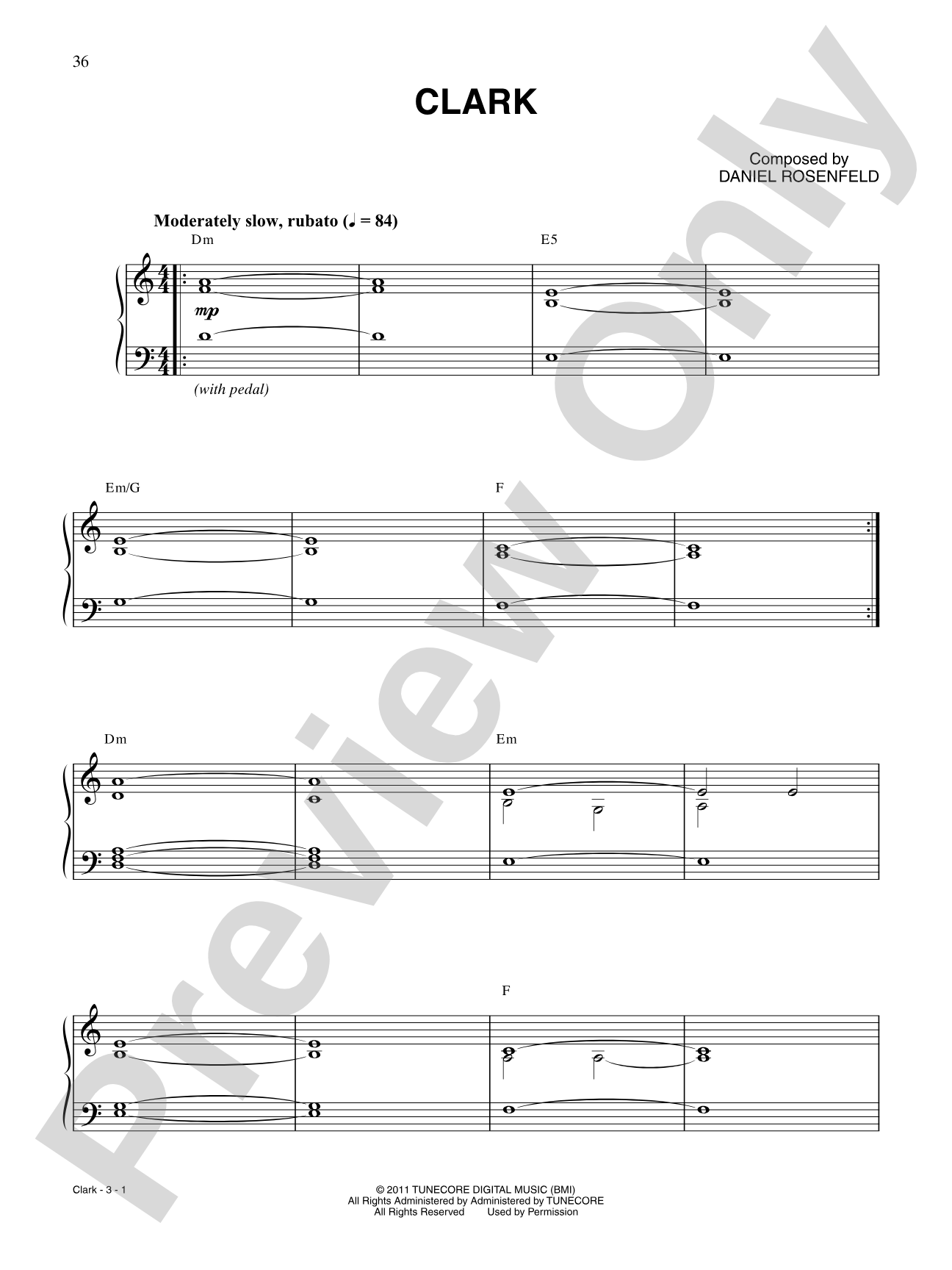

Clark (from "Minecraft"): Piano
Sheet Music Selections from the Video Game Soundtrack
Composed by C418
Item: 00-PS-0015490
$4.99
Pickup currently not available
Related Items
Key (from "Minecraft"): Piano |
$4.99
|
View | |
Door (from "Minecraft"): Piano |
$4.99
|
View | |
Subwoofer Lullaby (from "Minecraft"): Piano |
$4.99
|
View | |
Death (from "Minecraft"): Piano |
$4.99
|
View | |
Living Mice (from "Minecraft"): Piano |
$4.99
|
View | |
Moog City (from "Minecraft"): Piano |
$4.99
|
View | |
Haggstrom (from "Minecraft"): Piano |
$4.99
|
View | |
Equinoxe (from "Minecraft"): Piano |
$4.99
|
View | |
Mice on Venus (from "Minecraft"): Piano |
$4.99
|
View | |
Dry Hands (from "Minecraft"): Piano |
$4.99
|
View | |
Chris (from "Minecraft"): Piano |
$4.99
|
View | |
Excuse (from "Minecraft"): Piano |
$4.99
|
View | |
Sweden (from "Minecraft"): Piano |
$4.99
|
View | |
Danny (from "Minecraft"): Piano |
$4.99
|
View | |
Beginning (from "Minecraft"): Piano |
$4.99
|
View | |
Droopy Likes Ricochet (from "Minecraft"): Piano |
$4.99
|
View | |
Minecraft (from "Minecraft"): Piano |
$4.99
|
View | |
Wet Hands (from "Minecraft"): Piano |
$4.99
|
View |
Description
With more than 20 million players worldwide, Minecraft ranks among the world's most popular video games. Its soundtrack by Daniel "C418" Rosenfeld is one of the world's most recognized and beloved video game scores, and this book lets pianists bring the music to life! Titles: Key * Door * Subwoofer Lullaby * Death * Living Mice * Moog City * Haggstrom * Minecraft * Equinoxe * Mice on Venus * Dry Hands * Wet Hands * Clark * Chris * Excuse * Sweden * Danny * Beginning * Droopy Like Ricochet.


Clark (from "Minecraft"): Piano isn't in MakeMusic Cloud just yet...but it could be. Let us know you'd like to see it, and you'll help shape what comes next. In the meantime, start a free trial and dive into thousands of interactive titles your students can play along with today.
Request This Title
Tell us you want it.
Start Your Free Trial
Explore everything that's ready to play right now.
Sample Audio
No sample audio found.
Sample Video
No sample videos found.
Additional Details
Publisher:
Alfred Music
Page Count:
44
SKU:
00-PS-0015490
More about this title
About the Composer: Daniel Rosenfeld
Daniel Rosenfeld, known professionally as C418, is a German video game composer whose work on Minecraft has become one of the most streamed video game soundtracks in history. His minimalist, ambient approach to game music prioritizes emotional resonance and atmosphere over conventional melodic structure, making his compositions distinctly recognizable and deeply affecting. Rosenfeld's influence extends far beyond gaming; his music has shaped how educators and musicians understand the legitimacy and artistic value of interactive media soundtracks.
Rosenfeld's compositional voice relies on accessible harmonic language, repetitive structures, and subtle textural shifts—elements that translate beautifully to solo piano. His work demonstrates that video game music, when arranged thoughtfully, offers genuine educational value and performance satisfaction for pianists of all levels.
Why we love this
This collection brings legitimacy to video game music in the recital room. Each piece balances immediate approachability with surprising emotional depth, and the variety across 18 tracks means your students will find something that resonates with them personally. Programming music that your students already love and recognize shifts engagement entirely.
What to expect
These pieces evoke a sense of calm exploration and intimate wonder. The piano arrangements preserve Rosenfeld's ambient soundscapes while grounding them in the physicality of the instrument. Melancholy sits alongside moments of gentle beauty, creating a meditative listening and playing experience.
Who it's for
Pianists from intermediate to advanced levels who want to perform music they genuinely connect with. This collection appeals equally to students exploring the artistry of video game composition and to performers seeking contemporary repertoire that audiences recognize and embrace.
How to get the most out of it
- Pay attention to the sustain pedal; Rosenfeld's harmonic movement often depends on careful pedal work to blend chords and create the characteristic ambient wash.
- Resist rushing. These pieces feel spacious and contemplative. Hold silence and rests with the same intention you'd give to notes.
- Let the repetition work for you. Rather than fighting the cyclical patterns, use them to build texture gradually and explore subtle dynamic shifts.
- Explore the recording of the original game music first. Hearing Rosenfeld's intention for tempo, tone, and pacing will inform your own interpretive choices.
How to use it
Feature individual pieces in student recitals to demonstrate that contemporary and video game music deserves serious musical consideration. A full recital could program several tracks thematically (peaceful pieces followed by more energetic ones) or use them as elegant intermission music at school events.
Skills your students will build
- Pedal control and damper management in ambient, sustain-heavy contexts
- Reading and maintaining steady pulse through repetitive harmonic patterns
- Dynamic shaping and tonal control without relying on melody
- Interpretation of minimalist composition where small changes create significant effect
- Understanding harmonic function in accessible, contemporary music