May Our Paths Meet Again Cover Image

May Our Paths Meet Again: 3-Part Mixed Choral Octavo

$2.25 USD
Sale price  $2.25 USD Regular price 
Skip to product information
May Our Paths Meet Again Cover Image

May Our Paths Meet Again: 3-Part Mixed Choral Octavo

Music by Sally K. Albrecht and Jay Althouse

Item: 00-11398

makemusic Cloud badge

Need it now?

Buy Digital Version
$2.25
Shipped

One moment…

Description
A simple four-measure a cappella opening develops slowly and meaningfully into a gorgeous ballad of farewell. "I know you must travel your road as I must travel mine, but may our paths meet again sometime." Of course, it's an obvious choice for graduation, baccalaureate or end-of-year concerts, but we also recommend it as a closer for any concert. It just might become your choir's traditional encore.

Don't just read it, hear it, play along with it, and watch your students grow with it. In MakeMusic Cloud, May Our Paths Meet Again: 3-Part Mixed Choral Octavo comes alive with professional accompaniment, adjustable tempo, and built-in practice tools that turn solo practice into real progress.

Sample Pages

Sample Audio
No sample audio found.
Sample Video
Additional Details
Series: Alfred Archive Edition: Alfred Choral Designs
Publisher: Alfred Music
Page Count: 8
UPC: 038081028446
SKU: 00-11398

More about this title

About the Composer: Sally K. Albrecht
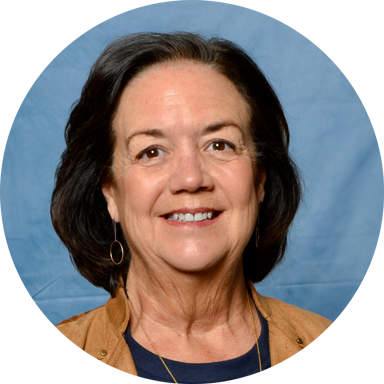
Sally K. Albrecht

Sally K. Albrecht has shaped choral music in schools for over thirty years, serving as Director of School Choral, Vocal, and Elementary Publications at major educational publishers, most notably Alfred Music. A conductor who has led honor choirs at Lincoln Center, Carnegie Hall, and The Kennedy Center, she has earned ASCAP Special Music Awards annually since 1987 and maintains a catalog of more than 600 published choral works alongside 75 larger musicals and songbooks.

Educated at Rollins College (B.A. in Music and Theater, 1976) and the University of Miami (M.A. in Drama, M.M. in Accompanying), Albrecht taught at Oakland University, Jersey City State College, and Meredith College before settling in North Carolina. She is a Distinguished Alumna of both the University of Miami Frost School of Music and Rollins College, where she serves on the Board of Trustees. Her collaborative partnership with composer and arranger Jay Althouse has produced some of the most enduring repertoire in contemporary school choral music.

Why we love this

Albrecht and Althouse understand how to build emotional weight without complexity. The journey from quiet opening to full ballad unfolds naturally, giving your singers real material to shape and your audience genuine substance to feel. This is the kind of piece that earns encores and becomes part of your choir's identity.

What to expect

The piece opens quietly and introspectively, almost like a private moment shared with the audience. As it develops, warmth and resonance grow, building into a genuine ballad of farewell and hope. There's honesty in the sentiment and accessibility in the writing that lets singers focus on meaning rather than mechanics.

Who it's for

This octavo works beautifully for choirs preparing graduation, baccalaureate, or end-of-year concerts. It also suits any ensemble looking for a meaningful, singable closing number that audiences respond to emotionally without requiring extensive technical demands.

How to get the most out of it

  • Let the four-measure a cappella opening breathe without rushing. These measures set the emotional tone, so take time to establish clear pitch and unified vowels before the development begins.
  • Shape the arc carefully across the entire piece. This is a farewell ballad, so think about dynamic and emotional trajectory from intimacy to full expression and back.
  • Balance the three parts so that no single voice dominates. SAB writing at this level often invites sopranos to overshadow altos and basses, so check blend frequently during rehearsal.
  • Consider how text underlay affects phrasing, especially in the transition from a cappella to accompanied sections. Clarity here prevents rushing.

How to use it

Program this as your concert closer rather than reserving it only for graduations. The piece has the kind of emotional resonance that works as a final statement after virtually any choral program, and many directors find it becomes a beloved annual tradition. Its simplicity also makes it an excellent choice for festivals or competitions where you want to showcase maturity of interpretation over technical difficulty.

Skills your students will build

  • Sustaining a cappella pitch and intonation across multiple measures
  • Blending three-part SAB voices with equal weight and presence
  • Shaping a longer musical arc across a complete piece
  • Interpreting and conveying emotional text through vocal expression
  • Transitioning smoothly from a cappella to accompanied sections

You May Also Like
