
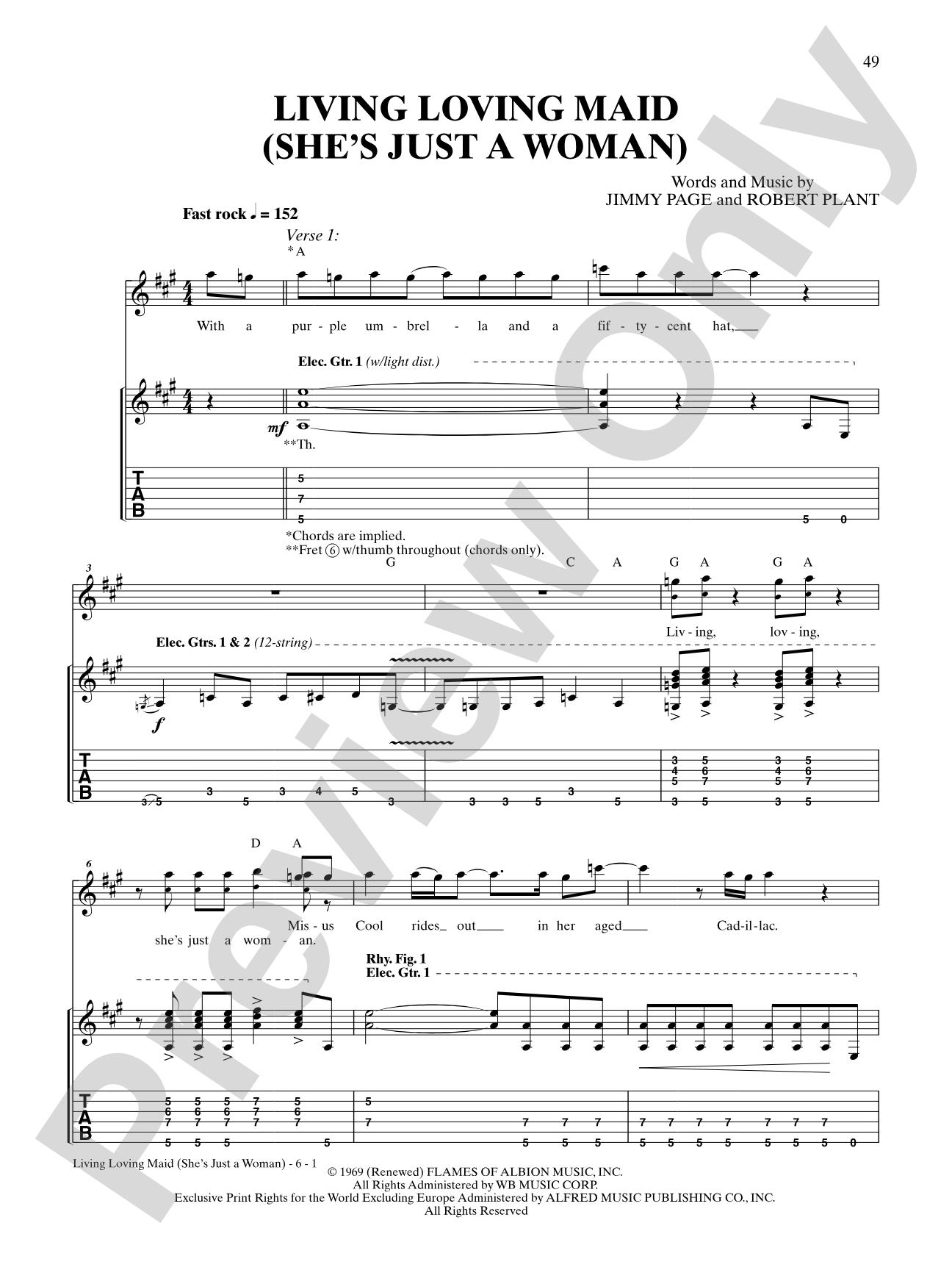
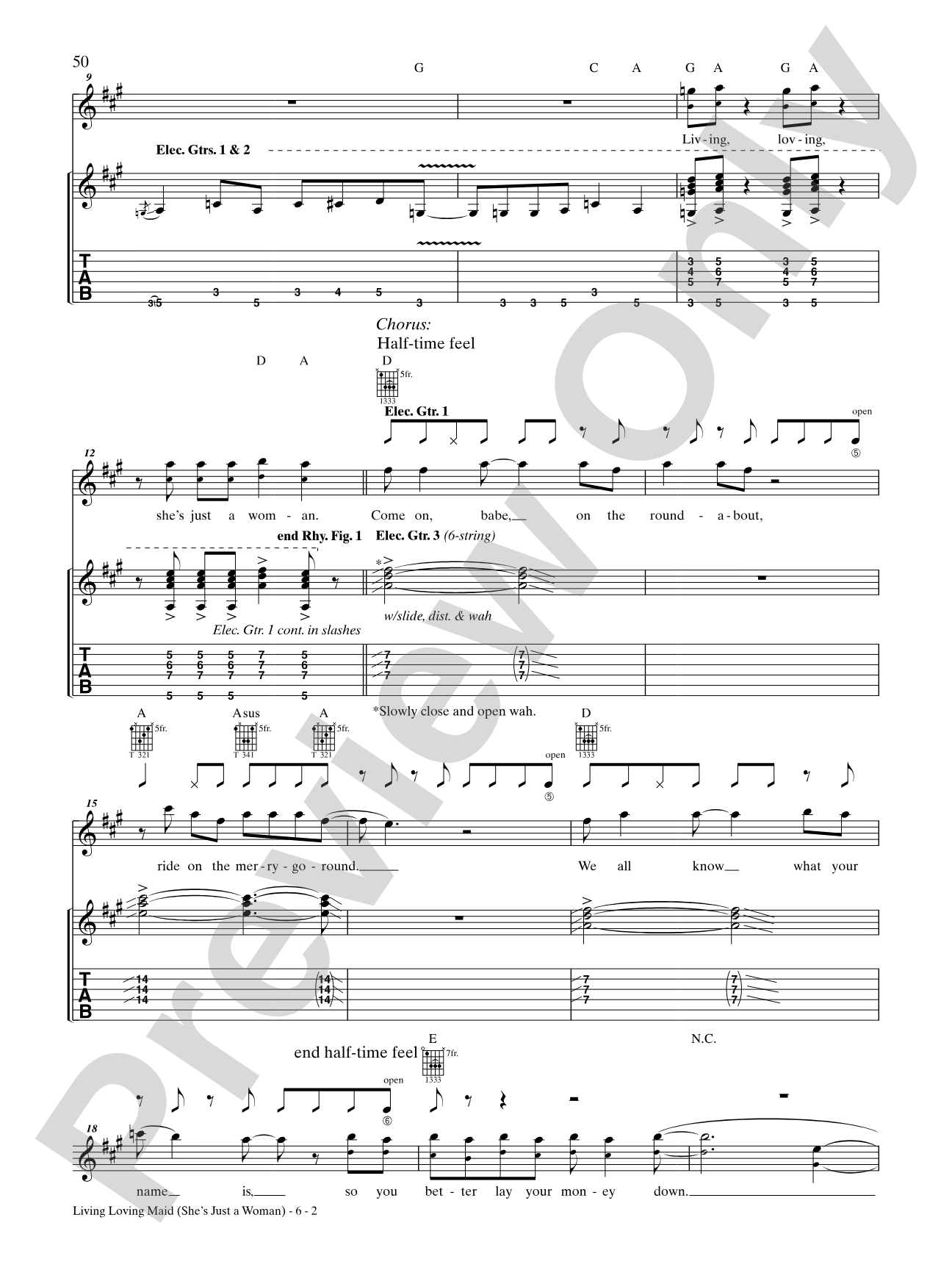

Living Loving Maid (She's Just a Woman): Authentic Guitar TAB
Led Zeppelin
Item: 00-PS-0000019
$5.99
Pickup currently not available
Related Items
Heartbreaker: Authentic Guitar TAB |
$9.99
|
View | |
Moby Dick: Authentic Guitar TAB |
$4.99
|
View | |
Ramble On: Authentic Guitar TAB |
$9.99
|
View | |
Thank You: Authentic Guitar TAB |
$5.99
|
View | |
What Is and What Should Never Be: Authentic Guitar TAB |
$4.99
|
View | |
Whole Lotta Love: Authentic Guitar TAB |
$5.99
|
View | |
Whole Lotta Love: Piano/Vocal/Chords |
$4.99
|
View | |
Living Loving Maid: Piano/Vocal/Chords |
$4.99
|
View | |
Moby Dick: Piano/Vocal/Chords |
$4.99
|
View | |
What Is and What Should Never Be: Piano/Vocal/Chords |
$4.99
|
View | |
Led Zeppelin: II Platinum Album Edition: Authentic Guitar TAB Book |
$24.99
|
View | |
Led Zeppelin: II Platinum Album Edition: Drum Transcriptions Book |
$19.99
|
View | |
Led Zeppelin: II Platinum Album Edition: Piano/Vocal/Chords Book |
$19.99
|
View | |
Led Zeppelin: II Platinum Album Edition: Authentic Bass TAB Book |
$16.99
|
View |
Description
Alfred Music, in association with Led Zeppelin, is proud to present new Platinum Album Edition songbooks for each of the band's classic studio recordings. Drawn from more than 30 years of documentation, interviews, and recorded footage, these all new transcriptions deliver unprecedented accuracy and insight into the guitar-style of Jimmy Page. With vintage Zeppelin photographs and a historical foreword by Guitar World magazine's editor-in-chief, Brad Tolinski, each volume is a true collectible every fan must own. Titles: Whole Lotta Love * What Is and What Should Never Be * The Lemon Song * Thank You * Heartbreaker * Living Loving Maid (She's Just a Woman) * Ramble On * Moby Dick * Bring It on Home.


Living Loving Maid (She's Just a Woman): Authentic Guitar TAB isn't in MakeMusic Cloud just yet...but it could be. Let us know you'd like to see it, and you'll help shape what comes next. In the meantime, start a free trial and dive into thousands of interactive titles your students can play along with today.
Request This Title
Tell us you want it.
Start Your Free Trial
Explore everything that's ready to play right now.
Sample Audio
No sample audio found.
Sample Video
No sample videos found.
Additional Details
Series:
Alfred's Platinum Album Editions
Publisher:
Alfred Music
Page Count:
76
SKU:
00-PS-0000019
More about this title
About the Composer: Jimmy Page
Jimmy Page shaped rock guitar across five decades, moving from session work and the Yardbirds into Led Zeppelin, where he developed techniques that defined hard rock: layered overdubs, Eastern-influenced tunings, and dynamics ranging from fingerpicked intimacy to crushing distortion. His approach to arrangement and production transformed how guitarists think about texture and space, making him one of the few rock musicians whose influence extends equally to technical players and songwriters.
Why we love this
These transcriptions capture what makes Page's playing so instructive: the interplay between rhythm and lead, the use of open tunings, and how he builds intensity through layering rather than speed alone. Having documented sources and guitarist interviews behind each tab means students aren't guessing at what Page actually played, they're learning from verified accuracy.
What to expect
Powerful and deliberate. Even in its quieter moments, this song carries weight, the kind of guitar work that sounds simple until you try to replicate the tone and timing. There's swagger without flash, and substance that rewards careful listening.
Who it's for
Guitarists serious about understanding classic rock construction and players looking to expand beyond chord-based playing into Page's approach to riff design, tuning, and production thinking. Teachers using rock repertoire in ensemble or solo contexts will find these verified transcriptions invaluable for accuracy.
How to get the most out of it
- Pay attention to the tuning notation. Page's non-standard tunings create the harmonic character; standard tuning approximations will lose the resonance that makes these riffs memorable.
- Balance the lead line against any rhythm accompaniment in the transcription. Page's genius often lies in how the two elements interact, not just the flashiness of either part alone.
- Let the recorded reference be a guide for feel and dynamics rather than a tempo map. Rock grooves breathe; locking too rigidly to a click will flatten the swing.
How to use it
Feature this in a rock history unit or concert that explores how riff-based songwriting differs from pop song structure. It's also ideal for advanced students working on electric guitar technique outside traditional classical study, since the transcription format makes the learning curve clear.
Skills your students will build
- Reading and executing Page's non-standard guitar tunings
- Balancing rhythm and lead guitar parts within a single arrangement
- Interpreting dynamic and tonal markings specific to electric rock guitar
- Understanding riff construction and how repetition creates propulsion