
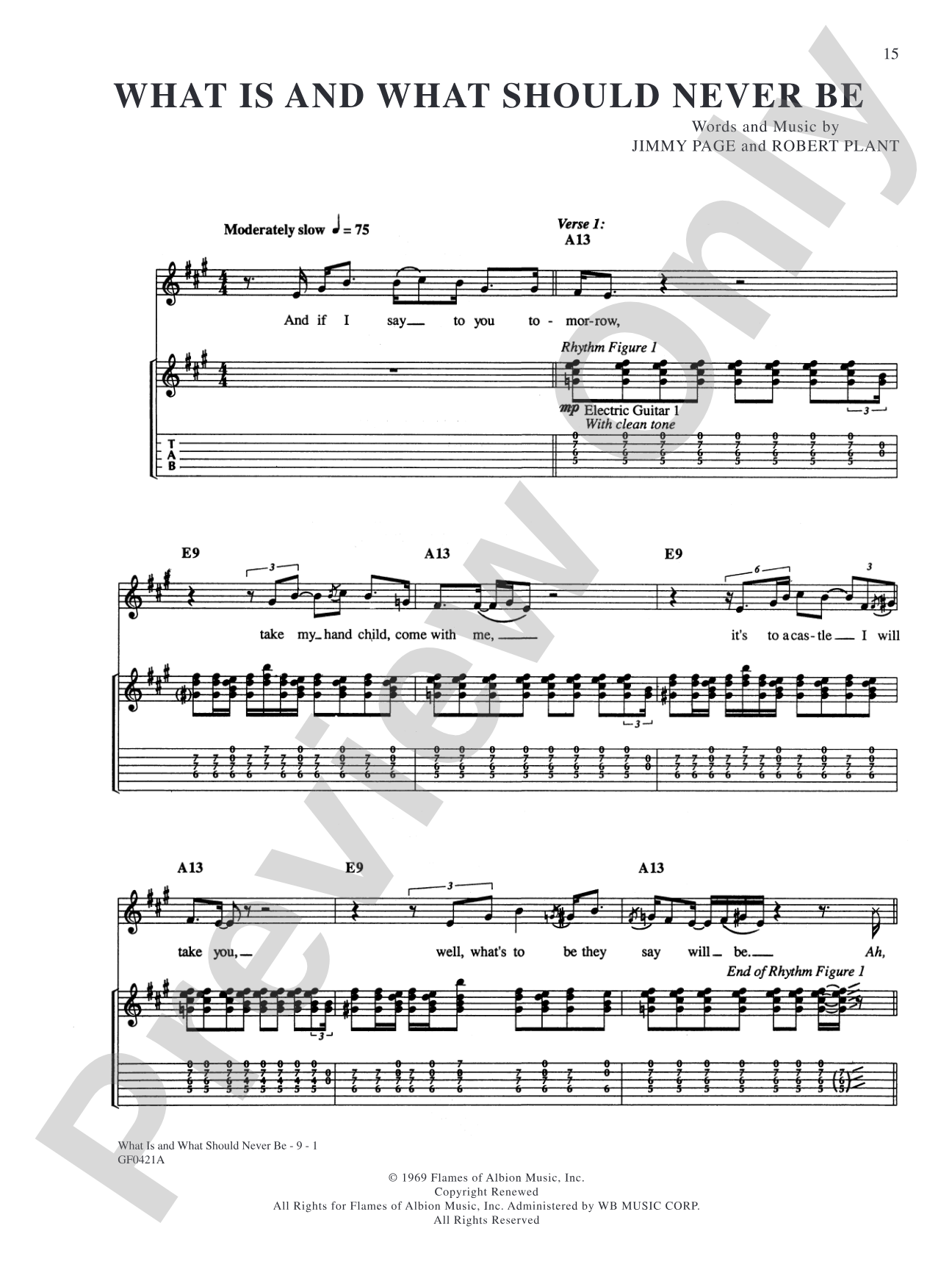

What Is and What Should Never Be: Authentic Guitar TAB
Led Zeppelin
Item: 00-PS-0000024
$4.99
Pickup currently not available
Related Items
Heartbreaker: Authentic Guitar TAB |
$9.99
|
View | |
Living Loving Maid (She's Just a Woman): Authentic Guitar TAB |
$5.99
|
View | |
Moby Dick: Authentic Guitar TAB |
$4.99
|
View | |
Ramble On: Authentic Guitar TAB |
$9.99
|
View | |
Thank You: Authentic Guitar TAB |
$5.99
|
View | |
Whole Lotta Love: Authentic Guitar TAB |
$5.99
|
View | |
Whole Lotta Love: Piano/Vocal/Chords |
$4.99
|
View | |
Living Loving Maid: Piano/Vocal/Chords |
$4.99
|
View | |
Moby Dick: Piano/Vocal/Chords |
$4.99
|
View | |
What Is and What Should Never Be: Piano/Vocal/Chords |
$4.99
|
View | |
Led Zeppelin: II Platinum Album Edition: Authentic Guitar TAB Book |
$24.99
|
View | |
Led Zeppelin: II Platinum Album Edition: Drum Transcriptions Book |
$19.99
|
View | |
Led Zeppelin: II Platinum Album Edition: Piano/Vocal/Chords Book |
$19.99
|
View | |
Led Zeppelin: II Platinum Album Edition: Authentic Bass TAB Book |
$16.99
|
View |
Description
Alfred Music, in association with Led Zeppelin, is proud to present new Platinum Album Edition songbooks for each of the band's classic studio recordings. Drawn from more than 30 years of documentation, interviews, and recorded footage, these all new transcriptions deliver unprecedented accuracy and insight into the guitar-style of Jimmy Page. With vintage Zeppelin photographs and a historical foreword by Guitar World magazine's editor-in-chief, Brad Tolinski, each volume is a true collectible every fan must own. Titles: Whole Lotta Love * What Is and What Should Never Be * The Lemon Song * Thank You * Heartbreaker * Living Loving Maid (She's Just a Woman) * Ramble On * Moby Dick * Bring It on Home.


What Is and What Should Never Be: Authentic Guitar TAB isn't in MakeMusic Cloud just yet...but it could be. Let us know you'd like to see it, and you'll help shape what comes next. In the meantime, start a free trial and dive into thousands of interactive titles your students can play along with today.
Request This Title
Tell us you want it.
Start Your Free Trial
Explore everything that's ready to play right now.
Sample Audio
No sample audio found.
Sample Video
No sample videos found.
Additional Details
Series:
Alfred's Platinum Album Editions
Publisher:
Alfred Music
Page Count:
76
SKU:
00-PS-0000024
More about this title
About the Composer: Jimmy Page
Jimmy Page shaped the sound of modern rock guitar across five decades, establishing techniques and tonal approaches that became foundational to the instrument's language. His work with Led Zeppelin demonstrated how guitar could function simultaneously as rhythm anchor, melodic voice, and textural innovator, influencing generations of players across genres.
Why we love this
These transcriptions capture the actual playing rather than simplified versions, giving students direct access to Page's creative decisions: his voicings, his use of open tunings, his layered approach to rhythm and lead. The historical context from Brad Tolinski anchors each song in its recording moment, transforming tabs into a masterclass in how arrangement and performance became inseparable in classic rock.
What to expect
Raw and visceral. These are the actual riffs that powered some of rock's most enduring songs, rendered in precise detail. Learning them means stepping into the creative choices of one of guitar's most influential voices, feeling the weight of open tunings and the intention behind every bend.
Who it's for
Advanced guitarists ready to decode how classic rock was actually played, not just read transcriptions of simplified versions. Teachers looking to build repertoire study that connects technique to recorded reference and historical documentation.
How to get the most out of it
- Work through the tuning requirements first. Several tracks use alternate tunings that fundamentally change finger positioning and tone; getting comfortable with the tuning change before tackling the riffs saves frustration.
- Pay attention to the dynamic layering in tracks like "Whole Lotta Love." Page often doubles parts with subtle variations in timing and tone; rushing through the tab misses the textural complexity that makes the part interesting.
- Reference the vintage photographs and historical notes while learning. Understanding what gear and effects Page used helps explain why certain passages sound the way they do on the recording.
- Break longer passages into short loops rather than running through full songs. This builds accuracy in the specific finger techniques Page employed, especially his signature bends and slides.
How to use it
Create an elective focused on analyzing classic rock composition and arrangement, using this book as the core text for how guitar-driven songwriting works. Pair tracks with the recordings and historical commentary to teach students how studio documentation and transcription serve music education.
Skills your students will build
- Reading and executing alternate guitar tunings
- Translating recorded nuance into tab notation
- Recognizing layered guitar arrangements and part independence
- Understanding fingering economy and position shifts on fretboard
- Analyzing how tone production (dynamics, timing, effects) affects tab interpretation