
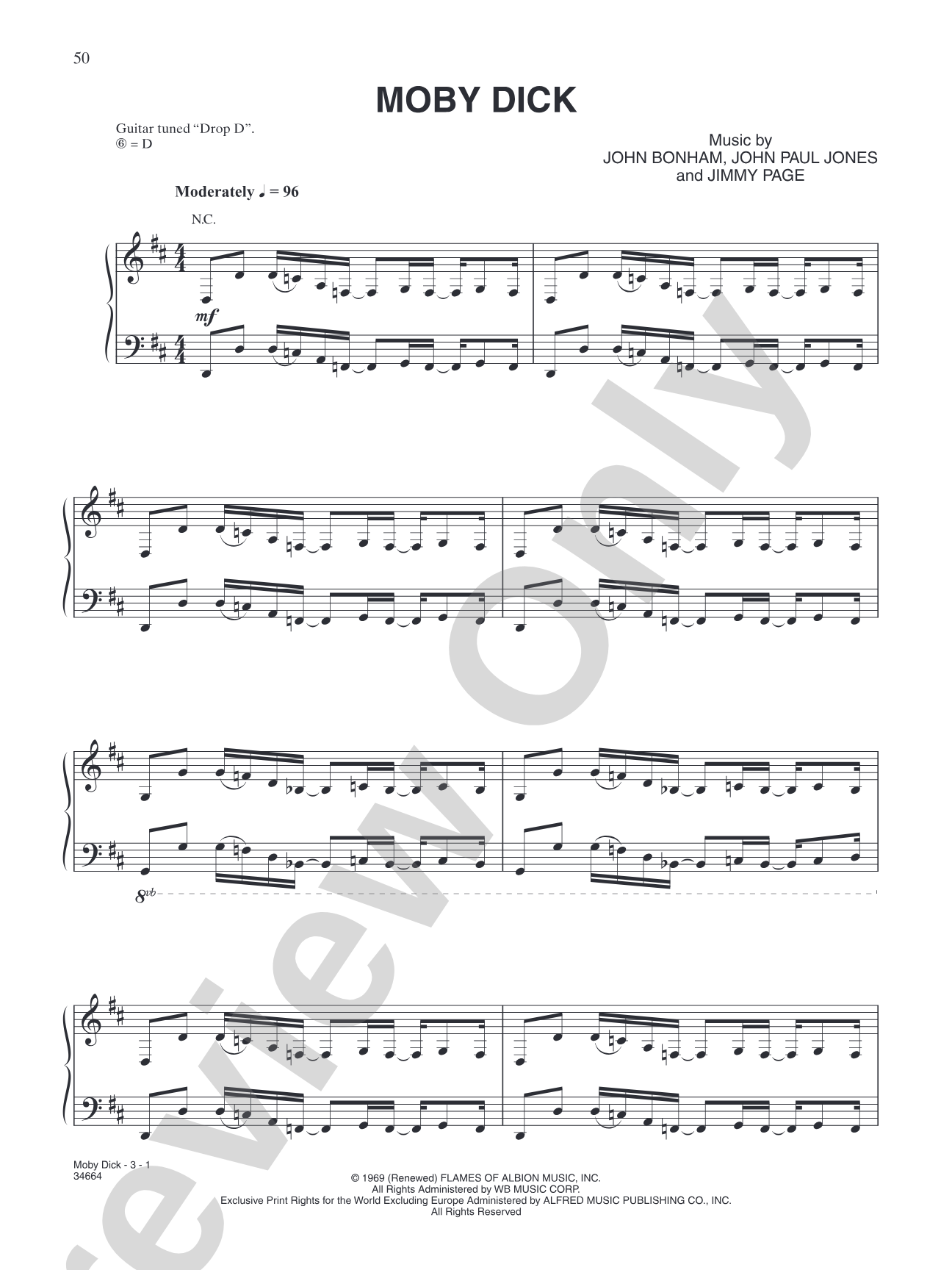

Moby Dick: Piano/Vocal/Chords
Led Zeppelin
Item: 00-XS-0000091
$4.99
Pickup currently not available
Related Items
Heartbreaker: Authentic Guitar TAB |
$9.99
|
View | |
Living Loving Maid (She's Just a Woman): Authentic Guitar TAB |
$5.99
|
View | |
Moby Dick: Authentic Guitar TAB |
$4.99
|
View | |
Ramble On: Authentic Guitar TAB |
$9.99
|
View | |
Thank You: Authentic Guitar TAB |
$5.99
|
View | |
What Is and What Should Never Be: Authentic Guitar TAB |
$4.99
|
View | |
Whole Lotta Love: Authentic Guitar TAB |
$5.99
|
View | |
Whole Lotta Love: Piano/Vocal/Chords |
$4.99
|
View | |
Living Loving Maid: Piano/Vocal/Chords |
$4.99
|
View | |
What Is and What Should Never Be: Piano/Vocal/Chords |
$4.99
|
View | |
Led Zeppelin: II Platinum Album Edition: Authentic Guitar TAB Book |
$24.99
|
View | |
Led Zeppelin: II Platinum Album Edition: Drum Transcriptions Book |
$19.99
|
View | |
Led Zeppelin: II Platinum Album Edition: Piano/Vocal/Chords Book |
$19.99
|
View | |
Led Zeppelin: II Platinum Album Edition: Authentic Bass TAB Book |
$16.99
|
View |
Description
Matching piano/vocal/guitar songbook to Led Zeppelin's second album, featuring detailed arrangements that capture all the nuances, including the intense bass lines of John Paul Jones and keyboard renditions of the essential guitar parts. Keyboardists, you're in for some fun: grab that pitch-bender and play the entire "Heartbreaker" guitar solo note-for-note. Guitar World magazine editor Brad Tolinski provides an insightful historical foreword, and Robert Plant has officially certified the accuracy of the lyrics. Titles: Whole Lotta Love * What Is and What Should Never Be * The Lemon Song * Thank You * Heartbreaker * Living Loving Maid (She's Just a Woman) * Ramble On * Moby Dick * Bring It on Home.


Discover MakeMusic Cloud: thousands of interactive titles your students can play along with today.
Sample Audio
No sample audio found.
Sample Video
No sample videos found.
Additional Details
Series:
Alfred's Platinum Album Editions
Publisher:
Alfred Music
Page Count:
60
SKU:
00-XS-0000091
More about this title
About the Composer: Jimmy Page
Jimmy Page emerged as one of rock's most innovative guitarists and producers, shaping the sound of Led Zeppelin through meticulous studio experimentation and arrangement. His work on Led Zeppelin II established techniques that became foundational to hard rock: layered textures, unconventional tunings, and a producer's ear for capturing raw power with studio sophistication. Page's compositions on this album balance blues-rooted songwriting with original material that pushed rock music toward heavier, more ambitious territory.
For music educators, Page's approach offers a masterclass in orchestration at the rock level. His arrangements—particularly how he balanced his own guitar work with John Paul Jones's keyboard and bass contributions—demonstrate how instrumental voices can build tension and narrative within a song. Understanding Page's compositional choices helps students see rock not as simple three-chord entertainment, but as arrangement and production craft.
Why we love this
This collection captures one of rock's most densely arranged albums in piano and vocal format, forcing keyboardists and singers to engage with every compositional layer that typically gets buried in the original mix. The inclusion of transcribed guitar solos (particularly "Heartbreaker") gives pianists access to the melodic architecture of iconic moments, while the verified accuracy of lyrics and Robert Plant's official endorsement makes this a definitive educational resource. Brad Tolinski's foreword adds historical context that reminds students this music emerged from deliberate artistic choices, not accident.
What to expect
Dense and powerful. These arrangements refuse to simplify Led Zeppelin II into three-chord sing-alongs; instead they honor the original's layered production and instrumental ambition. Playing through this collection feels like sitting inside the mix, understanding how each player contributed to the album's legendary weight and swagger.
Who it's for
Pianists, keyboardists, and singers working in rock contexts or studying rock arrangement at the intermediate level or above. This collection demands musicians who can handle blues-influenced phrasing, dynamic control, and the technical demands of transcribed solos alongside vocal accompaniment.
How to get the most out of it
- Approach the bass line transcriptions with the intensity and precision John Paul Jones brought to the original recordings; these are not secondary parts but essential melodic and harmonic anchors that shape the song's foundation.
- When playing the transcribed guitar solos (especially in "Heartbreaker"), study the original recording alongside the notation to capture the bending, sustain, and articulation that cannot be fully represented on the page; the pitch-bender on your keyboard becomes your most important expressive tool.
- Layer the keyboard parts over the vocal line gradually during rehearsal rather than trying to lock everything together immediately; this album's strength comes from the interaction between voices, and giving each part space to breathe first will make the final arrangement more cohesive.
- Lock the rhythm section (vocal melody and keyboard bass) before adding ornamentation in the upper keyboard voices; these songs rely on groove and pocket, and looseness in the foundational layers will undermine the intensity the original arrangements built.
How to use it
Ideal for a rock music history unit that bridges songwriting, arrangement, and performance, or for showcasing student pianist soloists in a popular music recital where they can demonstrate technical facility on transcribed material with cultural weight. This collection also serves ensemble programs exploring cross-genre repertoire; a jazz ensemble, pop ensemble, or even chamber ensemble can extract individual songs for study and performance. The completeness of the album makes it valuable as a semester-long study for serious students pursuing rock musicianship.
Skills your students will build
- Reading and interpreting rock vocal phrasing and blues-influenced melody
- Executing transcribed lead guitar parts on keyboard (bending, articulation, dynamic shaping)
- Playing complex bass lines that function as both rhythmic and melodic anchors
- Coordinating keyboard, vocal, and accompanying chord structures in a dense arrangement
- Understanding historical rock production and arrangement through performance