
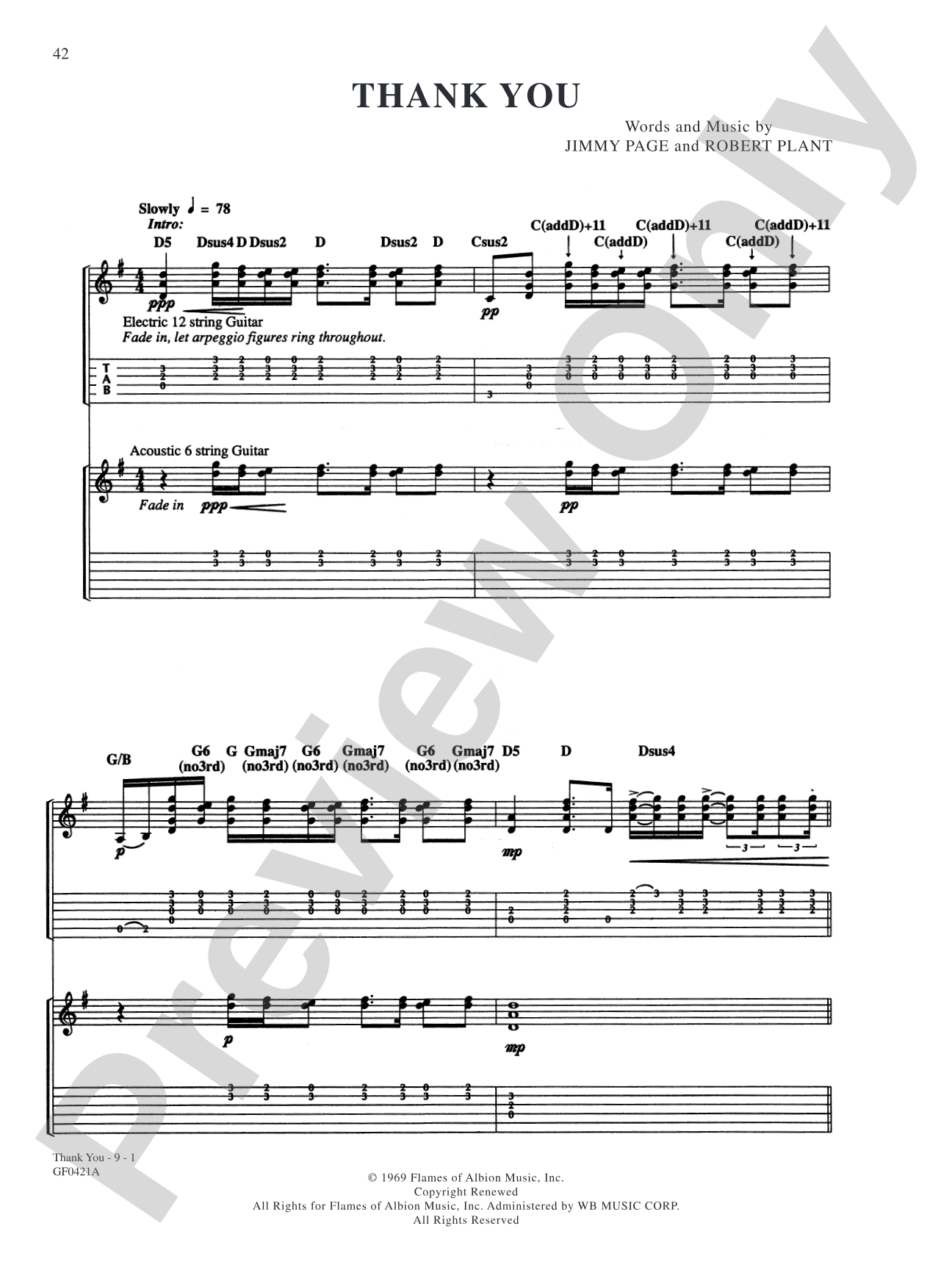
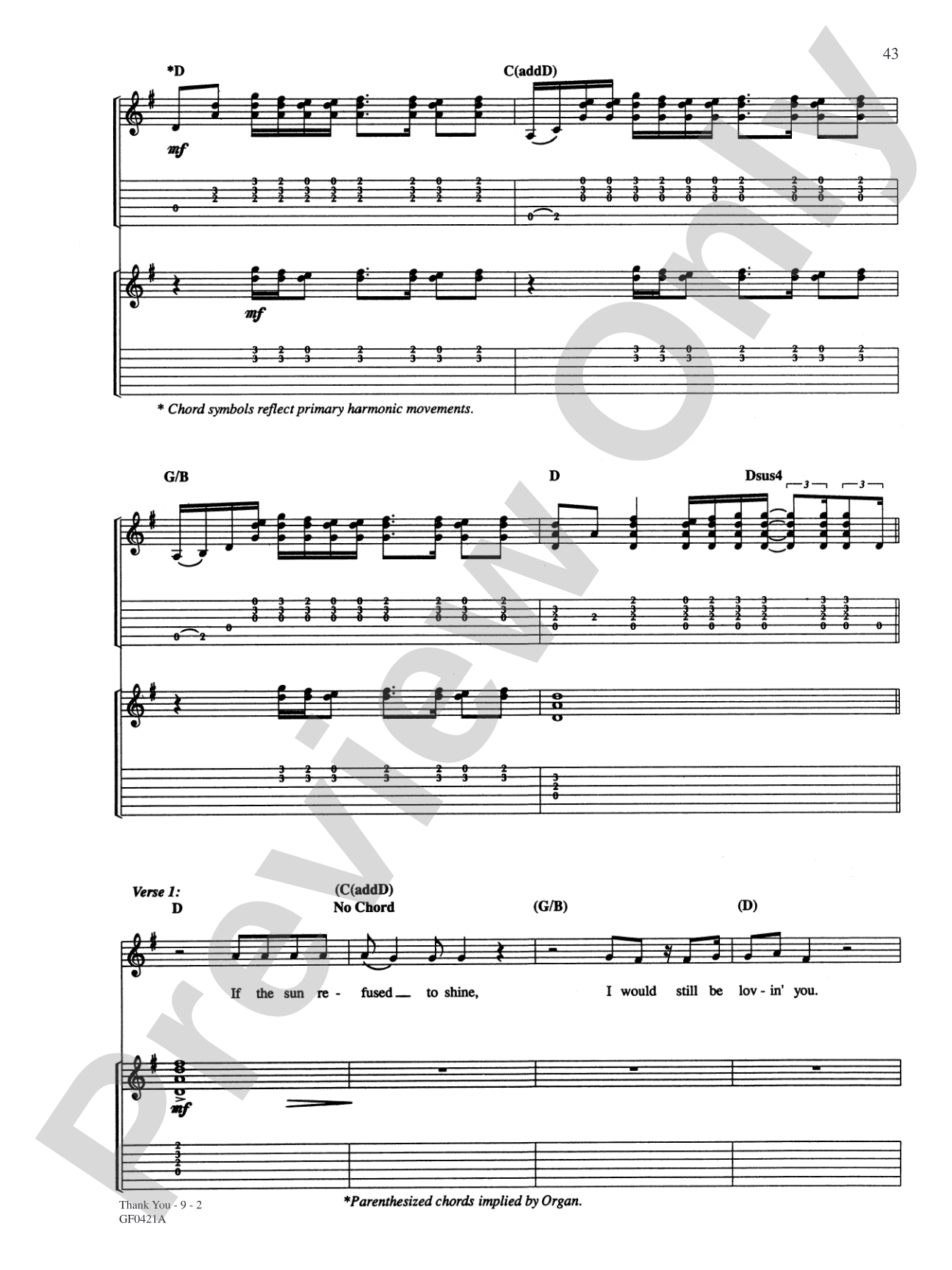

Thank You: Authentic Guitar TAB
Led Zeppelin
Item: 00-PS-0000023
$5.99
Pickup currently not available
Related Items
Heartbreaker: Authentic Guitar TAB |
$9.99
|
View | |
Living Loving Maid (She's Just a Woman): Authentic Guitar TAB |
$5.99
|
View | |
Moby Dick: Authentic Guitar TAB |
$4.99
|
View | |
Ramble On: Authentic Guitar TAB |
$9.99
|
View | |
What Is and What Should Never Be: Authentic Guitar TAB |
$4.99
|
View | |
Whole Lotta Love: Authentic Guitar TAB |
$5.99
|
View | |
Whole Lotta Love: Piano/Vocal/Chords |
$4.99
|
View | |
Living Loving Maid: Piano/Vocal/Chords |
$4.99
|
View | |
Moby Dick: Piano/Vocal/Chords |
$4.99
|
View | |
What Is and What Should Never Be: Piano/Vocal/Chords |
$4.99
|
View | |
Led Zeppelin: II Platinum Album Edition: Authentic Guitar TAB Book |
$24.99
|
View | |
Led Zeppelin: II Platinum Album Edition: Drum Transcriptions Book |
$19.99
|
View | |
Led Zeppelin: II Platinum Album Edition: Piano/Vocal/Chords Book |
$19.99
|
View | |
Led Zeppelin: II Platinum Album Edition: Authentic Bass TAB Book |
$16.99
|
View |
Description
Alfred Music, in association with Led Zeppelin, is proud to present new Platinum Album Edition songbooks for each of the band's classic studio recordings. Drawn from more than 30 years of documentation, interviews, and recorded footage, these all new transcriptions deliver unprecedented accuracy and insight into the guitar-style of Jimmy Page. With vintage Zeppelin photographs and a historical foreword by Guitar World magazine's editor-in-chief, Brad Tolinski, each volume is a true collectible every fan must own. Titles: Whole Lotta Love * What Is and What Should Never Be * The Lemon Song * Thank You * Heartbreaker * Living Loving Maid (She's Just a Woman) * Ramble On * Moby Dick * Bring It on Home.


Thank You: Authentic Guitar TAB isn't in MakeMusic Cloud just yet...but it could be. Let us know you'd like to see it, and you'll help shape what comes next. In the meantime, start a free trial and dive into thousands of interactive titles your students can play along with today.
Request This Title
Tell us you want it.
Start Your Free Trial
Explore everything that's ready to play right now.
Sample Audio
No sample audio found.
Sample Video
No sample videos found.
Additional Details
Series:
Alfred's Platinum Album Editions
Publisher:
Alfred Music
Page Count:
76
SKU:
00-PS-0000023
More about this title
About the Composer: Jimmy Page
Jimmy Page shaped modern rock guitar through his work with The Yardbirds and, most significantly, Led Zeppelin. His approach to the instrument combined blues fundamentals with Eastern influences, exotic tunings, and studio experimentation, establishing techniques that remain central to rock pedagogy today. Page's compositions and arrangements defined an era and continue to challenge guitarists across all levels.
Why we love this
These transcriptions represent the most documented and accurate interpretations of Page's guitar work ever published. Rather than relying on ear transcriptions or approximations, Alfred worked directly with band archives and recorded documentation spanning decades, giving students access to the actual voicings, tunings, and techniques that made these records iconic. For guitar teachers, this means finally having a reliable pedagogical resource for one of rock's most influential catalogs.
What to expect
Raw and inventive. These arrangements capture the swagger of early 1970s rock while revealing the precision and thoughtfulness beneath the surface. Whether it's the hypnotic groove of a blues-rooted riff or the cinematic sweep of an orchestral moment, the music demands both technical command and emotional depth.
Who it's for
Intermediate to advanced rock guitarists who want to move beyond approximations and learn from documented sources. Teachers preparing students for advanced repertoire or building a curriculum around rock history and technique will find this invaluable.
How to get the most out of it
- Spend time isolating the alternate tunings used across the album before diving into full arrangements; Page's non-standard tunings are central to achieving the recorded sound.
- Study the fingering suggestions carefully, as they often reveal unconventional hand positions that unlock the tonal character Page achieved.
- Layer the rhythm and lead parts separately first, then combine them; understanding how Page built these arrangements in the studio transfers directly to your own playing.
- Reference the vintage photographs and historical context throughout; knowing the story behind each recording deepens your interpretation.
How to use it
Integrate individual songs into your advanced guitar curriculum as technical studies, or use the complete collection as a semester-long exploration of rock composition and arrangement. Consider programming selections alongside classical or jazz material to show how different idioms approach similar problems of texture and form.
Skills your students will build
- Reading and executing alternate tunings (open G, DADGAD, and others)
- Fingerstyle and pick-hybrid techniques
- Transcription and analysis of layered guitar arrangements
- Understanding blues vocabulary applied to rock contexts
- Tone production and amp interaction