

Let Us Walk in Peace: 2-Part Choral Octavo
Music by Patsy Ford Simms
Item: 00-PO-0003863
$2.25
Minimum order quantity: 20 copies
Pickup currently not available
Description
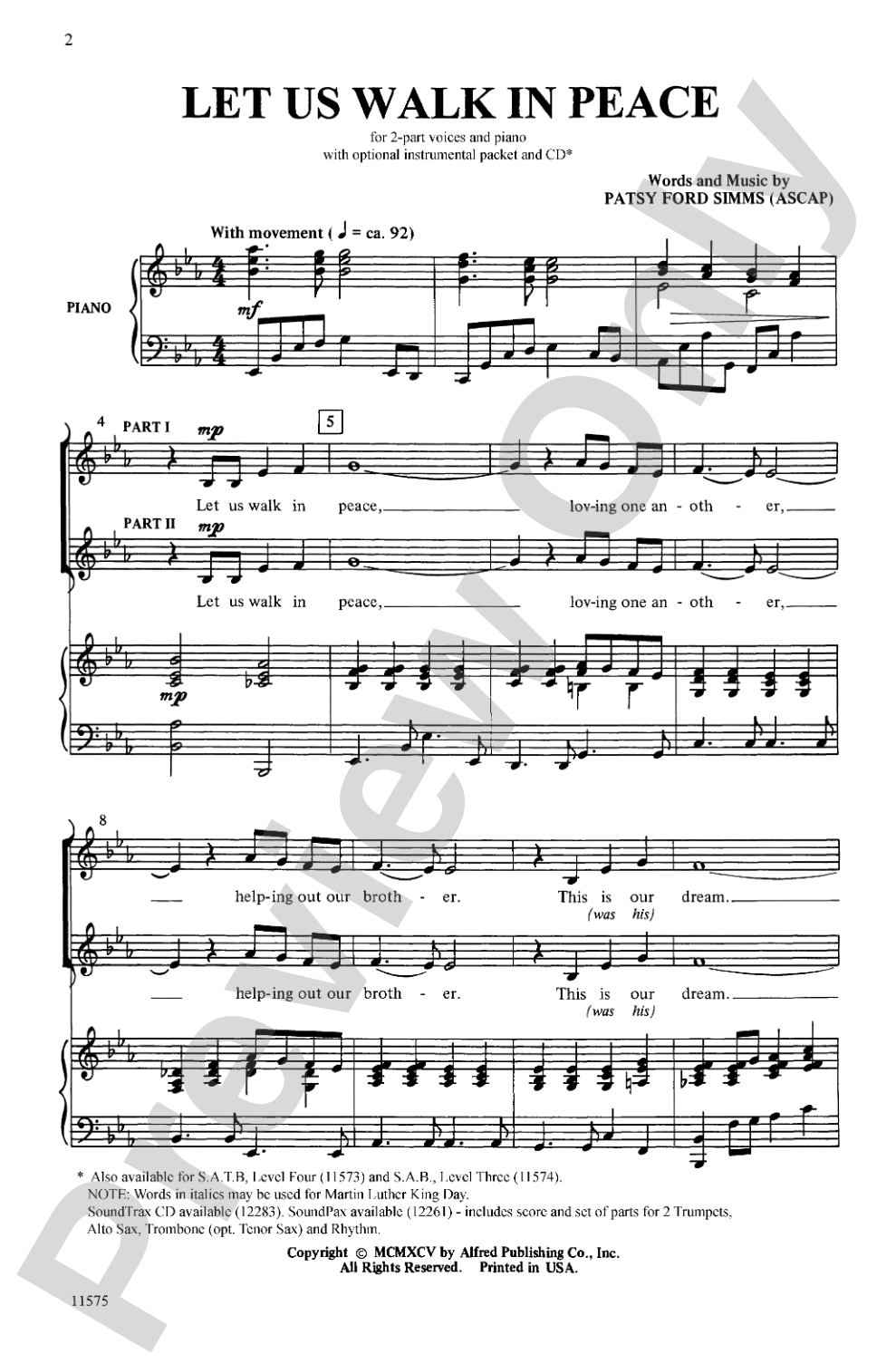
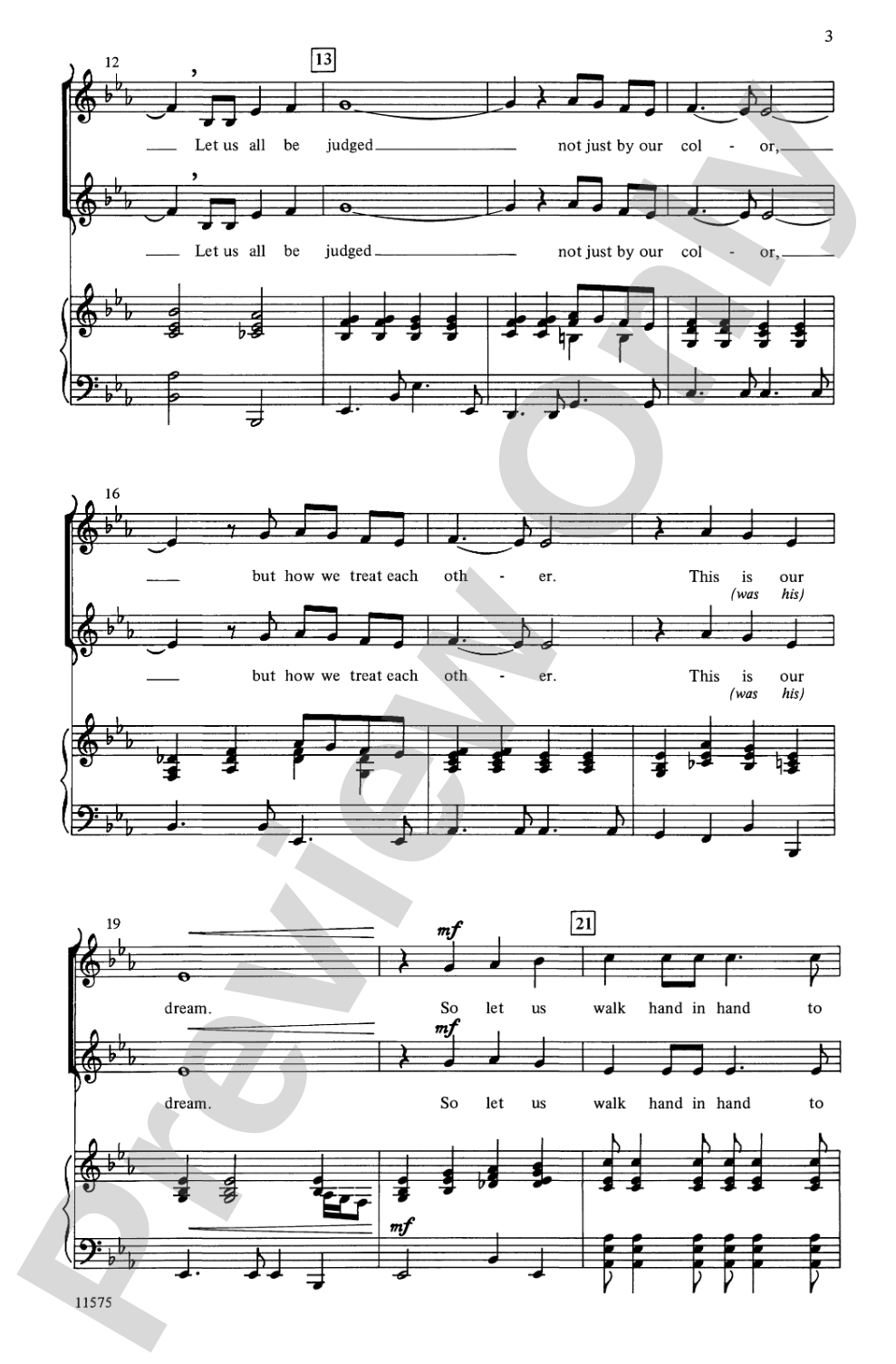
This meaningful work for all ages features a "brotherhood" text and strong, logical voice writing. Can be used any time of year or as a secular "peace" number at Christmas. Use the optional text for Martin Luther King day. Opens gently, builds to a powerful finish. An outstanding choral work.


Let Us Walk in Peace: 2-Part Choral Octavo isn't in MakeMusic Cloud just yet...but it could be. Let us know you'd like to see it, and you'll help shape what comes next. In the meantime, start a free trial and dive into thousands of interactive titles your students can play along with today.
Request This Title
Tell us you want it.
Start Your Free Trial
Explore everything that's ready to play right now.
Sample Audio
No sample audio found.
Sample Video
Additional Details
Series:
Alfred Archive Edition: Alfred Choral Designs
Publisher:
Alfred Music
Page Count:
8
SKU:
00-PO-0003863
More about this title
About the Composer: Patsy Ford Simms
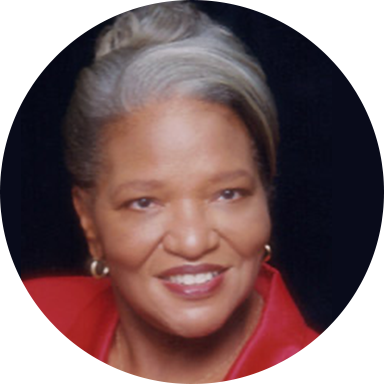
Patsy Ford Simms began composing and arranging in response to a real gap in the choral repertoire: the scarcity of quality octavos written for junior high and middle school voices. Since her first publication in 1981, she has created over 300 songs for educational and church settings, working with major publishers including Shawnee Press. Her work emerged directly from three decades of classroom experience teaching grades K-12, including time at the Youth Performing Arts School.
Simms holds a Bachelor of Science in Music Education from Knoxville College, a Master of Education from the University of Louisville, and a doctorate in Music Education from Columbia Pacific University. She has earned international recognition as a composer, arranger, and clinician, presenting her work in Italy and Africa. Her compositions have been featured in two MENC World's Largest Concerts, and she has received multiple ASCAP Special Music Awards. She has also composed short musicals centered on African American history and fulfilled numerous commissioned works.
Why we love this
This piece gives you genuine textual and musical flexibility. The core "brotherhood" message works year-round, but the optional text unlocks its potential for Martin Luther King day observances, making it a rare find that serves multiple programming moments without feeling forced. Simms's voice writing is direct and singable for young voices, yet the arc from gentle opening to powerful finish gives singers real dramatic territory to explore.
What to expect
The piece begins in quiet contemplation, with singers supported by thoughtful harmonic language that feels grounded and hopeful. As it progresses, energy and confidence build naturally, arriving at a powerful climax that feels earned rather than forced. The overall effect is one of collective conviction and dignity.
Who it's for
Directors working with middle school, high school, or community choirs benefit from this piece's singable voice writing and emotional maturity. The 2-part texture makes it accessible to developing singers while the message and musical arc keep advanced choirs engaged. Any ensemble seeking meaningful, secular material with optional flexibility for specific occasions will find real value here.
How to get the most out of it
- Establish the gentle opening with warm, supported tone in both parts. Resist the urge to project here; the contrast will make the build to the powerful finish more striking.
- Blend the two parts carefully during the opening section so they sound like a unified utterance rather than two separate lines.
- As the piece builds, encourage singers to maintain legit tone quality rather than pushing into belting, keeping the sound focused and mature.
- Use the recorded accompaniment to establish tempo and harmonic support during early rehearsals, then gradually reduce reliance as singers gain independence.
How to use it
Consider opening a spring concert with this piece to set an aspirational, inclusive tone for the entire program. It pairs well with other peace-themed or community-focused works at year-end celebrations. For schools with MLK observances, the optional text makes it a centerpiece of those ceremonies without requiring a separate arrangement.
Skills your students will build
- Blending two independent vocal lines into unified sound
- Dynamic control and phrasing through a long musical arc
- Sustaining legit tone quality while building intensity
- Singing with textual understanding and emotional commitment
- Navigating optional text variations within a single arrangement