Let Us Walk in Peace Cover Image

Let Us Walk in Peace: Choral SoundPax

$15.00 USD
Sale price  $15.00 USD Regular price 
Skip to product information
Let Us Walk in Peace Cover Image

Let Us Walk in Peace: Choral SoundPax

Music by Patsy Ford Simms

Item: 00-12261

makemusic Cloud badge

Need it now?

Buy Digital Version
$15.00
Shipped

One moment…

Description
This meaningful work for all ages features a "brotherhood" text and strong, logical voice writing. Can be used any time of year or as a secular "peace" number at Christmas. Use the optional text for Martin Luther King day. Opens gently, builds to a powerful finish. An outstanding choral work. InstruPax includes: director's score, 2 trumpets, trombone [opt. tenor sax], alto sax, rhythm.

Don't just read it, hear it, play along with it, and watch your students grow with it. In MakeMusic Cloud, Let Us Walk in Peace: Choral SoundPax comes alive with professional accompaniment, adjustable tempo, and built-in practice tools that turn solo practice into real progress.

Sample Pages

Sample Audio
No sample audio found.
Sample Video
Additional Details
Series: Alfred Choral Designs
Publisher: Alfred Music
Page Count: 32
UPC: 038081028798
SKU: 00-12261
Instrumentation: 2 trumpets, trombone [opt. tenor sax], alto sax, rhythm, score

More about this title

About the Composer: Patsy Ford Simms
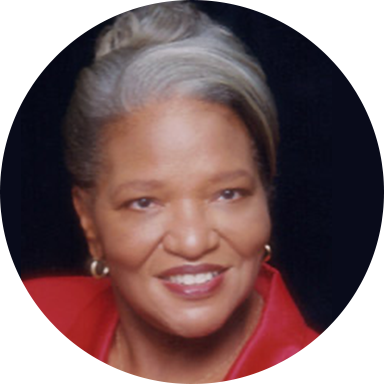
Patsy Ford Simms

Patsy Ford Simms began her publishing career in 1981 and has since created over 300 compositions and arrangements for educational and church settings. Her work with major publishers including Shawnee Press grew out of a clear pedagogical need: during her early teaching years, she found a shortage of quality choral literature suited to junior high and middle school voices, so she began writing to fill that gap.

Simms holds a Bachelor of Science in Music Education from Knoxville College, a Master of Education from the University of Louisville, and a doctorate in Music Education from Columbia Pacific University. She taught for 30 years across grades K-12 and at the Youth Performing Arts School before retiring from full-time classroom work. Her contributions to music education extend globally; she has presented as a clinician and arranger in Italy and Africa, received multiple ASCAP Special Music Awards, and had two of her compositions selected for MENC World's Largest Concerts. She has also composed commissioned works and short musicals exploring African American history.

Why we love this

Simms constructs this piece with remarkable clarity: it opens with vulnerability and restraint, then unfolds architecturally toward genuine power without ever becoming manipulative. The optional Martin Luther King Jr. text gives you flexibility across the calendar, while the brotherhood message works equally well at graduation or whenever your program needs authentic emotional substance. The voice writing is refreshingly logical throughout, which means your singers will understand the harmonic movement rather than simply following their line.

What to expect

The piece mirrors its title: it walks before it soars. A quiet, almost vulnerable opening gradually gathers conviction and harmonic weight until the choir arrives at something genuinely powerful and unified. The instrumental colors add warmth and forward motion without overwhelming the voices, creating a sense of collective movement toward hope.

Who it's for

This work serves middle and high school choirs, adult community ensembles, and church choirs of mixed ability. The straightforward voice writing welcomes singers who are still developing musicianship, while the meaningful text and musical sophistication engage more experienced musicians. Directors seeking a unifying piece that transcends age and skill level will find it here.

How to get the most out of it

  • Shape the opening with patience and breath awareness. The gentle beginning sets up the arc, so avoid the impulse to rush toward the powerful finish.
  • Let the instrumental ensemble breathe with the choir rather than pushing ahead of it. The rhythm section anchors the groove; align your vocal phrasing to their foundation.
  • Balance the dynamic build carefully across the middle section. The growth should feel inevitable and earned, not sudden or forced.
  • Use the recorded accompaniment to establish tempo and ensemble feel before your first rehearsal with instruments.

How to use it

Open a graduation concert with this if you want to set a reflective, purposeful tone before lighter selections. Alternatively, place it in the second half of your program as a powerful emotional center that audiences will carry with them as they leave. For holiday performances, the optional King text repositions it perfectly for a January or February concert celebrating cultural leaders and civil rights.

Skills your students will build

  • Understanding harmonic progression and voice leading in accessible diatonic harmony
  • Building stamina across a dynamic arc from soft to powerful singing
  • Singing with conviction and expression in a text-driven secular context
  • Coordinating with instrumental ensemble parts and following a conductor's shape
  • Ensemble balance and blend within a layered, full-voiced texture

You May Also Like
