
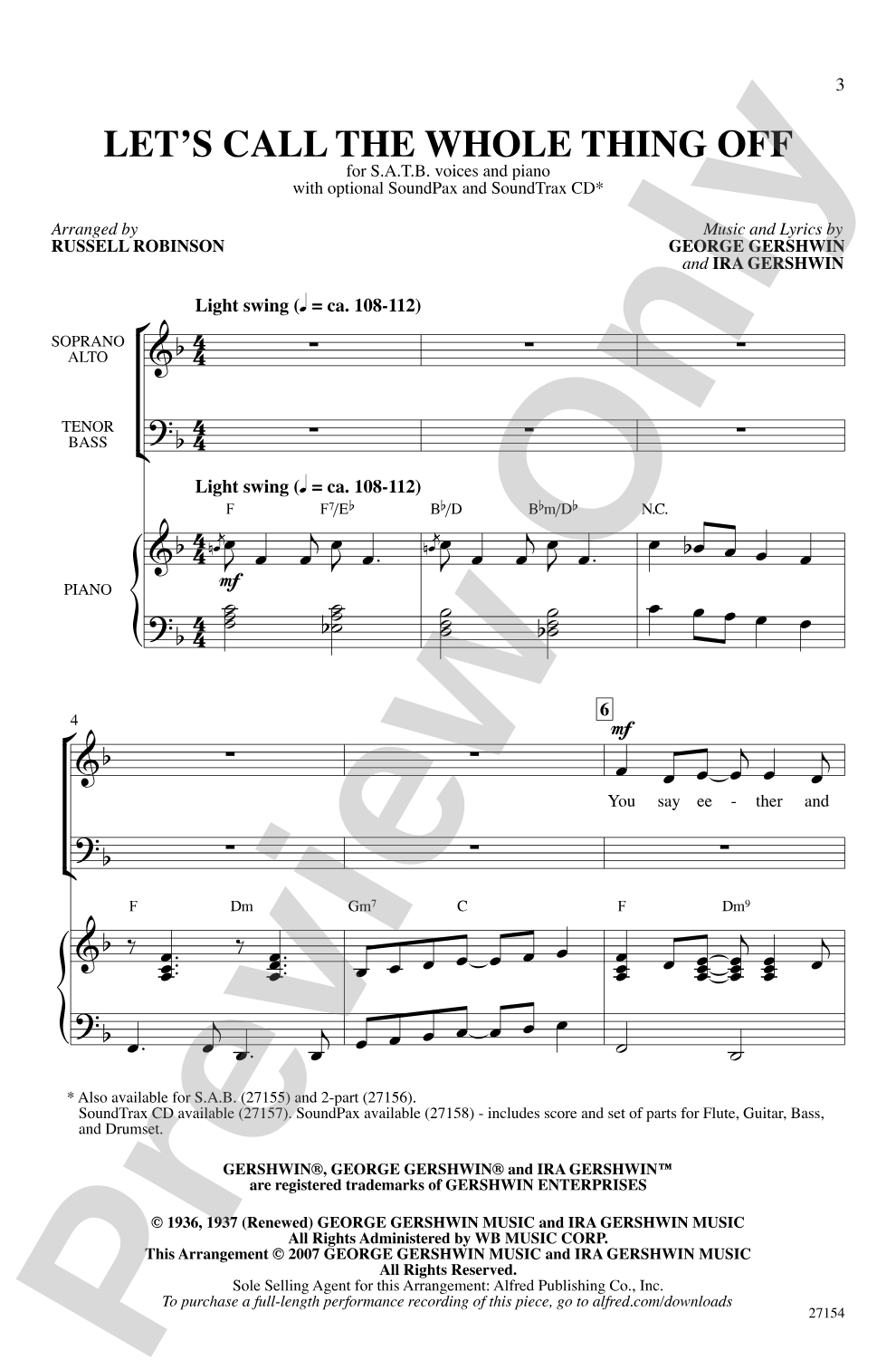

Let's Call the Whole Thing Off: SATB Choral Octavo
Music and lyrics by George Gershwin and Ira Gershwin / arr. Russell Robinson
Item: 00-PO-0002257
$2.25
Minimum order quantity: 20 copies
One moment…
Related Items
Let's Call the Whole Thing Off: SoundTrax Digital Audio Download |
$27.99
|
View | |
Let's Call the Whole Thing Off: SAB Choral Octavo |
$2.25
|
View | |
Let's Call the Whole Thing Off: 2-Part Choral Octavo |
$2.25
|
View | |
Let's Call the Whole Thing Off: Choral SoundPax |
$25.00
|
View | |
Let's Call the Whole Thing Off: SATB Choral Octavo |
$2.25
|
View | |
Let's Call the Whole Thing Off: SAB Choral Octavo |
$2.25
|
View | |
Let's Call the Whole Thing Off: 2-Part Choral Octavo |
$2.25
|
View | |
Let's Call the Whole Thing Off: Choral Octavo SoundTrax CD |
$27.99
|
View | |
Let's Call the Whole Thing Off: Choral SoundPax |
$25.00
|
View |
Description
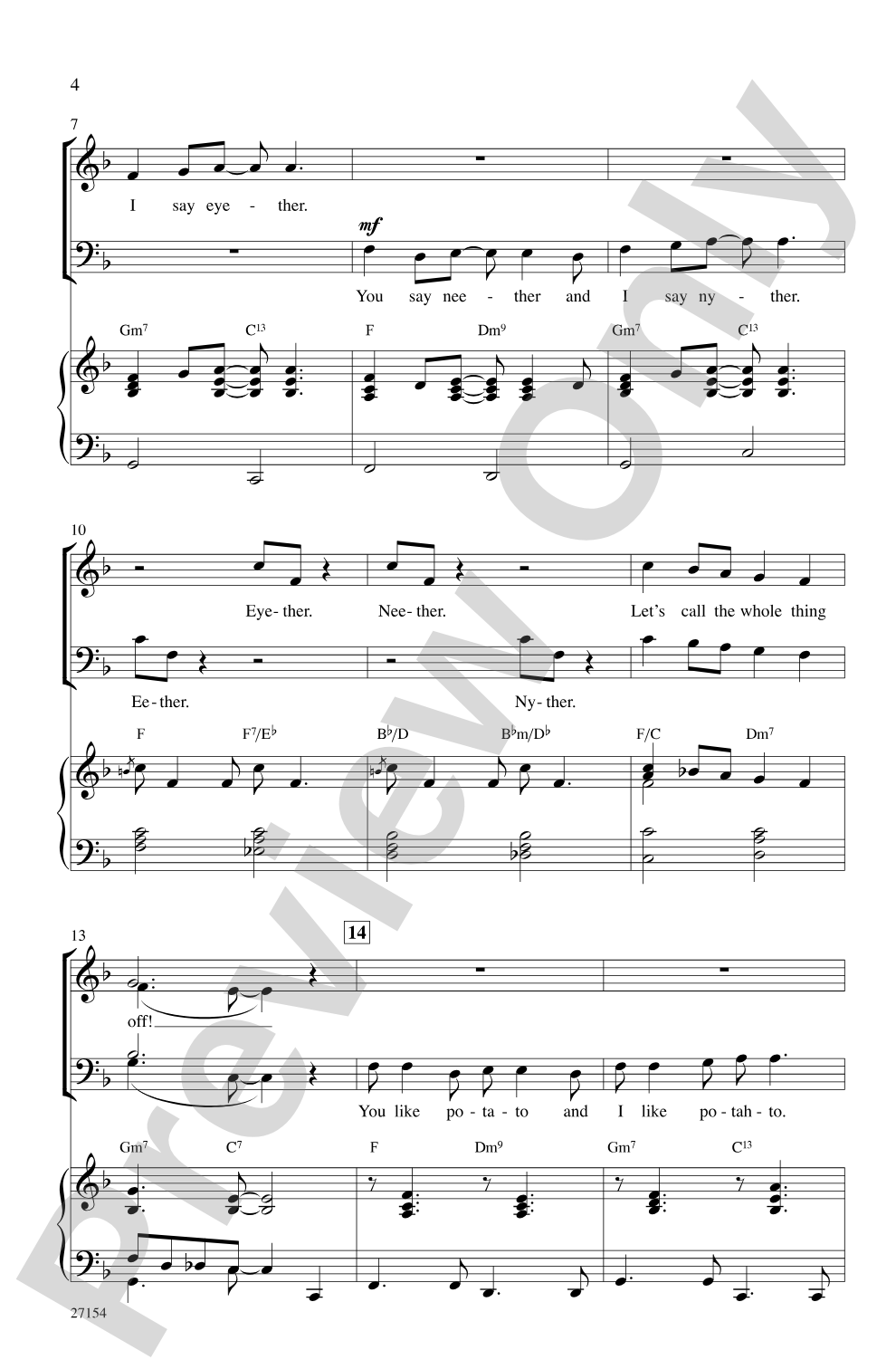
Here's a light, swinging arrangement of a cute George and Ira Gershwin song that's ideal for any age choir. High school groups can sink their teeth into it, middle school groups can really make music with it, and elementary groups can just have fun with it. The clever lyrics ("you say ee-ther and I say eye-ther") are the focus of this piece. Great for jazz/pop groups, too.


Let's Call the Whole Thing Off: SATB Choral Octavo isn't in MakeMusic Cloud just yet...but it could be. Let us know you'd like to see it, and you'll help shape what comes next. In the meantime, start a free trial and dive into thousands of interactive titles your students can play along with today.
Request This Title
Tell us you want it.
Start Your Free Trial
Explore everything that's ready to play right now.
Sample Audio
1
Audio File
--:--
0:00
0:00
Sample Video
No sample videos found.
Additional Details
Series:
Alfred Pop Choral Series
Publisher:
Alfred Music
Page Count:
12
SKU:
00-PO-0002257
More about this title
About the Composer: George Gershwin
George Gershwin (1898-1937) bridged classical and popular music with a compositional voice that felt entirely American. His songs became standards because they combined accessible melodies with sophisticated harmonies, and his theatrical instincts meant every piece had dramatic shape and personality. "Let's Call the Whole Thing Off" showcases what made Gershwin essential to music education: the ability to write music that works equally well in concert halls, jazz ensembles, and choral rehearsals.
Why we love this
Russell L. Robinson's arrangement keeps the charm and conversational wit of the original while giving each voice part something genuinely musical to do. The clever-without-being-precious approach to the lyrics means your singers stay engaged with the text, and the swinging jazz foundation lets you explore phrasing and rhythmic nuance across all levels from elementary through high school.
What to expect
Imagine a friendly argument set to music, where every side gets a chance to make its case with a smile. The arrangement swings with the lightness of a 1930s jazz club but never loses sight of the Gershwin melody that anchors it. Singing this feels like being part of an inside joke with excellent harmony.
Who it's for
This octavo works across the full age and ability range: elementary singers benefit from the song's natural fun and singable melody, middle school groups can explore jazz phrasing and sectional independence, and high school choirs can dig into the rhythmic sophistication and harmonic detail. Jazz and pop ensembles will especially appreciate the swinging feel and contemporary arranging style.
How to get the most out of it
- Emphasize the conversational quality of the lyrics by coaching singers to shape their phrases as if they're debating with their section mates. The playfulness lives in the delivery, not just the humor of the words.
- Use the recorded accompaniment as a rehearsal tool first; having singers hear the full arrangement early helps them lock into the swing feel and understand how their parts fit the harmonic picture.
- Balance clarity with groove by keeping the articulation light and the rhythm section parts (if using the instrumental parts) slightly separated from the vocal lines. This lets the arrangement breathe.
- Find the personality in each section's moment with the 'ee-ther/eye-ther' material. High voices and low voices experience these phonetic contrasts differently, so let them discover what sounds natural to them.
How to use it
This piece shines as a palate cleanser in a mixed concert, offering levity and style without sacrificing musical substance. It pairs naturally with other American Songbook standards or works beautifully as the opener or closer for a jazz-focused concert or spring pops program.
Skills your students will build
- Swing rhythm interpretation and jazz phrasing
- Sectional independence while maintaining blend
- Text-driven interpretation and rhythmic clarity on syncopated syllables
- Four-part SATB balance and voicing awareness