

Jingle Bells (Sort Of): 2-Part Choral Octavo
Words and music by James Pierpont / arr., with new words, by Jay Althouse
Item: 00-PO-0001308
$2.05
Minimum order quantity: 20 copies
Pickup currently not available
Related Items
Jingle Bells (Sort Of): SoundTrax Digital Audio Download |
$27.99
|
View | |
Jingle Bells (Sort Of): SATB Choral Octavo |
$2.05
|
View | |
Jingle Bells (Sort Of): 3-Part Mixed (with Opt. Baritone) Choral Octavo |
$2.05
|
View | |
Jingle Bells (Sort Of): SSA Choral Octavo |
$2.05
|
View | |
Jingle Bells (Sort Of): TTBB Choral Octavo |
$1.85
|
View | |
Jingle Bells (Sort Of): Choral SoundPax |
$25.00
|
View | |
Jingle Bells (Sort Of): SATB Choral Octavo |
$2.05
|
View | |
Jingle Bells (Sort Of): 3-Part Mixed (with Opt. Baritone) Choral Octavo |
$2.05
|
View | |
Jingle Bells (Sort Of): SSA Choral Octavo |
$2.05
|
View | |
Jingle Bells (Sort Of): TTBB Choral Octavo |
$1.85
|
View | |
Jingle Bells (Sort Of): 2-Part Choral Octavo |
$2.05
|
View | |
Jingle Bells (Sort Of): Choral Octavo SoundTrax CD |
$27.99
|
View | |
Jingle Bells (Sort Of): Choral SoundPax |
$25.00
|
View |
Description
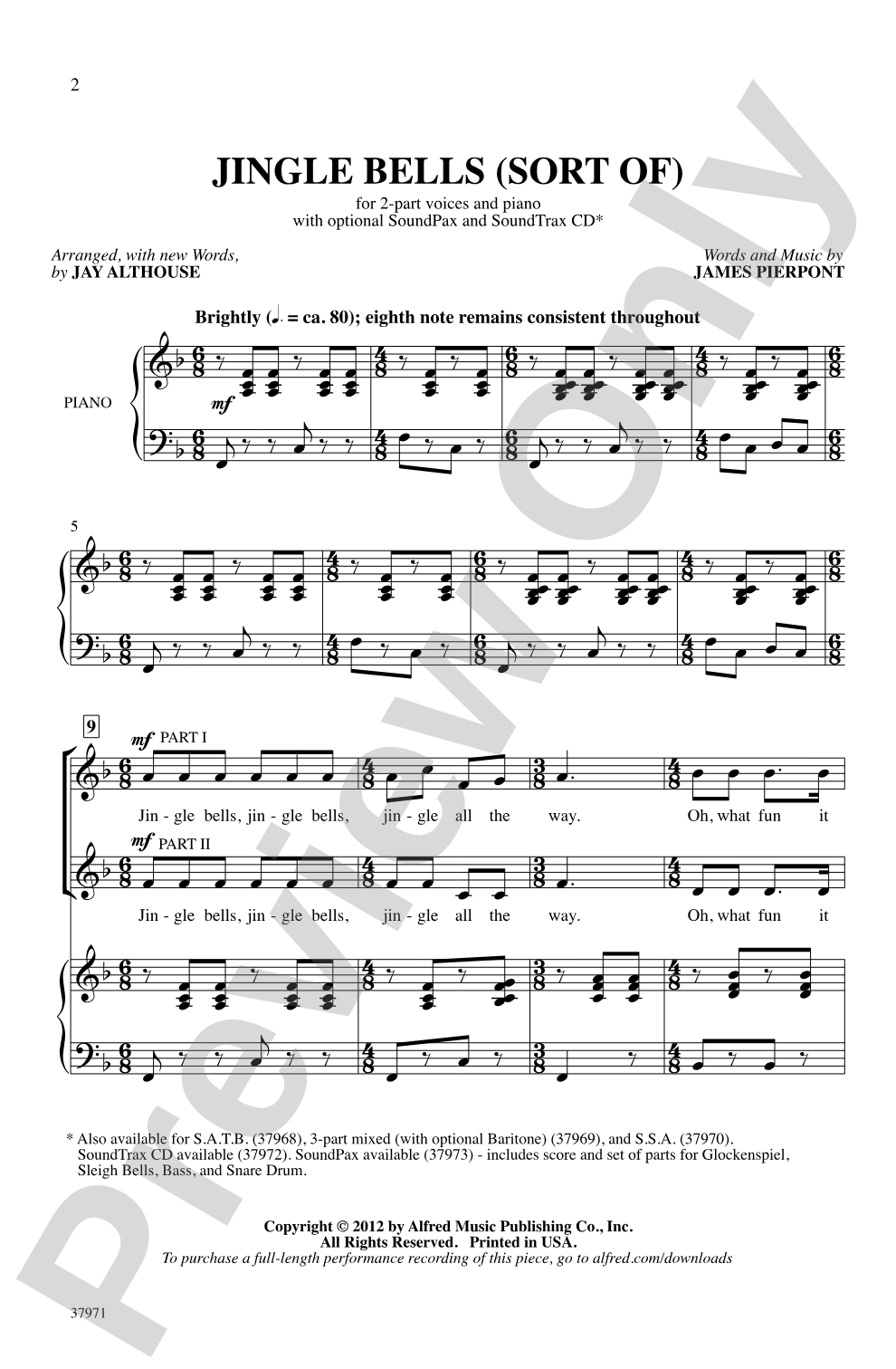
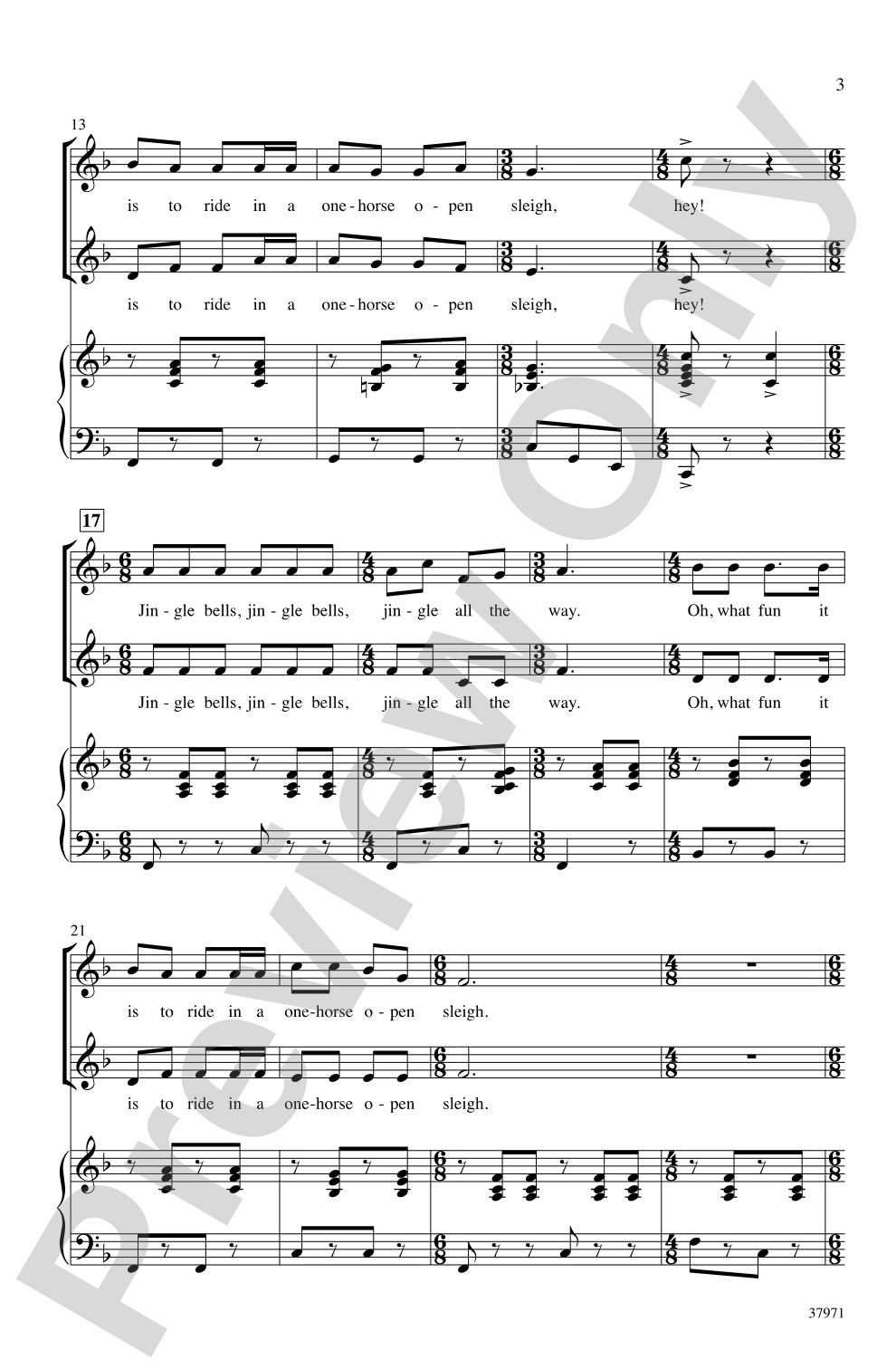
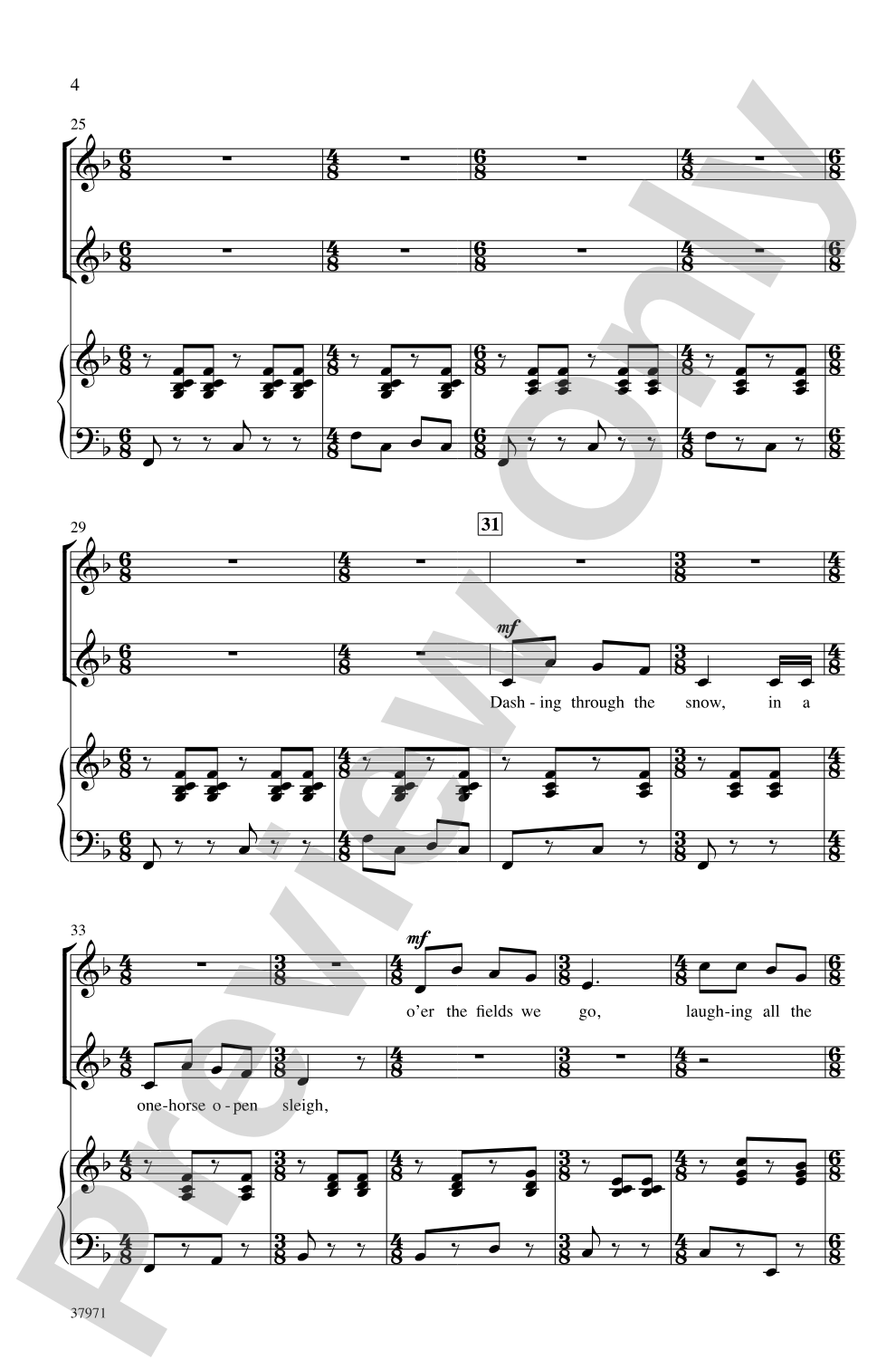
What a mixed-up, mixed meter, crazy and fun arrangement of "Jingle Bells!" As the lyric states, "The melody's the same; the rhythms, they are not."


Jingle Bells (Sort Of): 2-Part Choral Octavo isn't in MakeMusic Cloud just yet...but it could be. Let us know you'd like to see it, and you'll help shape what comes next. In the meantime, start a free trial and dive into thousands of interactive titles your students can play along with today.
Request This Title
Tell us you want it.
Start Your Free Trial
Explore everything that's ready to play right now.
Sample Audio
1
Audio File
--:--
0:00
0:00
Sample Video
No sample videos found.
Additional Details
Series:
Alfred Choral Designs
Publisher:
Alfred Music
Page Count:
12
SKU:
00-PO-0001308
More about this title
About the Composer: James Pierpont
James Pierpont (1822-1893) composed one of America's most enduring winter songs in 1857. Though he wrote other vocal works and compositions throughout his career, "Jingle Bells" became his legacy, achieving popularity that has only grown with time. His gift for memorable melody and straightforward songwriting made his work accessible to singers of all levels.
Why we love this
Jay Althouse transforms a familiar holiday standard into a rhythmic puzzle that keeps singers engaged and audiences laughing. The mixed meters and syncopated reharmonization prove that novelty arrangements don't sacrifice musicianship, and the 2-part voicing makes it accessible for younger or developing choirs without dumbing down the concept.
What to expect
This piece bounces between playful chaos and knowing winks at the audience. The familiar melody anchors listeners while unexpected rhythmic shifts create comedic surprise, and the return to the original "Jingle Bells" rhythm at the end delivers satisfying resolution.
Who it's for
Choirs with singers comfortable reading through rhythmic complexity gain the most from this arrangement. It works for treble choirs, SSA, SAB, or mixed voicing at the high school or adult community level, and younger singers benefit from the humor and novelty factor as motivation to master trickier rhythmic notation.
How to get the most out of it
- Lock in the rhythmic displacement between parts early in rehearsal; mark the downbeats clearly in scores so singers track the underlying pulse beneath the syncopation.
- Record a rehearsal playback and have singers listen to themselves balancing the two parts; this aural feedback helps them hear when the melody line is obscured by overly aggressive accompanying voices.
- Lift the energy in the final phrase when the original rhythm returns; the contrast between the mixed-meter section and the "normal" ending lands best with a slight tempo bump and dynamic boost.
How to use it
Program this as a second act opener or finale to lighten a heavy winter concert setlist, or pair it with other Althouse novelty arrangements for a fun programming block. It also works well in informal holiday performances where audience engagement and smiles matter as much as polish.
Skills your students will build
- Reading mixed meters (primary time signature shifts)
- Maintaining pulse independence when melody and harmony sit in different rhythmic spaces
- Interpreting syncopated rhythmic notation accurately
- Balancing harmonic and melodic voices within a single line