
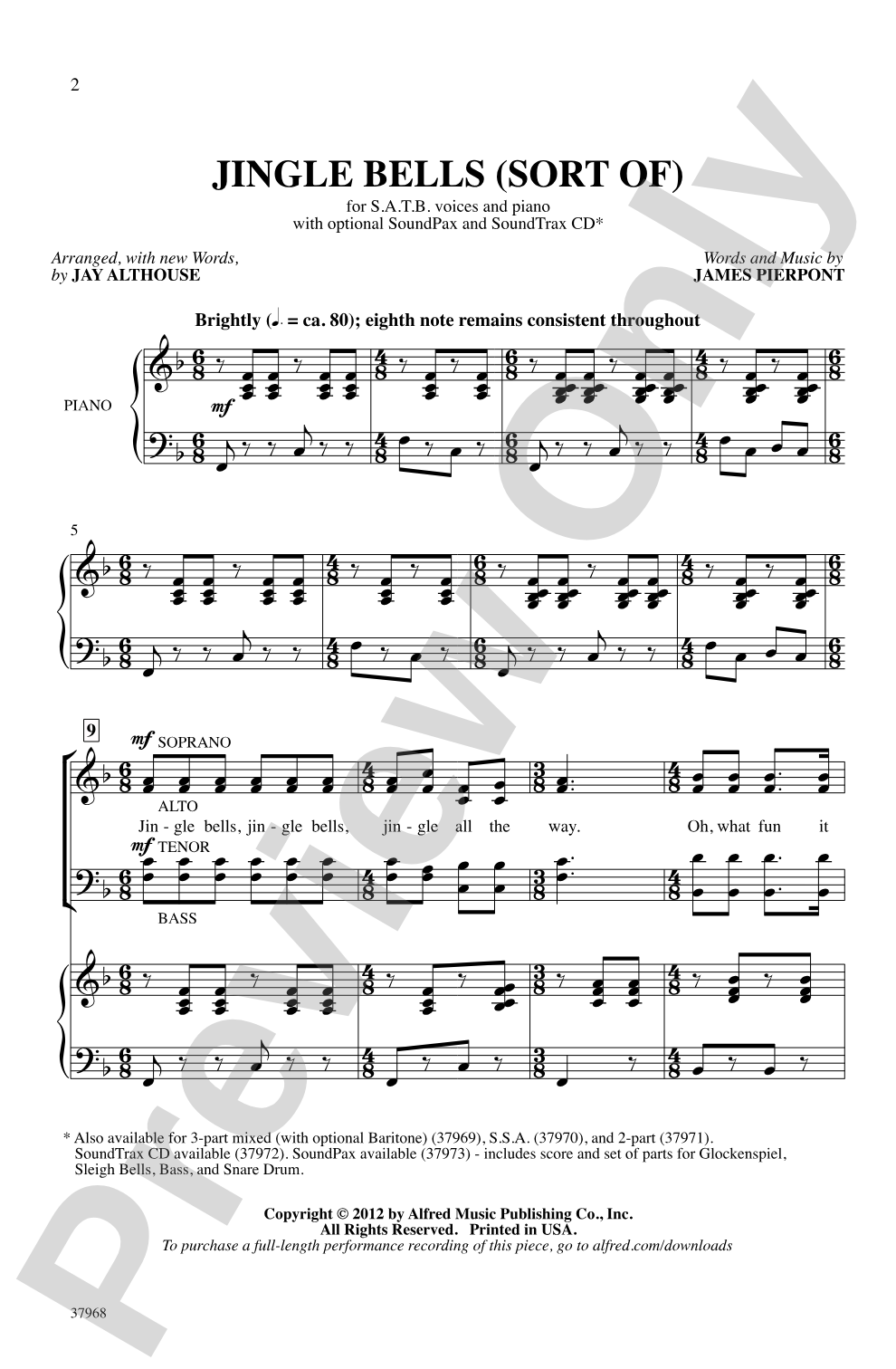
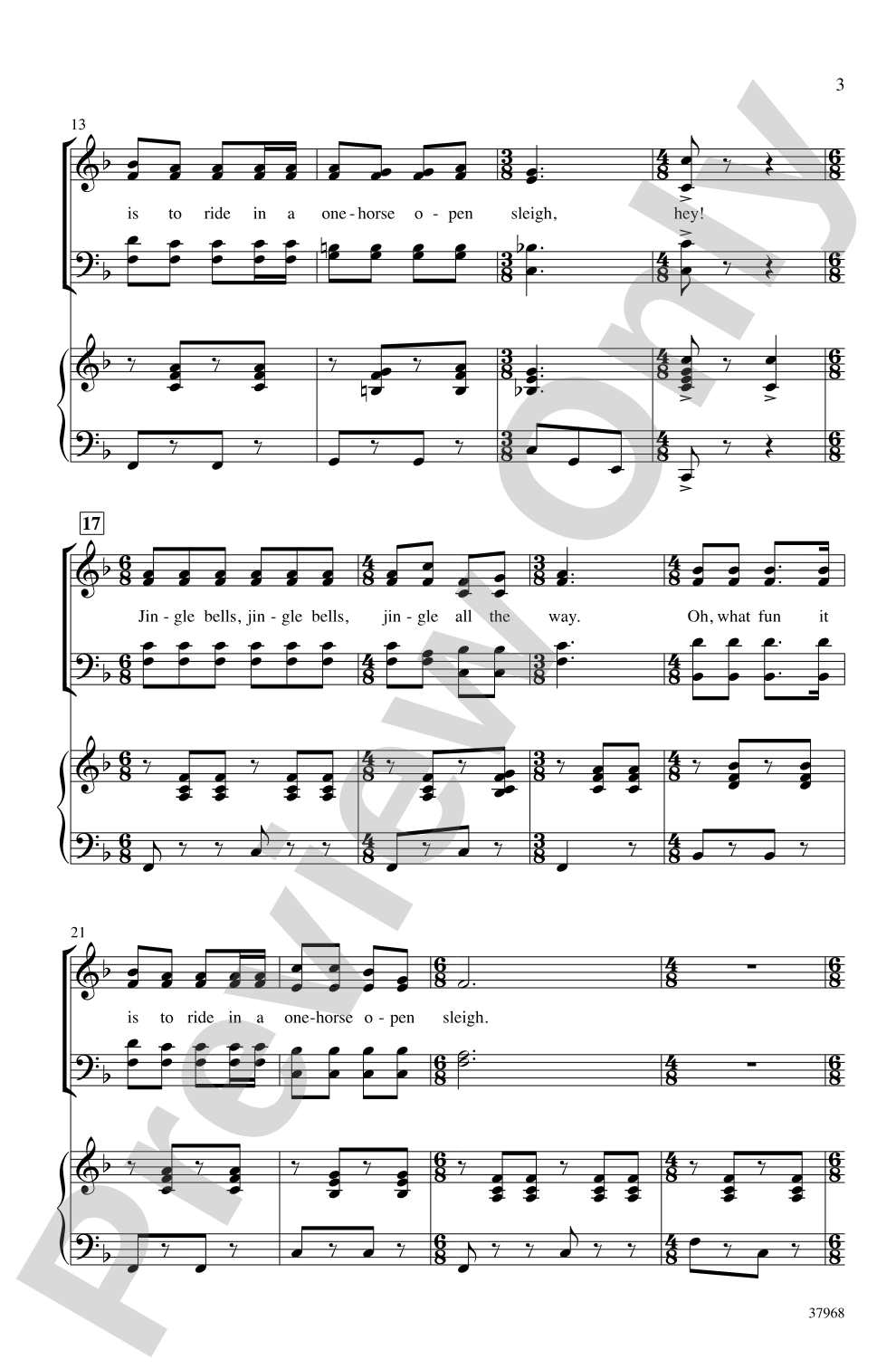
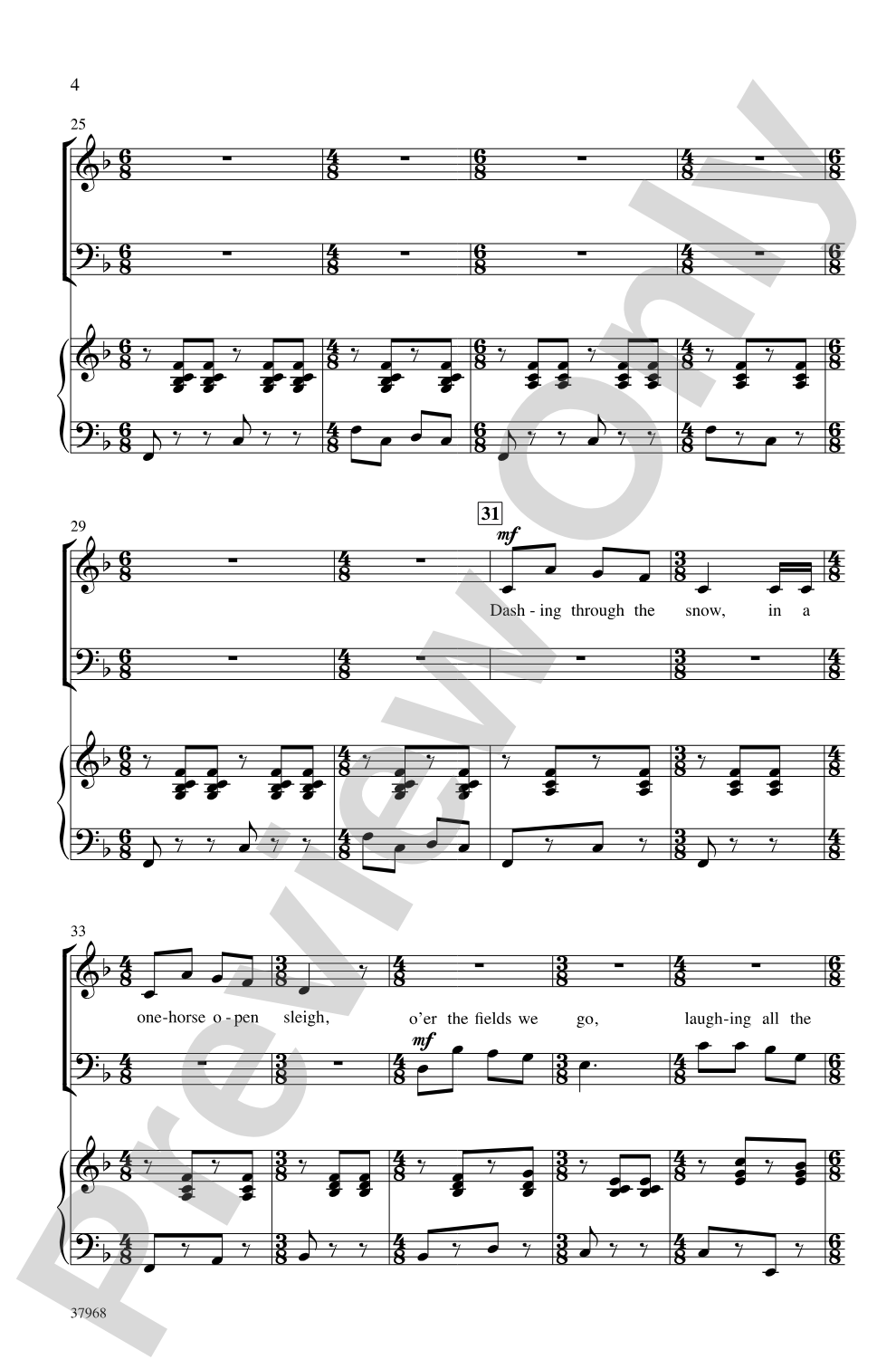

Jingle Bells (Sort Of): SATB Choral Octavo
Words and music by James Pierpont / arr., with new words, by Jay Althouse
Item: 00-PO-0001305
$2.05
Minimum order quantity: 20 copies
Pickup currently not available
Related Items
Jingle Bells (Sort Of): SoundTrax Digital Audio Download |
$27.99
|
View | |
Jingle Bells (Sort Of): 3-Part Mixed (with Opt. Baritone) Choral Octavo |
$2.05
|
View | |
Jingle Bells (Sort Of): SSA Choral Octavo |
$2.05
|
View | |
Jingle Bells (Sort Of): TTBB Choral Octavo |
$1.85
|
View | |
Jingle Bells (Sort Of): 2-Part Choral Octavo |
$2.05
|
View | |
Jingle Bells (Sort Of): Choral SoundPax |
$25.00
|
View | |
Jingle Bells (Sort Of): SATB Choral Octavo |
$2.05
|
View | |
Jingle Bells (Sort Of): 3-Part Mixed (with Opt. Baritone) Choral Octavo |
$2.05
|
View | |
Jingle Bells (Sort Of): SSA Choral Octavo |
$2.05
|
View | |
Jingle Bells (Sort Of): TTBB Choral Octavo |
$1.85
|
View | |
Jingle Bells (Sort Of): 2-Part Choral Octavo |
$2.05
|
View | |
Jingle Bells (Sort Of): Choral Octavo SoundTrax CD |
$27.99
|
View | |
Jingle Bells (Sort Of): Choral SoundPax |
$25.00
|
View |
Description
What a mixed-up, mixed meter, crazy and fun arrangement of "Jingle Bells!" As the lyric states, "The melody's the same; the rhythms, they are not."


Jingle Bells (Sort Of): SATB Choral Octavo isn't in MakeMusic Cloud just yet...but it could be. Let us know you'd like to see it, and you'll help shape what comes next. In the meantime, start a free trial and dive into thousands of interactive titles your students can play along with today.
Request This Title
Tell us you want it.
Start Your Free Trial
Explore everything that's ready to play right now.
Sample Audio
1
Audio File
--:--
0:00
0:00
Sample Video
No sample videos found.
Additional Details
Series:
Alfred Choral Designs
Publisher:
Alfred Music
Page Count:
12
SKU:
00-PO-0001305
More about this title
About the Composer: James Pierpont
James Pierpont (1822-1893) composed one of America's most enduring holiday melodies during the mid-19th century. "Jingle Bells" emerged from his Boston roots and became a cultural touchstone that survives in countless arrangements, adaptations, and reinterpretations across genres and generations.
Pierpont's original tune has proven remarkably durable. Its straightforward melody and infectious rhythm made it ideal material for educators and arrangers seeking accessible seasonal repertoire. The song's popularity across centuries of performance speaks to the strength of the basic musical idea.
Why we love this
Jay Althouse takes the world's most familiar holiday tune and splinters it across mixed meters and syncopated rhythms, transforming recognition into surprise. Your singers will delight in the cognitive puzzle of singing "the same" melody while their bodies rebel against the familiar pulse. It's the kind of arrangement that generates spontaneous laughter in rehearsal and genuine audience delight at performance.
What to expect
Joyful chaos. The melody you thought you knew keeps sliding sideways through the beat, creating a kind of musical vertigo that's exhilarating rather than destabilizing. Sing "Jingle Bells (Sort Of)" and you're in on the joke with your audience; it's clever without being condescending, playful without losing its musical integrity.
Who it's for
This arrangement suits intermediate to advanced SATB choirs who've developed enough rhythmic facility to handle metric modulation and syncopation without losing unity. It works equally well for holiday concerts, pop-up performances, or winter cabaret-style events where the audience expects both musicality and entertainment value.
How to get the most out of it
- Establish the straight "Jingle Bells" rhythm in rehearsal before introducing the mixed-meter version. Singers need that muscle memory as an anchor point to fully appreciate the deliberate displacement happening throughout.
- Lock the rhythm section (piano and any available bass/percussion) first. Once accompaniment and basses are rock solid on the metric shifts, the upper voices can navigate with confidence.
- Conduct this with clear, exaggerated gesture. The mixed meters demand visual leadership; your singers will track the beat through your hands even when the notation challenges their instincts.
- Lean into the humor without sacrificing precision. The arrangement works because the rhythmic complications are executed cleanly, not sloppily.
How to use it
Program this after a set of more traditional or serious work to shift the energy in the concert hall. Its novelty status makes it an ideal closer or pre-encore piece that leaves audiences smiling. Alternatively, use it as the opener if your program theme plays with musical transformation or linguistic/rhythmic play.
Skills your students will build
- Reading mixed meters (straight 4/4 against displaced syncopated patterns)
- Maintaining melodic identity while rhythms shift underneath
- Ensemble synchronization across metrically complex passages
- Stylistic awareness of novelty and humorous arrangement
- Rhythmic independence between voice parts