

Jazz Cantate: 2-Part Choral Octavo
By Andy Beck
Item: 00-PO-0000716

$2.50
Minimum order quantity: 20 copies
Pickup currently not available
Related Items
Jazz Cantate: SoundTrax Digital Audio Download |
$27.99
|
View | |
Jazz Cantate: SATB Choral Octavo |
$2.05
|
View | |
Jazz Cantate: SAB Choral Octavo |
$2.05
|
View | |
Jazz Cantate: Choral SoundPax |
$25.00
|
View | |
Jazz Cantate: SATB Choral Octavo |
$2.05
|
View | |
Jazz Cantate: SAB Choral Octavo |
$2.05
|
View | |
Jazz Cantate: 2-Part Choral Octavo |
$2.50
|
View | |
Jazz Cantate: Choral Octavo SoundTrax CD |
$27.99
|
View | |
Jazz Cantate: Choral SoundPax |
$25.00
|
View |
Description
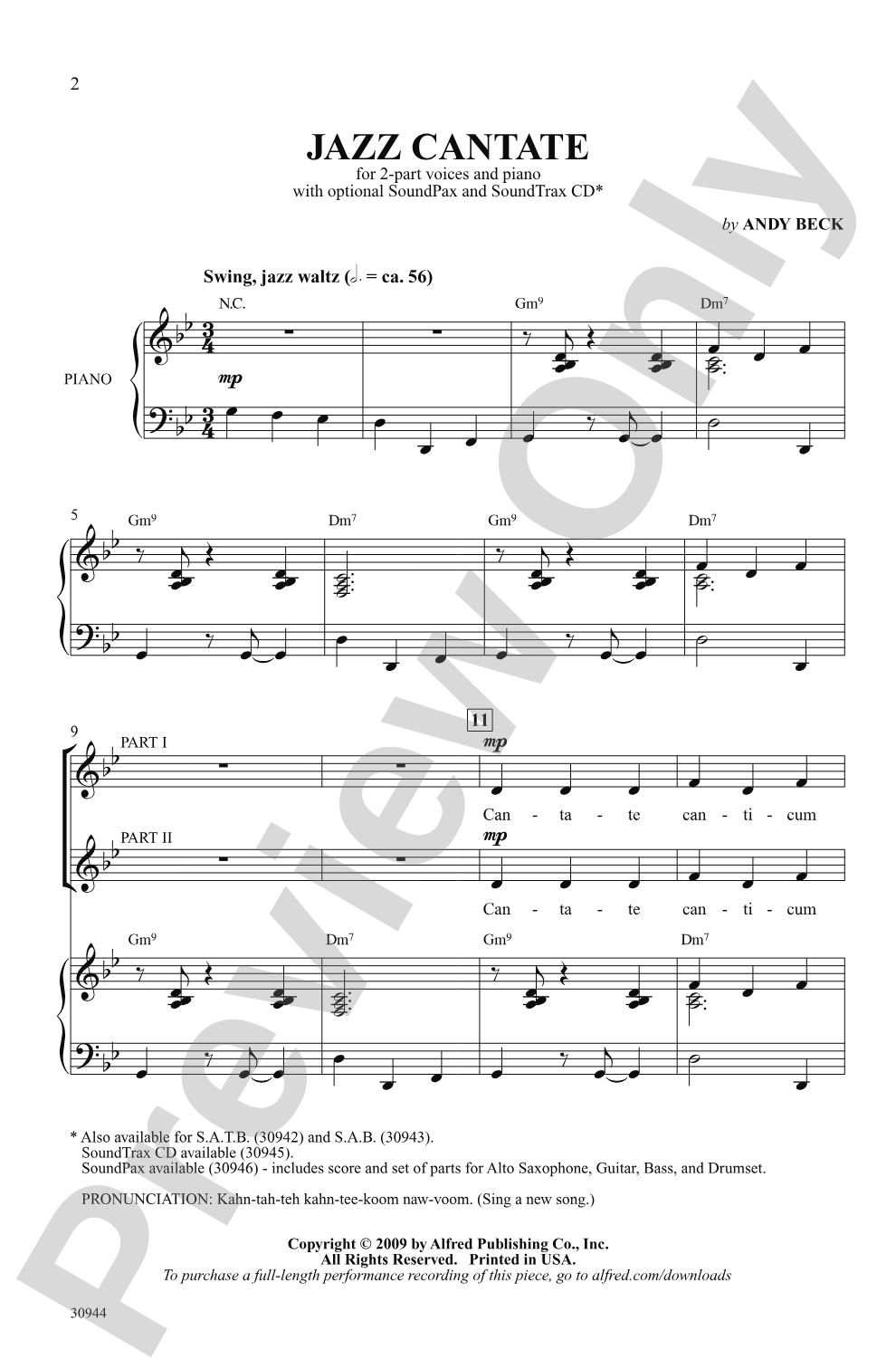
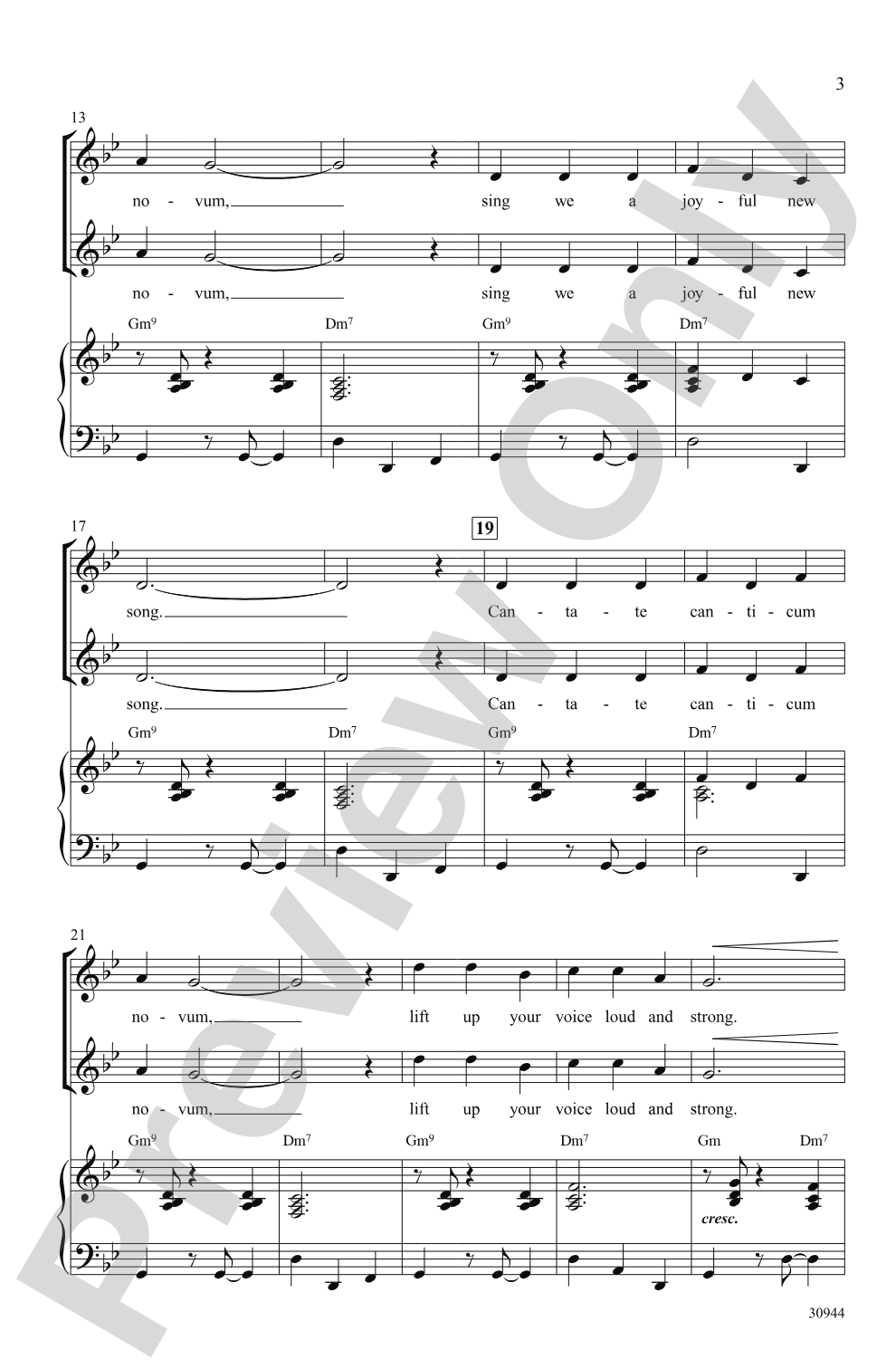
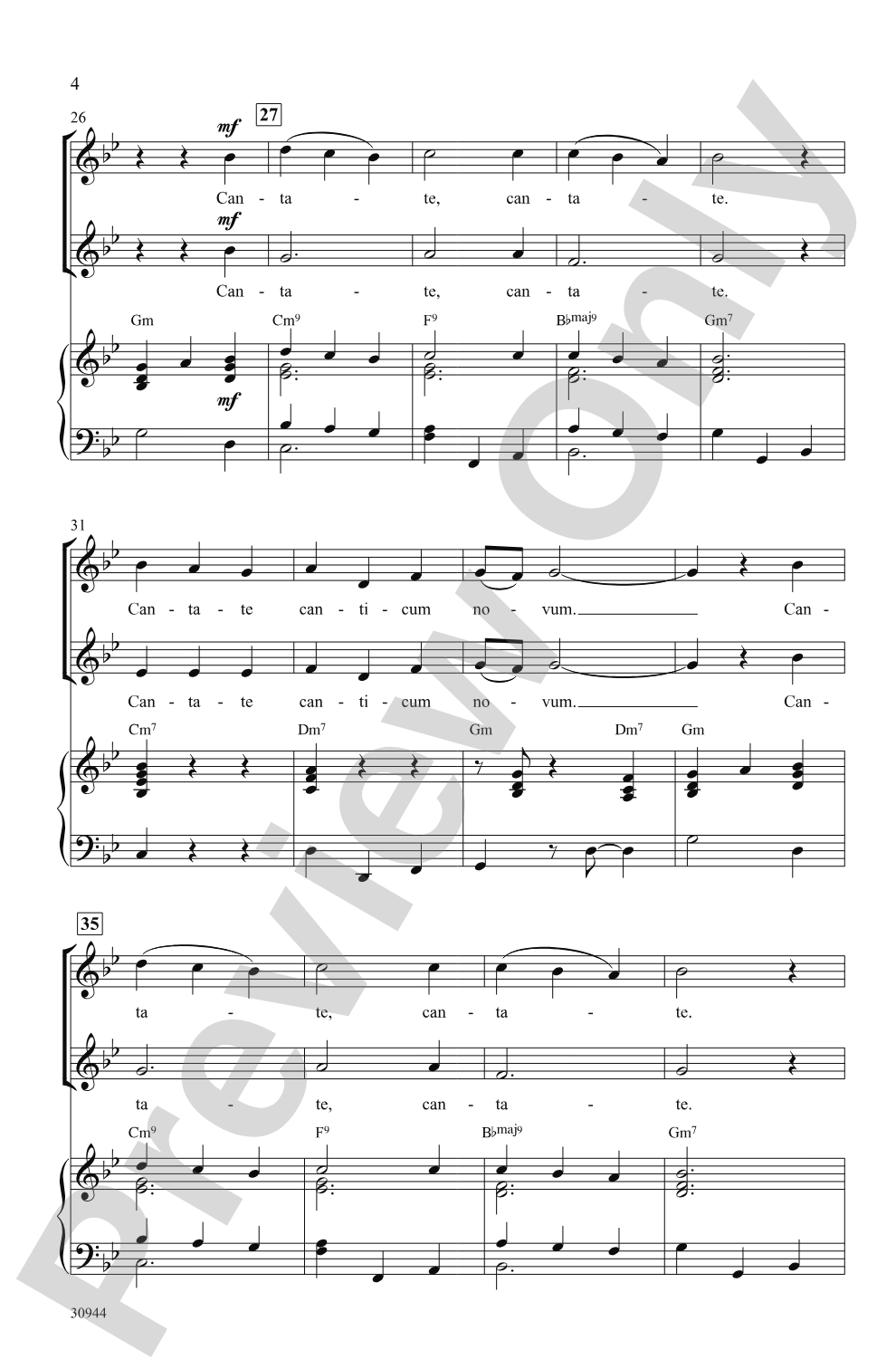
The brief Latin text, "Cantate canticum novum," means "Sing a new song." And this is an outstanding new song to sing. All voicings include legitimate jazz sonorities, canonic verses, and logical choral phrasing, making it just right for the music classroom, performance hall, or festival stage.


Don't just read it, hear it, play along with it, and watch your students grow with it. In MakeMusic Cloud, Jazz Cantate: 2-Part Choral Octavo comes alive with professional accompaniment, adjustable tempo, and built-in practice tools that turn solo practice into real progress.
Open in the Player
Jump straight in and assign it today.
Start Your Free Trial
Open this title and explore the full library in minutes.
Sample Audio
1
Audio File
--:--
0:00
0:00
Sample Video
No sample videos found.
Additional Details
Series:
Alfred Choral Designs
Publisher:
Alfred Music
Page Count:
12
SKU:
00-PO-0000716
More about this title
About the Composer: Andy Beck

Andy Beck leads Alfred Music's choral publications department and has established himself as a prolific voice in American choral music, with more than 450 works in print spanning choral octavos, vocal resources, and full theatrical productions. His pedagogical contributions include three widely adopted sight-singing and vocal technique resources: Sing at First Sight, Foundations in Choral Sight Singing, and Vocalize! 45 Vocal Warm-Ups That Teach Technique. A trained tenor with degrees in music education from Ithaca College and Northwest Missouri State University, Beck maintains active careers as a guest conductor, clinician, and adjudicator for honor choirs and all-state groups across the country.
Beyond his editorial role, Beck performs regularly with the North Carolina Master Chorale Chamber Choir and has contributed studio vocals to Alfred Music recordings since 1992. He brings directorial experience in musical theatre and a deep commitment to choral artistry and music literacy, qualities that shape every publication he develops for the Alfred catalog. His work is performed by singers worldwide, making him a trusted voice in secondary and collegiate choral music.
Why we love this
Beck crafts genuine jazz harmonies without sacrificing singability or accessibility for developing voices. The canonic writing adds compositional sophistication while the motivic development keeps the piece engaging for both singers and listeners. This is the kind of contemporary choral work that sounds fresh in concert without requiring a professional ensemble to pull off.
What to expect
The piece inhabits a bright, forward-looking energy that the Latin text reinforces. Jazz sonorities shimmer beneath clean choral lines, creating a sense of contemporary sophistication grounded in the accessibility of 2-part writing. There's a celebratory quality throughout, as if the "new song" itself is being discovered in real time.
Who it's for
This octavo works equally well in middle or high school choral programs, festival repertoire selections, and community or collegiate choirs seeking contemporary material with genuine musical substance. Singers need secure pitch and comfort with jazz chord movement, but the 2-part voicing keeps it accessible for musicians still developing jazz literacy.
How to get the most out of it
- Balance the jazz voicings carefully by having singers listen inward to their own part's harmonic function rather than blending toward unison. The sonorities depend on each voice maintaining its distinct pitch center.
- Mark the canonic entries clearly in rehearsal so singers understand where their line overlaps with other parts. This prevents tentative singing and builds confidence in the independence required by the writing.
- Let the recorded accompaniment establish the swing feel and harmonic context early. Have singers practice phrases with and without it so they internalize the harmonic progression rather than relying solely on the recording.
How to use it
Consider programming this as a festival entry where contemporary choral writing is valued, or pair it with traditional repertoire as a thematic closer that says something fresh about renewal or innovation. It also serves as an excellent teaching piece mid-year when singers have developed ensemble skills and are ready to explore jazz harmony without overwhelming complexity.
Skills your students will build
- Jazz harmonic hearing and voice independence within non-traditional chord structures
- Canonic singing and independent part maintenance
- Stylistic interpretation within a swing/jazz idiom
- Intonation accuracy in extended harmonic contexts