

Jazz Cantate: SATB Choral Octavo
By Andy Beck
Item: 00-PO-0000714

$2.05
Minimum order quantity: 20 copies
Pickup currently not available
Related Items
Jazz Cantate: SoundTrax Digital Audio Download |
$27.99
|
View | |
Jazz Cantate: SAB Choral Octavo |
$2.05
|
View | |
Jazz Cantate: 2-Part Choral Octavo |
$2.50
|
View | |
Jazz Cantate: Choral SoundPax |
$25.00
|
View | |
Jazz Cantate: SATB Choral Octavo |
$2.05
|
View | |
Jazz Cantate: SAB Choral Octavo |
$2.05
|
View | |
Jazz Cantate: 2-Part Choral Octavo |
$2.50
|
View | |
Jazz Cantate: Choral Octavo SoundTrax CD |
$27.99
|
View | |
Jazz Cantate: Choral SoundPax |
$25.00
|
View |
Description
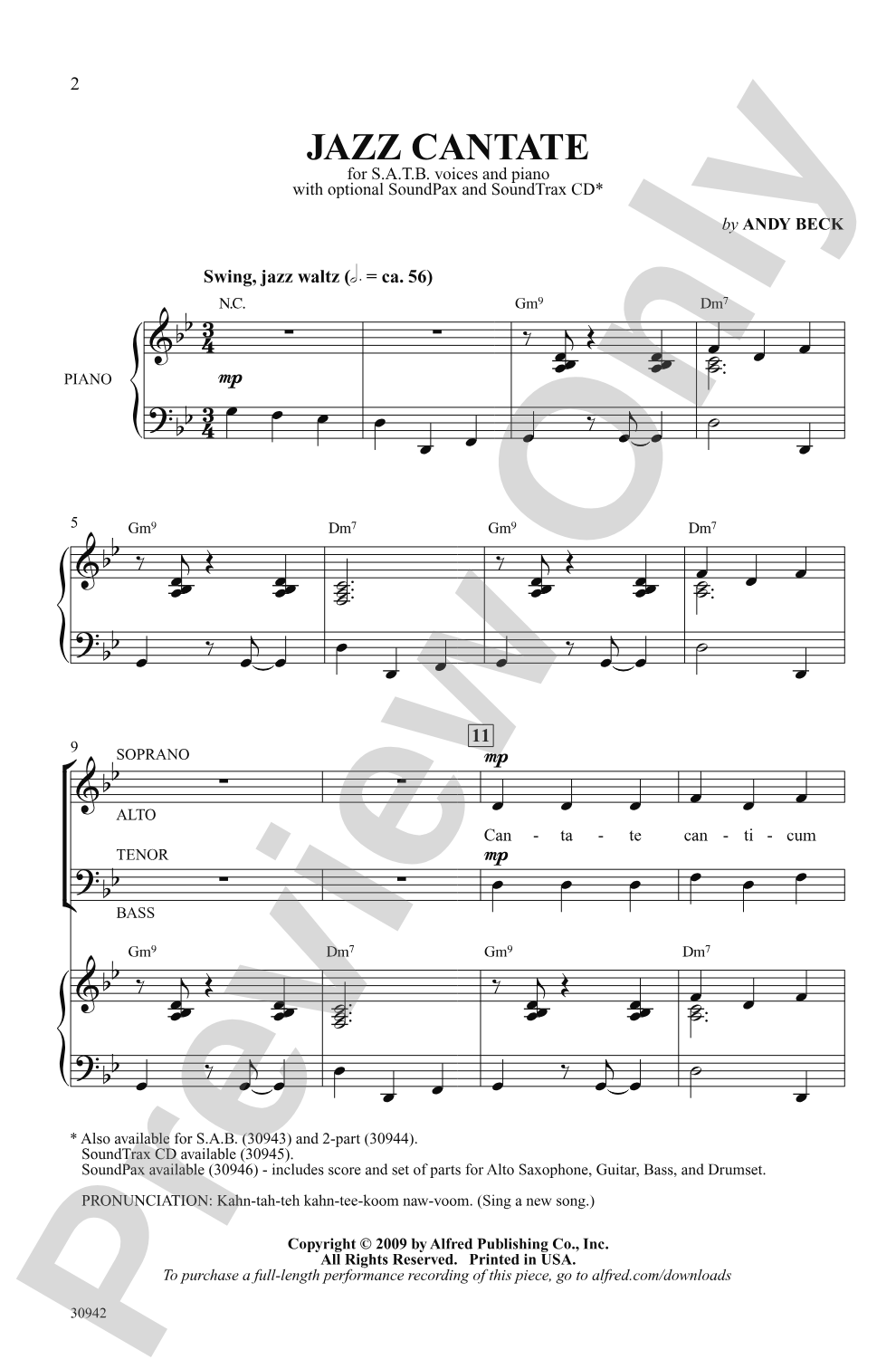
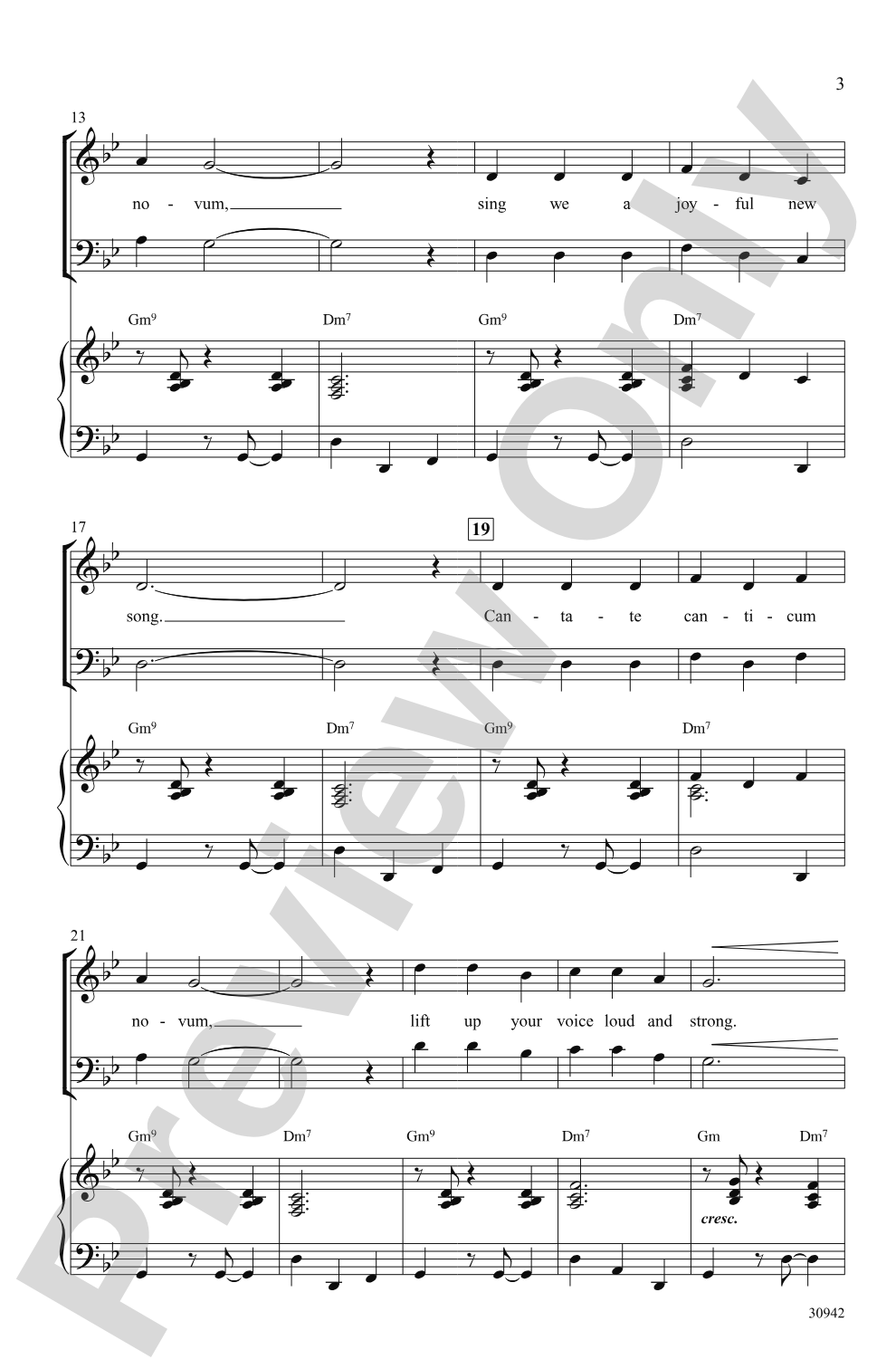
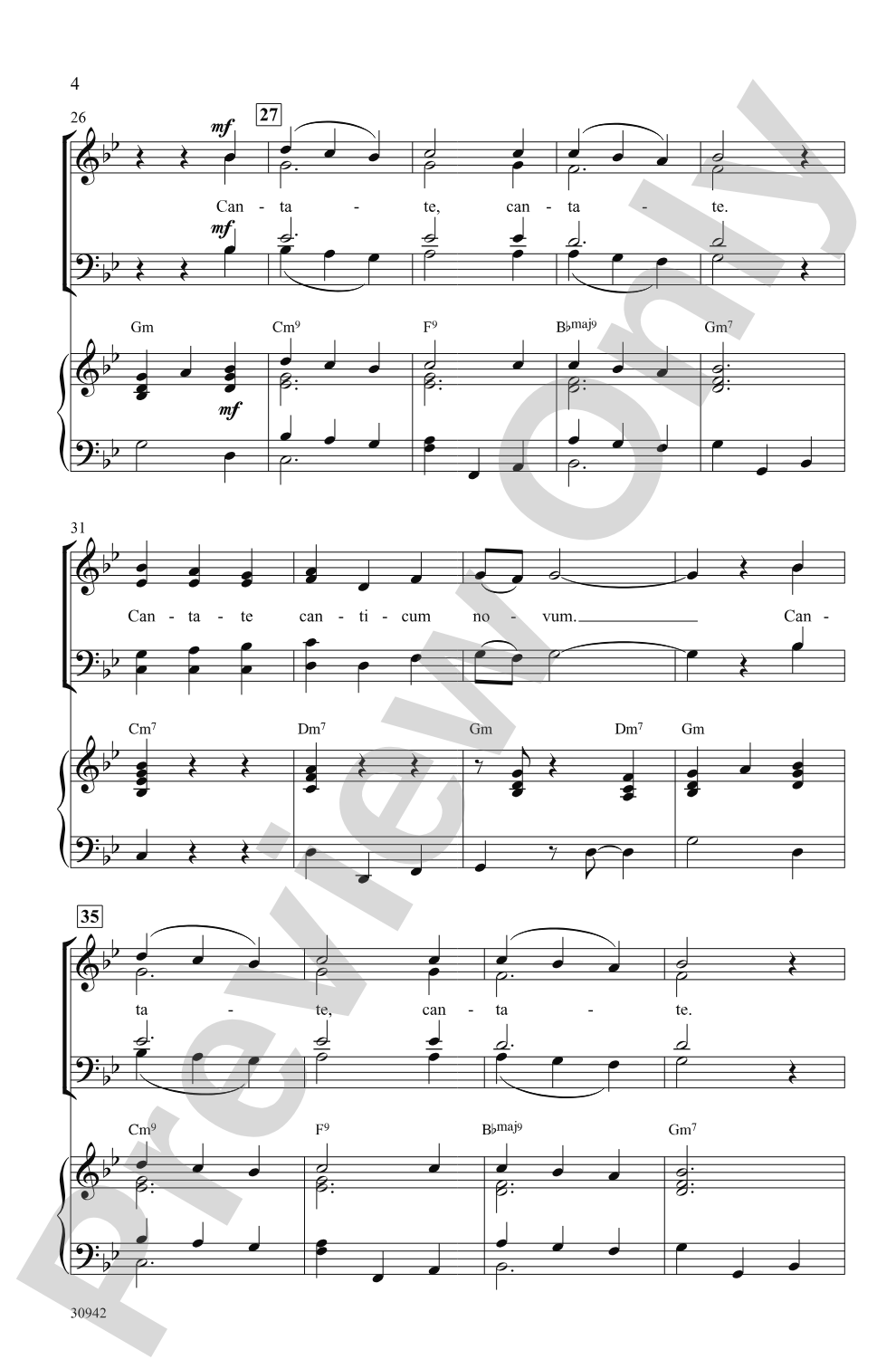
The brief Latin text, "Cantate canticum novum," means "Sing a new song." And this is an outstanding new song to sing. All voicings include legitimate jazz sonorities, canonic verses, and logical choral phrasing, making it just right for the music classroom, performance hall, or festival stage.


Don't just read it, hear it, play along with it, and watch your students grow with it. In MakeMusic Cloud, Jazz Cantate: SATB Choral Octavo comes alive with professional accompaniment, adjustable tempo, and built-in practice tools that turn solo practice into real progress.
Open in the Player
Jump straight in and assign it today.
Start Your Free Trial
Open this title and explore the full library in minutes.
Sample Audio
1
Audio File
--:--
0:00
0:00
Sample Video
No sample videos found.
Additional Details
Series:
Alfred Choral Designs
Publisher:
Alfred Music
Page Count:
12
SKU:
00-PO-0000714
More about this title
About the Composer: Andy Beck

Andy Beck directs choral publications for Alfred Music and has composed and arranged more than 450 choral works, vocal resources, and children's musicals in active performance. His published vocal pedagogies, including Sing at First Sight and Vocalize! 45 Vocal Warm-Ups That Teach Technique, have shaped sight-singing and technique instruction in choirs across the country. A performance search on YouTube reveals the breadth of his reach; his music travels from middle school risers to all-state honor choirs and international stages.
Beyond the page, Beck works regularly as a guest conductor, clinician, and adjudicator for music educators and young singers throughout the United States and internationally. He holds a Bachelor's degree in Music Education from Ithaca College and a Master's degree in Music Education from Northwest Missouri State University. A tenor vocalist himself, he performs with the North Carolina Master Chorale Chamber Choir and has contributed as an Alfred Music studio singer since 1992. His dual commitment to both composition and music literacy education informs every publication he shapes for Alfred's catalog.
Why we love this
Beck writes for real choirs in real rooms, and this piece proves it. The Latin text gives gravitas, but the jazz harmonies and canonic passages keep the energy forward and the singers engaged. You'll find legitimate harmonic sophistication wrapped in something your singers can actually learn and own in rehearsal.
What to expect
Sing a new song carries both reverence and swing. The Latin words anchor the piece in something timeless, while the jazz voicings and rhythmic play keep it contemporary and vital. It's sophisticated without pretension, accessible without condescension.
Who it's for
Directors programming for festival competitions, concert series, or festival adjudication will find a piece that earns recognition without resorting to overstated difficulty. Advanced middle school, high school, and college choirs all have the musical literacy and vocal maturity this work demands and rewards.
How to get the most out of it
- Balance the jazz sonorities by listening for the root movement beneath the extended harmonies; anchor your lower voices so the chords speak clearly rather than blur.
- In the canonic sections, establish the leader's line with confidence and clarity before the second voice enters; the staggered entrances only work if singers hear the shape they're mirroring.
- Shape the text "Cantate canticum novum" with natural phrasing rather than literal syllable stress; let the arcs of the melodic lines guide your breath points.
- Use the recorded accompaniment as a rhythmic anchor during early rehearsals, but plan rehearsal time without it so the choir develops internal independence with the harmonic movement.
How to use it
Pair this with a more traditional sacred choral work to frame a concert exploring sacred music across styles and eras. Or slot it into a lighter program segment where you want to showcase your singers' harmonic awareness and rhythmic flexibility. The 12-page length and recorded accompaniment availability make it manageable for learning while still offering real artistic substance.
Skills your students will build
- Reading extended jazz harmonies (seventh, ninth, and eleventh chords)
- Singing canonic entrances with ensemble precision
- Shaping longer choral phrases across multiple harmonic changes
- Interpreting and performing contemporary Latin texts with musical conviction