
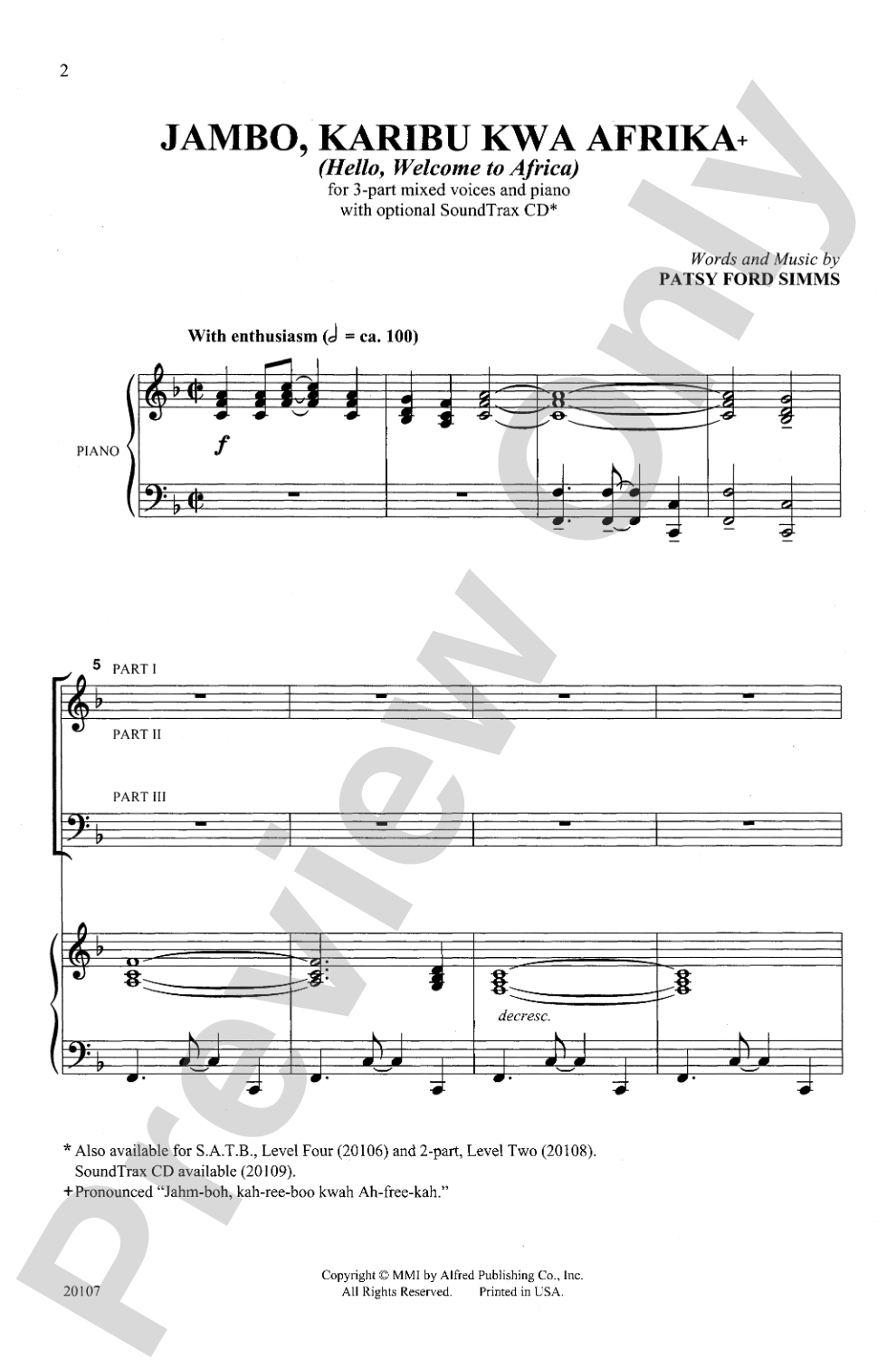
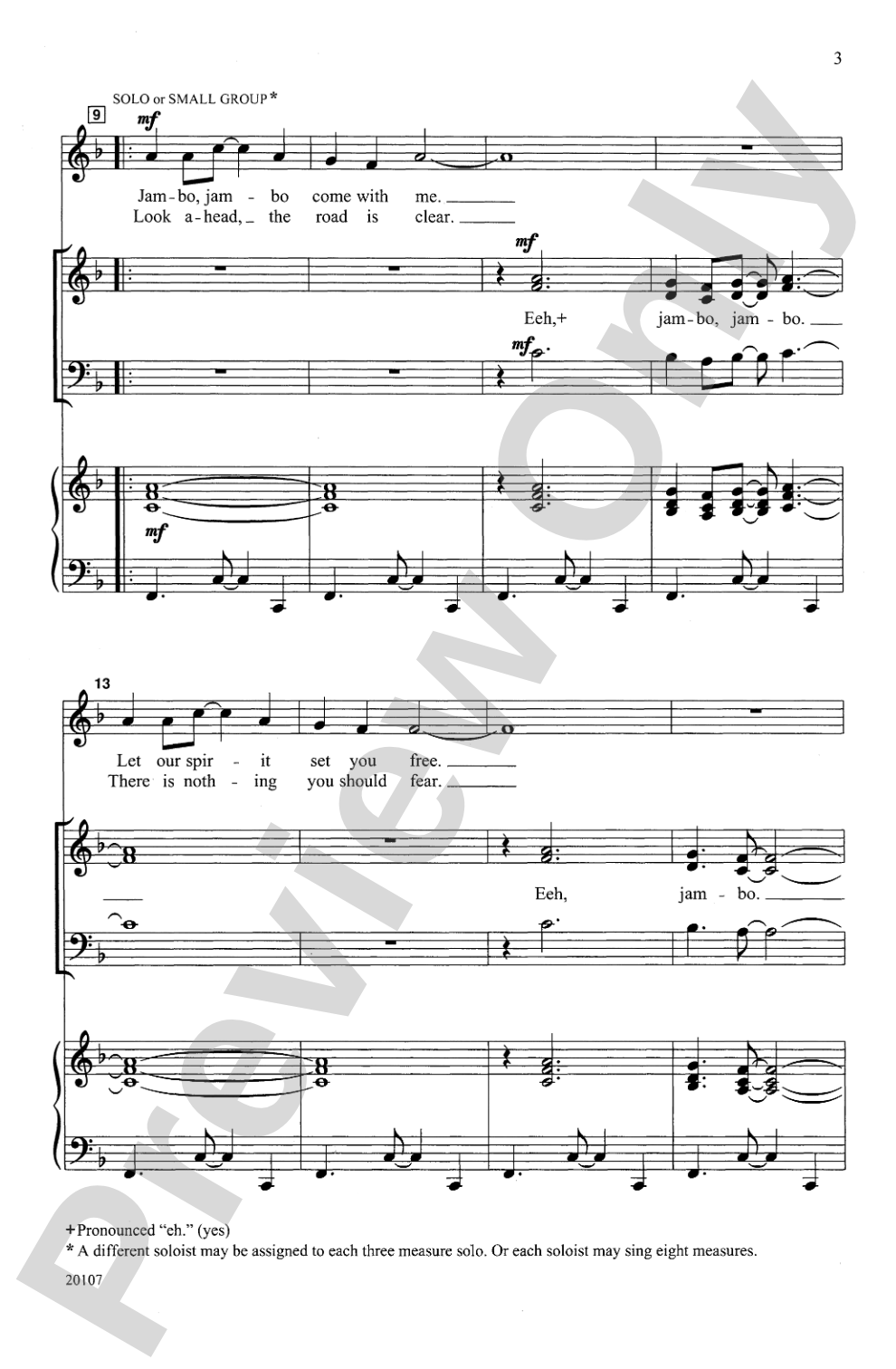

Jambo, Karibu Kwa Afrika: 3-Part Mixed Choral Octavo
Music by Patsy Ford Simms
Item: 00-PO-0004205
$2.25
Minimum order quantity: 20 copies
Pickup currently not available
Related Items
Jambo, Karibu Kwa Afrika: SATB Choral Octavo |
$2.25
|
View | |
Jambo, Karibu Kwa Afrika: 2-Part Choral Octavo |
$2.25
|
View | |
Jambo, Karibu Kwa Afrika: SATB Choral Octavo |
$2.25
|
View | |
Jambo, Karibu Kwa Afrika: 3-Part Mixed Choral Octavo |
$2.25
|
View | |
Jambo, Karibu Kwa Afrika: 2-Part Choral Octavo |
$2.25
|
View | |
Jambo, Karibu Kwa Afrika: Choral Octavo SoundTrax CD |
$27.99
|
View |
Description
"Hello, welcome to Africa." Patsy Simms has crafted the piece in the traditional African style with brief joyous solos (or small groups) followed by responses from the choir. Much of the text is in English and the Swahili phrases are easy and fun to sing (pronunciation guide included). It's happy, jubilant, and repetition makes it easy to learn. Don't miss the "world music" SoundTrax CD.


Jambo, Karibu Kwa Afrika: 3-Part Mixed Choral Octavo isn't in MakeMusic Cloud just yet...but it could be. Let us know you'd like to see it, and you'll help shape what comes next. In the meantime, start a free trial and dive into thousands of interactive titles your students can play along with today.
Request This Title
Tell us you want it.
Start Your Free Trial
Explore everything that's ready to play right now.
Sample Audio
1
Audio File
--:--
0:00
0:00
Sample Video
No sample videos found.
Additional Details
Series:
Alfred Archive Edition: Alfred Choral Designs
Publisher:
Alfred Music
Page Count:
12
SKU:
00-PO-0004205
More about this title
About the Composer: Patsy Ford Simms
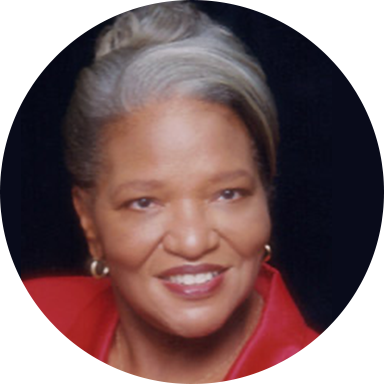
Patsy Ford Simms began her composing and arranging career out of practical necessity: during her early years teaching, she found few choral octavos that matched the needs and abilities of junior high and middle school singers. That gap became her mission. Over four decades, she has created more than 300 pieces for educational and church choirs, establishing herself as a prolific voice in choral music for developing singers. Her formal training includes a Bachelor of Science in Music Education from Knoxville College, a Master of Education from the University of Louisville, and a doctorate in Music Education from Columbia Pacific University.
Simms spent 30 years in the classroom, teaching across grades K-12 and at the Youth Performing Arts School before transitioning to a full-time composing and arranging career. She has worked with major publishing houses including Shawnee Press and has been recognized internationally as both a clinician and presenter, with invitations to Italy and Africa. Her commissions include short musicals focused on African American history, and her work has been featured in two MENC World's Largest Concerts. She remains a frequent recipient of ASCAP Special Music Awards.
Why we love this
Simms understands exactly what middle school choirs need: energy, accessibility, and music that feels genuinely joyful rather than didactic. The traditional African call-and-response structure gives every student a moment to shine, whether they're carrying a solo line or anchoring the choir response, and the Swahili text paired with English lyrics removes the intimidation factor while celebrating cultural authenticity. The built-in repetition makes this one of those rare pieces that's genuinely fun to rehearse and perform.
What to expect
From the first note, this piece transmits warmth and celebration. The traditional African call-and-response structure creates natural dialogue between soloists and choir, building energy through repetition rather than complexity. It sounds like what it means: a genuine, joyful welcome.
Who it's for
This piece works beautifully for middle school and early high school mixed choirs, particularly those seeking repertoire that celebrates world music while remaining technically accessible. It's equally valuable for community and church choirs wanting uplifting, multicultural material that engages singers at all levels. Any ensemble looking for a program opener or finale that radiates genuine joy will find this invaluable.
How to get the most out of it
- Assign the solo sections intentionally. They don't require strong singers; what matters is clarity and confidence. Rotating soloists through rehearsals before locking in your final cast builds ensemble ownership of the piece.
- Let the rhythm breathe naturally without over-conducting. The call-and-response structure works best when soloists and choir listen to each other rather than watch the baton.
- Use the pronunciation guide to anchor your early rehearsals, but move past it quickly. Students remember unfamiliar syllables better through repetition and listening than through written guides.
- Consider staging options that highlight the call-and-response dialogue. Even a simple setup where soloists face the choir creates visual interest and reminds audiences what they're hearing.
How to use it
Open a concert with this piece to immediately establish an inviting, celebratory mood. It pairs naturally with other world music selections or works beautifully as a standalone closer that leaves audiences smiling. The piece is also excellent for school assemblies, cultural celebrations, or community events where authenticity and accessibility matter.
Skills your students will build
- Singing in call-and-response form with secure rhythmic independence
- Pronouncing and sustaining Swahili vowels and phrases accurately
- Balancing solo and ensemble roles within the same piece
- Maintaining steady pulse and energy through repetition without losing focus