

Jambo, Karibu Kwa Afrika: 2-Part Choral Octavo
Music by Patsy Ford Simms
Item: 00-PO-0002178
$2.25
Minimum order quantity: 20 copies
Pickup currently not available
Related Items
Jambo, Karibu Kwa Afrika: SATB Choral Octavo |
$2.25
|
View | |
Jambo, Karibu Kwa Afrika: 3-Part Mixed Choral Octavo |
$2.25
|
View | |
Jambo, Karibu Kwa Afrika: SATB Choral Octavo |
$2.25
|
View | |
Jambo, Karibu Kwa Afrika: 3-Part Mixed Choral Octavo |
$2.25
|
View | |
Jambo, Karibu Kwa Afrika: 2-Part Choral Octavo |
$2.25
|
View | |
Jambo, Karibu Kwa Afrika: Choral Octavo SoundTrax CD |
$27.99
|
View |
Description
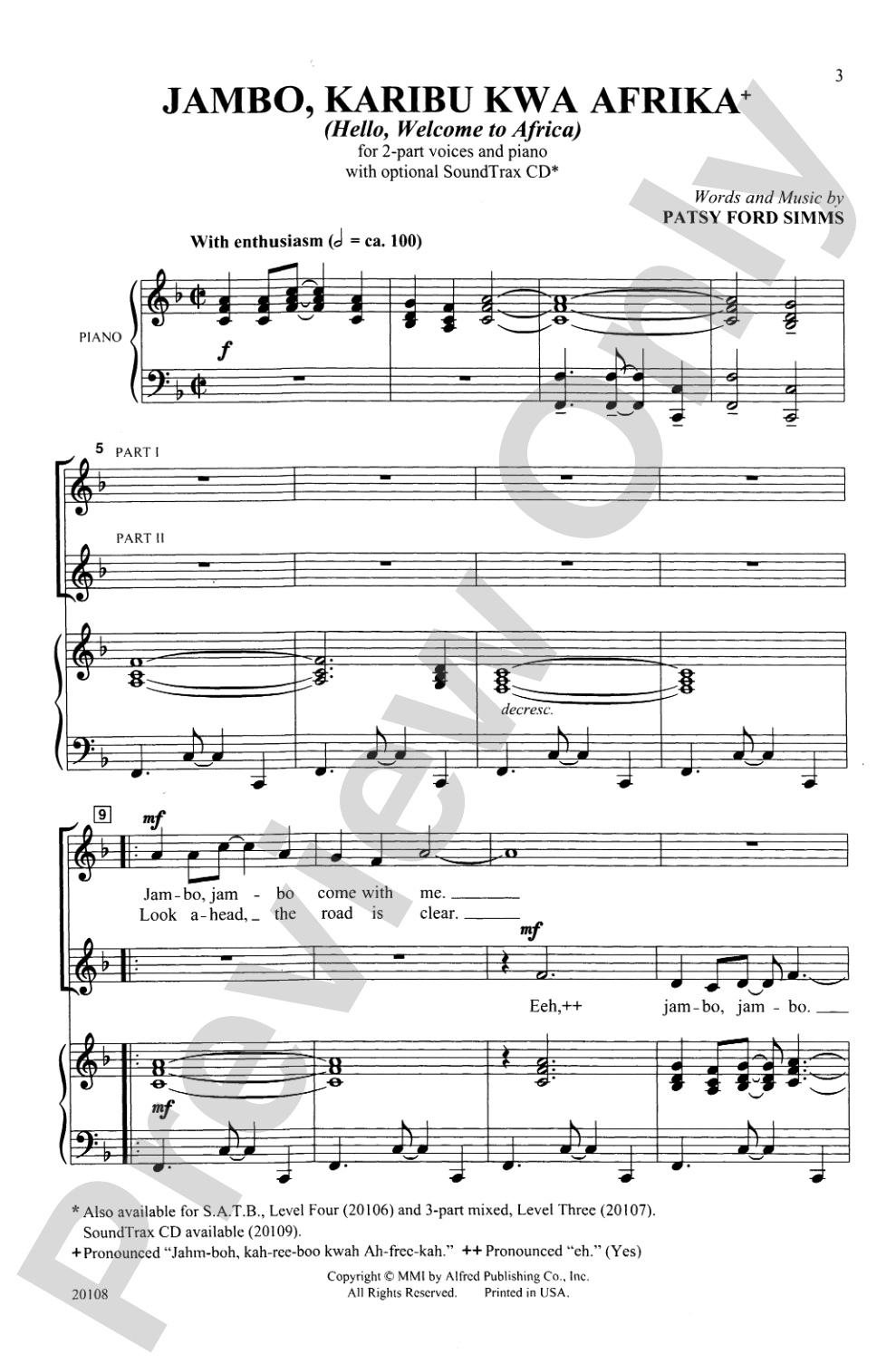
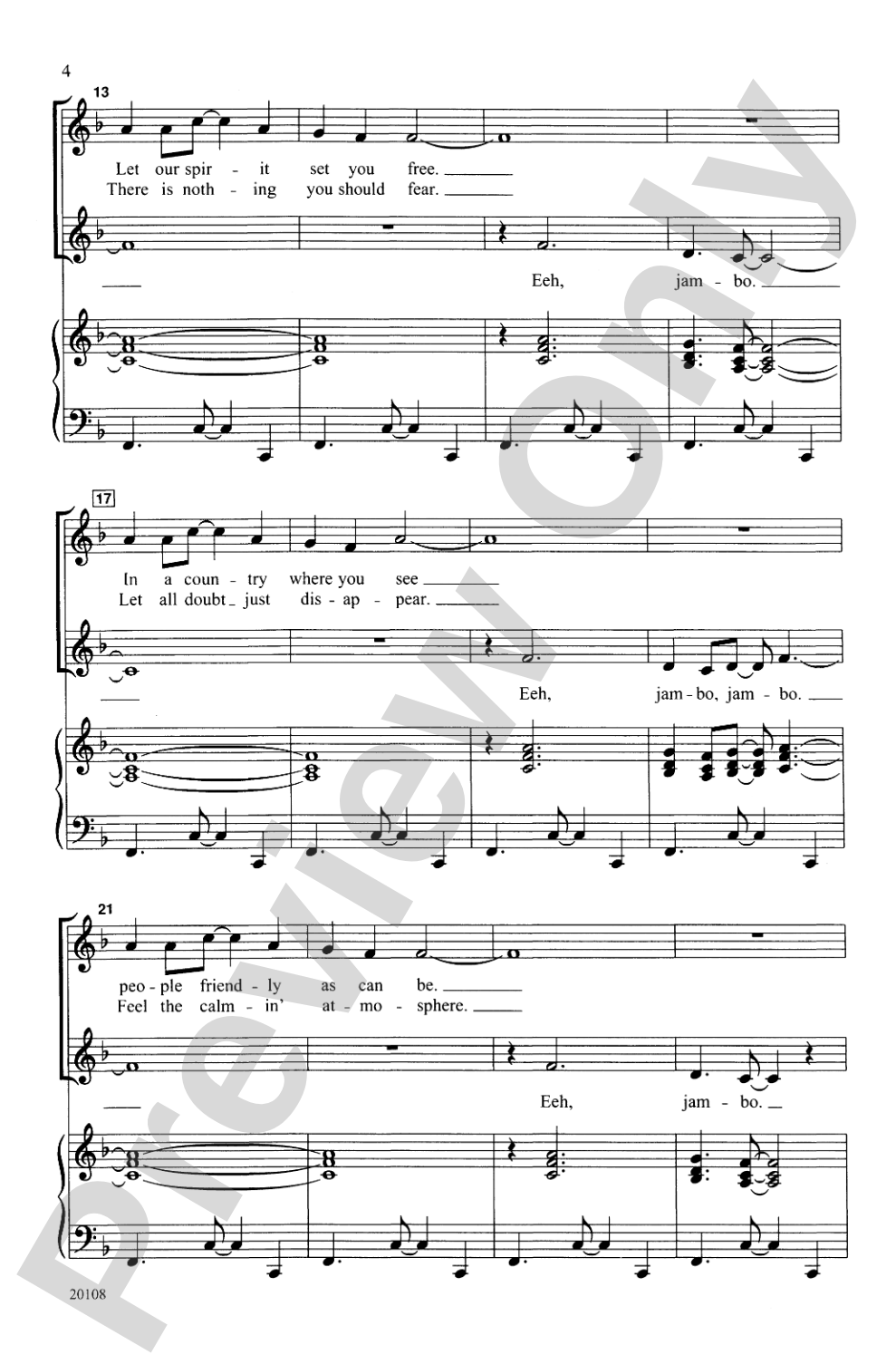
"Hello, welcome to Africa." Patsy Simms has crafted the piece in the traditional African style with brief joyous solos (or small groups) followed by responses from the choir. Much of the text is in English and the Swahili phrases are easy and fun to sing (pronunciation guide included). It's happy, jubilant, and repetition makes it easy to learn. Don't miss the "world music" SoundTrax CD.


Jambo, Karibu Kwa Afrika: 2-Part Choral Octavo isn't in MakeMusic Cloud just yet...but it could be. Let us know you'd like to see it, and you'll help shape what comes next. In the meantime, start a free trial and dive into thousands of interactive titles your students can play along with today.
Request This Title
Tell us you want it.
Start Your Free Trial
Explore everything that's ready to play right now.
Sample Audio
1
Audio File
--:--
0:00
0:00
Sample Video
No sample videos found.
Additional Details
Series:
Alfred Archive Edition: Alfred Choral Designs
Publisher:
Alfred Music
Page Count:
12
SKU:
00-PO-0002178
More about this title
About the Composer: Patsy Ford Simms
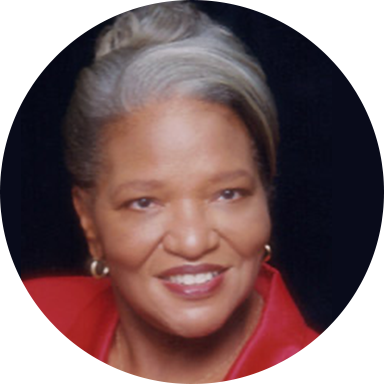
Patsy Ford Simms began her publishing career in 1981 and has since created more than 300 songs for educational and church settings across multiple major publishers. Her prolific catalog emerged directly from her classroom experience: during her early years teaching middle school choral music, she found few quality octavos suited to that voice range and began writing to fill the gap. Over three decades in K-12 classrooms and at the Youth Performing Arts School, she developed a distinctive ear for what students need and enjoy.
Simms holds a Bachelor of Science in Music Education from Knoxville College, a Master of Education from the University of Louisville, and a doctorate in Music Education from Columbia Pacific University. Her work spans arrangements, original compositions, and short musicals exploring African American history. She has been commissioned for major works, presented clinically in Italy and Africa, and received multiple ASCAP Special Music Awards. Two of her compositions were selected for MENC World's Largest Concerts, establishing her reputation as a composer and clinician with international reach.
Why we love this
Simms has built this piece on call-and-response patterns that feel completely natural to singers while giving you a strong pedagogical scaffold: solos or small group phrases land comfortably on ears trained through decades of middle and secondary choral teaching. The Swahili text is phonetically accessible without sacrificing authenticity, and the repetition means your singers retain the material without drilling them senseless. Programming world music that lives up to its title rather than simplifying it away is rare at this level.
What to expect
Warmth and celebration flow through every measure. The piece invites singers into a call-and-response conversation that feels like a conversation across cultures, with the Swahili phrases landing as natural extensions of the English text rather than ornamental additions. There's an infectious lightness here, rooted in genuine joy rather than manufactured cheerfulness.
Who it's for
This works beautifully in middle school and high school choral programs, particularly those seeking repertoire that reflects diverse musical traditions without patronizing the singers. It's equally at home in an educational or community choir setting where learning about African culture and music is part of the ensemble's mission.
How to get the most out of it
- Encourage the soloist(s) or small group phrases to sing with personality and rhythmic confidence; the choir's response should settle in like an answer rather than an echo.
- Use the pronunciation guide as a warm-up activity one week before performance so singers internalize the Swahili sounds without conscious effort during the concert.
- Balance the joy and jubilation with clear diction in both languages; repetition can flatten energy if you're not intentional about phrase shape and dynamic contour.
How to use it
Program this as a concert opener to set an energetic, welcoming tone, or use it as a bridge between more formal repertoire and a lighter closing section. It pairs well with other multicultural selections or with world music themed concerts, and the recorded accompaniment option gives you flexibility whether you're performing in a concert hall or a smaller venue.
Skills your students will build
- Call-and-response singing and active listening between soloist/small group and full choir
- Reading and performing Swahili pronunciation with accurate vowel sounds
- Maintaining energy and ensemble cohesion through repetitive sections
- Two-part voice independence while balancing textural clarity