
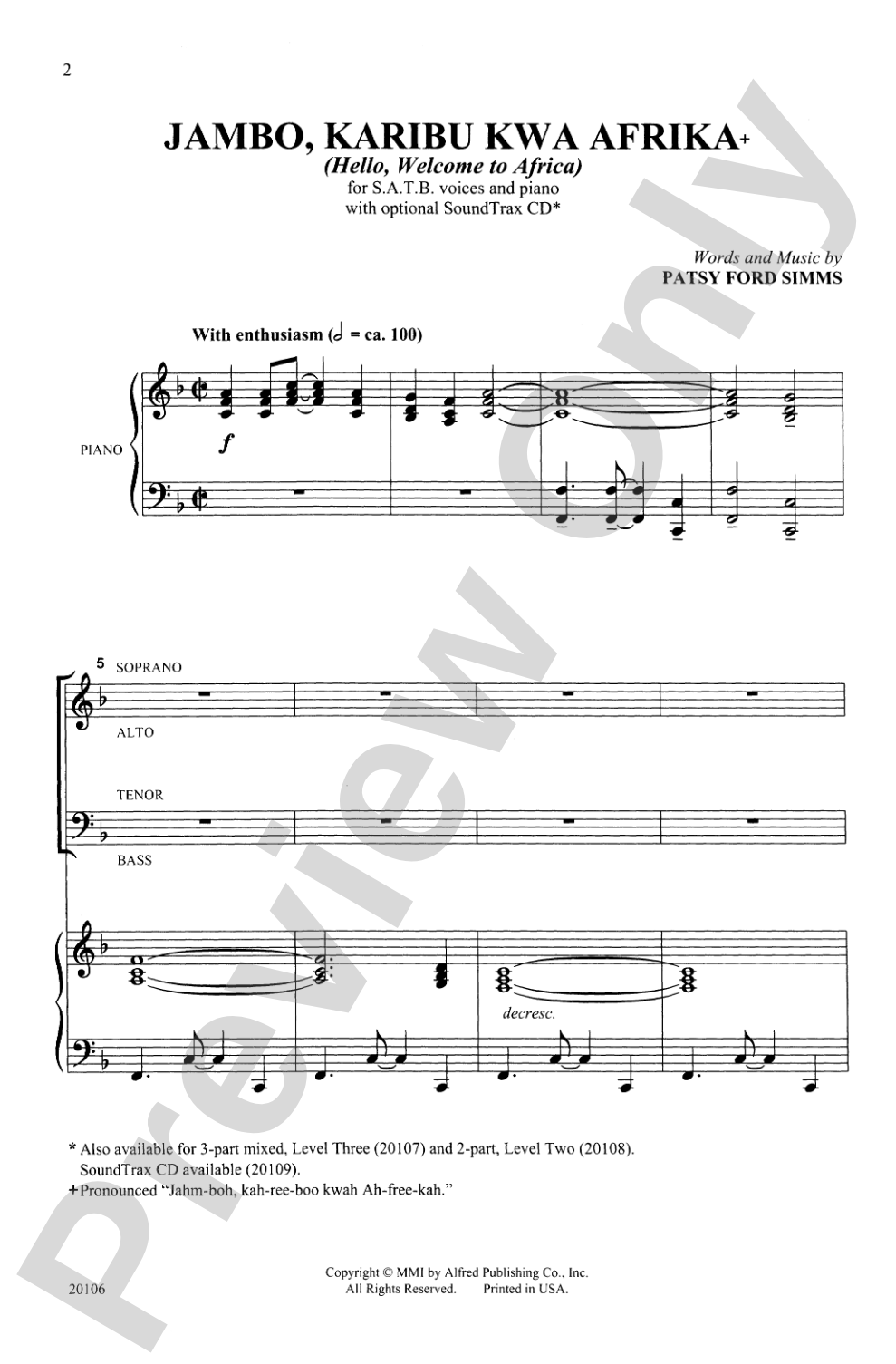
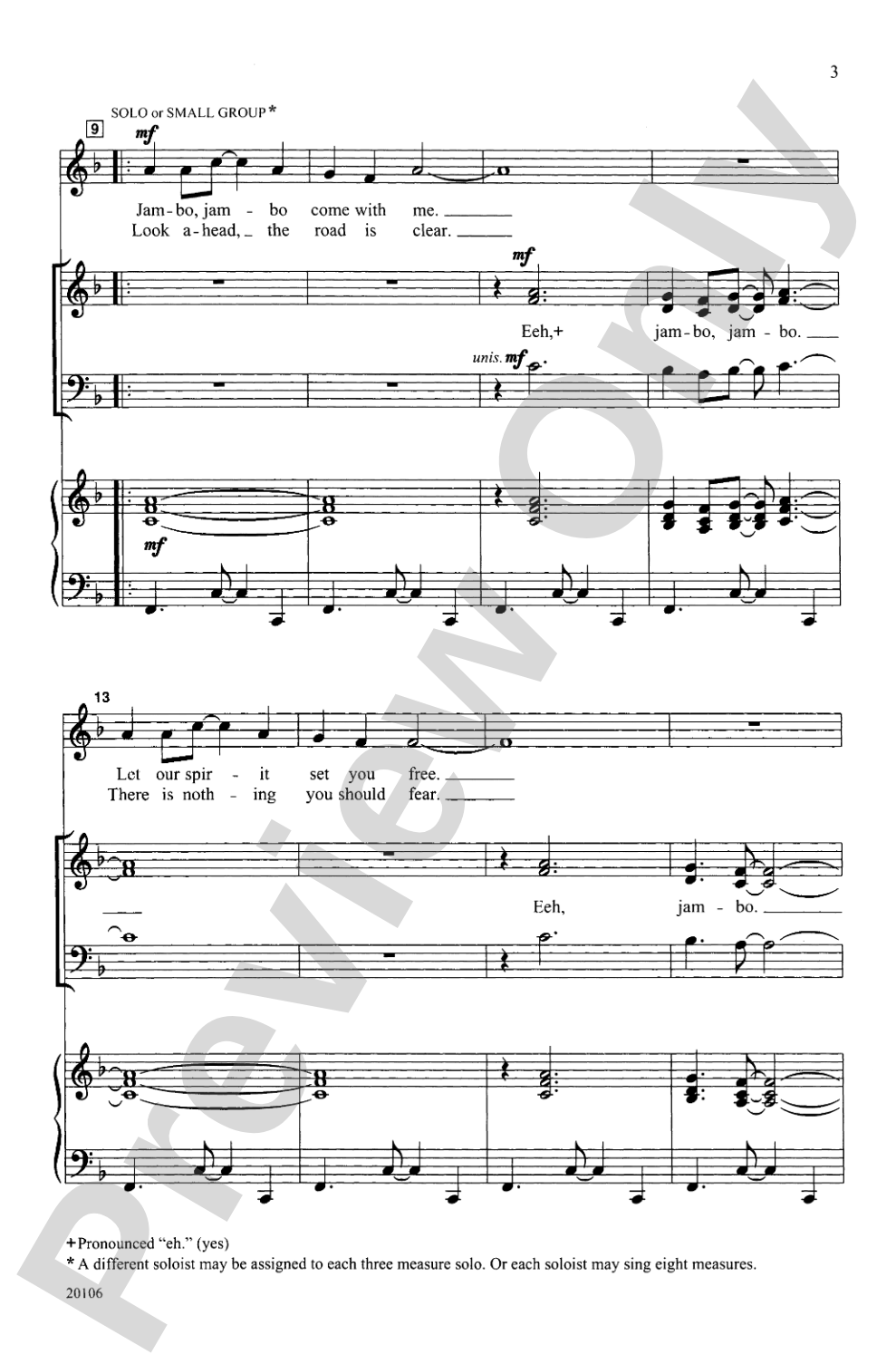

Jambo, Karibu Kwa Afrika: SATB Choral Octavo
Music by Patsy Ford Simms
Item: 00-PO-0004204
$2.25
Minimum order quantity: 20 copies
Pickup currently not available
Related Items
Jambo, Karibu Kwa Afrika: 3-Part Mixed Choral Octavo |
$2.25
|
View | |
Jambo, Karibu Kwa Afrika: 2-Part Choral Octavo |
$2.25
|
View | |
Jambo, Karibu Kwa Afrika: SATB Choral Octavo |
$2.25
|
View | |
Jambo, Karibu Kwa Afrika: 3-Part Mixed Choral Octavo |
$2.25
|
View | |
Jambo, Karibu Kwa Afrika: 2-Part Choral Octavo |
$2.25
|
View | |
Jambo, Karibu Kwa Afrika: Choral Octavo SoundTrax CD |
$27.99
|
View |
Description
Welcome your audiences with this lively cross-cultural number which, translated from the Swahili, means "Hello, welcome to Africa." Patsy Simms has crafted the piece in the traditional African style with brief joyous solos (or small groups) followed by responses from the choir. Much of the text is in English and the Swahili phrases are easy and fun to sing (pronunciation guide included). It's happy, jubilant, and repetition makes it easy to learn. Don't miss the "world music" SoundTrax CD.


Jambo, Karibu Kwa Afrika: SATB Choral Octavo isn't in MakeMusic Cloud just yet...but it could be. Let us know you'd like to see it, and you'll help shape what comes next. In the meantime, start a free trial and dive into thousands of interactive titles your students can play along with today.
Request This Title
Tell us you want it.
Start Your Free Trial
Explore everything that's ready to play right now.
Sample Audio
1
Audio File
--:--
0:00
0:00
Sample Video
No sample videos found.
Additional Details
Series:
Alfred Archive Edition: Alfred Choral Designs
Publisher:
Alfred Music
Page Count:
12
SKU:
00-PO-0004204
More about this title
About the Composer: Patsy Ford Simms
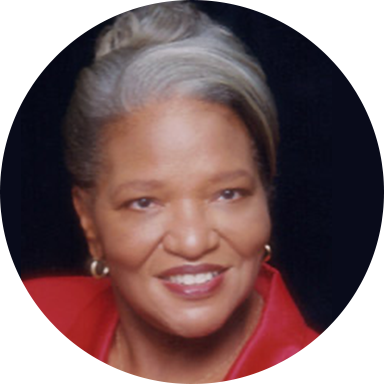
Patsy Ford Simms began her publishing career in 1981 and has since composed and arranged over 300 pieces for educational and church settings across multiple major publishing houses, including Shawnee Press. Her prolific output emerged from a practical need she identified during her early teaching years: the scarcity of choral literature written for junior high and middle school voices.
Simms holds a Bachelor of Science in Music Education from Knoxville College, a Master of Education from the University of Louisville, and a doctorate in Music Education from Columbia Pacific University. Over 30 years in the classroom, she taught across grades K-12 and at the Youth Performing Arts School before transitioning to full-time composing and arranging work. Her contributions to the field extend internationally; she has presented clinics in Italy and Africa, composed commissioned works, and created short musicals centered on African American history. Two of her compositions were selected for MENC World's Largest Concerts, and she has received multiple ASCAP Special Music Awards.
Why we love this
Simms structures this piece around a call-and-response framework rooted in African musical traditions, which naturally engages singers and creates clear narrative moments on stage. The accessibility is genuinely there: a pronunciation guide supports the Swahili text, repetitive harmonic and melodic material accelerates learning, and the piece sits comfortably for mixed voices without requiring extensive vocal agility. From a programming perspective, it opens concerts with infectious joy and cultural authenticity without ever feeling didactic.
What to expect
From the first notes, this piece radiates celebration and openness. The call-and-response structure creates natural dialogue between soloist and ensemble, building a sense of gathering and welcome that performers and audiences both absorb. Jubilant, rhythmically buoyant, and rooted in authentic African musical practice, it feels like a genuine invitation rather than a manufactured novelty number.
Who it's for
Mixed choral ensembles at the middle school and high school level will find this piece accessible and rewarding to perform. It also works well for community choirs and church choirs seeking multicultural repertoire that doesn't demand advanced vocal technique or extended rehearsal time.
How to get the most out of it
- Assign solos or small group responses intentionally, not by default. Rotating singers through these moments builds ownership and gives more students a featured opportunity.
- Lean into the rhythmic drive. The piece thrives on forward momentum, so ensure steady pulse work in early rehearsals and resist the temptation to slow down for accuracy.
- Pair the recorded accompaniment with your own rehearsals once the choir has internalized the basic material. Singing against the recording surfaces precision issues that sectional rehearsal alone may miss.
- Clarify the pronunciation of Swahili phrases early and revisit them regularly. Confident diction sells the authenticity of the piece and helps the audience feel the welcome the text extends.
How to use it
Open a concert with this piece to set an energetic and welcoming tone for the entire program. It also serves as an effective transition between formal classical selections and more contemporary repertoire, or as a companion piece in a thematic concert exploring world music and cultural traditions.
Skills your students will build
- Call-and-response singing and ensemble listening
- Pronunciation and performance of non-English text (Swahili)
- Rhythmic precision in a driven, syncopated style
- Solo performance experience and confidence
- Understanding of African musical forms and traditions