
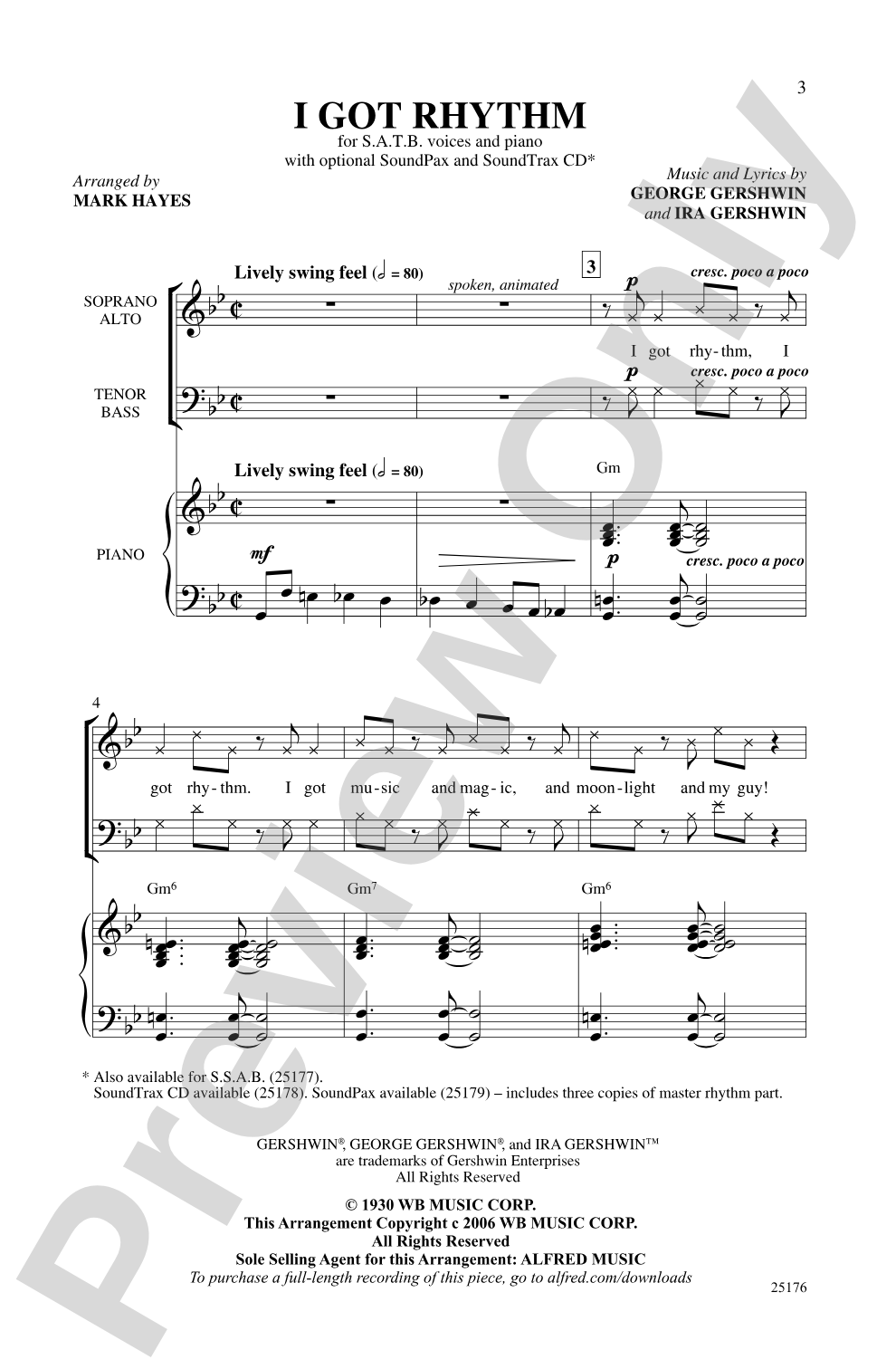
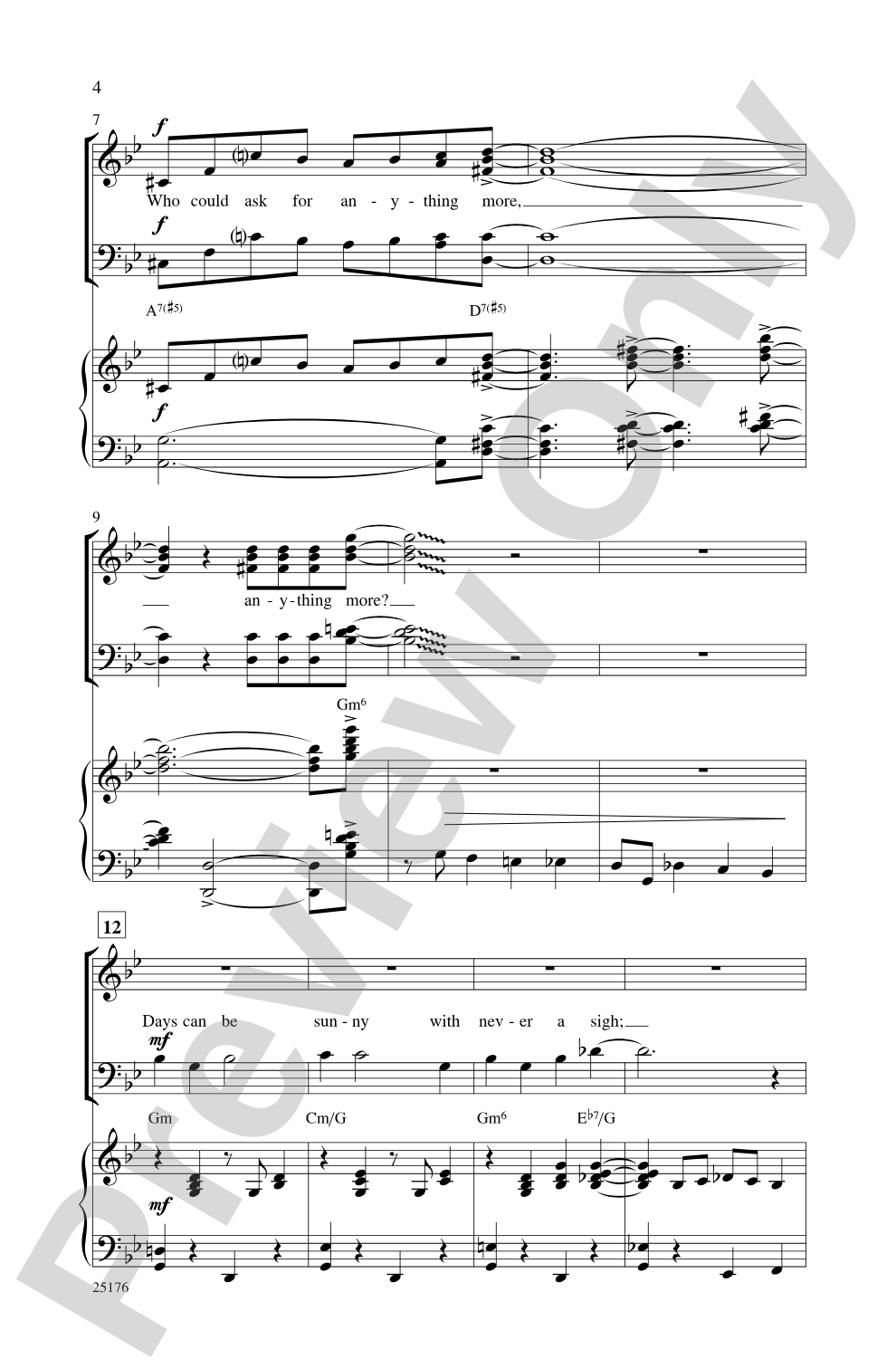
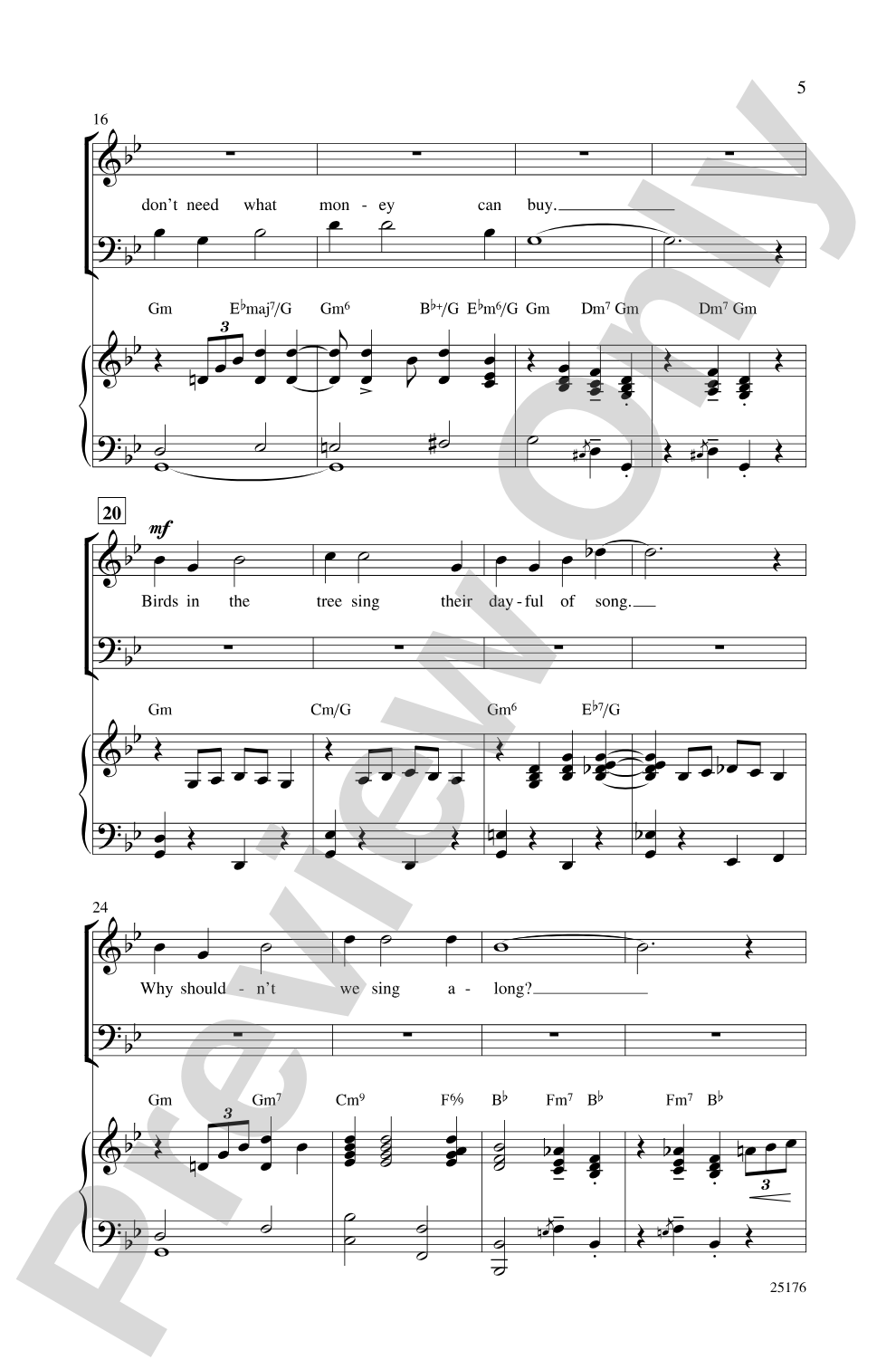

I Got Rhythm: SATB Choral Octavo
Words and music by George Gershwin and Ira Gershwin / arr. Mark Hayes
Item: 00-PO-0006560
$2.95
Minimum order quantity: 20 copies
One moment…
Related Items
I Got Rhythm: SoundTrax Digital Audio Download |
$29.99
|
View | |
I Got Rhythm: SoundTrax Digital Audio Download |
$22.95
|
View | |
I Got Rhythm: SSAB Choral Octavo |
$2.25
|
View | |
I Got Rhythm: SSA Choral Octavo |
$2.25
|
View | |
I Got Rhythm: TTBB Choral Octavo |
$2.25
|
View | |
I Got Rhythm: Choral SoundPax |
$15.00
|
View | |
I Got Rhythm: SATB Choral Octavo |
$2.95
|
View | |
I Got Rhythm: SSAB Choral Octavo |
$2.25
|
View | |
I Got Rhythm: SSA Choral Octavo |
$2.25
|
View | |
I Got Rhythm: TTBB Choral Octavo |
$2.25
|
View | |
I Got Rhythm: Choral Octavo SoundTrax CD |
$27.99
|
View | |
I Got Rhythm: Choral SoundPax |
$15.00
|
View |
Description
No one but Mark Hayes could take this Gershwin masterpiece and make it into an absolutely rip-roaring, no-holds-barred choral work. You want rhythm? You'll get it, in more ways than you can count in this outstanding arrangement of one of America's great songs. A classic, by any standard.


I Got Rhythm: SATB Choral Octavo isn't in MakeMusic Cloud just yet...but it could be. Let us know you'd like to see it, and you'll help shape what comes next. In the meantime, start a free trial and dive into thousands of interactive titles your students can play along with today.
Request This Title
Tell us you want it.
Start Your Free Trial
Explore everything that's ready to play right now.
Sample Audio
1
Audio File
--:--
0:00
0:00
Sample Video
No sample videos found.
Additional Details
Series:
Alfred Pop Choral Series
Publisher:
Alfred Music
Page Count:
16
SKU:
00-PO-0006560
More about this title
About the Composer: George Gershwin
George Gershwin (1898, 1937) bridged the concert hall and popular song like few composers of his generation. His ability to write melodies that stick in the ear while maintaining sophisticated harmonic language made him essential to American music. Gershwin's gift for rhythm and blues inflection transformed what popular song could be, influencing generations of composers across musical boundaries.
In the classroom, Gershwin's work serves as a gateway to understanding how folk idioms, jazz vocabulary, and classical forms can coexist. His songs remain teaching tools because they demonstrate that accessibility and musical substance are not opposites.
Why we love this
Mark Hayes knows how to let a song breathe while cranking the energy to full capacity. This arrangement respects Gershwin's harmonic wit and the melodic hook that makes "I Got Rhythm" instantly recognizable, then layers in rhythmic complexity and clever voicing that keeps even experienced singers engaged. It's the kind of piece that reminds audiences why this song earned its place in American music history.
What to expect
Pure joy with an edge. The arrangement sparkles with Gershwin's signature rhythmic drive while the Hayes orchestration adds contemporary sophistication. You'll feel the swing groove the moment you hear the first few measures; the energy is infectious without ever feeling frantic.
Who it's for
This arrangement works for any SATB choir with solid rhythm readers and some comfort with jazz vocabulary. High school choirs at the intermediate level and above will find the harmonic language and syncopation challenging but achievable; community and college choirs will embrace it as a performance-quality crowd-pleaser.
How to get the most out of it
- Keep the swing feel consistent across all sections. The rhythm section parts (available separately) anchor the groove, so lock in with them from the first rehearsal rather than waiting until dress rehearsal.
- Balance the melody line against the inner harmony; Hayes writes engaging counterpoint that will disappear if sopranos dominate. Check the alto and tenor lines for musical substance.
- Attack rhythmic hits cleanly and together. Precision on the syncopated figures is what gives this arrangement its personality; loose ensemble work flattens the style.
- Use the recorded accompaniment early to help singers hear the jazz idiom and harmonic movement, then gradually reduce reliance on it so the choir develops confidence in the harmony.
How to use it
This piece thrives in a pops concert or as part of an American songbook set that celebrates the Great American Song tradition. Its 16 pages and accessible-yet-polished feel make it an excellent closer for a concert that includes other jazz or popular standards, where it can send the audience out smiling without sacrificing musical credibility.
Skills your students will build
- Reading and performing swing rhythms and syncopation
- Balancing melodic and harmonic lines in jazz-influenced voicing
- Hearing and reproducing blues-inflected harmony and chord extensions
- Maintaining ensemble precision on syncopated rhythmic figures
- Executing clean articulation on jazz-style attacks and releases