
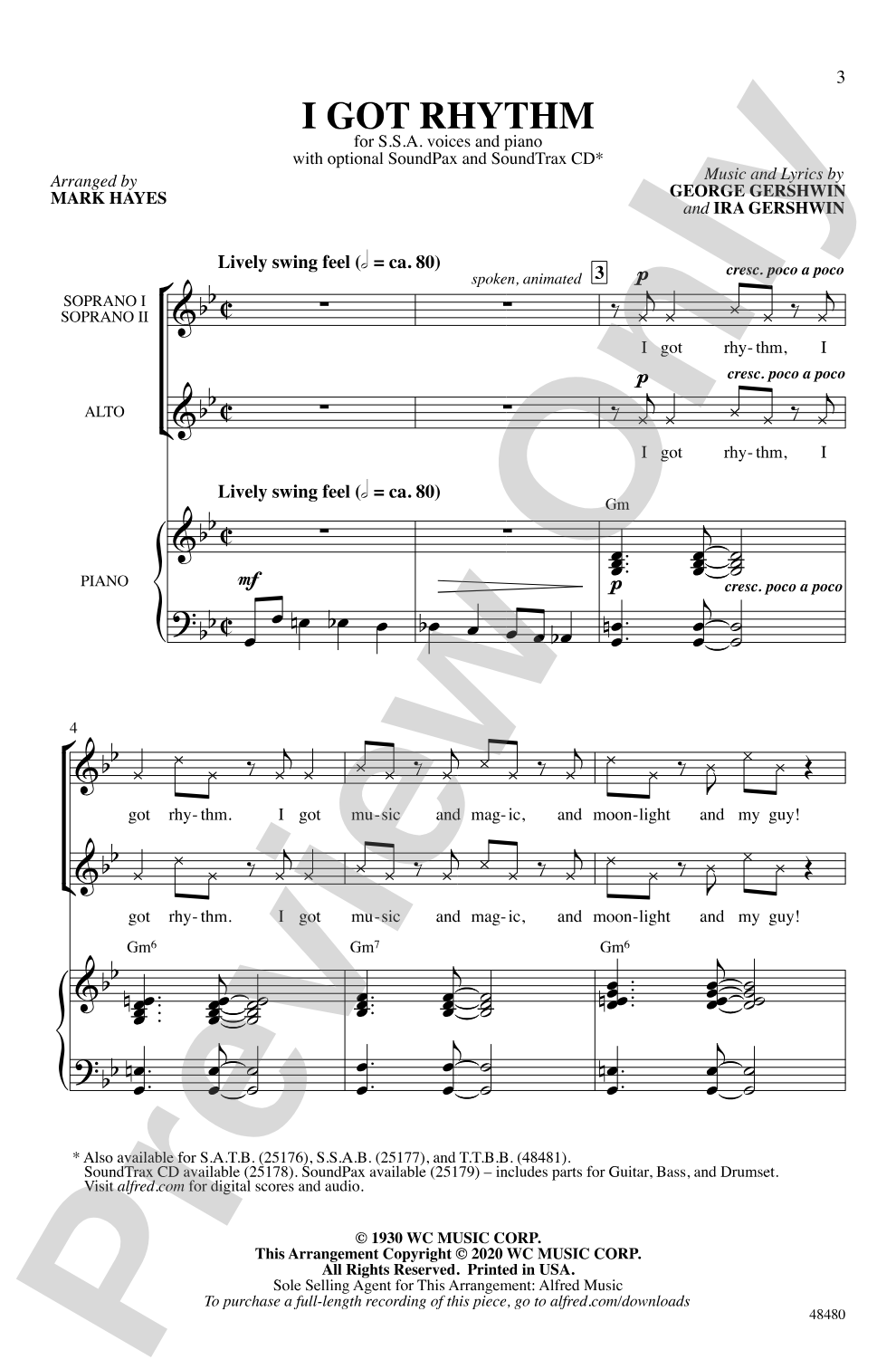
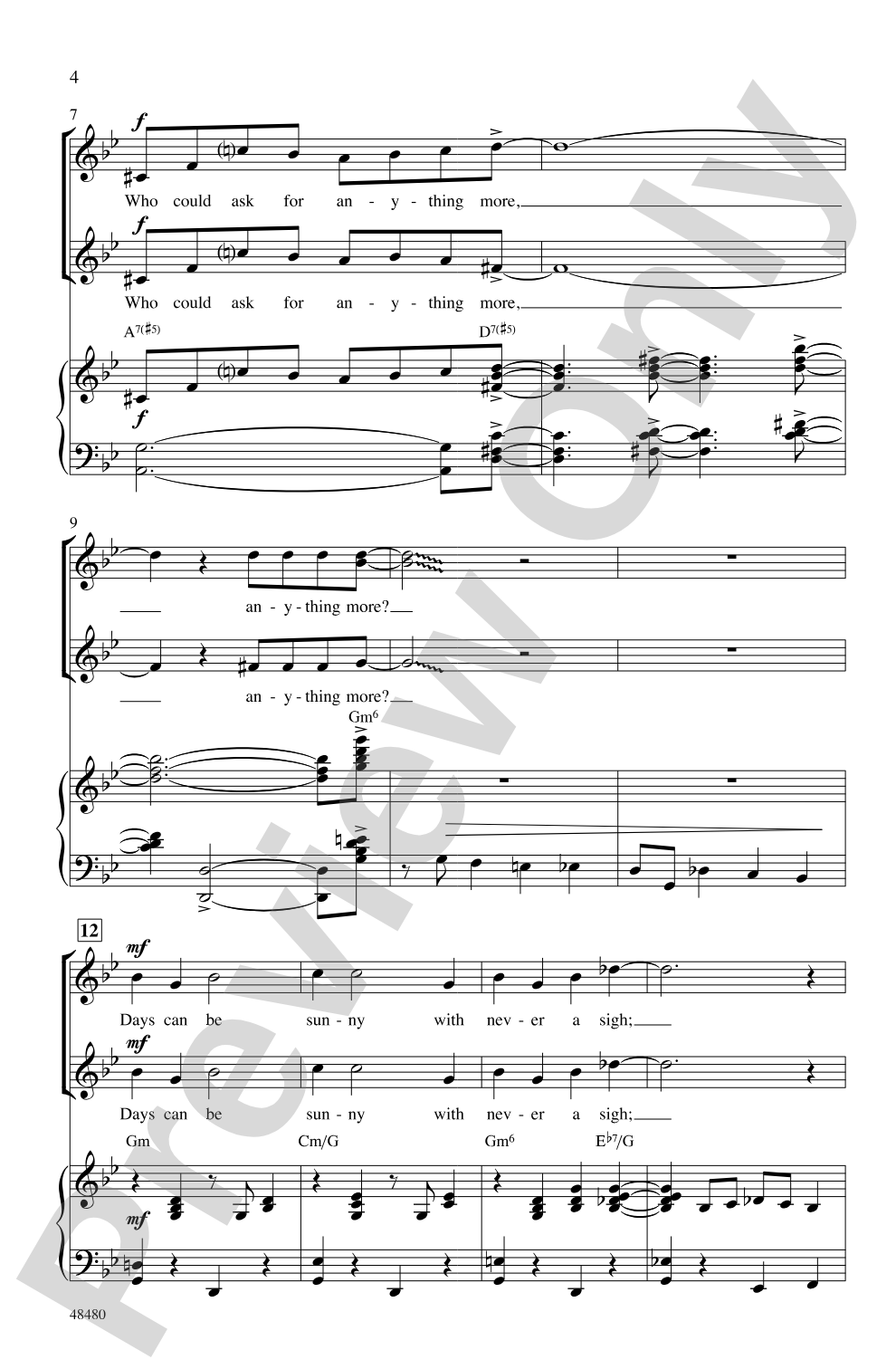
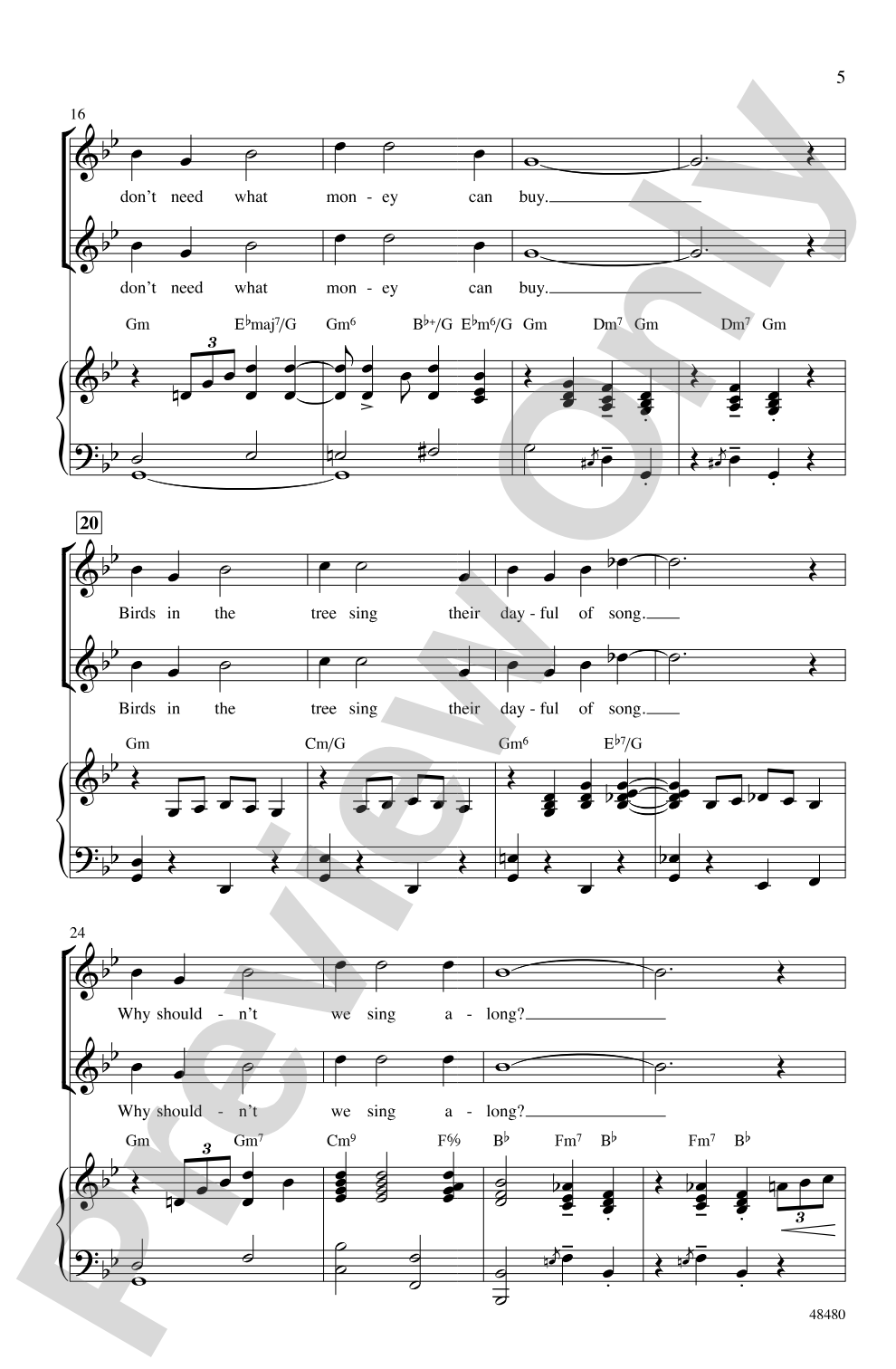

I Got Rhythm: SSA Choral Octavo
Words and music by George Gershwin and Ira Gershwin / arr. Mark Hayes
Item: 00-PO-0006459
$2.25
Minimum order quantity: 20 copies
One moment…
Related Items
I Got Rhythm: SoundTrax Digital Audio Download |
$29.99
|
View | |
I Got Rhythm: SoundTrax Digital Audio Download |
$22.95
|
View | |
I Got Rhythm: SATB Choral Octavo |
$2.95
|
View | |
I Got Rhythm: SSAB Choral Octavo |
$2.25
|
View | |
I Got Rhythm: TTBB Choral Octavo |
$2.25
|
View | |
I Got Rhythm: Choral SoundPax |
$15.00
|
View | |
I Got Rhythm: SATB Choral Octavo |
$2.95
|
View | |
I Got Rhythm: SSAB Choral Octavo |
$2.25
|
View | |
I Got Rhythm: SSA Choral Octavo |
$2.25
|
View | |
I Got Rhythm: TTBB Choral Octavo |
$2.25
|
View | |
I Got Rhythm: Choral Octavo SoundTrax CD |
$27.99
|
View | |
I Got Rhythm: Choral SoundPax |
$15.00
|
View |
Description
No one but Mark Hayes could take this Gershwin masterpiece and make it into an absolutely rip-roaring, no-holds-barred choral work. You want rhythm? You'll get it, in more ways than you can count in this outstanding arrangement of one of America's great songs. A classic, by any standard.


I Got Rhythm: SSA Choral Octavo isn't in MakeMusic Cloud just yet...but it could be. Let us know you'd like to see it, and you'll help shape what comes next. In the meantime, start a free trial and dive into thousands of interactive titles your students can play along with today.
Request This Title
Tell us you want it.
Start Your Free Trial
Explore everything that's ready to play right now.
Sample Audio
1
Audio File
--:--
0:00
0:00
Sample Video
Additional Details
Series:
Alfred Pop Choral Series
Publisher:
Alfred Music
Page Count:
16
SKU:
00-PO-0006459
More about this title
About the Composer: George Gershwin
George Gershwin (1898-1937) bridged concert music and popular song in ways few composers have managed. His ability to write melodies that stick in your head while building them into substantial musical structures made him a natural voice for American music in the early 20th century.
For choir directors, Gershwin's legacy matters because his songs teach singers how to inhabit jazz idioms, swing phrasing, and syncopated rhythms without requiring extensive jazz training. His melodies reward clear singing while demanding rhythmic precision.
Why we love this
Mark Hayes has a gift for honoring a song's DNA while unleashing its full potential as a choral vehicle. This arrangement respects every ounce of Gershwin's swagger and wit, giving your singers genuine rhythmic challenges that feel earned rather than imposed. Programming this signals to your audience that your choir can swing.
What to expect
Pure rhythmic vitality. This arrangement pulses with the kind of energy that comes from Gershwin's obsession with American vernacular music and Hayes's skill at layering independent rhythmic lines. Your singers will feel the propulsive momentum even during quieter moments, and the joy is genuinely infectious.
Who it's for
Choirs with solid rhythmic foundation and comfort with syncopation will thrive here. You need singers who can hold their own rhythmically while blending with others, especially in sections where the parts move independently. This works best for groups ready to move beyond ballads and show tunes into genuine jazz-influenced repertoire.
How to get the most out of it
- Let the rhythm section lock in first during rehearsals. The foundation here matters more than in many choral pieces, so spend time getting your accompanists or recorded track perfectly synced before layering voices.
- Articulate the consonants crisply, especially in faster passages. Gershwin's syncopations depend on clean diction to land their rhythmic punches.
- Avoid over-sentimentalizing the lyric. The song's strength comes from its confident, almost cheeky attitude. Lean into the humor and swagger.
- Check the ranges on all three parts before committing to the arrangement. Hayes writes idiomatically for SSA, but some singers may need octave adjustments depending on your group's voice types.
How to use it
This lands perfectly in spring concerts or programs built around American songbook standards. Consider pairing it with other arranged standards to create a thematic set, or use it as a set-closer where you want to leave the audience energized and smiling. The 16-page format makes it substantial enough to command its own moment on the program.
Skills your students will build
- Syncopated rhythm reading across multiple simultaneous patterns
- Swing articulation and phrasing distinct from classical legato
- Independence in ensemble sections with rhythmically divergent voice parts
- Jazz idiom conventions in a choral context
- Dynamic contrast within rhythmically driven writing