

I Gave My Love a Cherry: SAB Choral Octavo
(The Riddle Song)
Traditional Folk Song / arr. Pepper Choplin
Item: 00-PO-0001826
$1.85
Minimum order quantity: 20 copies
Pickup currently not available
Related Items
I Gave My Love a Cherry: SoundTrax Digital Audio Download |
$27.99
|
View | |
I Gave My Love a Cherry: SATB Choral Octavo |
$1.85
|
View | |
I Gave My Love a Cherry: SSA Choral Octavo |
$1.85
|
View | |
I Gave My Love a Cherry: SATB Choral Octavo |
$1.85
|
View | |
I Gave My Love a Cherry: SAB Choral Octavo |
$1.85
|
View | |
I Gave My Love a Cherry: SSA Choral Octavo |
$1.85
|
View | |
I Gave My Love a Cherry: Choral Octavo SoundTrax CD |
$27.99
|
View |
Description
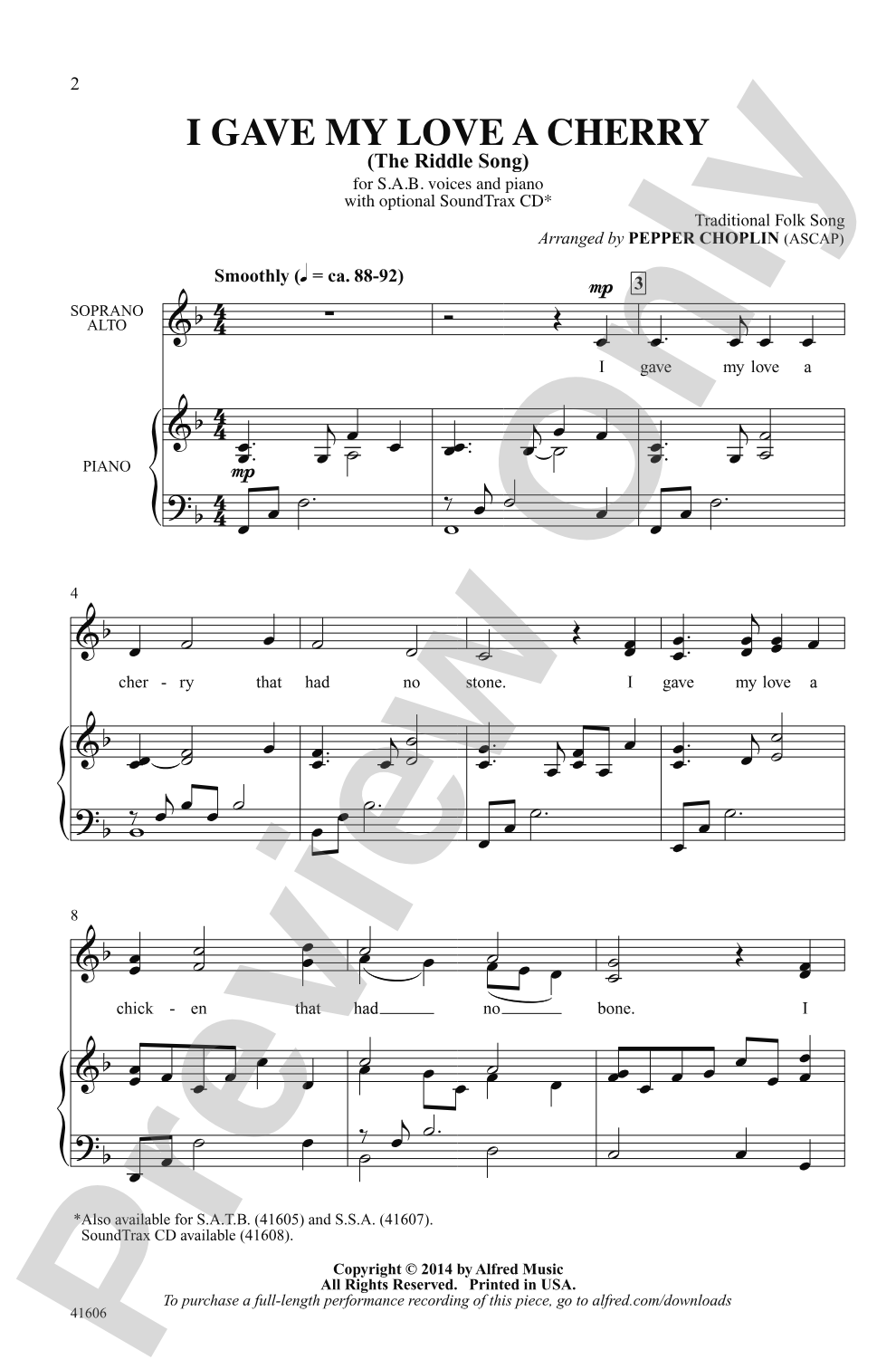
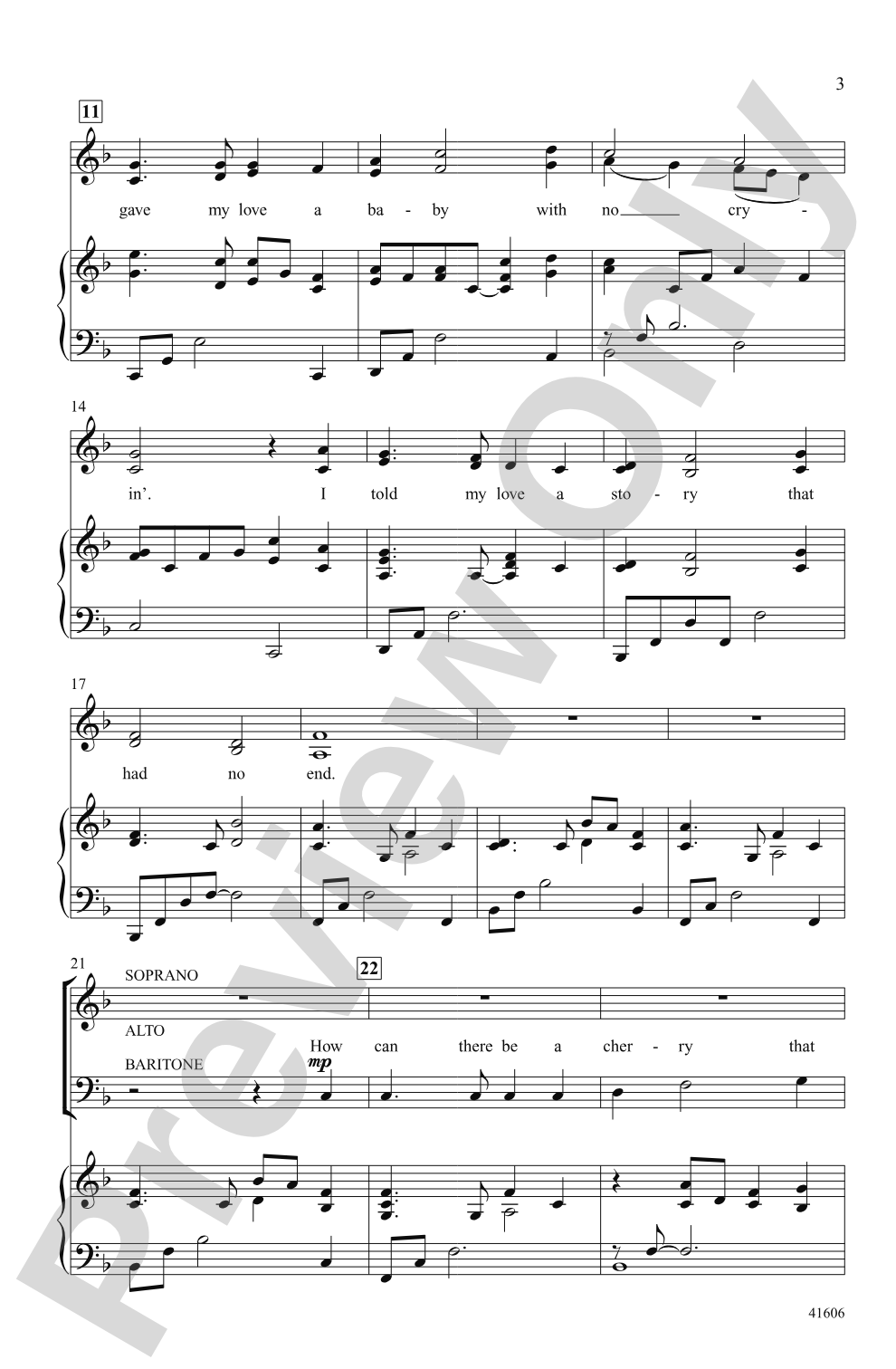
Simply stunning. A gently flowing accompaniment beautifully complements the transparent choral texture, and an extended coda provides the perfect close to this Appalachian-inspired arrangement. Unlike anything else you will program this year!


I Gave My Love a Cherry: SAB Choral Octavo isn't in MakeMusic Cloud just yet...but it could be. Let us know you'd like to see it, and you'll help shape what comes next. In the meantime, start a free trial and dive into thousands of interactive titles your students can play along with today.
Request This Title
Tell us you want it.
Start Your Free Trial
Explore everything that's ready to play right now.
Sample Audio
1
Audio File
--:--
0:00
0:00
Sample Video
No sample videos found.
Additional Details
Series:
Alfred Choral Designs
Publisher:
Alfred Music
Page Count:
8
SKU:
00-PO-0001826
More about this title
About the Arranger: Pepper Choplin

Pepper Choplin holds degrees in music from the University of North Carolina at Greensboro (Bachelor of Music) and Southwestern Baptist Theological Seminary in Fort Worth, Texas (Master of Music in composition). His catalog spans over two hundred anthems and seven choral musicals, drawing from a remarkably varied musical background that includes work as a church musician, theme park entertainer, and performer across rock, classical, and bluegrass styles.
Choplin conducts and leads workshops throughout the country as a composer, clinician, and entertainer, known for blending inspirational and humorous material that moves audiences to both laughter and reflection. As Minister of Music at Greystone Baptist Church in Raleigh, North Carolina, he continues to create music born from real worship needs, with many of his pieces emerging directly from his own congregation's experience. His recordings include the self-produced "Pepper Is My Real Name" (featuring humorous songs) and "Hold On" (a solo collection of his most popular inspirational works).
Why we love this
Choplin's gift for transparent writing means your singers will shine without drowning in accompaniment complexity. The Appalachian character of this arrangement sits naturally with SAB voicing, making it equally effective in festivals, concerts, or church settings without sounding like a simplified version of something more substantial.
What to expect
Gentle and flowing, with an Appalachian warmth that feels both familiar and freshly arranged. The transparent texture creates intimacy; you hear each voice clearly, and the accompaniment never competes for attention. The extended coda provides a lingering close that feels inevitable rather than tacked-on.
Who it's for
SAB choirs seeking genuinely singable folk arrangements that avoid both oversimplification and unnecessary technical demands. This works for community choruses, high school choirs, church choirs, and festival-focused ensembles looking for repertoire with authentic character and appeal.
How to get the most out of it
- Balance the alto line carefully in measures where it carries the melodic weight; SAB works best when no part feels subordinate to another.
- Let the accompaniment breathe with the choral phrases rather than driving through them; this arrangement rewards a conversational, organic approach.
- The extended coda deserves rehearsal time separate from the main body of the piece; shape it as a deliberate wind-down, not a rush to the finish.
- Experiment with light dynamics across the piece; transparent texture means subtle dynamic choices become audible and musical.
How to use it
Pair this with other folk-inspired pieces to create a thematic concert segment, or use it as an accessible opener that builds audience connection before moving into more elaborate repertoire. Its character also makes it suitable for community engagement events, church services, or any program where you want quality choral writing without demanding virtuosity from singers.
Skills your students will build
- Blending and balance in three-part mixed voicing
- Singing transparent textures without forcing tone or dynamic
- Interpreting folk idiom through modern harmonic language
- Ensemble awareness across mixed age and experience levels