

I Can See the River Jordan: SSA Choral Octavo
Words and music by Jay Althouse
Item: 00-PO-0005495
$1.90
Minimum order quantity: 20 copies
Pickup currently not available
Related Items
I Can See the River Jordan: PianoTrax Digital Download |
$9.99
|
View | |
I Can See the River Jordan: SATB Choral Octavo |
$1.90
|
View | |
I Can See the River Jordan: SAB Choral Octavo |
$1.90
|
View | |
I Can See the River Jordan: SATB Choral Octavo |
$1.90
|
View | |
I Can See the River Jordan: SAB Choral Octavo |
$1.90
|
View | |
I Can See the River Jordan: SSA Choral Octavo |
$1.90
|
View |
Description
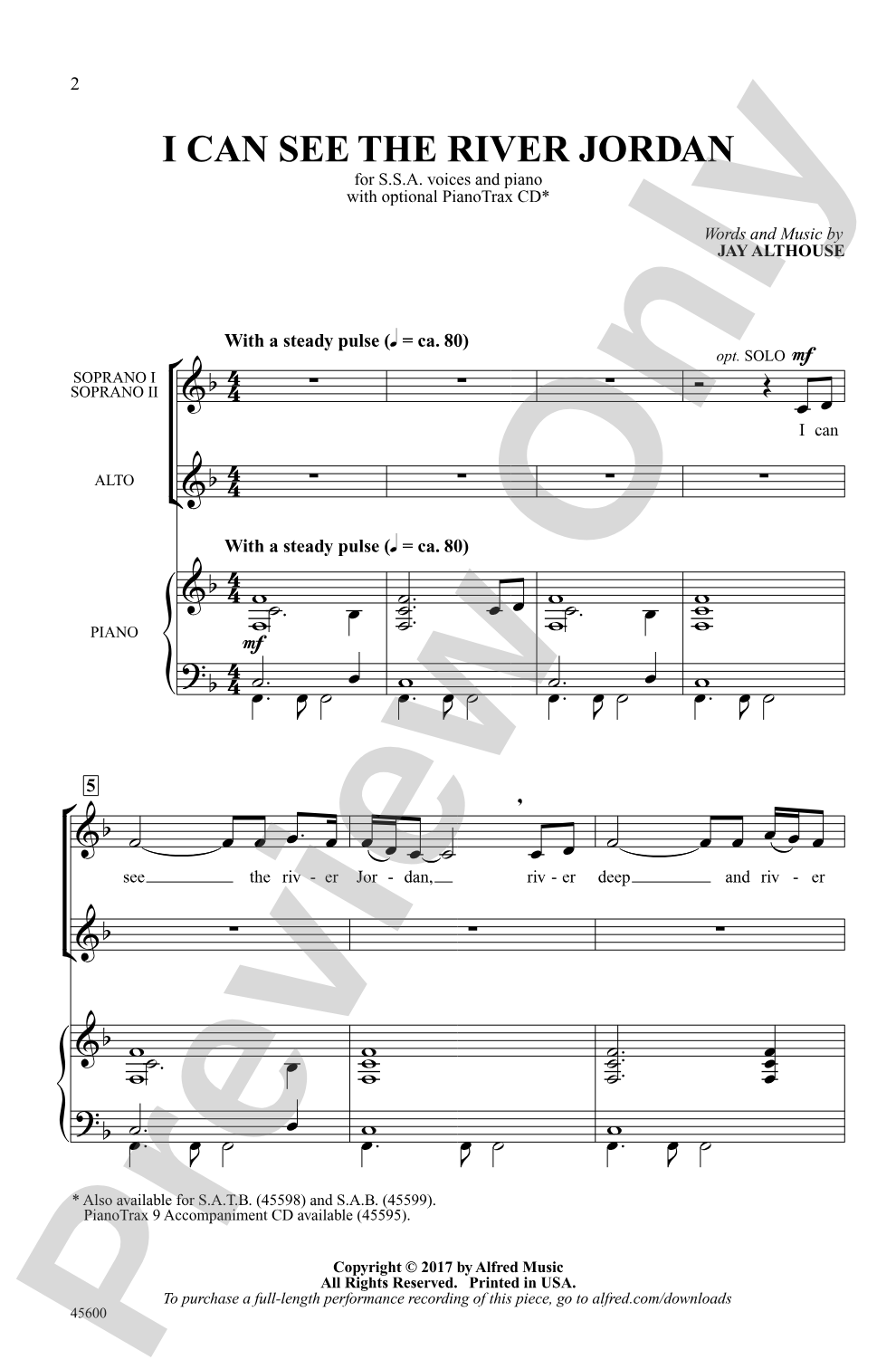
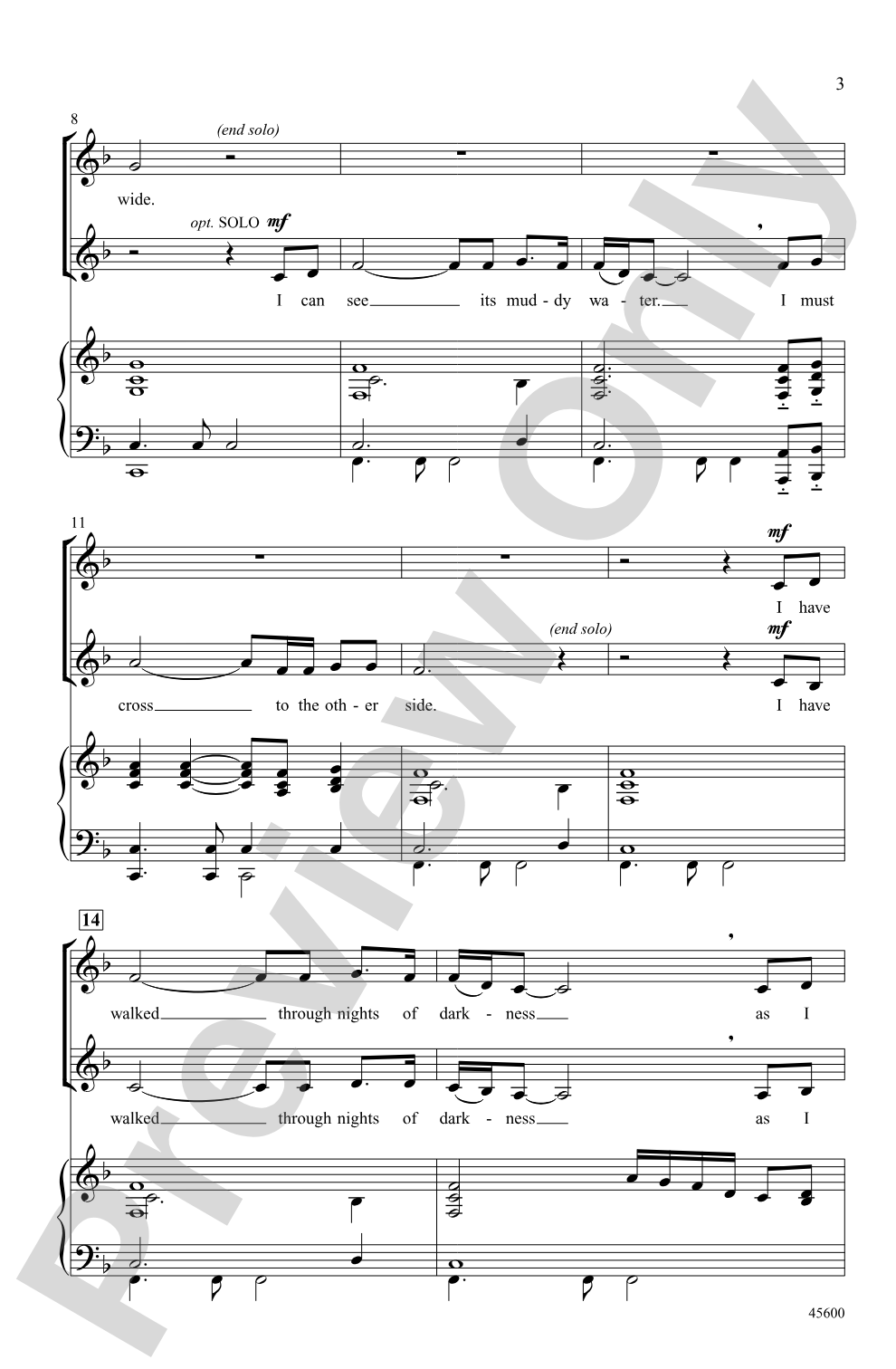
This sturdy original is composed in the style of a traditional spiritual. A symbolic text leads to crossing metaphoric River Jordan as the music recalls songs from early America. Opens with brief solos, builds to a hand clapping, almost a cappella bridge, and concludes only after full choral harmonies fade and voices unite on a single pitch.


I Can See the River Jordan: SSA Choral Octavo isn't in MakeMusic Cloud just yet...but it could be. Let us know you'd like to see it, and you'll help shape what comes next. In the meantime, start a free trial and dive into thousands of interactive titles your students can play along with today.
Request This Title
Tell us you want it.
Start Your Free Trial
Explore everything that's ready to play right now.
Sample Audio
1
Audio File
--:--
0:00
0:00
Sample Video
No sample videos found.
Additional Details
Series:
Alfred Choral Designs
Publisher:
Alfred Music
Page Count:
8
SKU:
00-PO-0005495
More about this title
About the Composer: Jay Althouse

Jay Althouse holds degrees in Music Education and Music from Indiana University of Pennsylvania, where he was later recognized with the Distinguished Alumni award. His career spans both administrative leadership in educational music publishing and prolific composition; he spent eight years managing rights and licenses for a major publisher and served on the Executive Board of the Music Publishers Association of America. As a composer, he has more than 800 works in print across all choir levels and is a writer member of ASCAP, a regular recipient of the ASCAP Special Award.
Beyond choral composition, Althouse has collaborated with his wife Sally K. Albrecht on multiple children's musicals and co-authored influential instructional books including The Complete Choral Warm-up Book and Accent on Composers. He compiled and arranged numerous vocal solo collections and created classroom-ready reproducible materials on music literacy and composer study. His choral work I Hear America Singing was performed by the San Francisco Girls and Boys Choirs at President Barack Obama's inauguration in 2009. He resides in Wake Forest, North Carolina, and serves on the National Advisory Board of the Folk Art Society of America.
Why we love this
Althouse captures the spiritual tradition authentically without requiring advanced harmonic sophistication from your singers. The arc of this piece—from intimate solos through clapping and near-silence to unified voices dissolving into a single pitch—builds genuine emotional resonance rather than relying on complexity, making it rewarding for festival adjudication and concert performance alike.
What to expect
The piece unfolds like a spiritual narrative, beginning with quiet reflection before gradually gathering momentum and human presence through clapping and unified voices. You'll hear echoes of early American song traditions woven through contemporary harmonic writing, creating a sense of both reverence and belonging.
Who it's for
SSA choirs in middle school through community settings will find this piece accessible and meaningful. Directors seeking authentic spiritual writing that respects the tradition while remaining performable by developing singers will appreciate Althouse's clarity of expression and structural intelligence.
How to get the most out of it
- Shape the opening solos with clear narrative intent. These aren't showcase moments for individual singers but rather voices beginning a collective spiritual journey; consider coaching them toward introspection rather than projection.
- Treat the hand-clapping bridge as a rhythmic anchor that grounds the choir. The physical engagement helps singers locate the pulse and creates ensemble cohesion during the near-cappella section.
- Balance the final unified pitch carefully. Let it emerge from the full harmonic texture gradually rather than cutting off abruptly; this honors the piece's symbolic journey toward spiritual arrival.
- Use the eight-page format to study phrasing across the full arc. Mark the dynamic journey from intimate opening through textural buildup so your singers understand where energy lives in each section.
How to use it
This works powerfully in a spirituals-focused concert or as a centerpiece in programming that traces American vocal traditions. The emotional arc and accessible harmonic language also make it suitable for festival competition, where its genuine expression and structural sophistication will resonate with adjudicators.
Skills your students will build
- Singing independent SSA lines with blend and intonation
- Interpreting text expression within a spiritual idiom
- Maintaining rhythmic precision during rhythmic-free (near-cappella) sections
- Building dynamic contrast from intimate solo passages to full-choir unisons
- Understanding formal structure and how textural changes shape narrative