

I Can See the River Jordan: SAB Choral Octavo
Words and music by Jay Althouse
Item: 00-PO-0005494
$1.90
Minimum order quantity: 20 copies
Pickup currently not available
Related Items
I Can See the River Jordan: PianoTrax Digital Download |
$9.99
|
View | |
I Can See the River Jordan: SATB Choral Octavo |
$1.90
|
View | |
I Can See the River Jordan: SSA Choral Octavo |
$1.90
|
View | |
I Can See the River Jordan: SATB Choral Octavo |
$1.90
|
View | |
I Can See the River Jordan: SAB Choral Octavo |
$1.90
|
View | |
I Can See the River Jordan: SSA Choral Octavo |
$1.90
|
View |
Description
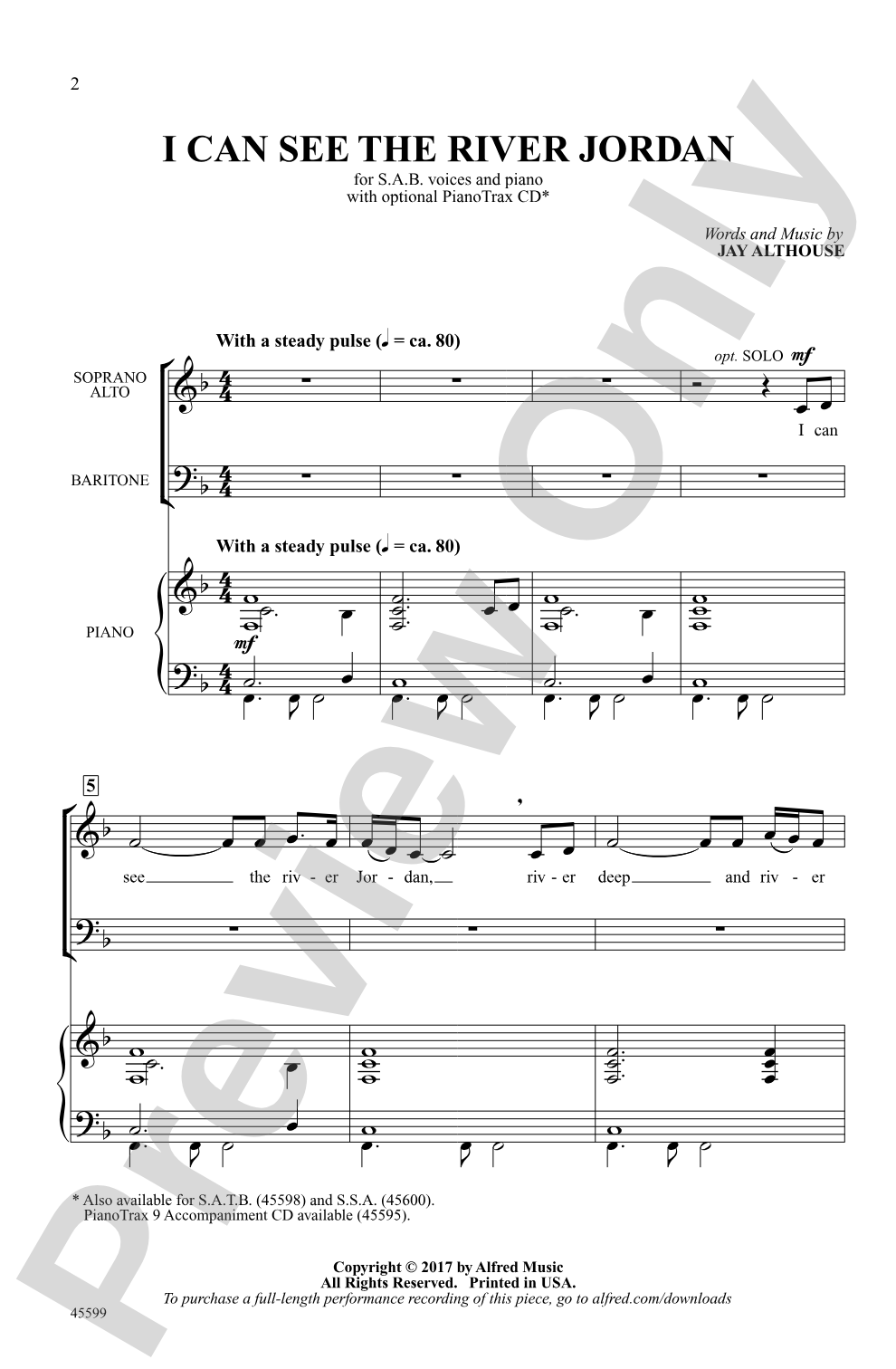
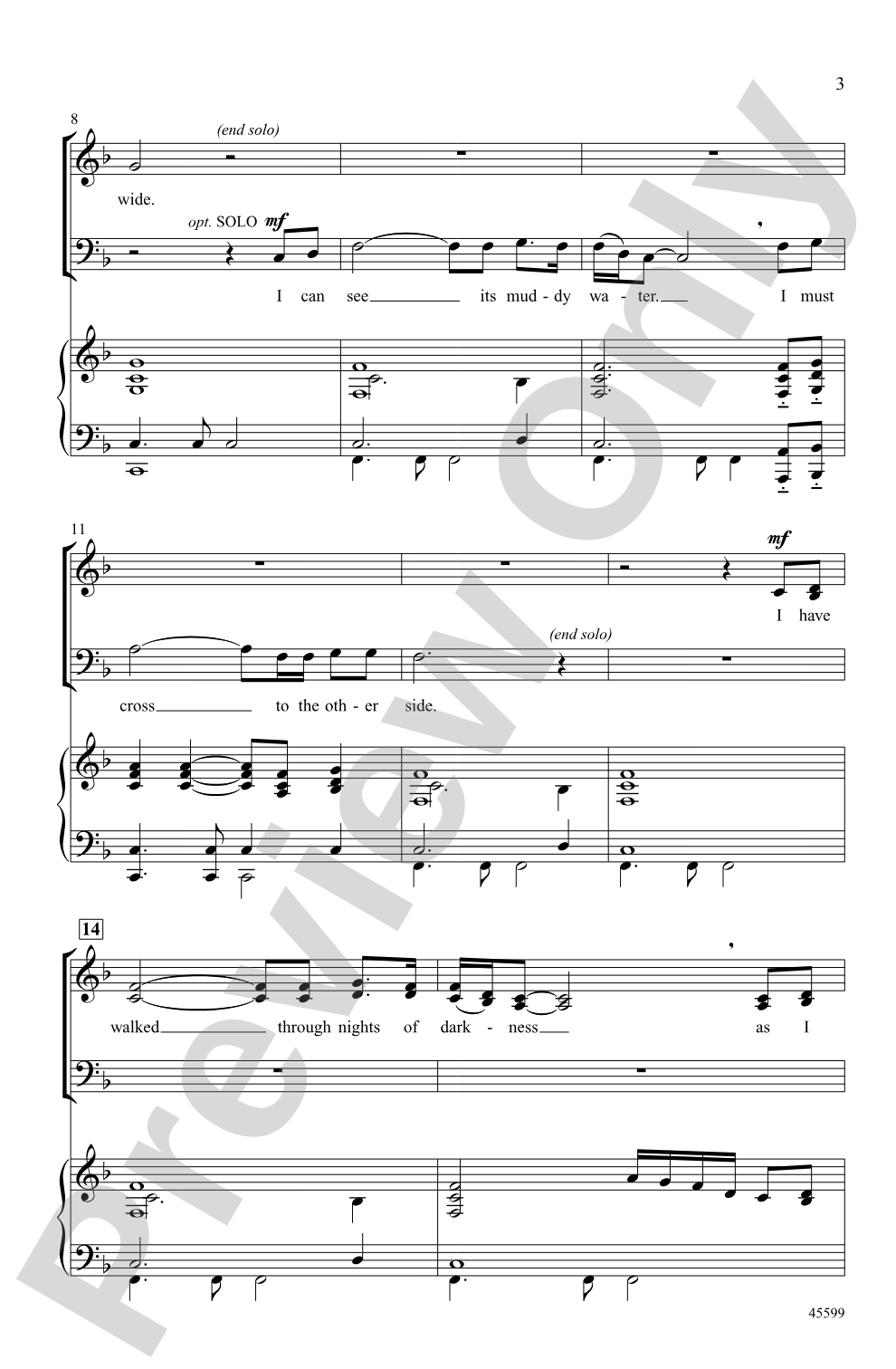
This sturdy original is composed in the style of a traditional spiritual. A symbolic text leads to crossing metaphoric River Jordan as the music recalls songs from early America. Opens with brief solos, builds to a hand clapping, almost a cappella bridge, and concludes only after full choral harmonies fade and voices unite on a single pitch.


I Can See the River Jordan: SAB Choral Octavo isn't in MakeMusic Cloud just yet...but it could be. Let us know you'd like to see it, and you'll help shape what comes next. In the meantime, start a free trial and dive into thousands of interactive titles your students can play along with today.
Request This Title
Tell us you want it.
Start Your Free Trial
Explore everything that's ready to play right now.
Sample Audio
1
Audio File
--:--
0:00
0:00
Sample Video
No sample videos found.
Additional Details
Series:
Alfred Choral Designs
Publisher:
Alfred Music
Page Count:
8
SKU:
00-PO-0005494
More about this title
About the Composer: Jay Althouse

Jay Althouse earned a B.S. in Music Education and an M.Ed. in Music from Indiana University of Pennsylvania, where he was later recognized as a Distinguished Alumnus. His eight-year tenure as a rights and licenses administrator at a major educational music publisher gave him deep insight into what teachers need, and he served on the Executive Board of the Music Publishers Association of America during that period.
As a composer, Althouse has created over 800 choral works performed across the English-speaking world. He holds membership in ASCAP and has been a regular recipient of the ASCAP Special Award for his compositions. Beyond composing, he has co-written children's musicals with his wife Sally K. Albrecht, edited respected vocal solo collections including Folk Songs for Solo Singers, and authored influential instructional resources such as The Complete Choral Warm-up Book, Accent on Composers, and Ready to Read Music. His choral composition I Hear America Singing, written with Albrecht, was performed by the San Francisco Girls and Boys Choirs at President Barack Obama's 2009 Inauguration. Althouse served on the board of the North Carolina Master Chorale and continues his work with American folk music traditions as a member of the National Advisory Board for the Folk Art Society of America.
Why we love this
Althouse captures the spiritual tradition authentically without sacrificing singability or modern choral writing. The architecture of this piece works brilliantly in concert: soloists establish intimacy, hand clapping energizes the room, and the gradual convergence to unison delivers profound stillness. It programs equally well at festivals or as a moment of reflection within a larger concert.
What to expect
The opening draws listeners into intimate spiritual testimony before the hand clapping invites them into a communal experience. As voices layer and build, the energy shifts from personal witness to collective affirmation, culminating in a transcendent moment when the choir becomes a single voice—holding that final unison note feels like crossing threshold together.
Who it's for
This octavo serves SAB choirs at the festival and contest level, particularly ensembles seeking meaningful sacred repertoire that respects American musical roots. Directors working with developing choirs will find the part-writing accessible without feeling condescended to, and the piece works beautifully for groups ready to handle dramatic dynamic control and textural variety.
How to get the most out of it
- Balance the opening solos carefully so they carry genuine weight without overpowering the choral sections that follow; these voices set the emotional foundation for the entire work.
- Rehearse the hand clapping bridge as a rhythmic unit separate from the singing, then layer the voices in gradually so the near-a cappella texture feels intentional and controlled.
- Shape the final descent to unison as a ritardando of both tempo and dynamic intensity; let silence become part of the music as voices fade.
- Use the SAB voicing to your advantage by keeping the alto line singing through the bridge section, creating an anchoring harmonic presence beneath the sparsity.
How to use it
Pair this with other spirituals or early American works to create a thematic concert arc; it works equally well as a festival selection or as the centerpiece of a sacred music program. The piece's emotional journey makes it particularly effective as a closer or penultimate number, where its quiet resolution can settle over the audience.
Skills your students will build
- Balancing solo work with ensemble singing
- Creating and sustaining a cappella blend and intonation
- Managing dynamic contrast and tension (building to climax, releasing to stillness)
- Interpreting stylistic characteristics of American spirituals
- Coordinating rhythmic elements (hand clapping) with vocal parts
- Singing unison passages with unified vowels and breath