

Hit Me with a Hot Note: SATB Choral Octavo
(And Watch Me Bounce)
Words and music by Duke Ellington and Don George / arr. Mark Hayes
Item: 00-PO-0005862
$2.10
Minimum order quantity: 20 copies
One moment…
Related Items
Hit Me with a Hot Note: SoundTrax Digital Audio Download |
$27.99
|
View | |
Hit Me with a Hot Note: SAB Choral Octavo |
$2.10
|
View | |
Hit Me with a Hot Note: SSA Choral Octavo |
$2.10
|
View | |
Hit Me with a Hot Note: Choral SoundPax |
$50.00
|
View | |
Hit Me with a Hot Note: SATB Choral Octavo |
$2.10
|
View | |
Hit Me with a Hot Note: SAB Choral Octavo |
$2.10
|
View | |
Hit Me with a Hot Note: SSA Choral Octavo |
$2.10
|
View | |
Hit Me with a Hot Note: Choral Octavo SoundTrax CD |
$29.99
|
View |
Description
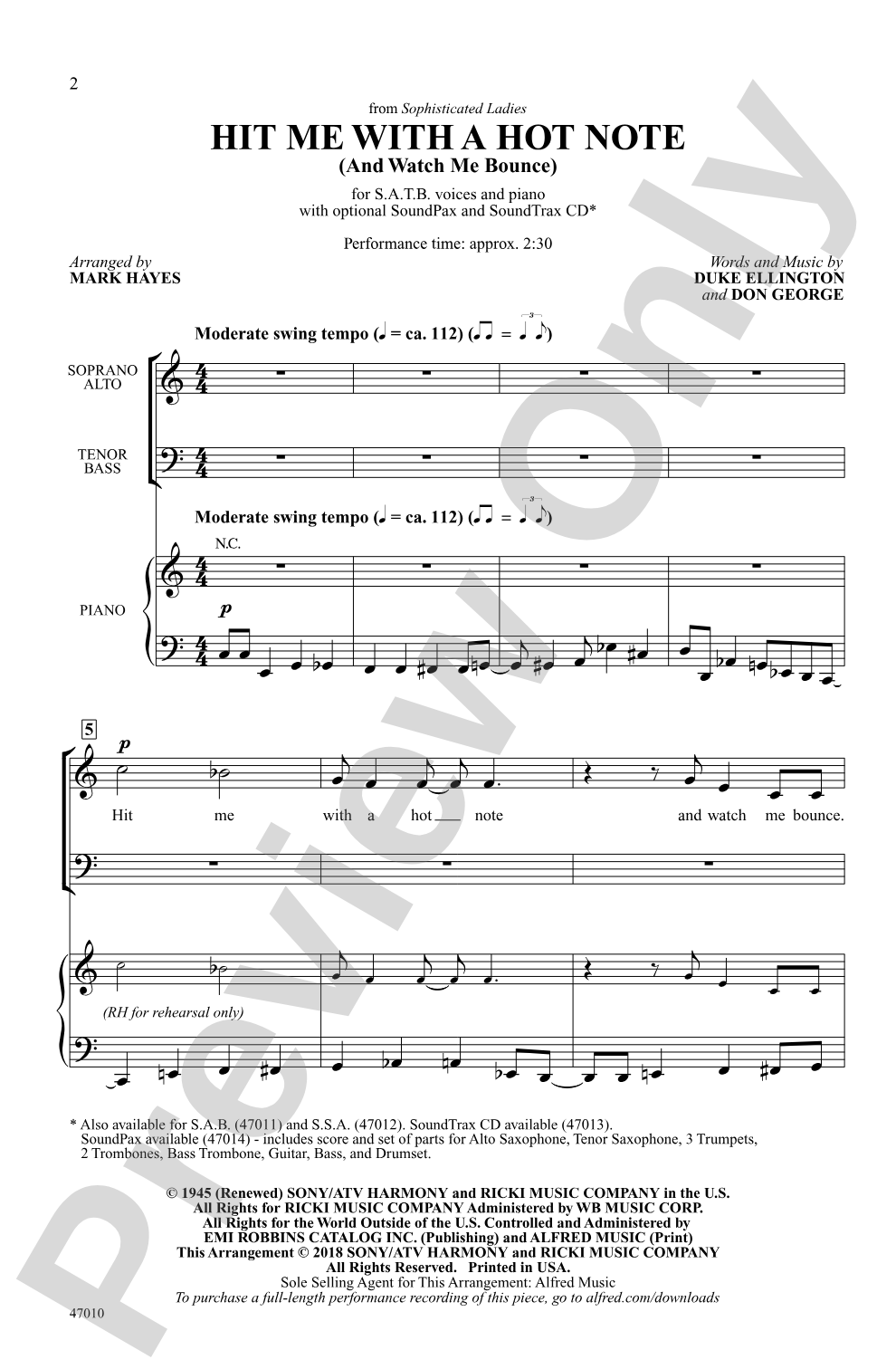
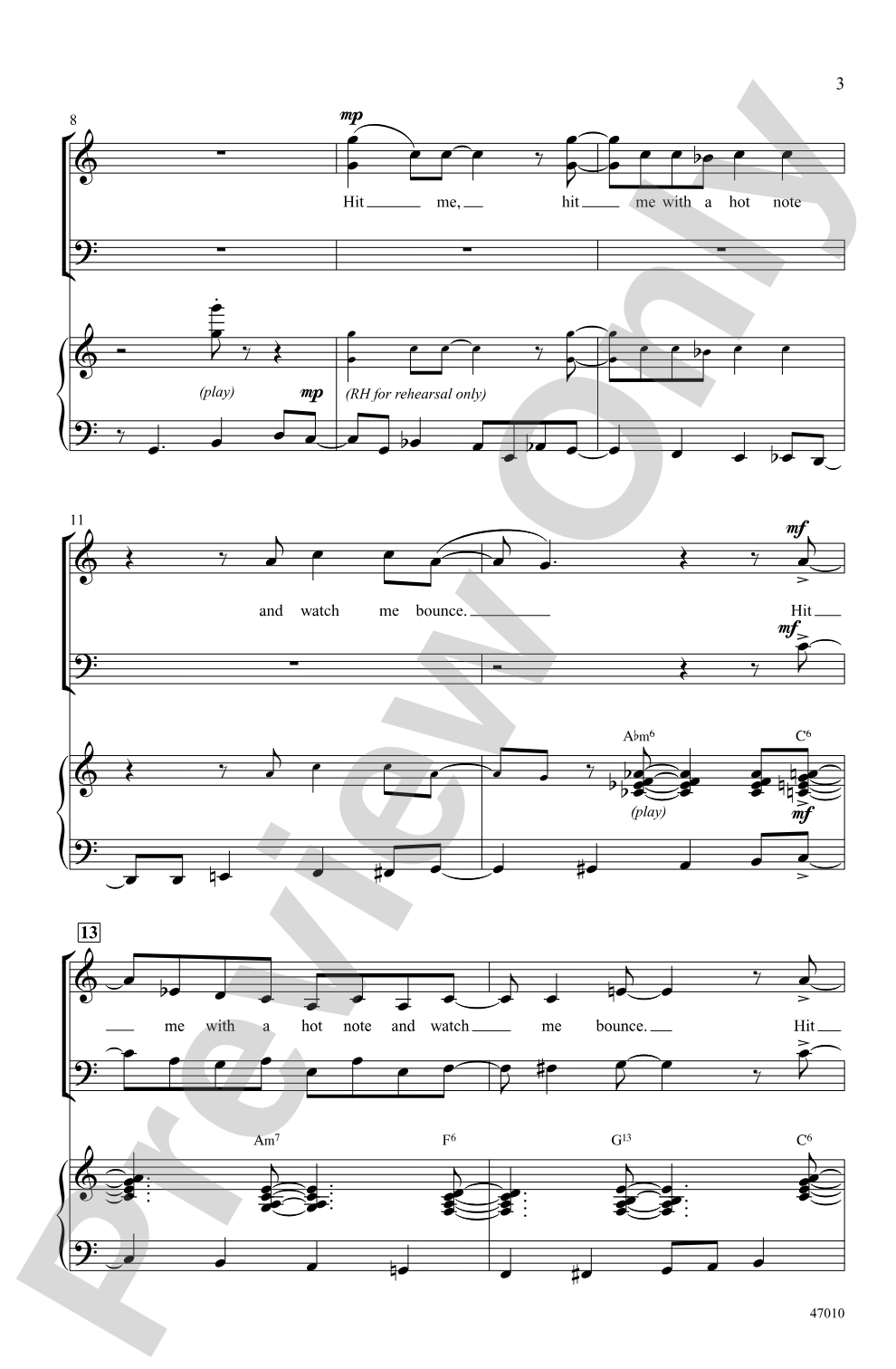
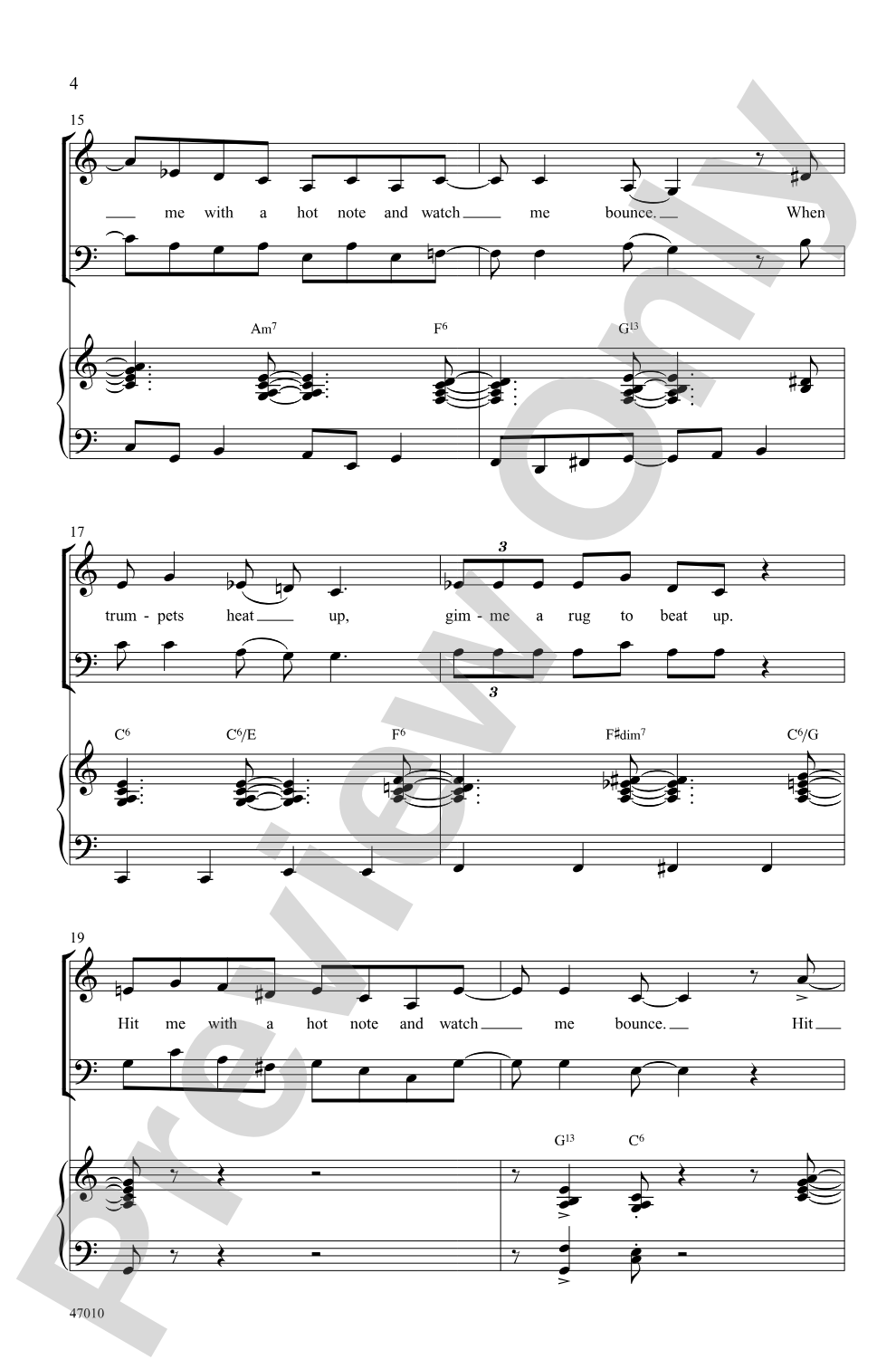
This Duke Ellington number was featured in Sophisticated Ladies, the musical revue celebrating the life and music of the great bandleader. A slinky bass accompanies some sassy vocals in the intro just before this swingin' setting grows into full-blown jazz. Syncopated horn licks and a tight rhythm section provide some sizzle on the optional SoundTrax CD and SoundPax.


Hit Me with a Hot Note: SATB Choral Octavo isn't in MakeMusic Cloud just yet...but it could be. Let us know you'd like to see it, and you'll help shape what comes next. In the meantime, start a free trial and dive into thousands of interactive titles your students can play along with today.
Request This Title
Tell us you want it.
Start Your Free Trial
Explore everything that's ready to play right now.
Sample Audio
1
Audio File
--:--
0:00
0:00
Sample Video
Additional Details
Series:
Alfred Pop Choral Series
Publisher:
Alfred Music
Page Count:
12
SKU:
00-PO-0005862
More about this title
About the Composer: Duke Ellington
Duke Ellington (1899-1974) was an American composer, pianist, and bandleader whose three-decade output shaped jazz and American music itself. His compositions ranged from short instrumental features to extended sacred and secular works, many of which entered the standard repertoire through both instrumental and vocal arrangements. Ellington's harmonic sophistication and gift for melody made his music adaptable across ensembles and contexts, ensuring that conductors and singers continue to discover new dimensions in his work decades after his death.
Why we love this
Mark Hayes captures the swagger and sass of this Ellington-George tune in an arrangement that gives your choir genuine rhythmic and harmonic challenges without requiring a jazz ensemble background. The optional instrumental parts transform a charming vocal number into a full-bodied jazz setting, making it equally rewarding for groups that want to add ensemble texture or those keeping it vocal-focused.
What to expect
Sophisticated and playful at once, with a rhythm section that propels the piece forward while allowing the voices to strut their stuff. The syncopated horn licks and tight accompaniment create a nightclub atmosphere that feels both vintage and immediate.
Who it's for
Intermediate to advanced SATB choirs with singers comfortable navigating jazz harmonies and syncopated rhythms. This arrangement works well for concert choirs, show choirs, and vocal jazz groups looking to program American standards with substantive musicality and swing.
How to get the most out of it
- Anchor the opening bass line with your lowest singers and bass section; the slinky feel depends on rhythmic confidence rather than volume, so prioritize articulation and pocket feel over projection.
- Lock into the syncopation through sectional rehearsals on rhythm alone before combining parts; this piece rewards singers who understand where they sit against the beat, not just what notes they sing.
- If using the recorded accompaniment, run multiple rehearsals without it first so singers own the harmonic movement and don't rely on pitch reinforcement during performance.
- Blend the "sassy vocals" in the intro by keeping the upper register bright but controlled; let the sly humor come from phrasing and articulation choices rather than aggressive volume.
How to use it
Pair this with other Duke Ellington or Great American Songbook selections for a full set celebrating jazz vocal tradition, or feature it as a show-stopping contrast within a classical or varied concert. It works especially well in spring pops programs or as an entertaining encore that reminds audiences why Ellington's melodies and harmonies have endured.
Skills your students will build
- Reading and executing syncopated rhythms in jazz context
- Navigating jazz-influenced harmonic progressions and chromatic voice leading
- Matching articulation and phrasing to swing feel
- Balancing ensemble cohesion with individual character in a sassy vocal setting
- Understanding ensemble roles (supporting accompaniment vs. featured melody)