

Hallelujah, Get Happy! (A Medley): SATB Choral Octavo
Featuring: Get Happy / Oh, Happy Day
"Get Happy" - words and music by Harold Arlen and Ted Koehler; "Oh, Happy Day" - words and music by Edwin R. Hawkins / arr. Greg Gilpin
Item: 00-PO-0006571
$2.95
Minimum order quantity: 20 copies
One moment…
Related Items
Hallelujah, Get Happy! (A Medley): SoundTrax Digital Audio Download |
$22.95
|
View | |
Hallelujah, Get Happy! (A Medley): SAB Choral Octavo |
$2.95
|
View | |
Hallelujah, Get Happy! (A Medley): SSA Choral Octavo |
$2.95
|
View | |
Hallelujah, Get Happy! (A Medley): 2-Part Choral Octavo |
$2.95
|
View | |
Hallelujah, Get Happy! (A Medley): SATB Choral Octavo |
$2.95
|
View | |
Hallelujah, Get Happy! (A Medley): SAB Choral Octavo |
$2.95
|
View | |
Hallelujah, Get Happy! (A Medley): SSA Choral Octavo |
$2.95
|
View | |
Hallelujah, Get Happy! (A Medley): 2-Part Choral Octavo |
$2.95
|
View | |
Hallelujah, Get Happy! (A Medley): Choral Octavo SoundTrax CD |
$22.95
|
View |
Description
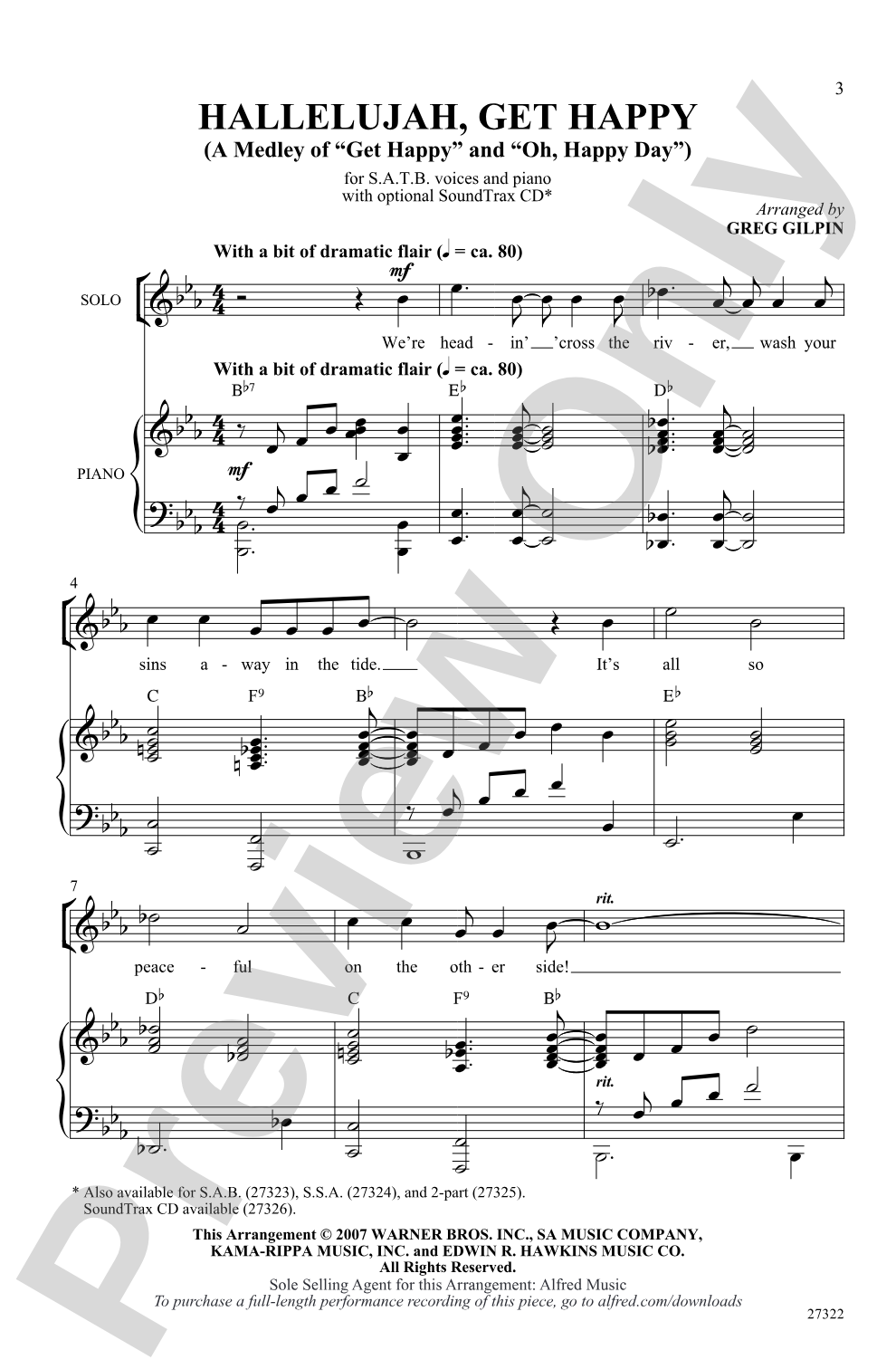
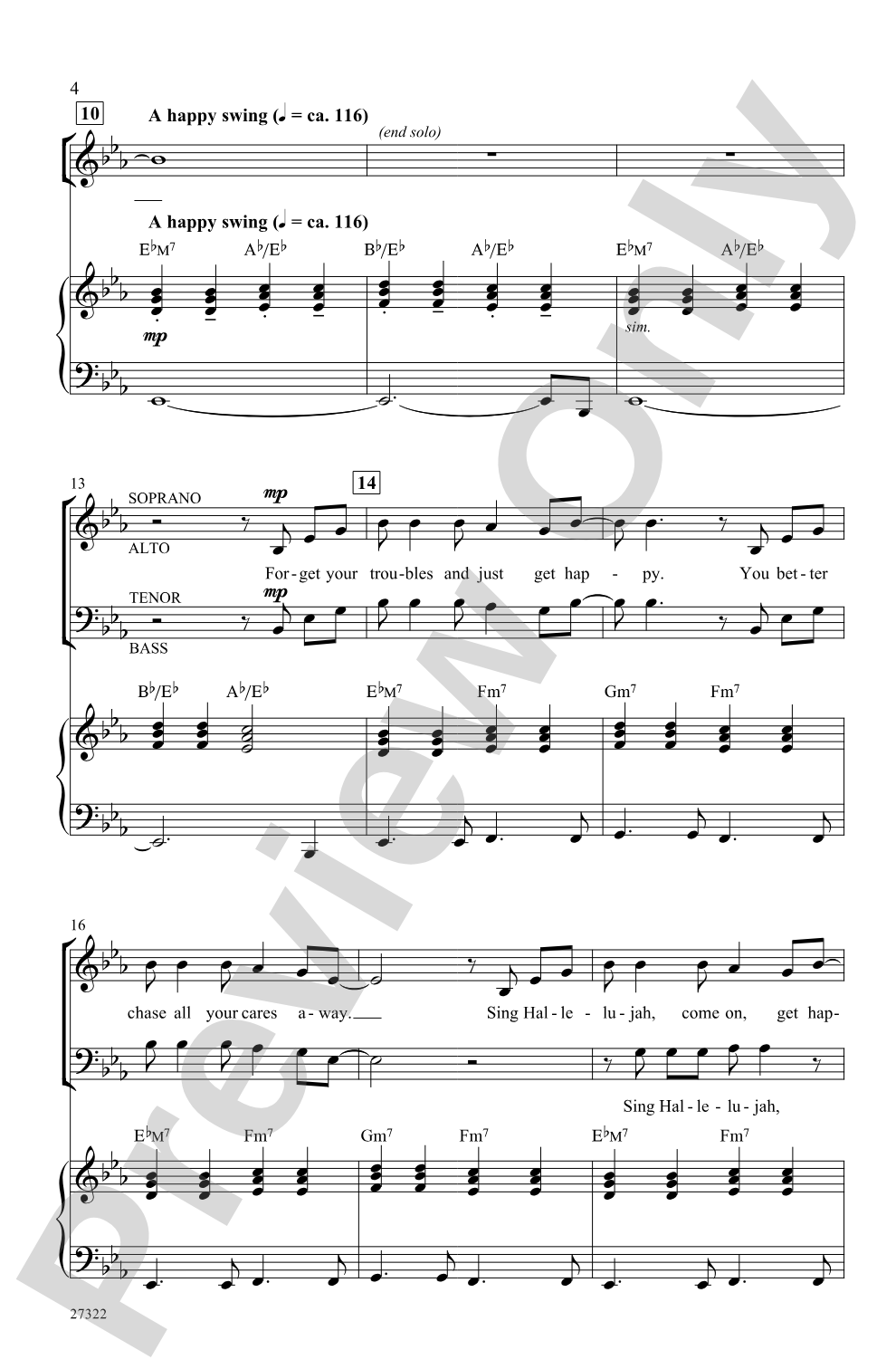
Here's a medley that couldn't be happier. It includes a swinging classic ("Forget your troubles and just get happy...") and a gospel standard ("Oh happy day...when all my sins were washed away..."). Put the two together and it's a recipe for a smile. The lyrics make it appropriate for all age groups, and the songs are ideal for any concert.


Hallelujah, Get Happy! (A Medley): SATB Choral Octavo isn't in MakeMusic Cloud just yet...but it could be. Let us know you'd like to see it, and you'll help shape what comes next. In the meantime, start a free trial and dive into thousands of interactive titles your students can play along with today.
Request This Title
Tell us you want it.
Start Your Free Trial
Explore everything that's ready to play right now.
Sample Audio
1
Audio File
--:--
0:00
0:00
Sample Video
No sample videos found.
Additional Details
Series:
Alfred Archive Edition: Alfred Pop Choral Series
Publisher:
Alfred Music
Page Count:
16
SKU:
00-PO-0006571
More about this title
About the Composer: Harold Arlen
Harold Arlen (1905-1986) composed some of the most enduring melodies in American popular music, from the Great Depression through the mid-twentieth century. His gift for crafting singable, emotionally resonant tunes made him a favorite of Broadway, Hollywood, and jazz musicians alike. Arlen's work appears across genres because his melodies transcend any single style; they succeed equally in a concert hall, a jazz club, or a church.
Why we love this
Greg Gilpin's arrangement channels the joy of two beloved American standards without sacrificing musical substance. The pairing feels inevitable in hindsight, yet the arrangement does genuine work to make the medley coherent rather than just spliced together. Choirs consistently report that audiences light up the moment these opening melodies land, and your singers will feel that energy right back.
What to expect
The opening swings with irrepressible optimism, full of the resilience that defined American popular song during hard times. When the gospel section arrives, the mood deepens and quiets, inviting reflection before the closing energy restores the smile. The overall effect is one of genuine warmth, never saccharine, rooted in real musical tradition.
Who it's for
This arrangement works for mixed choirs with developing singers through experienced ensembles. The straightforward SATB voicing and accessible ranges make it suitable for high school choirs and volunteer church singers, while the musical sophistication and arrangement craft will engage more advanced groups.
How to get the most out of it
- Establish the swing feel early in rehearsal. The rhythmic lilt of "get happy" drives the entire medley, so lock in the pocket before moving to the gospel section.
- Shape the dynamic arc across the two songs. Build momentum through the first tune, then use the transition into "Oh Happy Day" to recalibrate the energy rather than sustain it unchanged.
- Balance clarity in the text with musicality in the lines. Both songs live or die by their lyrics, so ensure diction doesn't sacrifice the flowing contours of Arlen's melodies.
- If using the recorded accompaniment, rehearse enough a cappella or with piano to ground the choir's independence before relying on the track in full rehearsals.
How to use it
Position this in the second half of a concert where the audience has settled in and will respond to the uplifting mood shift. It pairs naturally with other jazz-inflected or gospel-touched pieces, or it can stand alone as a palate cleanser after heavier contemporary choral work. The medley also works well in spring or holiday contexts where celebration feels appropriate.
Skills your students will build
- Swing rhythm and articulation in a popular music idiom
- Transitioning between contrasting musical styles and tempos within a single piece
- Phrase shaping across two songs with different emotional centers
- Balancing rhythmic precision with lyrical delivery in text-driven music