
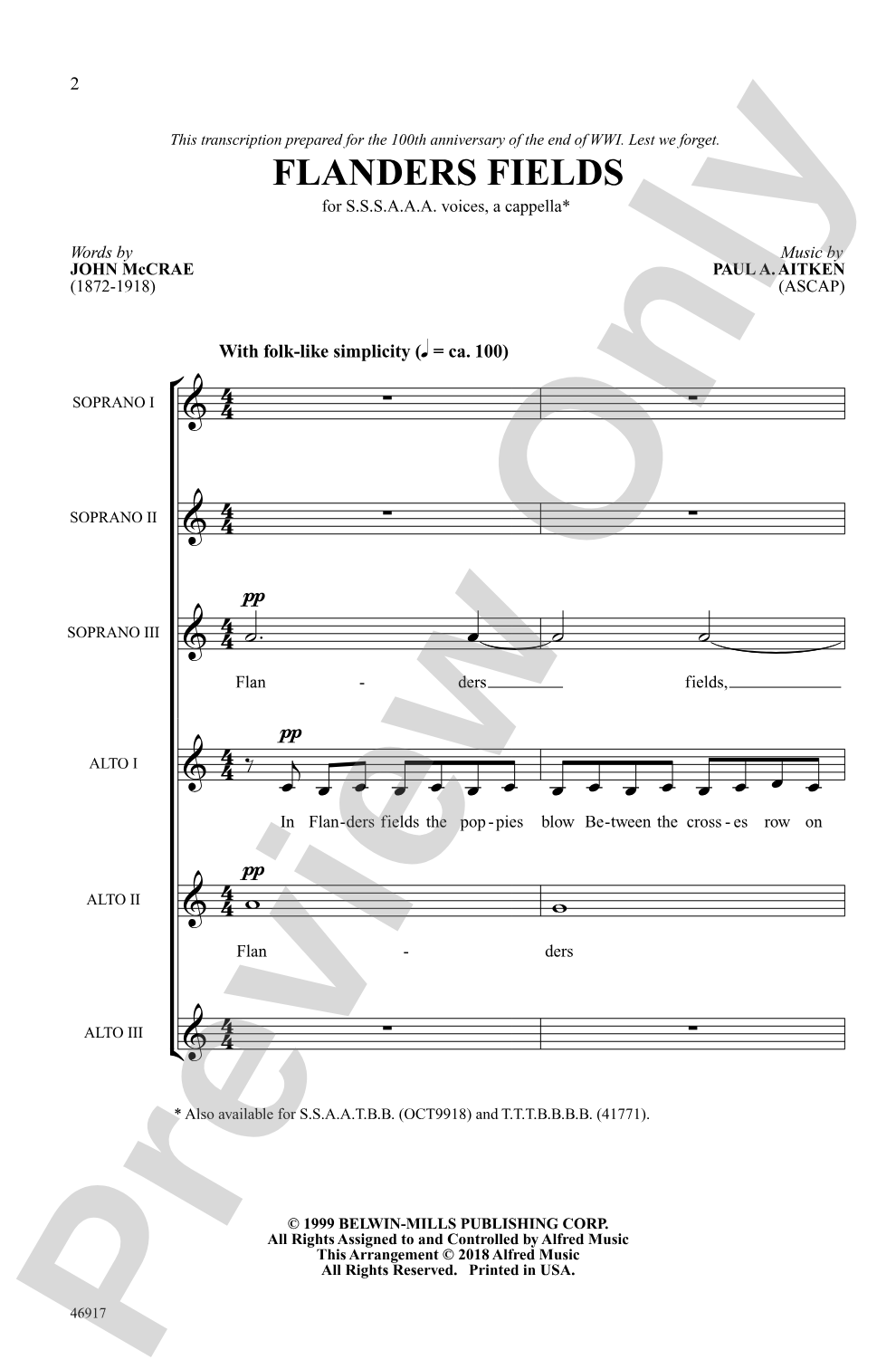
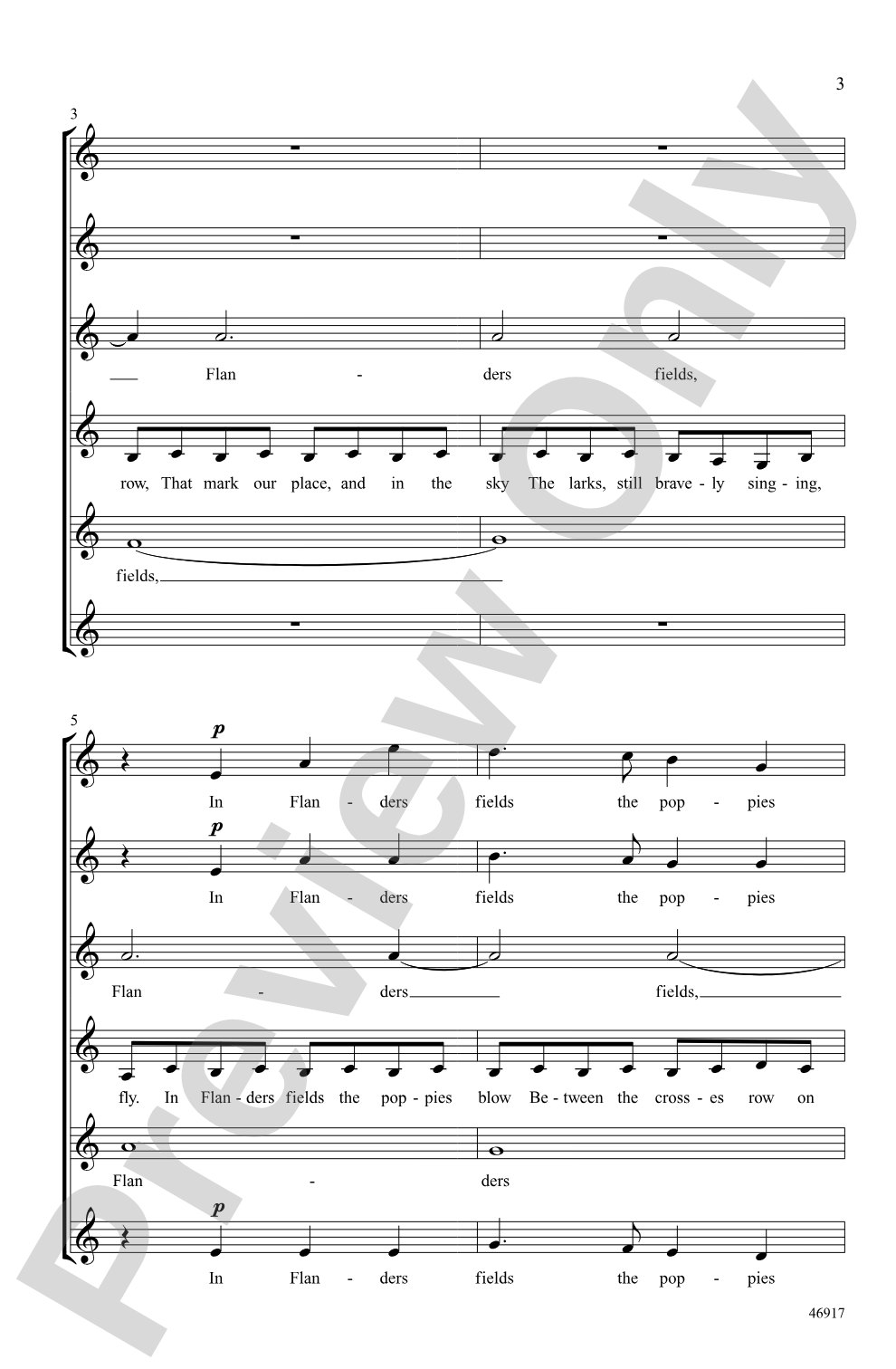
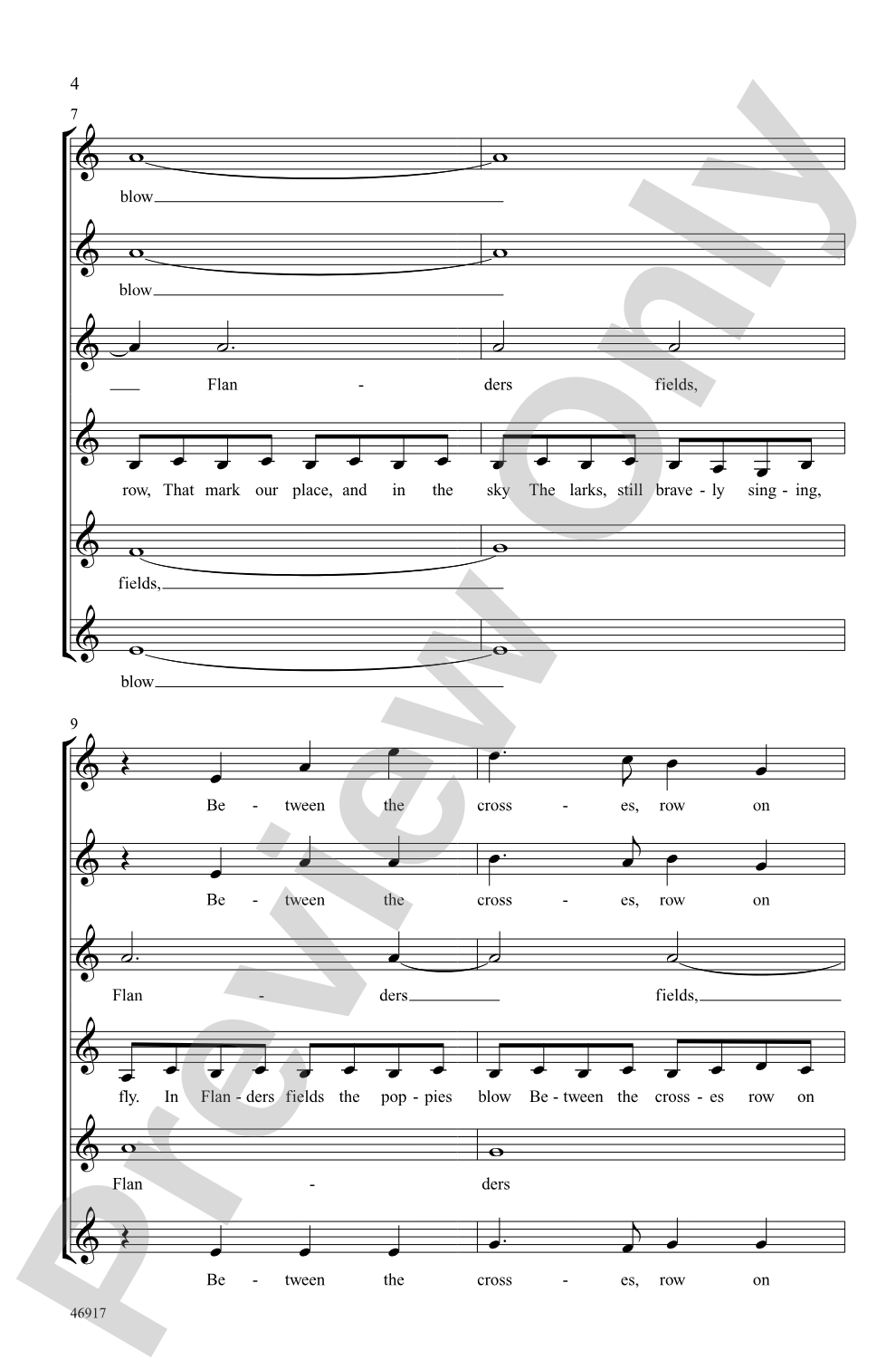
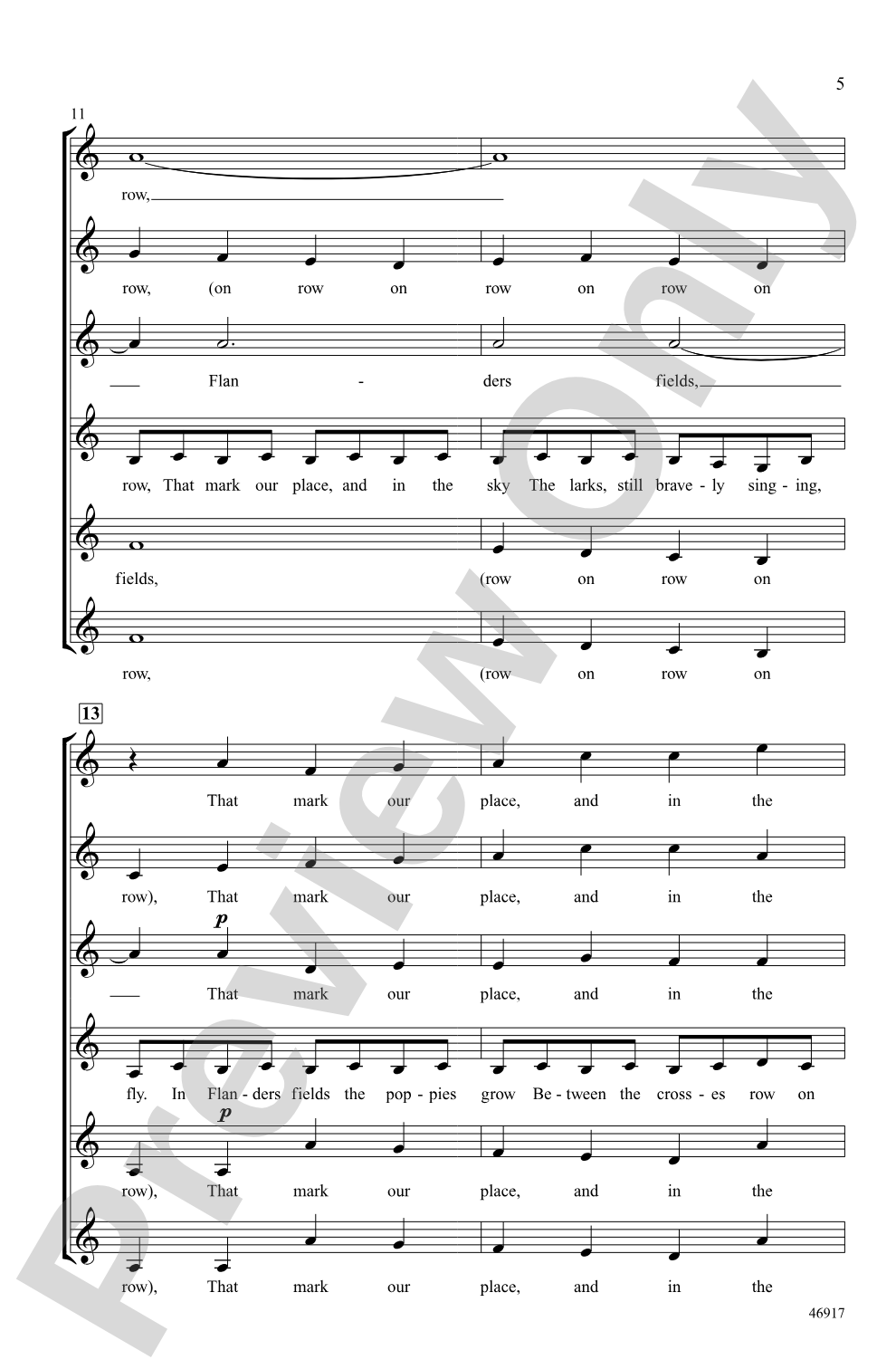

Flanders Fields: SSSAAA Choral Octavo
Words by John McCrae, music by Paul A. Aitken
Item: 00-PO-0005787

$2.30
Minimum order quantity: 20 copies
Pickup currently not available
Description
This distinguished setting of the John McCrae text was originally published for mixed choirs soon after being named the first winner of the ACDA Brock Memorial composition contest. Aitken's more recent voicings for women's and men's choirs are just as inspiring as the original.


Don't just read it, hear it, play along with it, and watch your students grow with it. In MakeMusic Cloud, Flanders Fields: SSSAAA Choral Octavo comes alive with professional accompaniment, adjustable tempo, and built-in practice tools that turn solo practice into real progress.
Open in the Player
Jump straight in and assign it today.
Start Your Free Trial
Open this title and explore the full library in minutes.
Sample Audio
1
Audio File
--:--
0:00
0:00
Sample Video
Additional Details
Series:
Lawson-Gould
Publisher:
Alfred Music
Page Count:
20
SKU:
00-PO-0005787
More about this title
About the Composer: Paul A. Aitken

Paul A. Aitken grew up in Canada and has built a prolific career as a composer and conductor spanning more than two decades. He currently serves as Director of Music & Worship Arts and Composer-in-Residence at the Cathedral of the Rockies in Boise, Idaho, where he oversees more than twenty ensembles across two campuses. His work has earned commissions from major organizations including the American Guild of Organists, the State of Idaho, and the Boise Philharmonic Master Chorale, and he made his Carnegie Hall debut in 2010 conducting his large-scale choral work "And None Shall Be Afraid."
Aitken's composition "Flanders Fields" earned distinction as the inaugural winner of the ACDA Brock Student Composition Competition, launching what would become a catalog of over forty works. He holds degrees from the University of Western Ontario, Southern Illinois University at Carbondale, and the University of Oklahoma, and remains deeply engaged with ACDA at state, divisional, and national levels, having served as National Chair of Music in Worship.
Why we love this
Aitken's setting captures the profound quiet of McCrae's poem without sentimentality, letting the text speak through transparent, singable lines that even modest choirs can execute with impact. The SSSAAA voicing unlocks this masterwork for treble ensembles at a moment when meaningful patriotic repertoire for women's voices remains scarce. A piece that won a national composition award for its artistry deserves to reach far more stages than it currently does.
What to expect
A measured meditation rather than a grand proclamation. The writing is lean and exact, with moments of harmonic richness that emerge from restraint rather than abundance. There is dignity in the pacing and an almost liturgical quality to how the voices move together.
Who it's for
Women's choirs and treble ensembles seeking repertoire that honors serious literary content with equally serious musical craftsmanship. This works for high school, college, and community choirs willing to engage thoughtfully with a text that deserves contemplation and respect.
How to get the most out of it
- Shape the phrase to the punctuation of McCrae's text rather than to the musical line; the poem's syntax guides breath placement and emotional pacing.
- Balance the upper voices to ensure the poem remains audible; even when writing is full, the text must project clearly.
- Secure the a cappella tuning by having singers internalize the opening sonority before rehearsing individual parts; pitch stability makes all the difference in this style.
- Move through transitions between sections with purpose; the restraint of the voicing means that subtle tempo or dynamic shifts communicate character more than they would in larger ensemble writing.
How to use it
Program this as a centerpiece for a memorial concert, a patriotic observance, or a program exploring poetry through music. It pairs well with other contemplative choral works and gains resonance when performed in sequence with texts that ask similar questions about loss and remembrance.
Skills your students will build
- Singing a cappella with sustained ensemble intonation
- Interpreting poetic text through phrasing and line shaping
- Balancing transparent voicing to ensure textual clarity
- Managing longer phrases within treble vocal ranges
- Responding to literary meaning as a guide for musical interpretation