
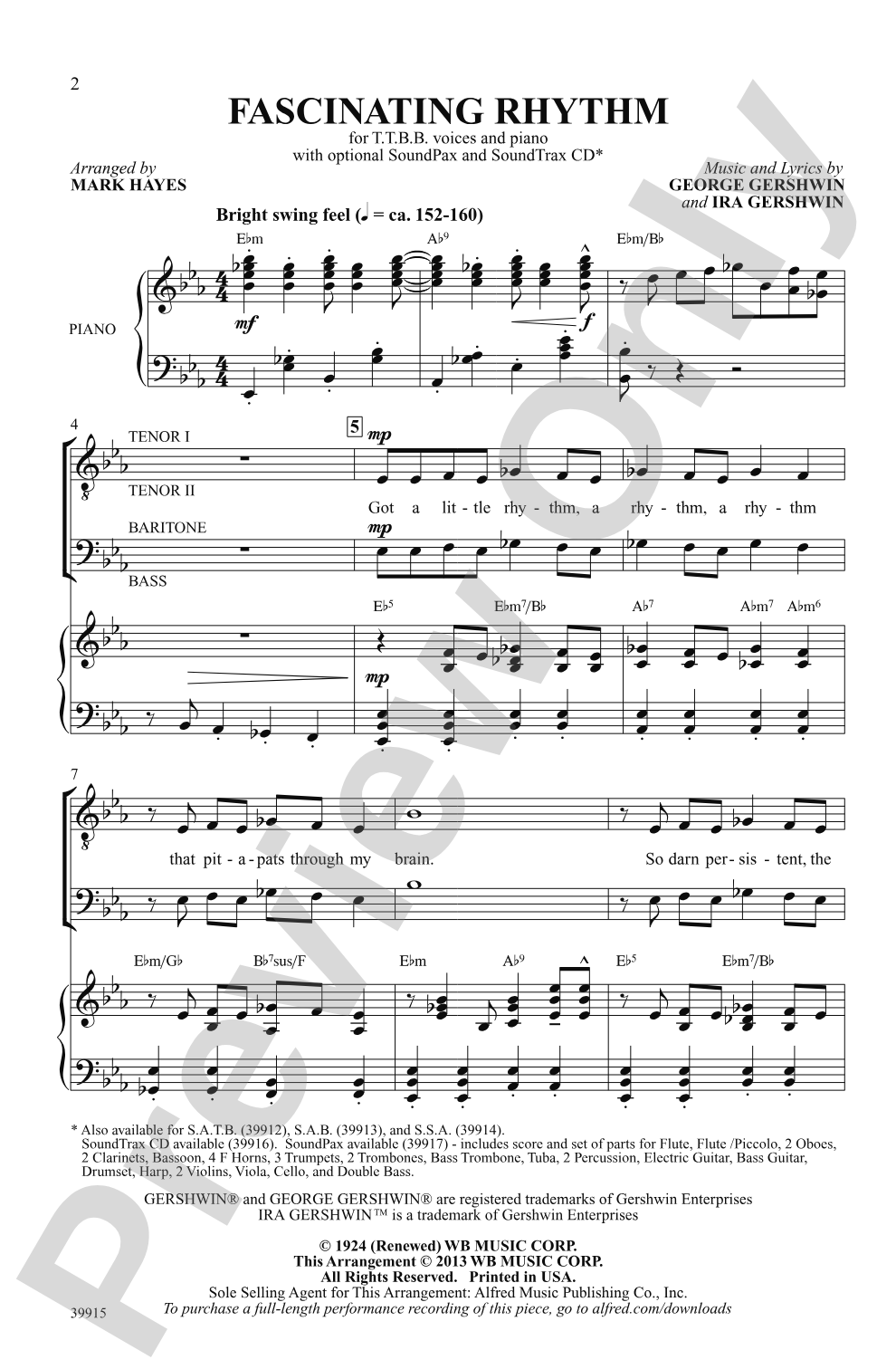
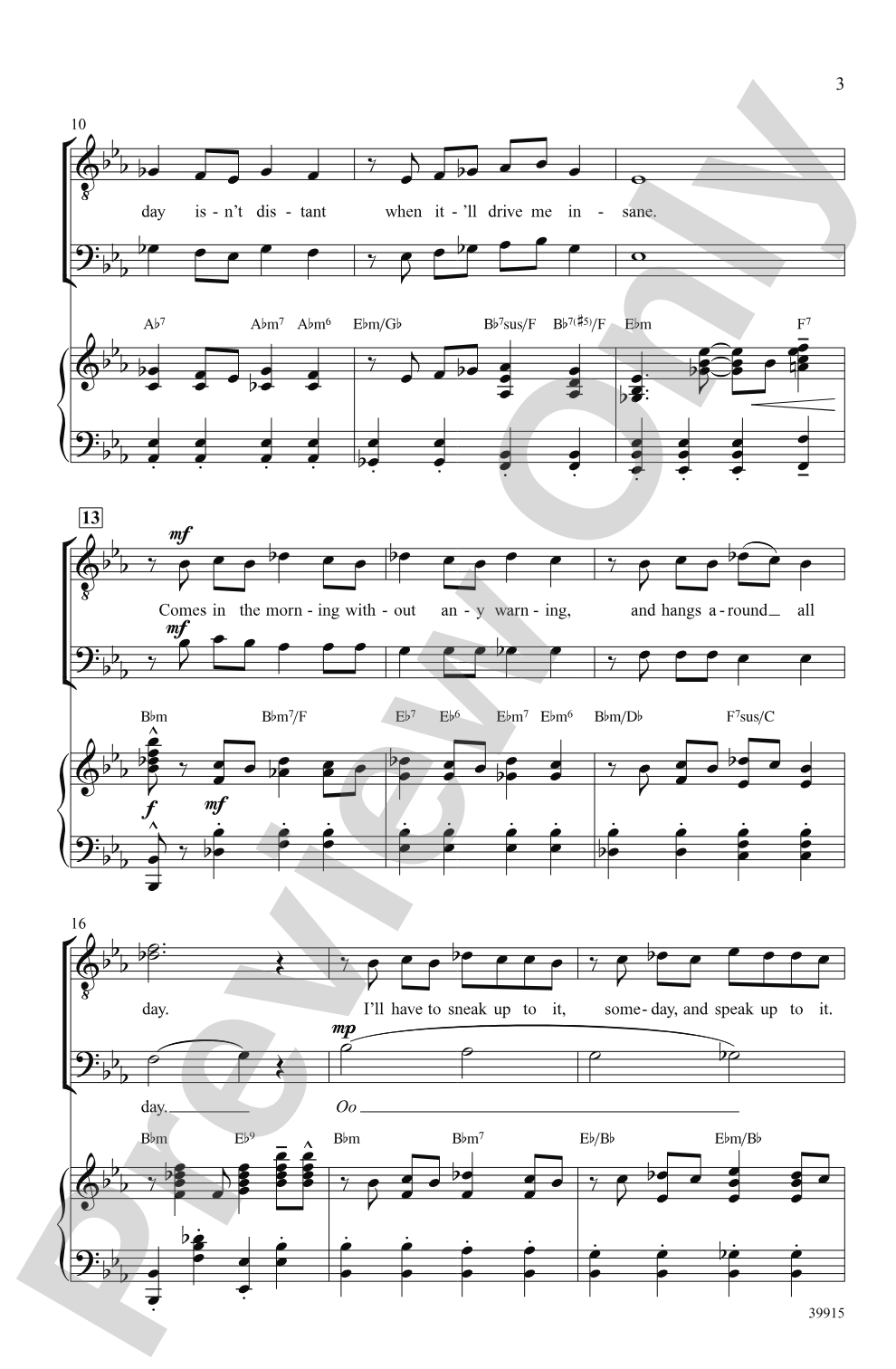
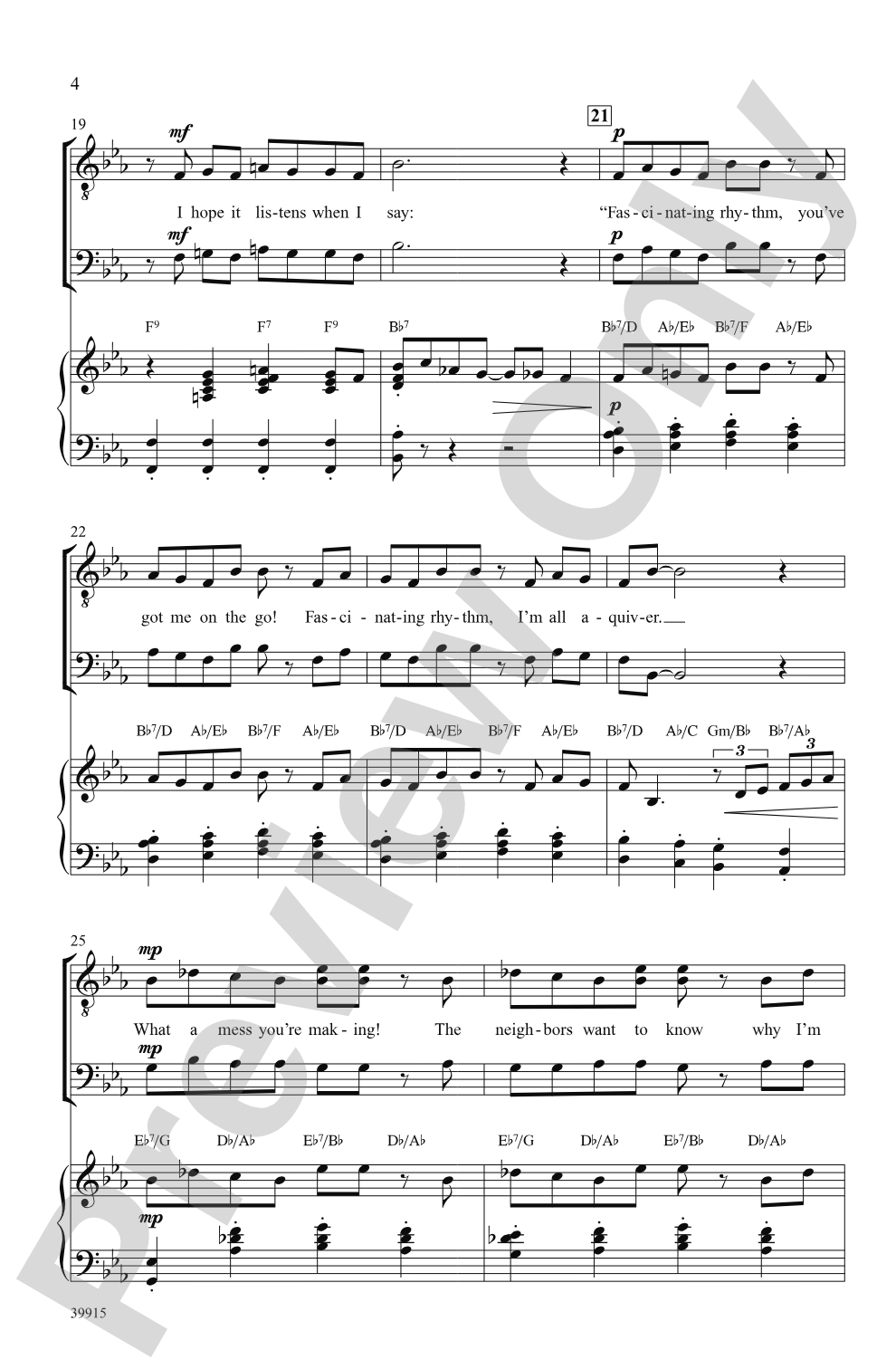

Fascinating Rhythm: TTBB Choral Octavo
Music and lyrics by George Gershwin and Ira Gershwin / arr. Mark Hayes
Item: 00-PO-0001699

$1.90
Minimum order quantity: 10 copies
Please note: Under U.S. copyright law, you must purchase the exact number of copies needed for your ensemble. Printing, duplicating or sharing additional copies is strictly prohibited.
One moment…
Related Items
Fascinating Rhythm: SoundTrax Digital Audio Download |
$27.99
|
View | |
Fascinating Rhythm: SATB Choral Octavo |
$2.10
|
View | |
Fascinating Rhythm: SAB Choral Octavo |
$1.90
|
View | |
Fascinating Rhythm: SSA Choral Octavo |
$1.90
|
View | |
Fascinating Rhythm: Choral SoundPax |
$60.00
|
View | |
Fascinating Rhythm: SATB Choral Octavo |
$2.10
|
View | |
Fascinating Rhythm: SAB Choral Octavo |
$1.90
|
View | |
Fascinating Rhythm: SSA Choral Octavo |
$1.90
|
View | |
Fascinating Rhythm: TTBB Choral Octavo |
$1.90
|
View | |
Fascinating Rhythm: Choral Octavo SoundTrax CD |
$27.99
|
View |
Description
First introduced in the Broadway musical Lady Be Good, this Gershwin hit has been covered by Rosemary Clooney, Michael Feinstein, The Four Tops, and many more. Mark's exciting arrangement effectively includes everything from Latin rhythm to Swing!


Don't just read it, hear it, play along with it, and watch your students grow with it. In MakeMusic Cloud, Fascinating Rhythm: TTBB Choral Octavo comes alive with professional accompaniment, adjustable tempo, and built-in practice tools that turn solo practice into real progress.
Open in the Player
Jump straight in and assign it today.
Start Your Free Trial
Open this title and explore the full library in minutes.
Sample Audio
1
Audio File
--:--
0:00
0:00
Sample Video
No sample videos found.
Additional Details
Series:
Alfred Pop Choral Series
Publisher:
Alfred Music
Page Count:
12
SKU:
00-PO-0001699
More about this title
About the Composer: George Gershwin
George Gershwin (1898-1937) bridged classical and popular music with a fluency that few composers have matched. His ability to write melodies that feel both sophisticated and immediately singable made him one of the most performed composers in American music education, and his songs remain central to the choral and instrumental repertoire.
Gershwin's collaboration with his brother Ira (lyricist) produced some of Broadway's most enduring standards. Pieces like "Fascinating Rhythm" showcase his gift for rhythmic invention and harmonic color, qualities that make his work especially rewarding for student musicians learning to navigate syncopation and jazz-influenced harmony.
Why we love this
Mark Hayes's arrangement captures the infectious energy of the original while giving TTBB singers distinct material to chew on. The mix of Latin rhythm and swing styles keeps every section engaged, and the twelve pages are packed with genuine musical substance rather than padding, making this a piece that rehearses well and performs with confidence.
What to expect
Bright, propulsive, and groove-driven from the opening downbeat. The piece channels the energy of a Gershwin-era jazz club, complete with the rhythmic sophistication and melodic charm that made the original a Broadway sensation. Singers feel the style shift between Latin and swing sections as if moving between different moments of the same exciting evening.
Who it's for
TTBB choirs looking for a showstopper with real musical substance. This arrangement works equally well for high school ensembles with solid reading skills and college or adult choirs seeking an accessible but stylistically rich selection that audiences love.
How to get the most out of it
- Establish the rhythmic pocket early in rehearsal. The Latin sections and swing figures demand precision, so lock the foundational pulse before layering in the harmonic and melodic details.
- Balance the texture so that section lines remain clear even when parts move quickly. This arrangement asks a lot rhythmically, so voicing clarity will prevent muddiness.
- Lean into the style shifts. The contrast between Latin and swing isn't incidental; it's the arrangement's core appeal. Let those moments breathe and sound intentional.
- Use the recorded accompaniment to internalize the grooves, especially if your singers are less experienced with jazz inflection and rhythmic syncopation.
How to use it
Place this mid-program or as a closer to lighten the mood after a heavier set. Its broad appeal and infectious rhythm make it an excellent bridge between classical and contemporary programming, and the strong recorded accompaniment option means you can program it even in venues where a full rhythm section isn't feasible.
Skills your students will build
- Syncopated rhythm reading (eighth-note syncopation and swing figures)
- Style awareness (distinguishing Latin and swing idioms within a single piece)
- Jazz harmonic language (tritones, secondary dominants, blues inflections)
- Rhythmic independence (maintaining part integrity amid active rhythmic figuration in other voices)
- Expressive phrasing in a secular/popular music context