
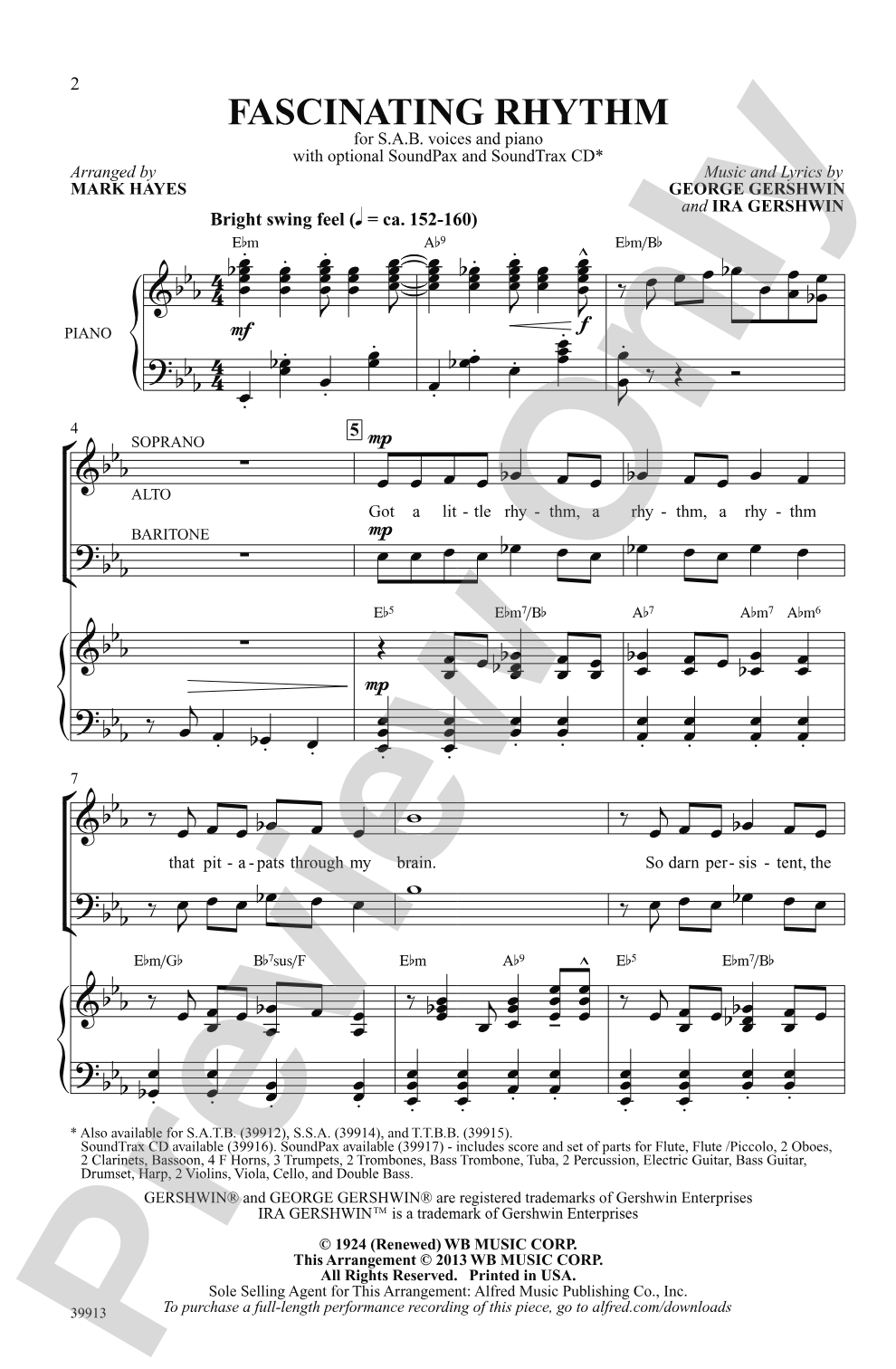
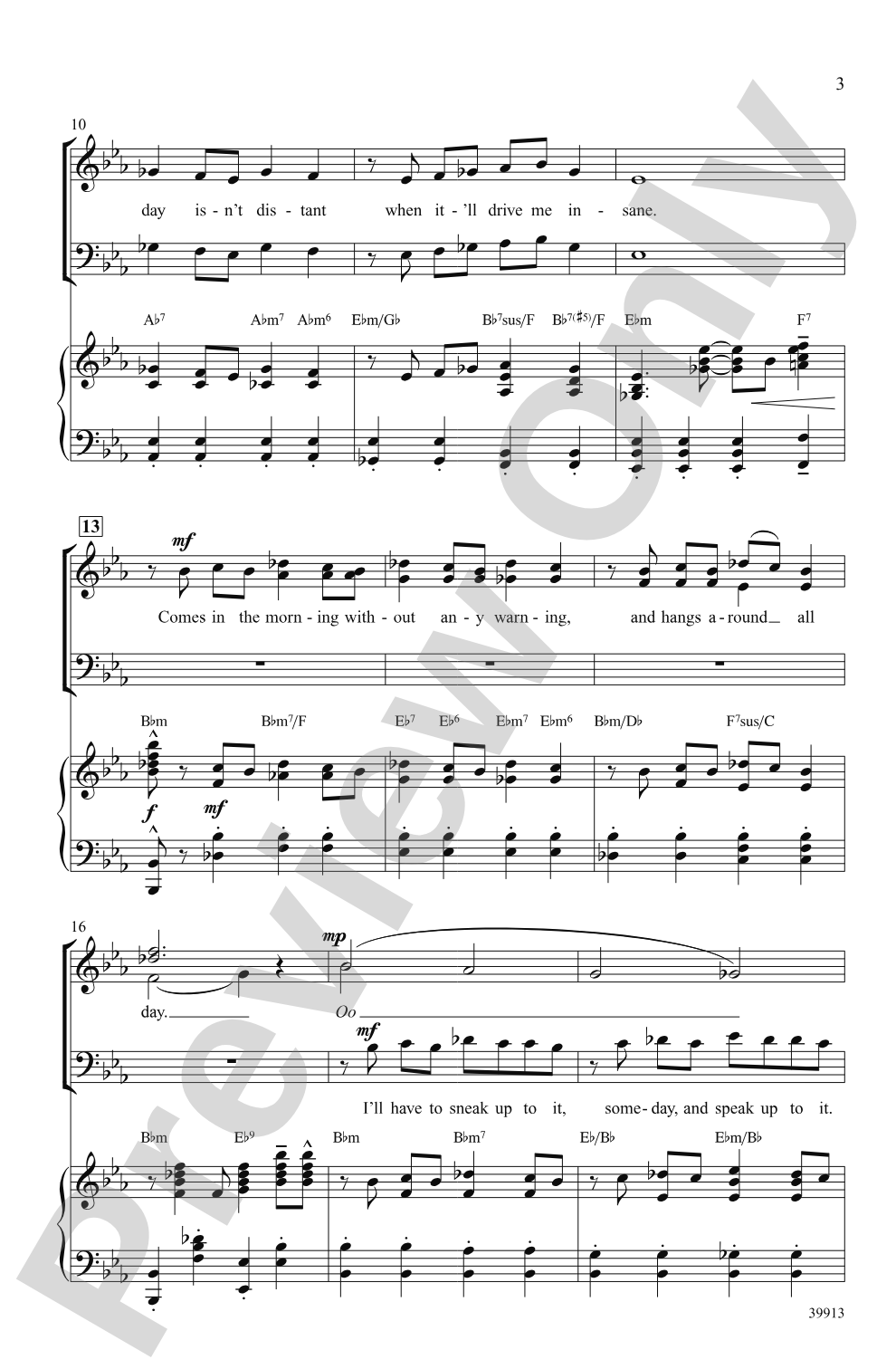
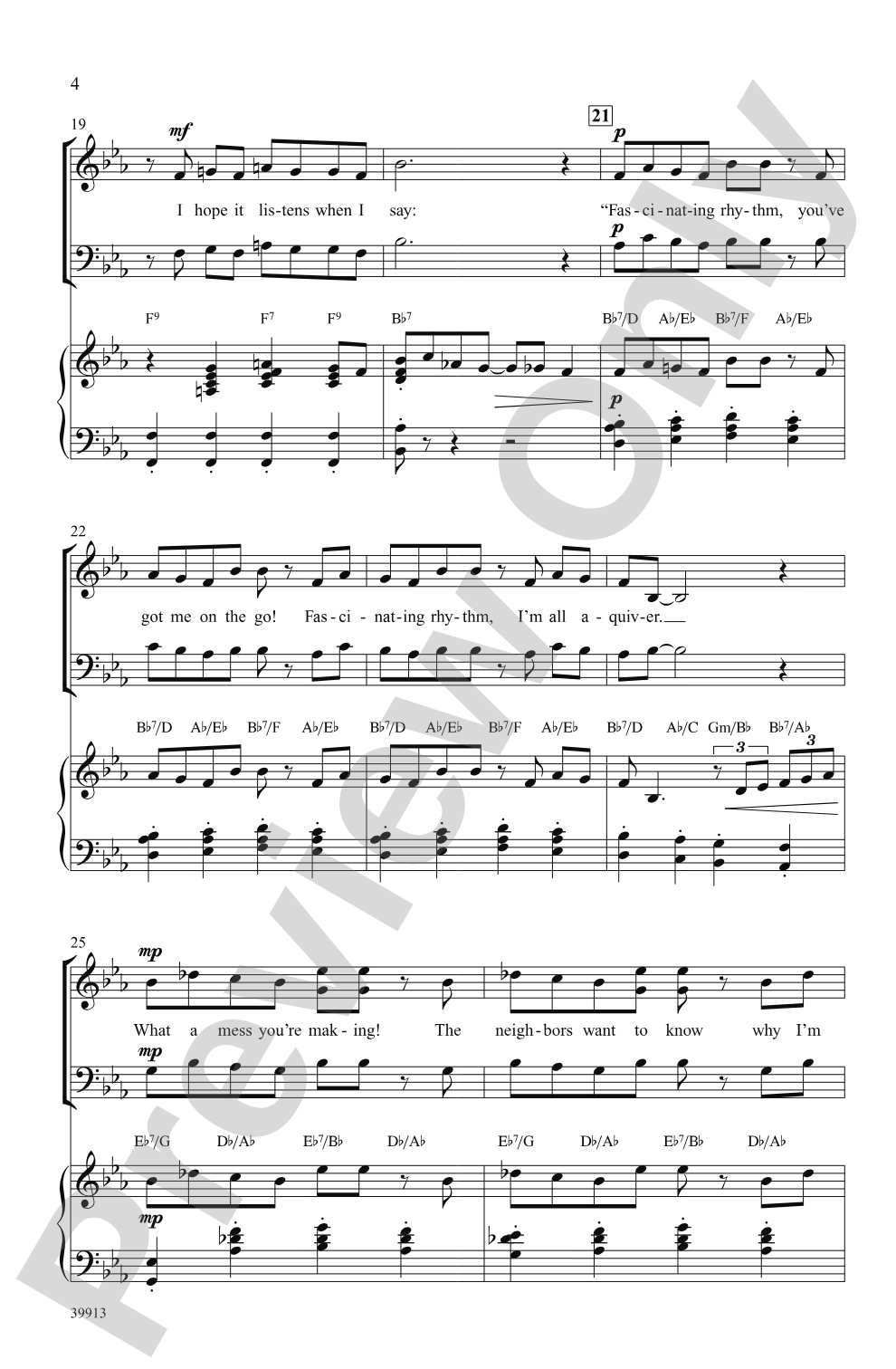

Fascinating Rhythm: SAB Choral Octavo
Music and lyrics by George Gershwin and Ira Gershwin / arr. Mark Hayes
Item: 00-PO-0001697

$1.90
Minimum order quantity: 10 copies
Please note: Under U.S. copyright law, you must purchase the exact number of copies needed for your ensemble. Printing, duplicating or sharing additional copies is strictly prohibited.
One moment…
Related Items
Fascinating Rhythm: SoundTrax Digital Audio Download |
$27.99
|
View | |
Fascinating Rhythm: SATB Choral Octavo |
$2.10
|
View | |
Fascinating Rhythm: SSA Choral Octavo |
$1.90
|
View | |
Fascinating Rhythm: TTBB Choral Octavo |
$1.90
|
View | |
Fascinating Rhythm: Choral SoundPax |
$60.00
|
View | |
Fascinating Rhythm: SATB Choral Octavo |
$2.10
|
View | |
Fascinating Rhythm: SAB Choral Octavo |
$1.90
|
View | |
Fascinating Rhythm: SSA Choral Octavo |
$1.90
|
View | |
Fascinating Rhythm: TTBB Choral Octavo |
$1.90
|
View | |
Fascinating Rhythm: Choral Octavo SoundTrax CD |
$27.99
|
View |
Description
First introduced in the Broadway musical Lady Be Good, this Gershwin hit has been covered by Rosemary Clooney, Michael Feinstein, The Four Tops, and many more. Mark's exciting arrangement effectively includes everything from Latin rhythm to Swing!


Don't just read it, hear it, play along with it, and watch your students grow with it. In MakeMusic Cloud, Fascinating Rhythm: SAB Choral Octavo comes alive with professional accompaniment, adjustable tempo, and built-in practice tools that turn solo practice into real progress.
Open in the Player
Jump straight in and assign it today.
Start Your Free Trial
Open this title and explore the full library in minutes.
Sample Audio
1
Audio File
--:--
0:00
0:00
Sample Video
No sample videos found.
Additional Details
Series:
Alfred Pop Choral Series
Publisher:
Alfred Music
Page Count:
12
SKU:
00-PO-0001697
More about this title
About the Composer: George Gershwin
George Gershwin (1898-1937) bridged the concert hall and the popular stage in ways few composers have managed. His gift for melody and his understanding of jazz idiom transformed American music, proving that serious compositional craft and infectious popular appeal were not mutually exclusive. Gershwin's works remain central to music education because they teach students how to swing, how to voice harmonies with sophistication, and how to work across musical genres without apology.
Why we love this
Mark Hayes strips away nothing essential in this arrangement; instead, he deepens the rhythmic vitality and gives SAB singers genuine textural interest without requiring advanced vocal gymnastics. The piece moves between Latin and swing feels naturally enough that your singers will grasp idiomatic differences through singing them, not discussing them. It's the kind of standard that works equally well at a concert, a competition, or a community event because the energy is built into the music itself.
What to expect
Restless energy meets craft. The opening rhythmic figure burrows into your brain immediately; once the Latin section settles, you feel the groove pulling your body forward. When the swing section arrives, the piece opens up—suddenly there's room to swing, to play with the timing, to let personality show through.
Who it's for
Choirs comfortable with rhythmic precision and syncopation. SAB voicing makes this accessible to developing and community ensembles while retaining enough sophistication to keep experienced singers engaged. This works for high school through adult choirs seeking a standard that feels fresh rather than tired.
How to get the most out of it
- Keep the Latin rhythms crisp and precise in the opening section; the contrast with the looser swing feel that follows depends on rhythmic clarity early on.
- Shape the solos to feel conversational rather than precious. This is a number written for Broadway singers, not art song performers.
- Lock the rhythm section (piano, drums if available) so the choir can sit on the groove. Your singers will lock in harder if the accompaniment feels anchored.
- Pay attention to the dynamic range Mark has written. The style invites bright, full sound, but the octavo includes softer moments that let the melody breathe.
How to use it
Program this alongside other Gershwin material or other mid-century popular standards to build a set that teaches idiom through context. The piece also works as a concert opener or closer since it leaves audiences energized. If you're preparing for festival or competition, the recorded accompaniment and optional instrumental parts make this flexible for different performance scenarios.
Skills your students will build
- Reading and performing Latin rhythms (clave-influenced figures)
- Swing articulation and phrasing
- Syncopation across bar lines
- Voice leading in SAB voicing with jazz harmonies
- Sectional independence while maintaining ensemble unity
- Stylistic distinction between rhythmic feels in a single piece