
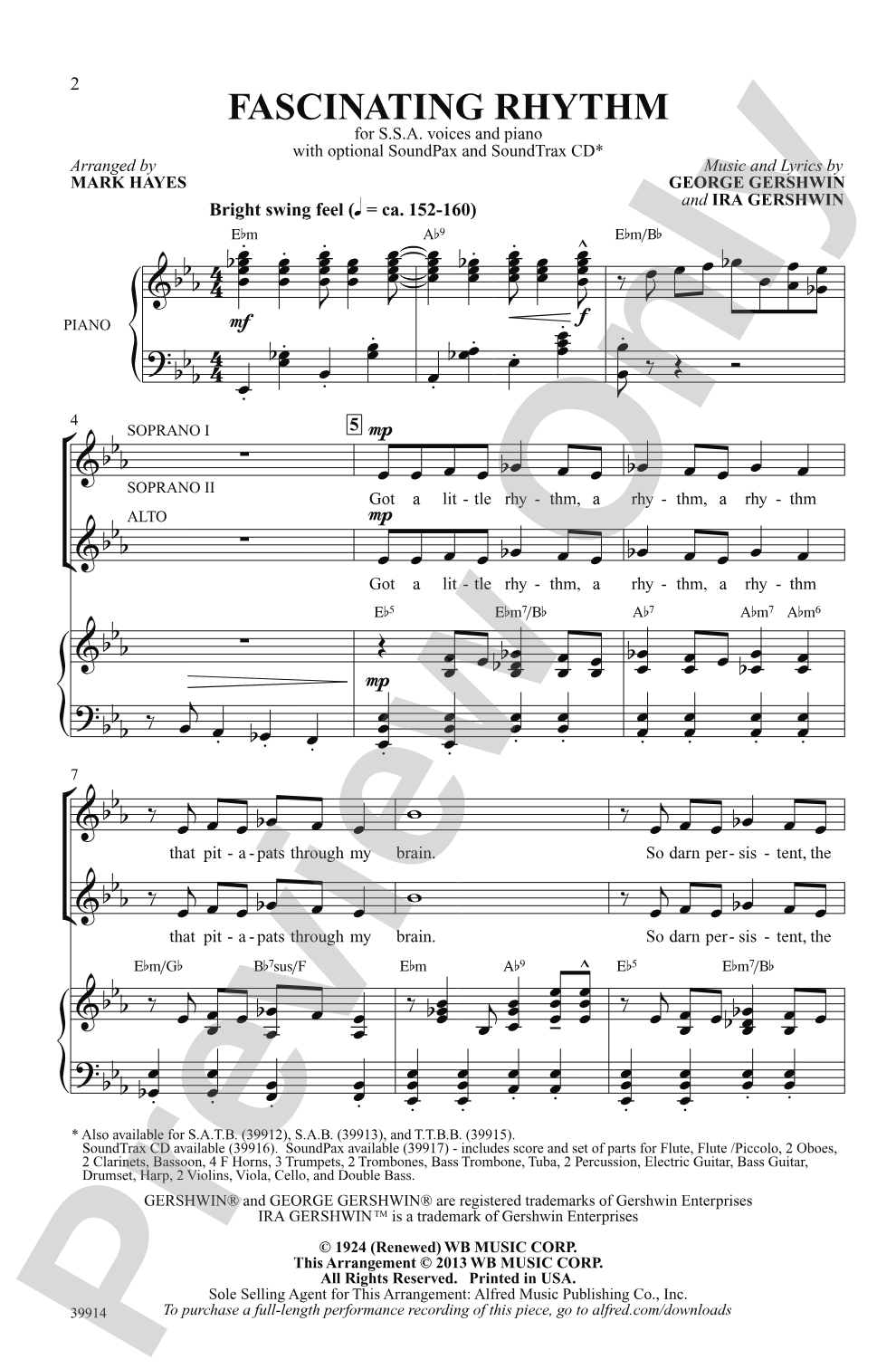
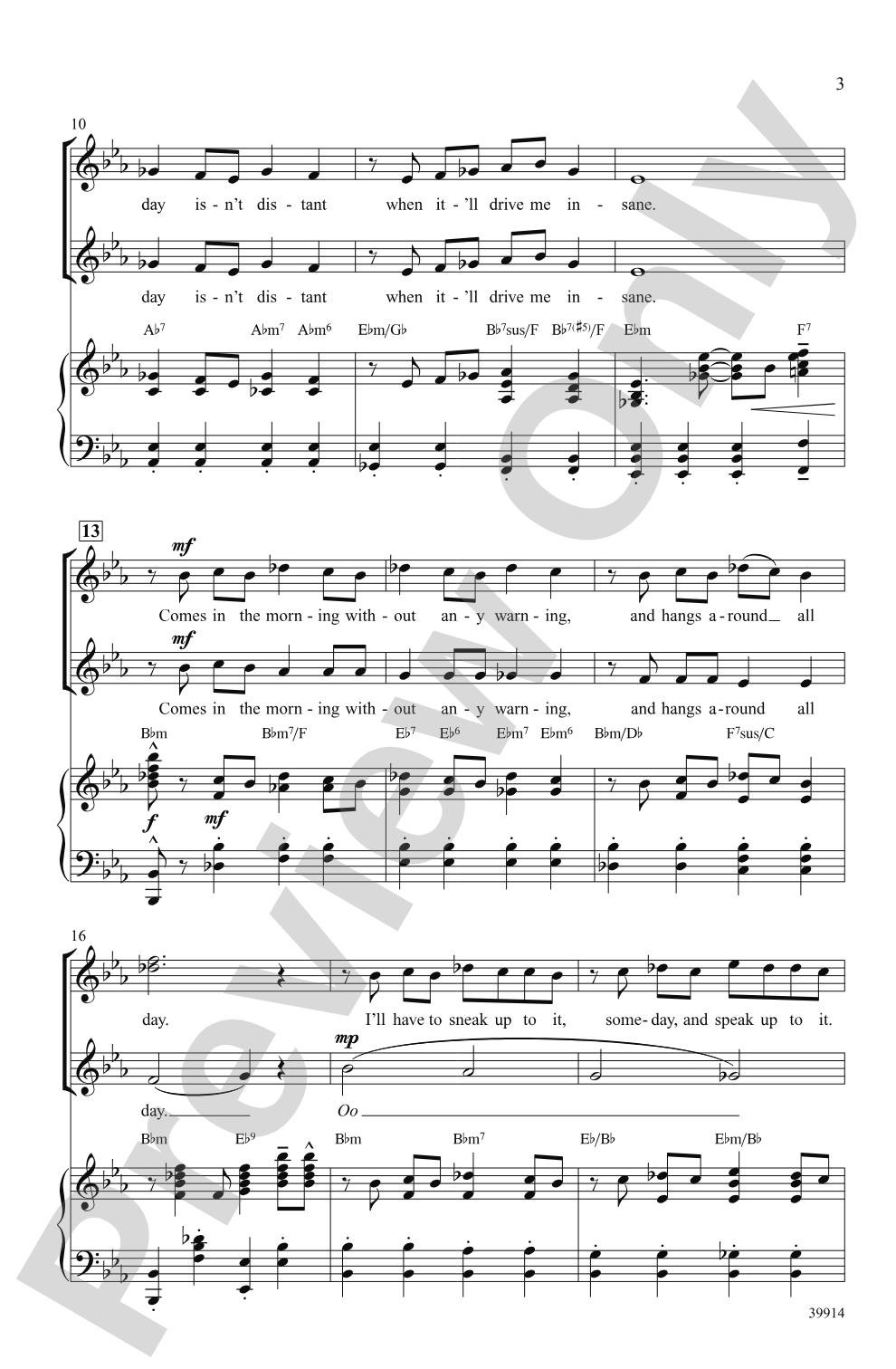
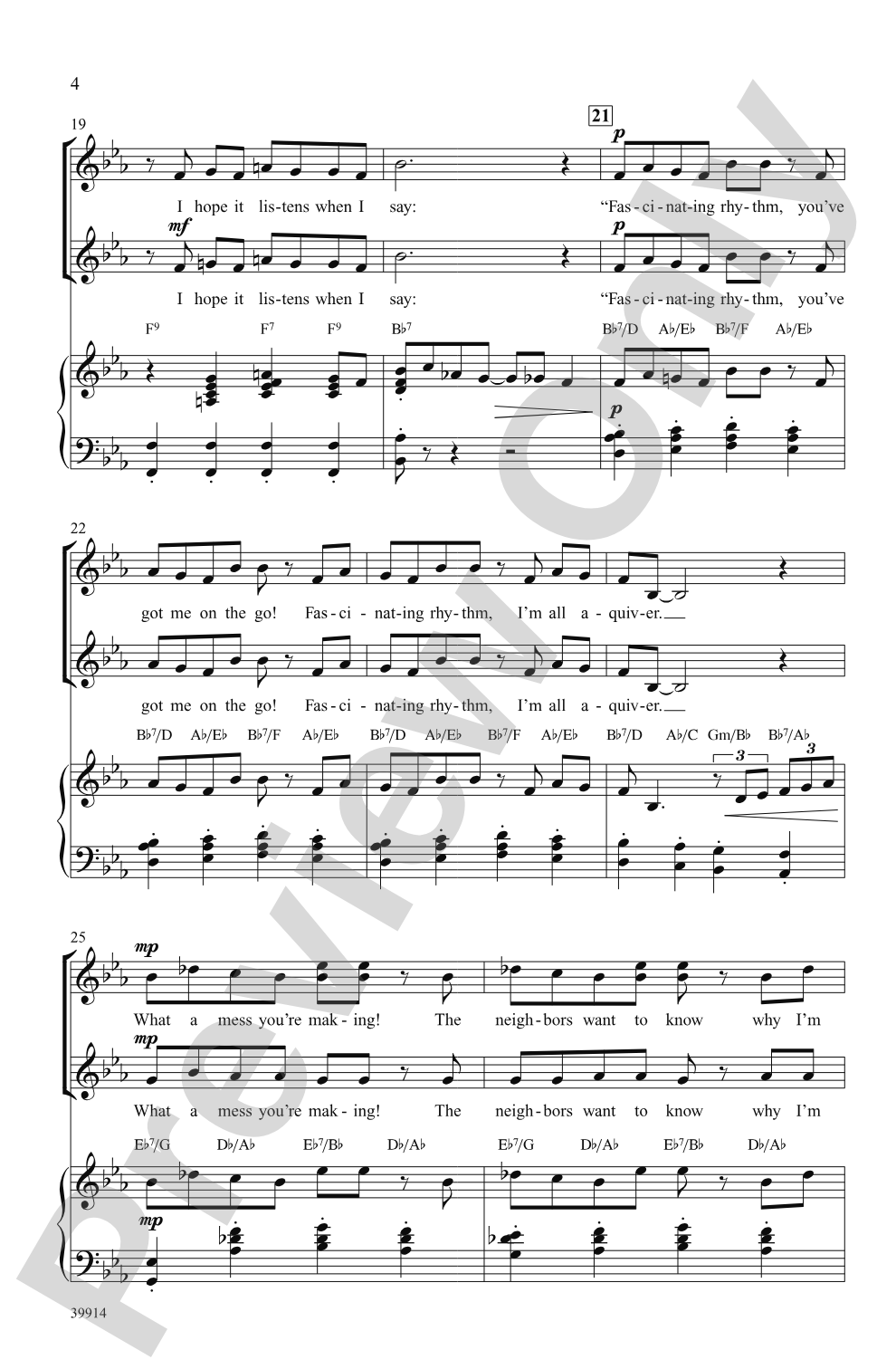

Fascinating Rhythm: SSA Choral Octavo
Music and lyrics by George Gershwin and Ira Gershwin / arr. Mark Hayes
Item: 00-PO-0001698

$1.90
Minimum order quantity: 10 copies
Please note: Under U.S. copyright law, you must purchase the exact number of copies needed for your ensemble. Printing, duplicating or sharing additional copies is strictly prohibited.
One moment…
Related Items
Fascinating Rhythm: SoundTrax Digital Audio Download |
$27.99
|
View | |
Fascinating Rhythm: SATB Choral Octavo |
$2.10
|
View | |
Fascinating Rhythm: SAB Choral Octavo |
$1.90
|
View | |
Fascinating Rhythm: TTBB Choral Octavo |
$1.90
|
View | |
Fascinating Rhythm: Choral SoundPax |
$60.00
|
View | |
Fascinating Rhythm: SATB Choral Octavo |
$2.10
|
View | |
Fascinating Rhythm: SAB Choral Octavo |
$1.90
|
View | |
Fascinating Rhythm: SSA Choral Octavo |
$1.90
|
View | |
Fascinating Rhythm: TTBB Choral Octavo |
$1.90
|
View | |
Fascinating Rhythm: Choral Octavo SoundTrax CD |
$27.99
|
View |
Description
First introduced in the Broadway musical Lady Be Good, this Gershwin hit has been covered by Rosemary Clooney, Michael Feinstein, The Four Tops, and many more. Mark's exciting arrangement effectively includes everything from Latin rhythm to Swing!


Don't just read it, hear it, play along with it, and watch your students grow with it. In MakeMusic Cloud, Fascinating Rhythm: SSA Choral Octavo comes alive with professional accompaniment, adjustable tempo, and built-in practice tools that turn solo practice into real progress.
Open in the Player
Jump straight in and assign it today.
Start Your Free Trial
Open this title and explore the full library in minutes.
Sample Audio
1
Audio File
--:--
0:00
0:00
Sample Video
No sample videos found.
Additional Details
Series:
Alfred Pop Choral Series
Publisher:
Alfred Music
Page Count:
12
SKU:
00-PO-0001698
More about this title
About the Composer: George Gershwin
George Gershwin (1898-1937) bridged concert music and popular song with a fluency that few composers have matched. His rhythmic innovations, harmonic sophistication, and gift for melody made him a defining voice of the American musical theater and jazz age. Gershwin's works remain central to music education because they demonstrate how serious compositional craft and accessibility can coexist, making them ideal entry points for students exploring 20th-century American music.
Ira Gershwin (1896-1983) was George's lyricist and creative partner, supplying the wit, narrative clarity, and singable prosody that made their collaborations endure. Together, they created standards that have been interpreted across genres and generations, from Broadway to concert halls to jazz ensembles. For choral directors, their partnership represents a masterclass in how text and music serve each other.
Why we love this
Mark Hayes's arrangement captures the essential DNA of this Gershwin standard while giving SSA groups genuine rhythmic and harmonic interest. The blend of Latin and swing idioms keeps the arrangement fresh and engaging for singers and audiences alike, and at 12 pages, it's substantial enough to feel rewarding without becoming unwieldy.
What to expect
Sleek, propulsive, and fun. The piece radiates the energy of a 1920s Broadway showstopper while staying grounded in the voice-friendly tessituras Hayes has crafted. Singers feel the swing and Latin grooves rather than struggling against them.
Who it's for
SSA choirs looking for an arrangement that treats their voices seriously without demanding soprano-stratosphere writing. This works equally well for high school show choirs, college treble ensembles, and community groups comfortable with jazz-influenced harmonic language and rhythmic independence.
How to get the most out of it
- Nail the rhythmic precision in the Latin sections. These grooves fall apart if they're approximate; drill the syncopation across all three parts separately, then blend.
- Balance the swing sections so the melody sings over clear but unobtrusive harmonic support. The rhythm section parts (available separately) anchor the groove, so trust them.
- Shape the dynamic arc across the full arrangement. With multiple style shifts, singers can lose sight of the larger phrase. Mark rehearsal points that show where tension builds and releases.
- Use the recorded accompaniment to lock tempos and feel, especially where style changes. Hearing the swing pocket or Latin clave before rehearsal solves timing problems fast.
How to use it
Program this on a concert celebrating American standards or the Great American Songbook. It pairs naturally with other Gershwin works or with mid-century vocal jazz arrangements, and its energy makes it an excellent closer or a strong second-half opener that resets audience attention.
Skills your students will build
- Swing rhythms and articulation
- Latin syncopation and clave patterns
- Rhythmic independence across three parts
- Jazz harmonic vocabulary (especially secondary dominants and chromatic voice leading)
- Style-switching and textural contrast within a single piece