
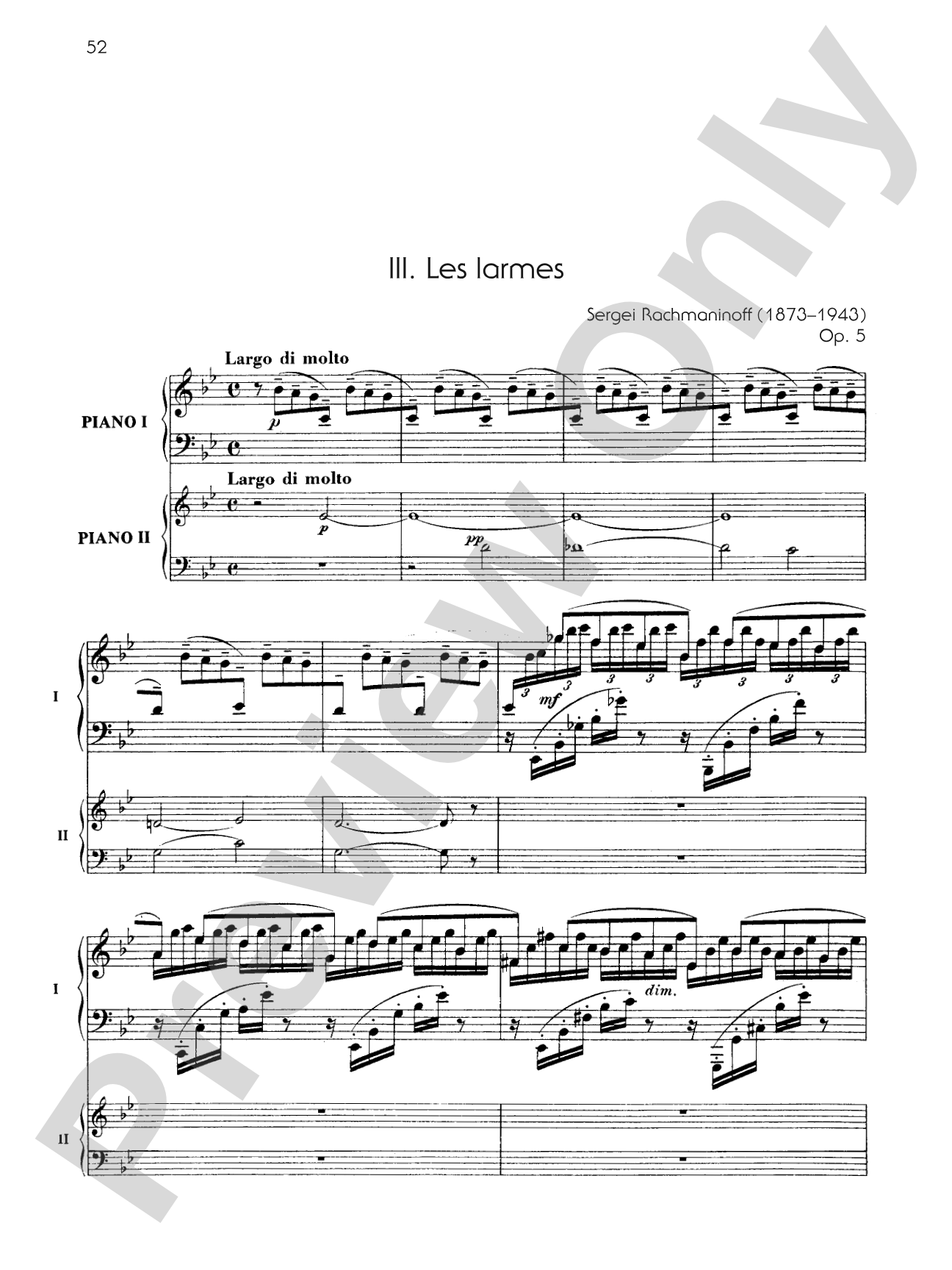
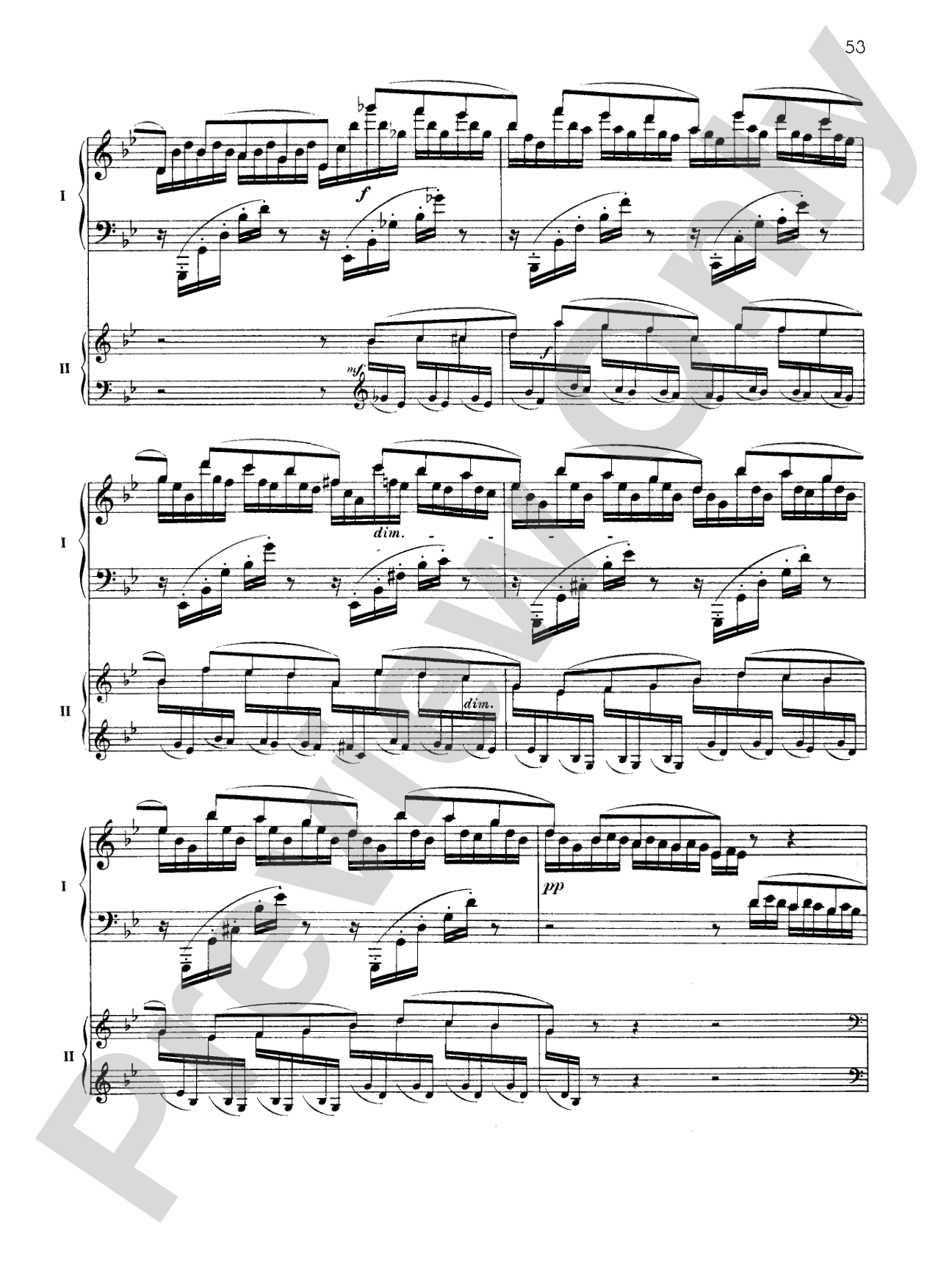
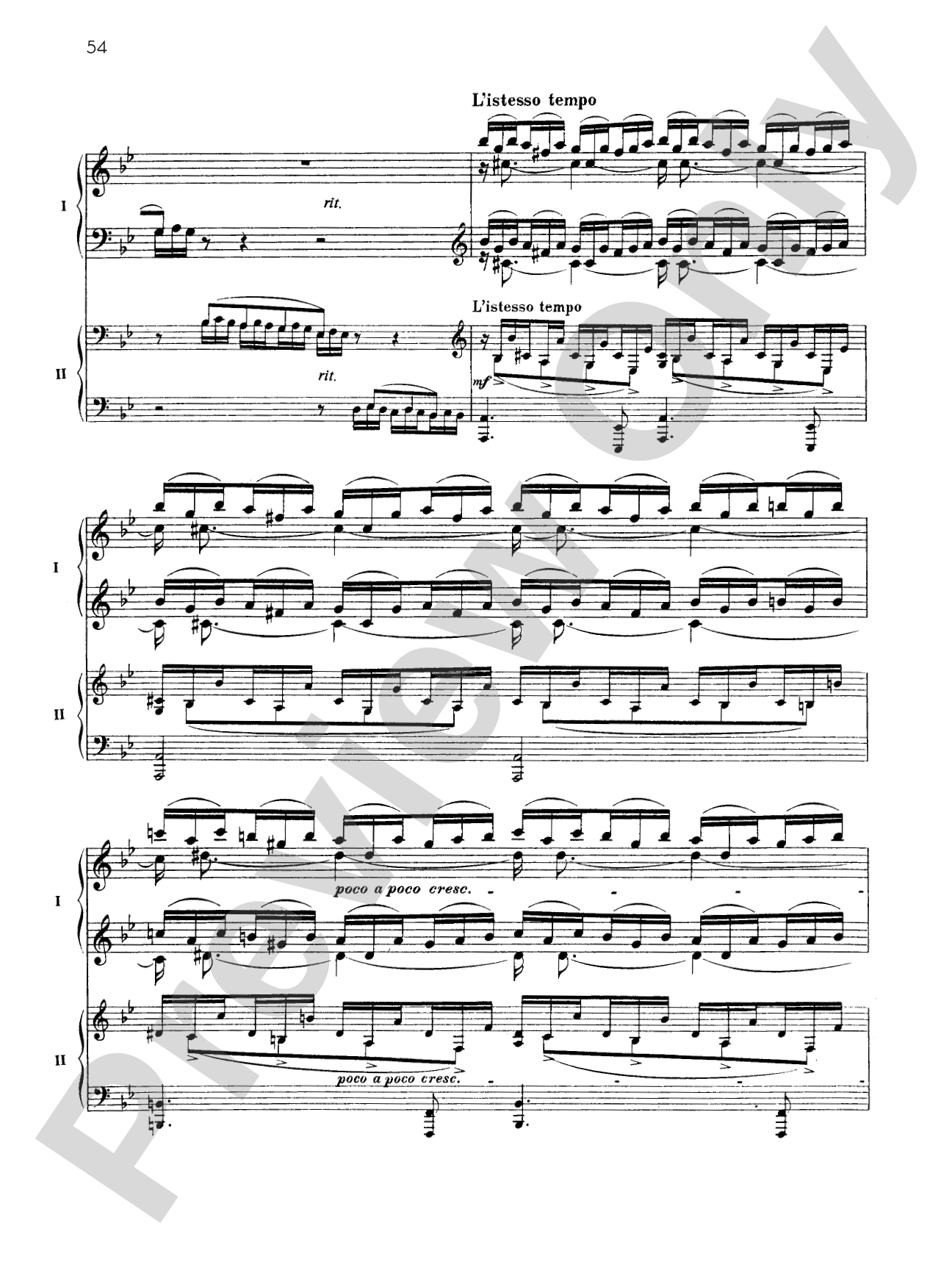

Fantaisie-tableaux (Suite No. 1), Opus 5 - III. Les larmes - Piano Duo (2 Pianos, 4 Hands): Piano Duo (2 Pianos, 4 Hands)
By Sergei Rachmaninoff
Level: Advanced
Item: 00-PS-0017269
$9.99
Pickup currently not available
Related Items
Fantaisie-tableaux (Suite No. 1), Opus 5 - I. Barcarolle - Piano Duo (2 Pianos, 4 Hands): Piano Duo (2 Pianos, 4 Hands) |
$9.99
|
View | |
Fantaisie-tableaux (Suite No. 1), Opus 5 - II. La nuit, l'amour - Piano Duo (2 Pianos, 4 Hands): Piano Duo (2 Pianos, 4 Hands) |
$9.99
|
View | |
Fantaisie-tableaux (Suite No. 1), Opus 5 - IV. Pâques - Piano Duo (2 Pianos, 4 Hands): Piano Duo (2 Pianos, 4 Hands) |
$5.99
|
View | |
Prelude in C-Sharp Minor - Piano Duo (2 Pianos, 4 Hands): Piano Duo (2 Pianos, 4 Hands) |
$5.99
|
View | |
Suite No. 2, Opus 17 - I. Introduction - Piano Duo (2 Pianos, 4 Hands): Piano Duo (2 Pianos, 4 Hands) |
$5.99
|
View | |
Suite No. 2, Opus 17 - II. Valse - Piano Duo (2 Pianos, 4 Hands): Piano Duo (2 Pianos, 4 Hands) |
$9.99
|
View | |
Suite No. 2, Opus 17 - III. Romance - Piano Duo (2 Pianos, 4 Hands): Piano Duo (2 Pianos, 4 Hands) |
$9.99
|
View | |
Suite No. 2, Opus 17 - IV. Tarantelle - Piano Duo (2 Pianos, 4 Hands): Piano Duo (2 Pianos, 4 Hands) |
$9.99
|
View | |
The Piano Works of Rachmaninoff, [0i*] Volume IX: Piano Duos (Two Pianos, Four Hands): Piano Duo (2 Pianos, 4 Hands) Book & Online Audio |
$16.99
|
View |
Description
This historic reference edition contains 9 pieces by Sergei Rachmaninoff for piano duo (Two Pianos, Four Hands), including an arrangement of Prelude in C-sharp Minor, Op. 3 No. 2 by the composer. Also included is a recording of Rachmaninoff's two suites by the famed piano duo Begoña Uriarte and Karl-Hermann Mrongovius. Contains: Fantaisie-tableaux (Suite No. 1), Op. 5 * Suite No. 2, Op. 17 * Prelude in C-sharp Minor, Op. 3, No. 2. A Federation Festivals 2024-2028 selection.


Fantaisie-tableaux (Suite No. 1), Opus 5 - III. Les larmes - Piano Duo (2 Pianos, 4 Hands): Piano Duo (2 Pianos, 4 Hands) isn't in MakeMusic Cloud just yet...but it could be. Let us know you'd like to see it, and you'll help shape what comes next. In the meantime, start a free trial and dive into thousands of interactive titles your students can play along with today.
Request This Title
Tell us you want it.
Start Your Free Trial
Explore everything that's ready to play right now.
Sample Audio
1
FantaisieTableauxPaques
--:--
2
Tarantelle
--:--
FantaisieTableauxPaques
0:00
0:00
Sample Video
No sample videos found.
Additional Details
Series:
Alfred's Classic Editions
Publisher:
Alfred Music
Page Count:
132
SKU:
00-PS-0017269
More about this title
About the Composer: Sergei Rachmaninoff
Sergei Rachmaninoff (1873-1943) stands among the last great Romantic composers, bridging the 19th and 20th centuries with a voice that was unmistakably his own. His command of harmonic color, lyrical melody, and pianistic texture made him one of the most performed composers in the concert hall, and his understanding of the piano's capabilities informed every work he created.
Rachmaninoff's skill at writing for two pianos reflects his deep knowledge of keyboard sonorities and his ability to create rich polyphonic textures. These arrangements and original works for piano duo showcase his gift for sustaining emotional depth across multiple instrumental lines, making them essential repertoire for advanced two-piano partnerships.
Why we love this
This collection captures Rachmaninoff at his most introspective and technically assured, with "Les larmes" standing as a moment of genuine emotional weight within the larger suite structure. The pairing of two pianos allows for a dialogue between the voices rather than a single narrative, and this edition includes a recording by acclaimed performers Begoña Uriarte and Karl-Hermann Mrongovius that serves as both inspiration and reference. For advanced duos seeking masterworks that demonstrate control over color, balance, and sustained lyrical playing, this material demands and rewards serious study.
What to expect
"Les larmes" unfolds with Rachmaninoff's characteristic melancholy and introspection, its title translating to "The Tears." The music moves through shifts in color and texture, trading melodic lines between the two pianos in a way that feels both intimate and substantial, creating an emotional arc that lingers long after the final chord.
Who it's for
Advanced pianist pairs seeking challenging and rewarding repertoire that sits at the intersection of chamber music and solo virtuosity. This edition is ideal for festival or recital programming, competitive two-piano partnerships, and conservatory students preparing advanced duo literature.
How to get the most out of it
- Attend closely to the balance between the two pianos in the reflective passages; "Les larmes" requires one piano to recede while the other carries melody, and this relationship shifts frequently throughout the movement.
- Use the included recording as a study tool for understanding how professional duos voice the harmonic content and shape the longer lines across both instruments.
- Coordinate pedaling carefully between the two pianos, as sustaining pedal choices in one instrument affect the acoustic blend and clarity heard by both players and the audience.
- Shape the opening phrases with attention to rubato and breath; Rachmaninoff's writing invites flexibility, and two pianos can execute subtle tempo adjustments together when the partnership is secure.
How to use it
This movement pairs naturally with other Rachmaninoff compositions in a solo or chamber concert; the inclusion of the Prelude in C-sharp Minor arrangement and the second suite within the same edition makes it possible to build a compelling all-Rachmaninoff or Russian Romantic recital. For festival selection, the Federation Festivals 2024-2028 designation makes it an immediate fit for competitive events at the advanced level.
Skills your students will build
- Balance and voice independence between two pianos
- Pedal coordination and shared acoustic awareness
- Sustaining lyrical lines across longer harmonic progressions
- Interpretive flexibility and collaborative rubato
- Reading and performing complex Romantic-era texture and harmony