
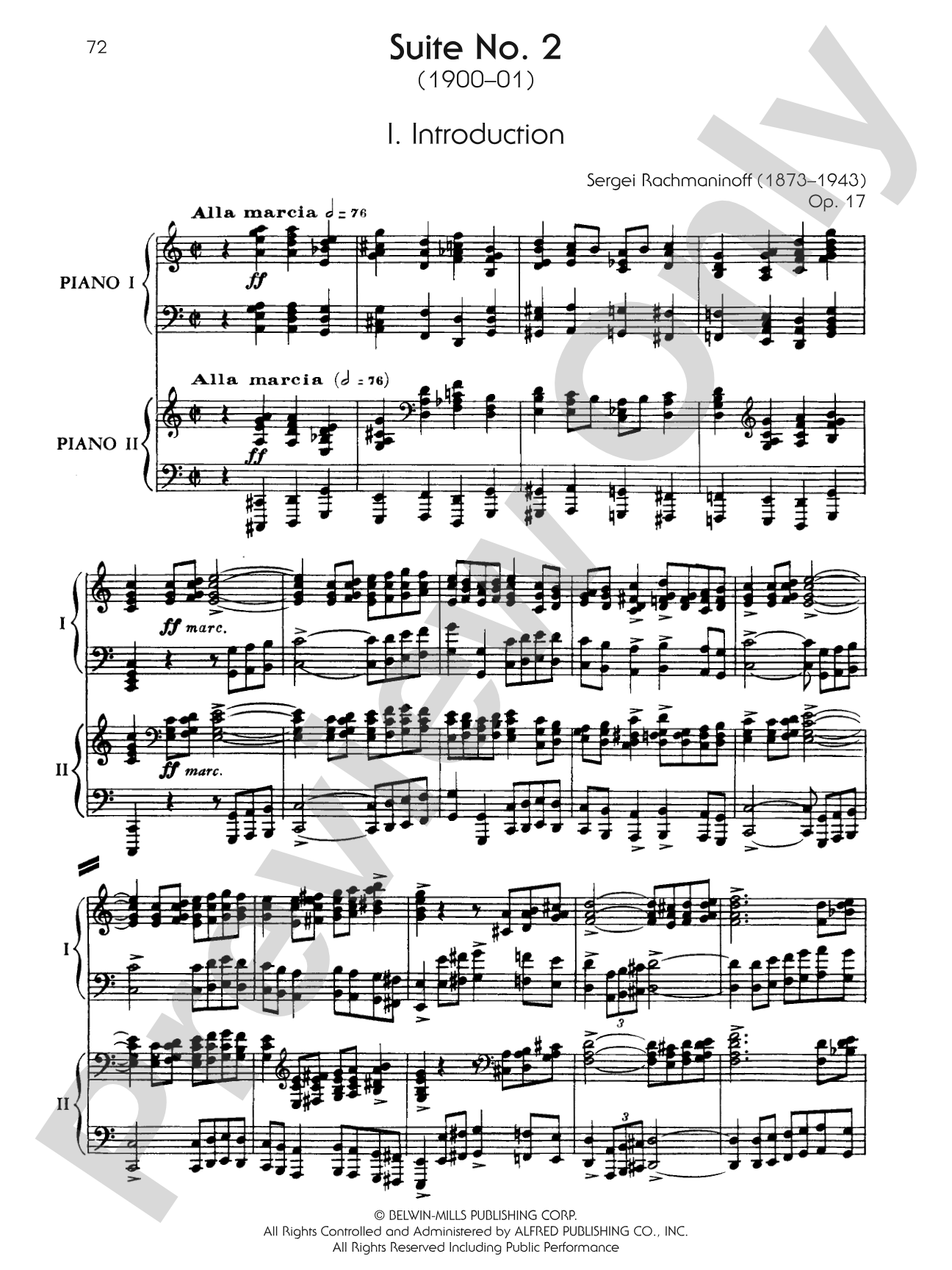
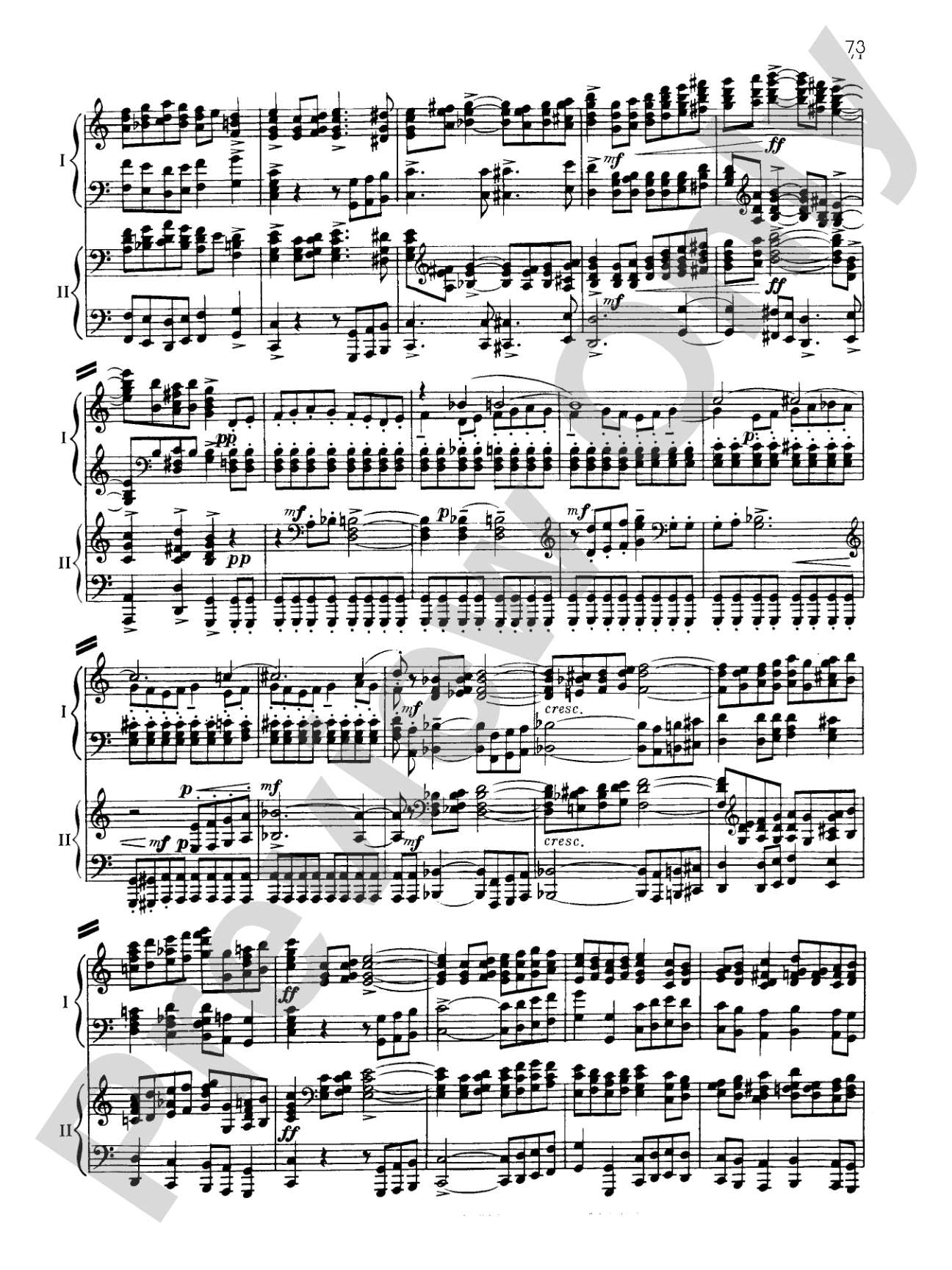

Suite No. 2, Opus 17 - I. Introduction - Piano Duo (2 Pianos, 4 Hands): Piano Duo (2 Pianos, 4 Hands)
By Sergei Rachmaninoff
Level: Advanced
Item: 00-PS-0017272
$5.99
Pickup currently not available
Related Items
Fantaisie-tableaux (Suite No. 1), Opus 5 - I. Barcarolle - Piano Duo (2 Pianos, 4 Hands): Piano Duo (2 Pianos, 4 Hands) |
$9.99
|
View | |
Fantaisie-tableaux (Suite No. 1), Opus 5 - II. La nuit, l'amour - Piano Duo (2 Pianos, 4 Hands): Piano Duo (2 Pianos, 4 Hands) |
$9.99
|
View | |
Fantaisie-tableaux (Suite No. 1), Opus 5 - III. Les larmes - Piano Duo (2 Pianos, 4 Hands): Piano Duo (2 Pianos, 4 Hands) |
$9.99
|
View | |
Fantaisie-tableaux (Suite No. 1), Opus 5 - IV. Pâques - Piano Duo (2 Pianos, 4 Hands): Piano Duo (2 Pianos, 4 Hands) |
$5.99
|
View | |
Prelude in C-Sharp Minor - Piano Duo (2 Pianos, 4 Hands): Piano Duo (2 Pianos, 4 Hands) |
$5.99
|
View | |
Suite No. 2, Opus 17 - II. Valse - Piano Duo (2 Pianos, 4 Hands): Piano Duo (2 Pianos, 4 Hands) |
$9.99
|
View | |
Suite No. 2, Opus 17 - III. Romance - Piano Duo (2 Pianos, 4 Hands): Piano Duo (2 Pianos, 4 Hands) |
$9.99
|
View | |
Suite No. 2, Opus 17 - IV. Tarantelle - Piano Duo (2 Pianos, 4 Hands): Piano Duo (2 Pianos, 4 Hands) |
$9.99
|
View | |
The Piano Works of Rachmaninoff, [0i*] Volume IX: Piano Duos (Two Pianos, Four Hands): Piano Duo (2 Pianos, 4 Hands) Book & Online Audio |
$16.99
|
View |
Description
This historic reference edition contains 9 pieces by Sergei Rachmaninoff for piano duo (Two Pianos, Four Hands), including an arrangement of Prelude in C-sharp Minor, Op. 3 No. 2 by the composer. Also included is a recording of Rachmaninoff's two suites by the famed piano duo Begoña Uriarte and Karl-Hermann Mrongovius. Contains: Fantaisie-tableaux (Suite No. 1), Op. 5 * Suite No. 2, Op. 17 * Prelude in C-sharp Minor, Op. 3, No. 2. A Federation Festivals 2024-2028 selection.


Suite No. 2, Opus 17 - I. Introduction - Piano Duo (2 Pianos, 4 Hands): Piano Duo (2 Pianos, 4 Hands) isn't in MakeMusic Cloud just yet...but it could be. Let us know you'd like to see it, and you'll help shape what comes next. In the meantime, start a free trial and dive into thousands of interactive titles your students can play along with today.
Request This Title
Tell us you want it.
Start Your Free Trial
Explore everything that's ready to play right now.
Sample Audio
1
FantaisieTableauxPaques
--:--
2
Tarantelle
--:--
FantaisieTableauxPaques
0:00
0:00
Sample Video
No sample videos found.
Additional Details
Series:
Alfred's Classic Editions
Publisher:
Alfred Music
Page Count:
132
SKU:
00-PS-0017272
More about this title
About the Composer: Sergei Rachmaninoff
Sergei Rachmaninoff (1873–1943) was a Russian composer, pianist, and conductor whose music defined late Romantic virtuosity and emotional depth. His works span orchestral symphonies, concertos, chamber music, and solo piano literature; his Prelude in C-sharp Minor remains one of the most performed pieces in classical music. Rachmaninoff's compositional voice combines lush harmonic language with demanding technical writing that showcases both the capabilities and poetic range of the instruments he wrote for.
Why we love this
This collection pairs substantial pedagogical value with genuine artistic substance. Advanced pianists gain access to Rachmaninoff's two major piano duo suites alongside his most iconic solo work, all in editions prepared by serious scholars; the included recording by Uriarte and Mrongovius models authentic interpretation and ensemble balance that students can internalize through careful listening.
What to expect
The Introduction unfolds with the moody introspection characteristic of Rachmaninoff; ornate figurations and rich harmonic suspensions create an atmosphere of yearning that gradually builds emotional intensity. These pieces demand both technical precision and the emotional maturity to sustain long harmonic arcs and allow silence to speak as meaningfully as sound.
Who it's for
Advanced piano duo teams preparing concert repertoire or festival submissions will find substantial material here, as the collection encompasses both the technically demanding suites and the opportunity to perform Rachmaninoff's signature prelude in an arrangement authorized by the composer himself. Pianists at conservatory level benefit from the interpretive guidance offered through the recorded performances by a professional duo.
How to get the most out of it
- Balance the pianistic weight between both instruments by rehearsing the recorded accompaniment with focused attention to dynamics and phrase direction; the four hands must breathe as a single musical entity rather than two independent parts.
- Attend to Rachmaninoff's harmonic language with particular care in the Introduction section, where chromatic voice leading can blur if pedaling is imprecise or if chord voicings are not clearly articulated between the two keyboards.
- Establish a shared metrical framework before tackling passage work; the symmetry between both piano parts relies on rhythmic confidence and coordination, especially across tempo changes or rubato passages.
- Use the score's dynamic markings as a guide to register and tonal color rather than mere volume changes; Rachmaninoff rarely writes loudly without intention, and restraint often yields greater impact.
How to use it
Program this collection across multiple seasons or as a cornerstone of a Rachmaninoff-focused recital; the three major works allow you to present a narrative arc through the composer's piano duo writing without redundancy. The Prelude in C-sharp Minor arrangement offers a familiar entry point for audiences while the two suites showcase deeper chamber writing.
Skills your students will build
- Coordinating independent melodic and harmonic material across two keyboards
- Balancing texture and transparency in richly scored late-Romantic harmony
- Sustaining long-form musical narratives with sophisticated rubato and phrase shaping
- Reading and interpreting 20th-century score conventions and performance practice