
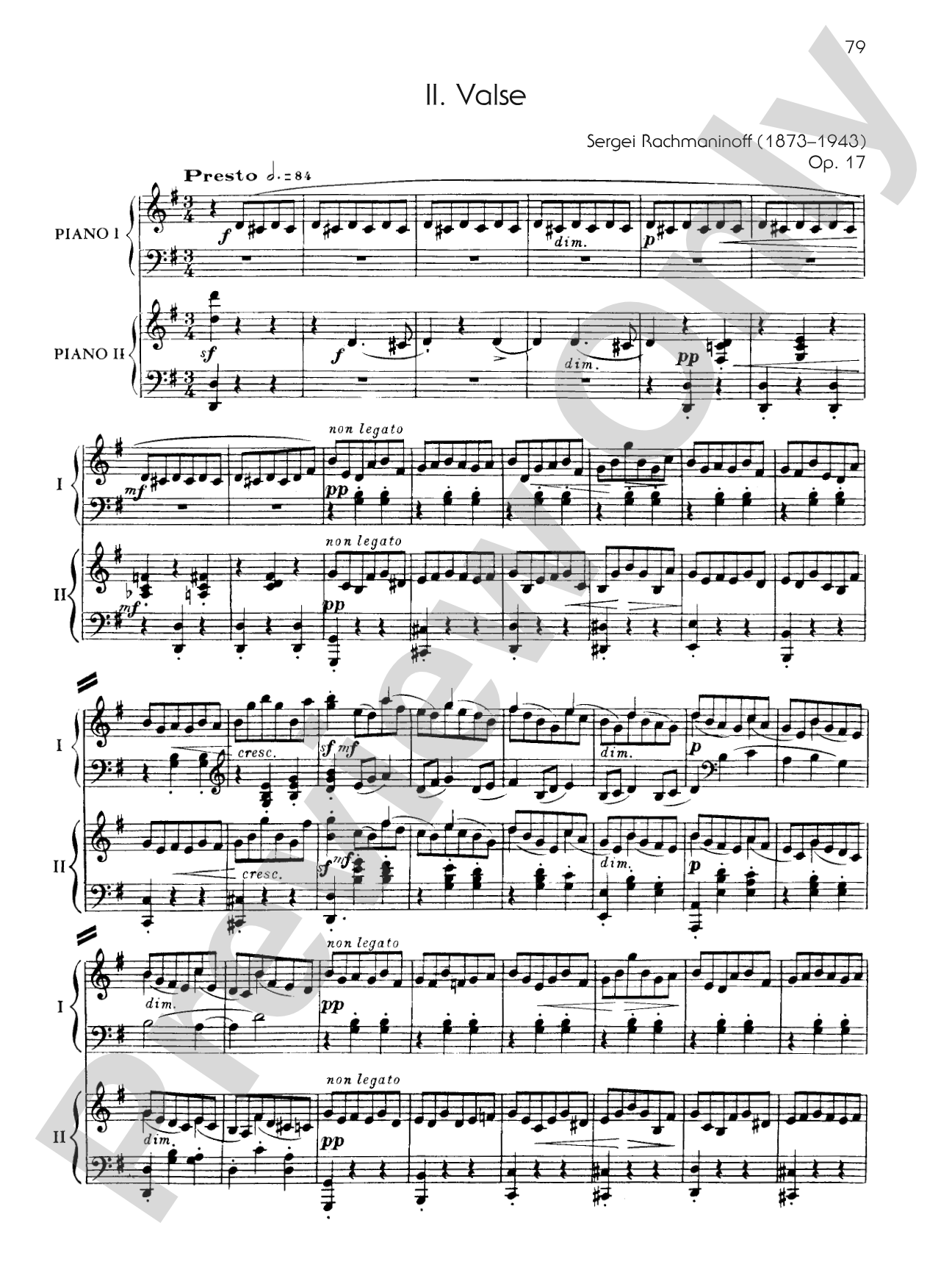
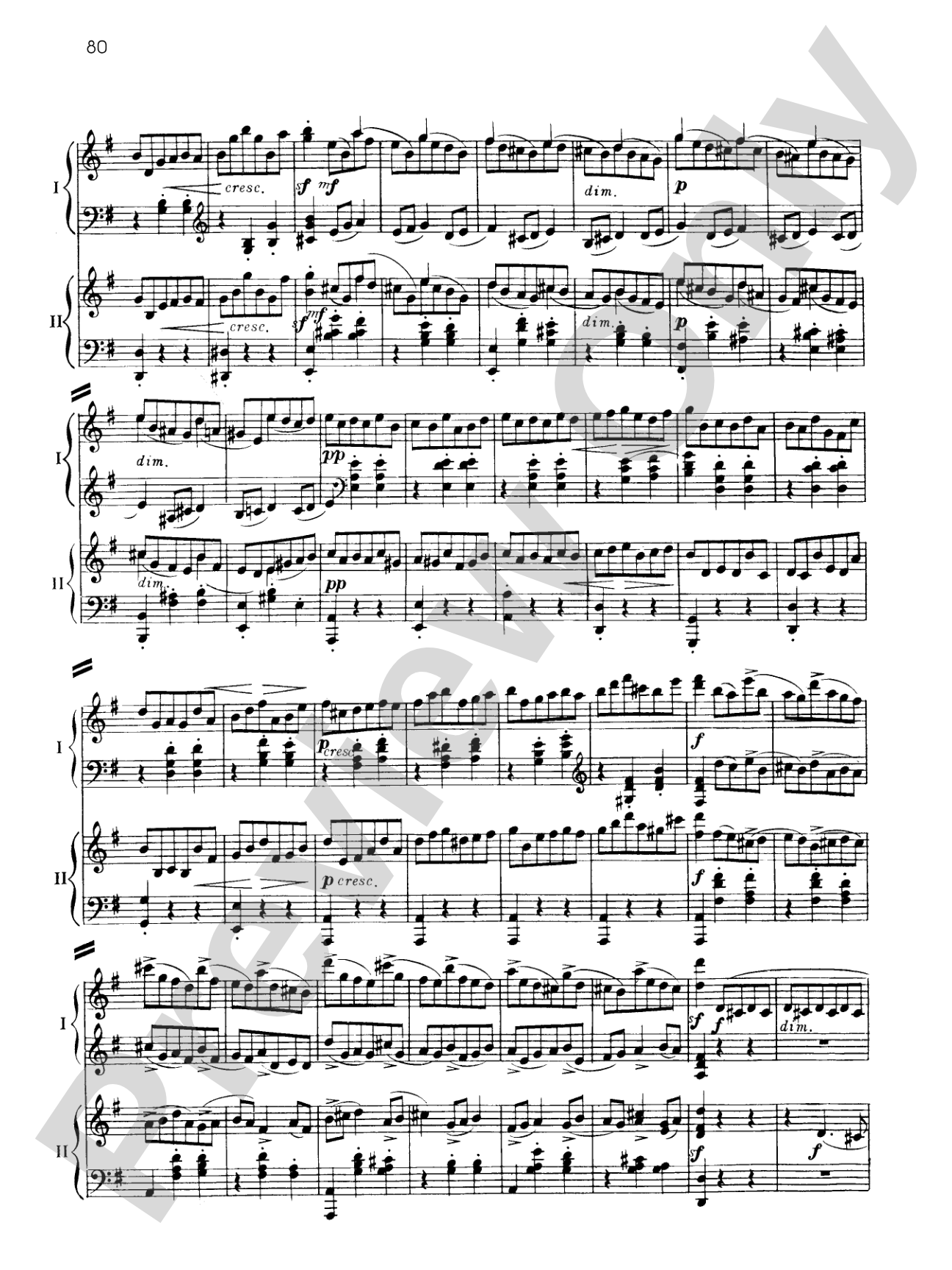
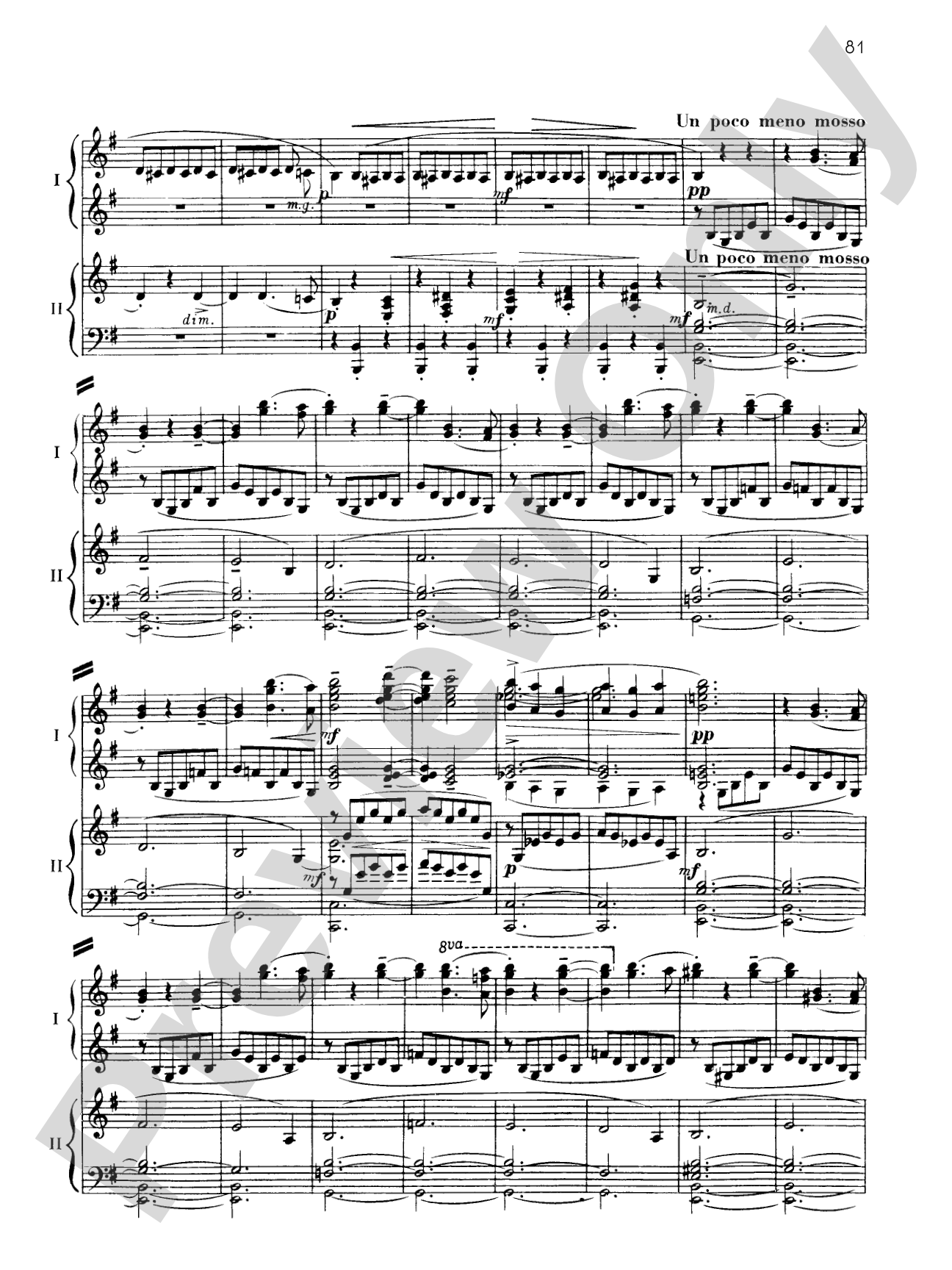
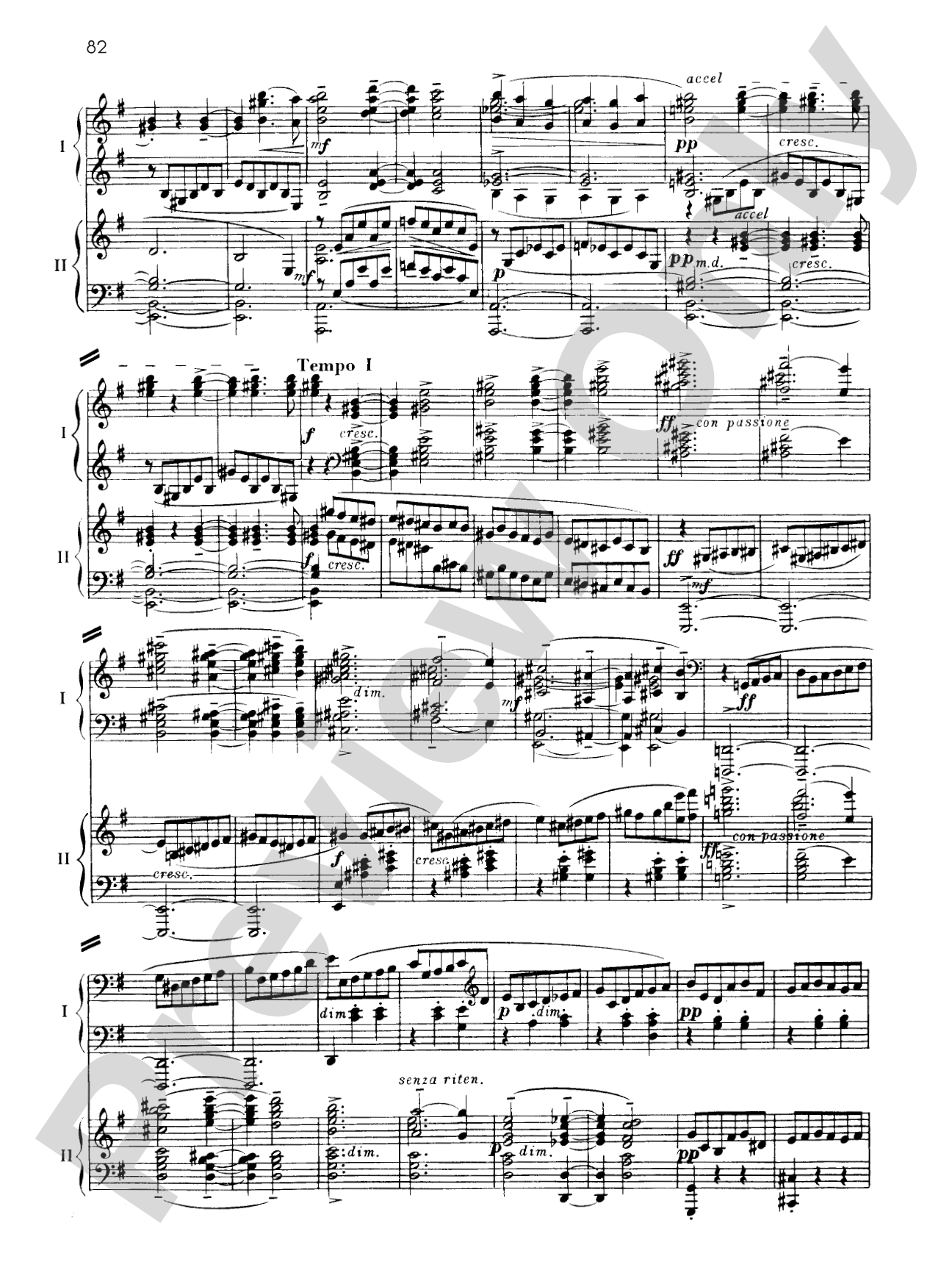

Suite No. 2, Opus 17 - II. Valse - Piano Duo (2 Pianos, 4 Hands): Piano Duo (2 Pianos, 4 Hands)
By Sergei Rachmaninoff
Level: Advanced
Item: 00-PS-0017273
$9.99
Pickup currently not available
Related Items
Fantaisie-tableaux (Suite No. 1), Opus 5 - I. Barcarolle - Piano Duo (2 Pianos, 4 Hands): Piano Duo (2 Pianos, 4 Hands) |
$9.99
|
View | |
Fantaisie-tableaux (Suite No. 1), Opus 5 - II. La nuit, l'amour - Piano Duo (2 Pianos, 4 Hands): Piano Duo (2 Pianos, 4 Hands) |
$9.99
|
View | |
Fantaisie-tableaux (Suite No. 1), Opus 5 - III. Les larmes - Piano Duo (2 Pianos, 4 Hands): Piano Duo (2 Pianos, 4 Hands) |
$9.99
|
View | |
Fantaisie-tableaux (Suite No. 1), Opus 5 - IV. Pâques - Piano Duo (2 Pianos, 4 Hands): Piano Duo (2 Pianos, 4 Hands) |
$5.99
|
View | |
Prelude in C-Sharp Minor - Piano Duo (2 Pianos, 4 Hands): Piano Duo (2 Pianos, 4 Hands) |
$5.99
|
View | |
Suite No. 2, Opus 17 - I. Introduction - Piano Duo (2 Pianos, 4 Hands): Piano Duo (2 Pianos, 4 Hands) |
$5.99
|
View | |
Suite No. 2, Opus 17 - III. Romance - Piano Duo (2 Pianos, 4 Hands): Piano Duo (2 Pianos, 4 Hands) |
$9.99
|
View | |
Suite No. 2, Opus 17 - IV. Tarantelle - Piano Duo (2 Pianos, 4 Hands): Piano Duo (2 Pianos, 4 Hands) |
$9.99
|
View | |
The Piano Works of Rachmaninoff, [0i*] Volume IX: Piano Duos (Two Pianos, Four Hands): Piano Duo (2 Pianos, 4 Hands) Book & Online Audio |
$16.99
|
View |
Description
This historic reference edition contains 9 pieces by Sergei Rachmaninoff for piano duo (Two Pianos, Four Hands), including an arrangement of Prelude in C-sharp Minor, Op. 3 No. 2 by the composer. Also included is a recording of Rachmaninoff's two suites by the famed piano duo Begoña Uriarte and Karl-Hermann Mrongovius. Contains: Fantaisie-tableaux (Suite No. 1), Op. 5 * Suite No. 2, Op. 17 * Prelude in C-sharp Minor, Op. 3, No. 2. A Federation Festivals 2024-2028 selection.


Suite No. 2, Opus 17 - II. Valse - Piano Duo (2 Pianos, 4 Hands): Piano Duo (2 Pianos, 4 Hands) isn't in MakeMusic Cloud just yet...but it could be. Let us know you'd like to see it, and you'll help shape what comes next. In the meantime, start a free trial and dive into thousands of interactive titles your students can play along with today.
Request This Title
Tell us you want it.
Start Your Free Trial
Explore everything that's ready to play right now.
Sample Audio
1
FantaisieTableauxPaques
--:--
2
Tarantelle
--:--
FantaisieTableauxPaques
0:00
0:00
Sample Video
No sample videos found.
Additional Details
Series:
Alfred's Classic Editions
Publisher:
Alfred Music
Page Count:
132
SKU:
00-PS-0017273
More about this title
About the Composer: Sergei Rachmaninoff
Sergei Rachmaninoff (1873-1943) stands as one of the last great masters of the Romantic piano tradition. His compositional voice blended Russian melodic richness with virtuosic keyboard writing, and he remained committed to tonal harmony even as European music shifted toward modernism. Beyond his celebrated concertos and orchestral works, Rachmaninoff was a formidable concert pianist who understood the instrument's expressive possibilities intimately.
Rachmaninoff's suites for two pianos represent his sophisticated approach to the medium. Rather than treating the format as a constraint, he used it to expand harmonic and textural possibilities, often writing material that rivals his solo piano works in ambition and emotional depth. These works shaped how later composers would approach piano duo writing.
Why we love this
This edition pairs the complete Rachmaninoff piano duo suites with a professional recording by Begoña Uriarte and Karl-Hermann Mrongovius, giving advanced students both a score to learn from and an authoritative reference to hear. The music itself demands interpretive maturity: the Valse from Suite No. 2 combines sophisticated harmonic language with genuine theatrical flair, making it ideal for pianists ready to move beyond technical display into genuine musical collaboration.
What to expect
The Valse sweeps with elegant nostalgia, drawing from the salon tradition while maintaining Rachmaninoff's characteristic harmonic sophistication. Beneath its graceful surface lies genuine complexity: unexpected harmonic turns, strategic key shifts, and moments of genuine passion that catch the ear and move the listener beyond simple waltz charm.
Who it's for
Advanced pianists working toward recital repertoire or festival competitions (this collection is a Federation Festivals 2024-2028 selection). Pianists with a strong collaborative partner are essential; these suites demand equal technical facility and musical sensitivity from both performers.
How to get the most out of it
- Balance the Primo and Secondo parts carefully during the lyrical passages; neither partner should overwhelm, even when one hand carries the primary melody. Listen actively to each other throughout.
- The Valse rhythm requires precision without rigidity. Let the lilting character breathe by allowing slight flexibility at phrase endings rather than metronomic exactness.
- Use the included recording as a reference for tempo relationships across the longer suite, but develop your own interpretation once you understand the structural arc.
- Coordinate pedal changes between players, especially during harmonically rich transitions where overlap matters for clarity and color.
How to use it
Program this as a centerpiece for a piano duo recital, or use the complete suite as a festival entry where two-piano literature is required. The Valse can stand alone on a concert program focused on dance forms or early 20th-century piano music, pairing well with other Russian composers or with contemporary works that engage the Romantic tradition.
Skills your students will build
- Coordinated ensemble playing at the advanced level, including shared attention to tempo and expressive nuance
- Reading and interpreting Russian Romantic harmonic language and non-functional chord progressions
- Balance and textural awareness across two independent pianos
- Collaboration skills: negotiating interpretation, managing dynamic relationships, and maintaining ensemble cohesion through sophisticated passages
- Interpreting waltz character with historical awareness while bringing modern expressivity