
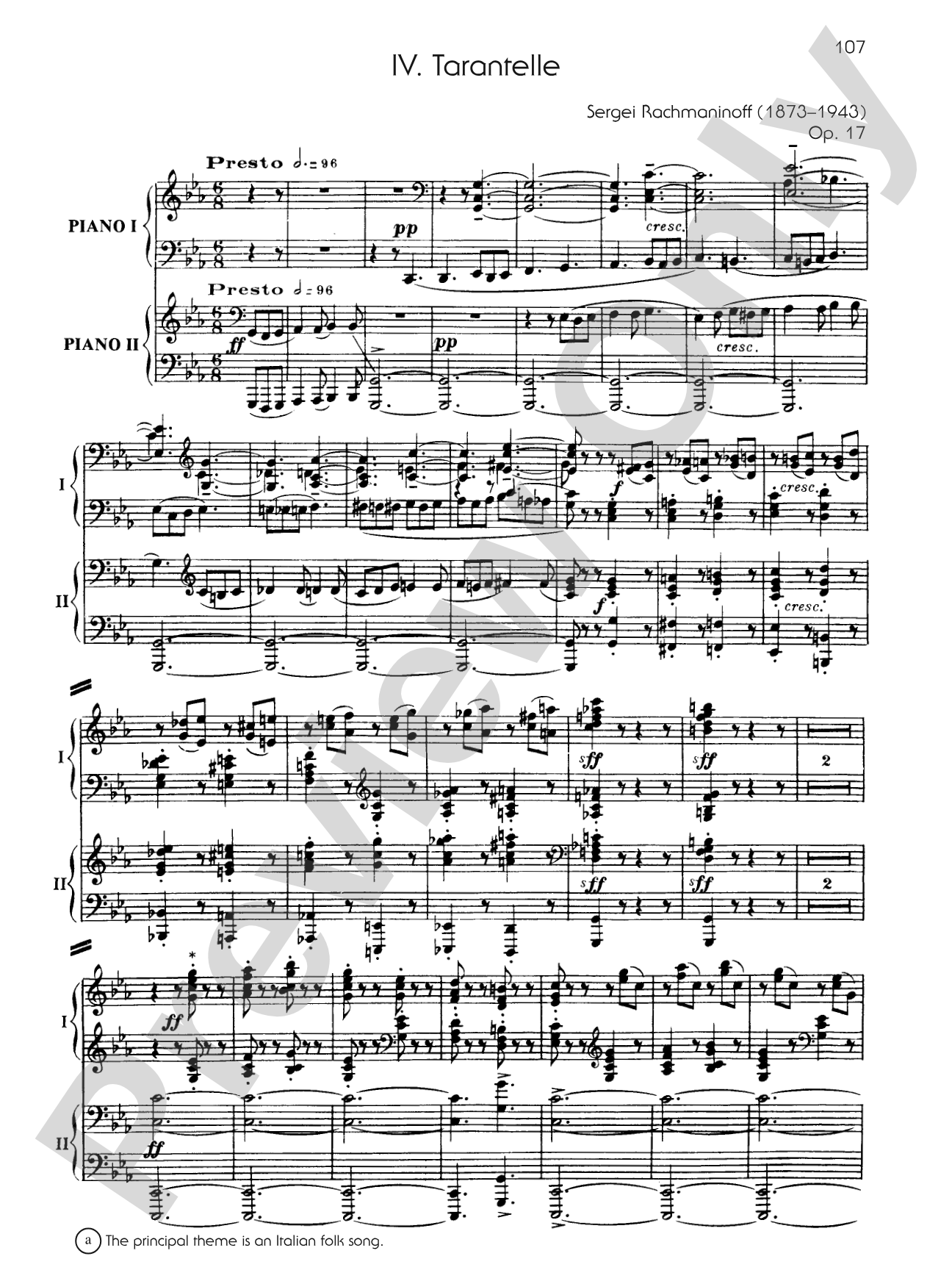
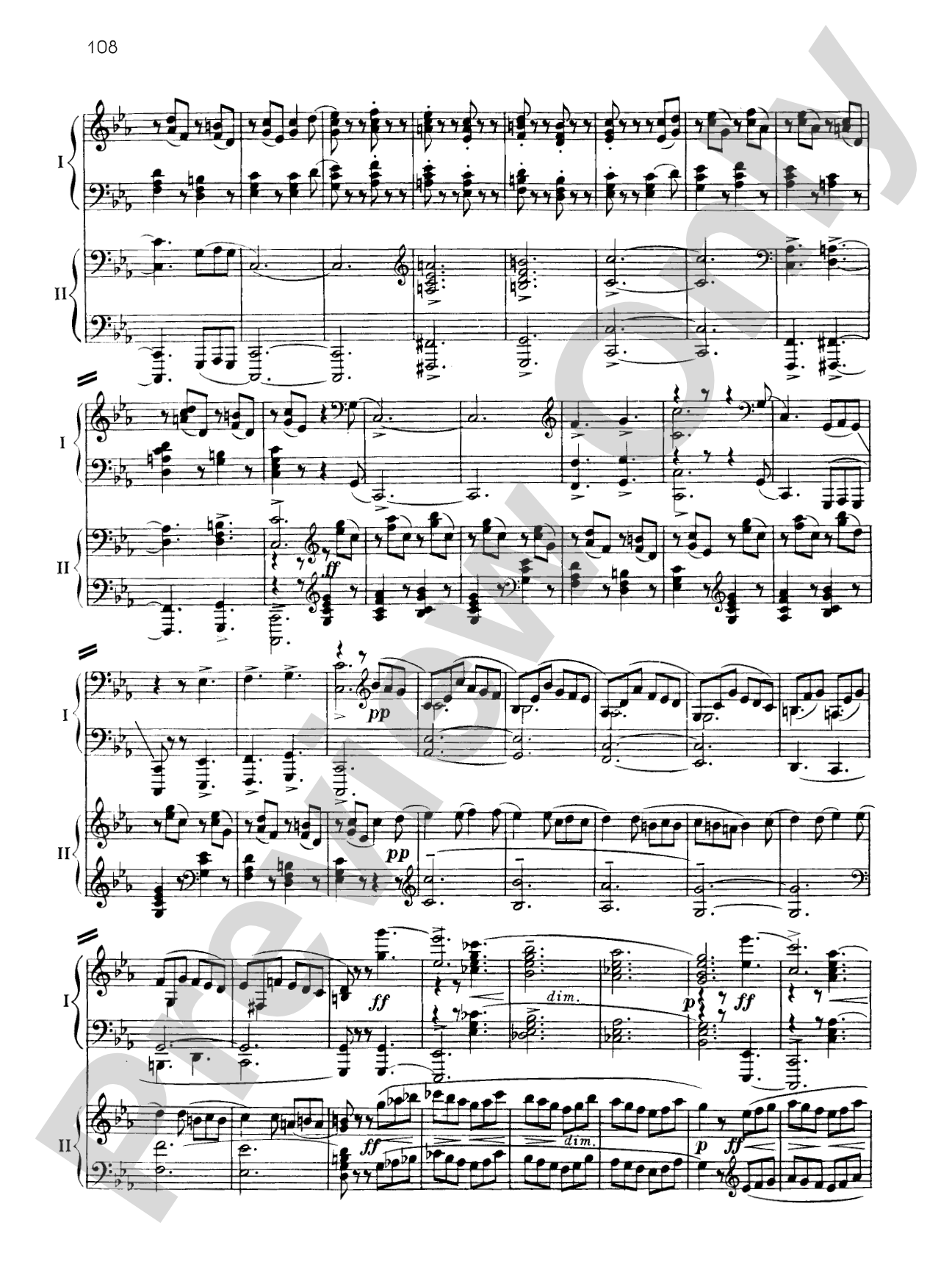
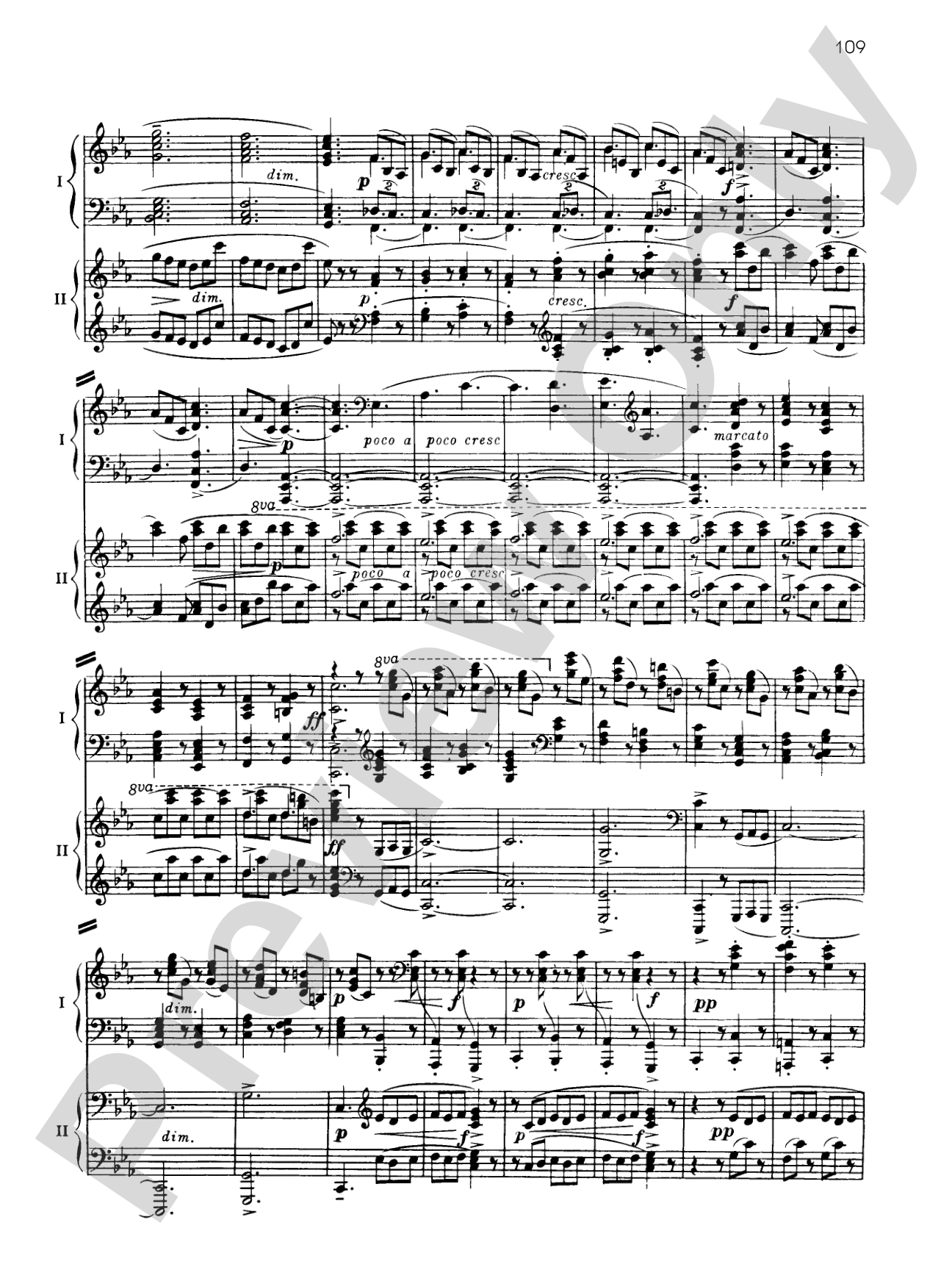
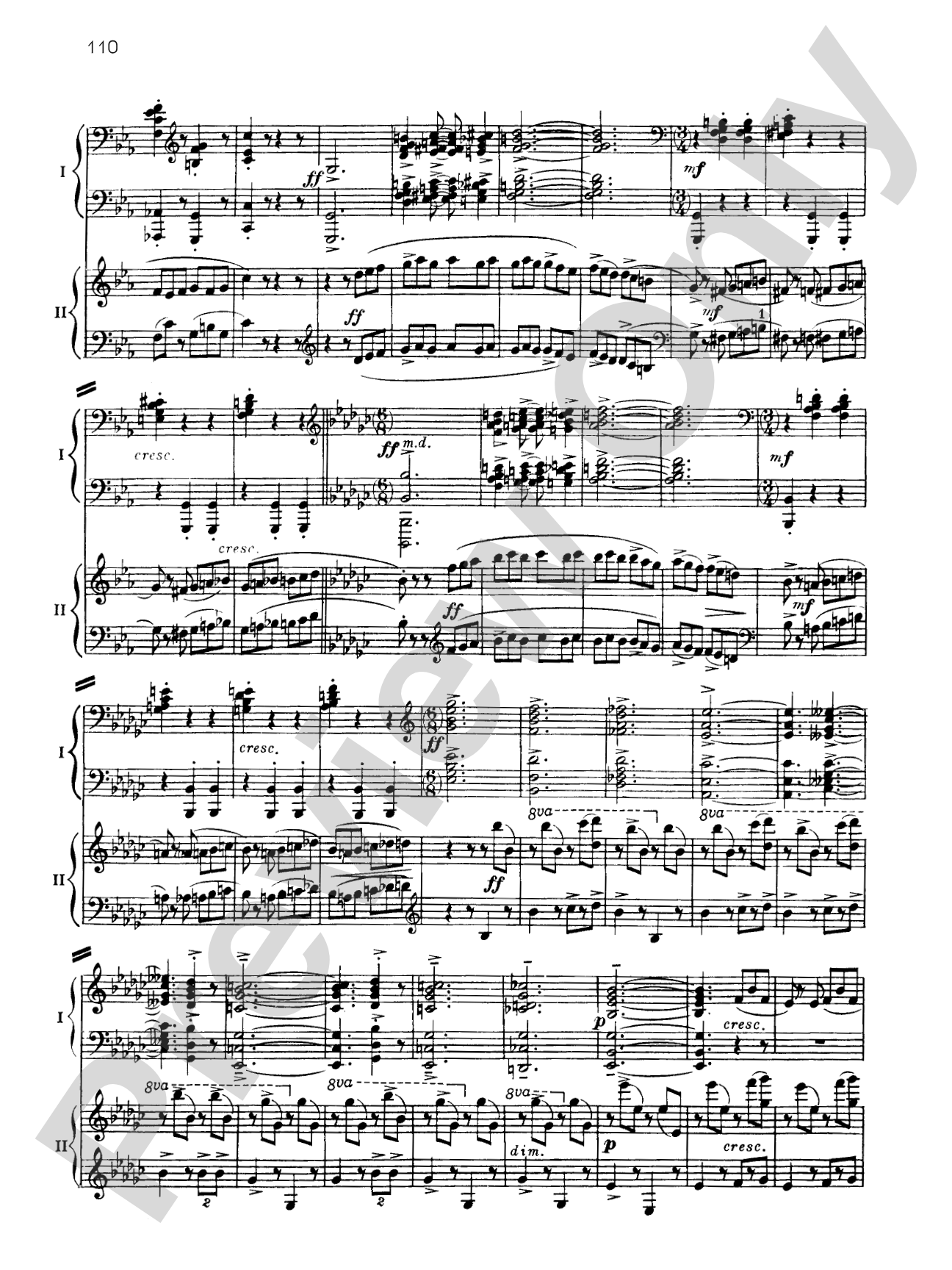

Suite No. 2, Opus 17 - IV. Tarantelle - Piano Duo (2 Pianos, 4 Hands): Piano Duo (2 Pianos, 4 Hands)
By Sergei Rachmaninoff
Level: Advanced
Item: 00-PS-0017275
$9.99
Pickup currently not available
Related Items
Fantaisie-tableaux (Suite No. 1), Opus 5 - I. Barcarolle - Piano Duo (2 Pianos, 4 Hands): Piano Duo (2 Pianos, 4 Hands) |
$9.99
|
View | |
Fantaisie-tableaux (Suite No. 1), Opus 5 - II. La nuit, l'amour - Piano Duo (2 Pianos, 4 Hands): Piano Duo (2 Pianos, 4 Hands) |
$9.99
|
View | |
Fantaisie-tableaux (Suite No. 1), Opus 5 - III. Les larmes - Piano Duo (2 Pianos, 4 Hands): Piano Duo (2 Pianos, 4 Hands) |
$9.99
|
View | |
Fantaisie-tableaux (Suite No. 1), Opus 5 - IV. Pâques - Piano Duo (2 Pianos, 4 Hands): Piano Duo (2 Pianos, 4 Hands) |
$5.99
|
View | |
Prelude in C-Sharp Minor - Piano Duo (2 Pianos, 4 Hands): Piano Duo (2 Pianos, 4 Hands) |
$5.99
|
View | |
Suite No. 2, Opus 17 - I. Introduction - Piano Duo (2 Pianos, 4 Hands): Piano Duo (2 Pianos, 4 Hands) |
$5.99
|
View | |
Suite No. 2, Opus 17 - II. Valse - Piano Duo (2 Pianos, 4 Hands): Piano Duo (2 Pianos, 4 Hands) |
$9.99
|
View | |
Suite No. 2, Opus 17 - III. Romance - Piano Duo (2 Pianos, 4 Hands): Piano Duo (2 Pianos, 4 Hands) |
$9.99
|
View | |
The Piano Works of Rachmaninoff, [0i*] Volume IX: Piano Duos (Two Pianos, Four Hands): Piano Duo (2 Pianos, 4 Hands) Book & Online Audio |
$16.99
|
View |
Description
This historic reference edition contains 9 pieces by Sergei Rachmaninoff for piano duo (Two Pianos, Four Hands), including an arrangement of Prelude in C-sharp Minor, Op. 3 No. 2 by the composer. Also included is a recording of Rachmaninoff's two suites by the famed piano duo Begoña Uriarte and Karl-Hermann Mrongovius. Contains: Fantaisie-tableaux (Suite No. 1), Op. 5 * Suite No. 2, Op. 17 * Prelude in C-sharp Minor, Op. 3, No. 2. A Federation Festivals 2024-2028 selection.


Suite No. 2, Opus 17 - IV. Tarantelle - Piano Duo (2 Pianos, 4 Hands): Piano Duo (2 Pianos, 4 Hands) isn't in MakeMusic Cloud just yet...but it could be. Let us know you'd like to see it, and you'll help shape what comes next. In the meantime, start a free trial and dive into thousands of interactive titles your students can play along with today.
Request This Title
Tell us you want it.
Start Your Free Trial
Explore everything that's ready to play right now.
Sample Audio
1
FantaisieTableauxPaques
--:--
2
Tarantelle
--:--
FantaisieTableauxPaques
0:00
0:00
Sample Video
No sample videos found.
Additional Details
Series:
Alfred's Classic Editions
Publisher:
Alfred Music
Page Count:
132
SKU:
00-PS-0017275
More about this title
About the Composer: Sergei Rachmaninoff
Sergei Rachmaninoff (1873-1943) was a Russian composer and virtuoso pianist whose works bridge the Romantic and early modern eras. His compositions for piano duo demonstrate his gift for writing idiomatically across multiple keyboards, creating rich harmonic textures and dramatic contrasts that require both pianists to function as a unified ensemble.
Why we love this
Rachmaninoff's suites for two pianos reveal an entirely different compositional voice than his solo works. The Tarantelle from Suite No. 2 crackles with energy and requires genuine collaboration between players, making it an ideal choice for advanced duos ready to tackle repertoire that demands both technical prowess and musical maturity. The included recording by Uriarte and Mrongovius serves as an invaluable performance reference.
What to expect
The Tarantelle crackles with energy and propulsive rhythm, the traditional Italian dance transformed through Rachmaninoff's lush harmonic palette. Both pianos whirl together in passages of dizzying virtuosity, then occasionally split to create moments of dramatic contrast before the piece hurtles toward its energetic close.
Who it's for
Advanced piano duos preparing for recitals, competitions, or festival play. Pianists comfortable with Rachmaninoff's harmonic language and willing to invest serious rehearsal time in ensemble coordination will find this collection deeply rewarding.
How to get the most out of it
- Establish a clear hierarchy between primo and secondo parts during your first read-throughs; Rachmaninoff often gives the melodic or decorative material to one piano while the other provides harmonic foundation, and recognizing this from the start prevents muddiness.
- Balance the tarantella's rhythmic drive without letting either piano rush; the piece demands precision but never sounds mechanical when both players breathe together through the phrase shapes.
- Use the recorded performance as a touchstone for tempo and character, but develop your own interpretation of the dialogue between the two pianos rather than copying every nuance.
How to use it
Program this as a centerpiece of a Russian music recital or a showcase for advanced duo partnerships. It pairs naturally with works by other Russian composers or with other pieces from this collection to create a themed concert exploring Rachmaninoff's approach to the two-piano medium.
Skills your students will build
- Balance and blend between two independent keyboard voices
- Coordinating rhythmic figures across two pianos in fast tempos
- Interpreting Rachmaninoff's harmonic language and voice-leading
- Ensemble listening and communication without a conductor
- Sustaining energy through virtuosic passage work that demands stamina