
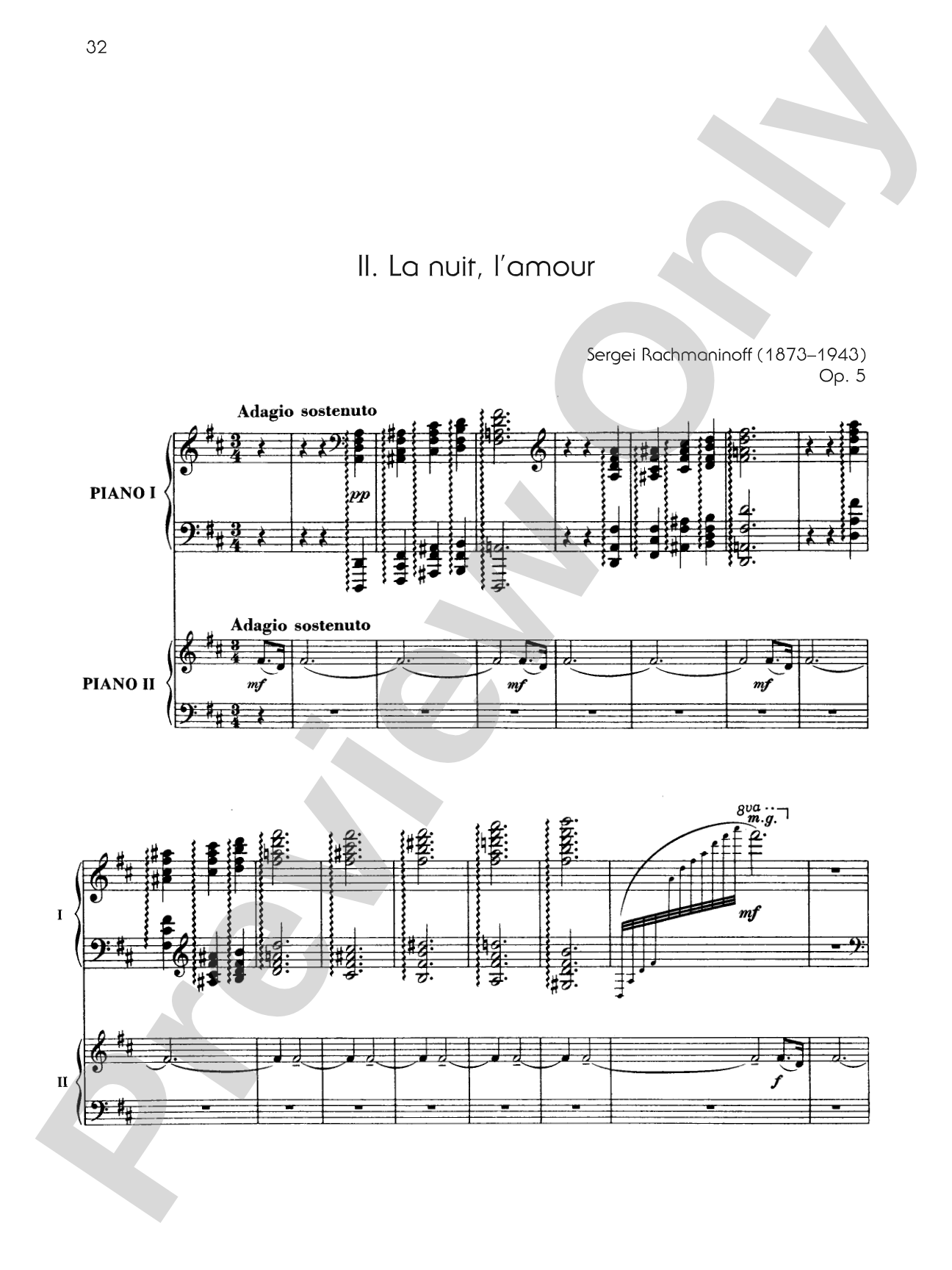
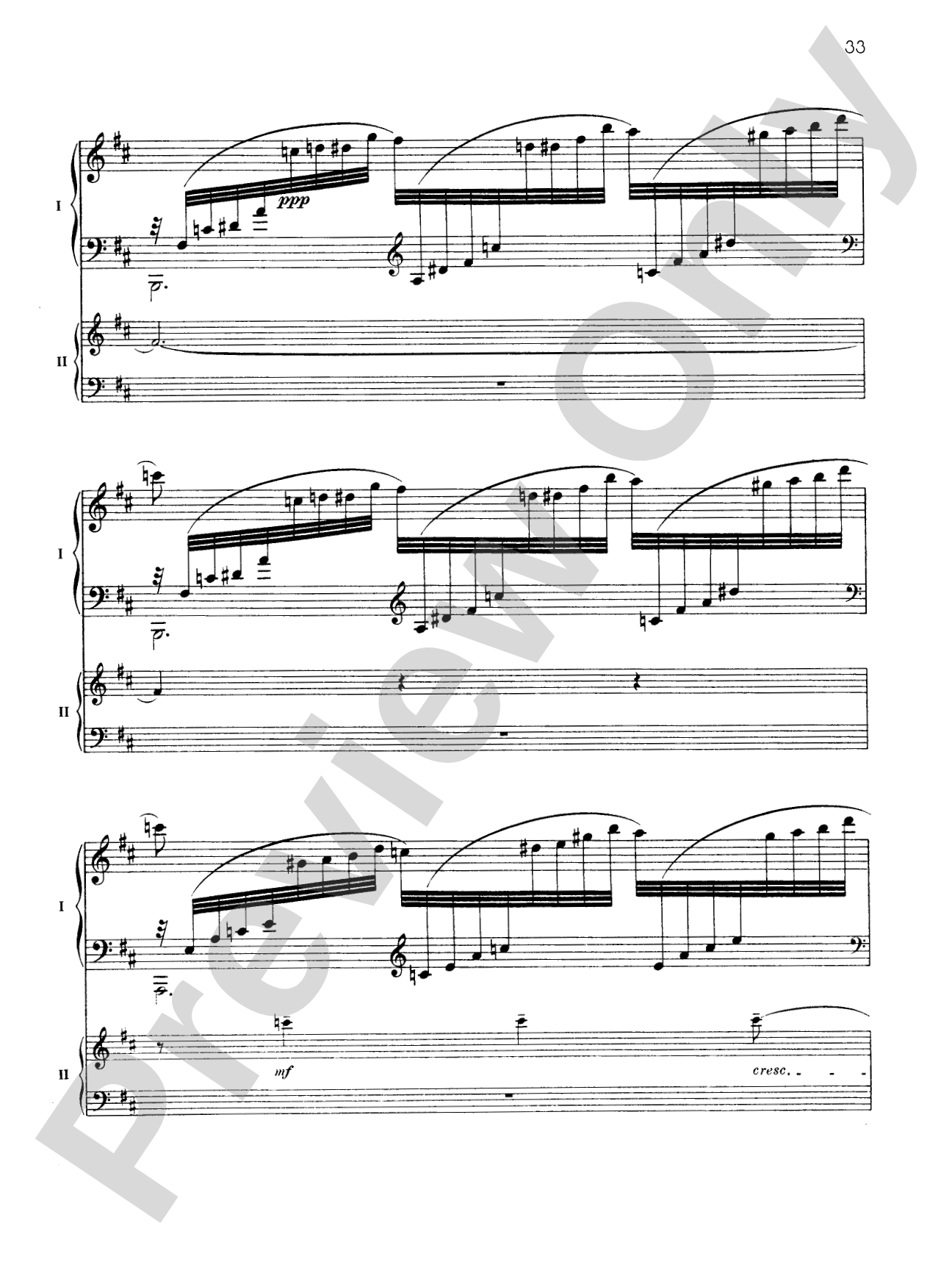
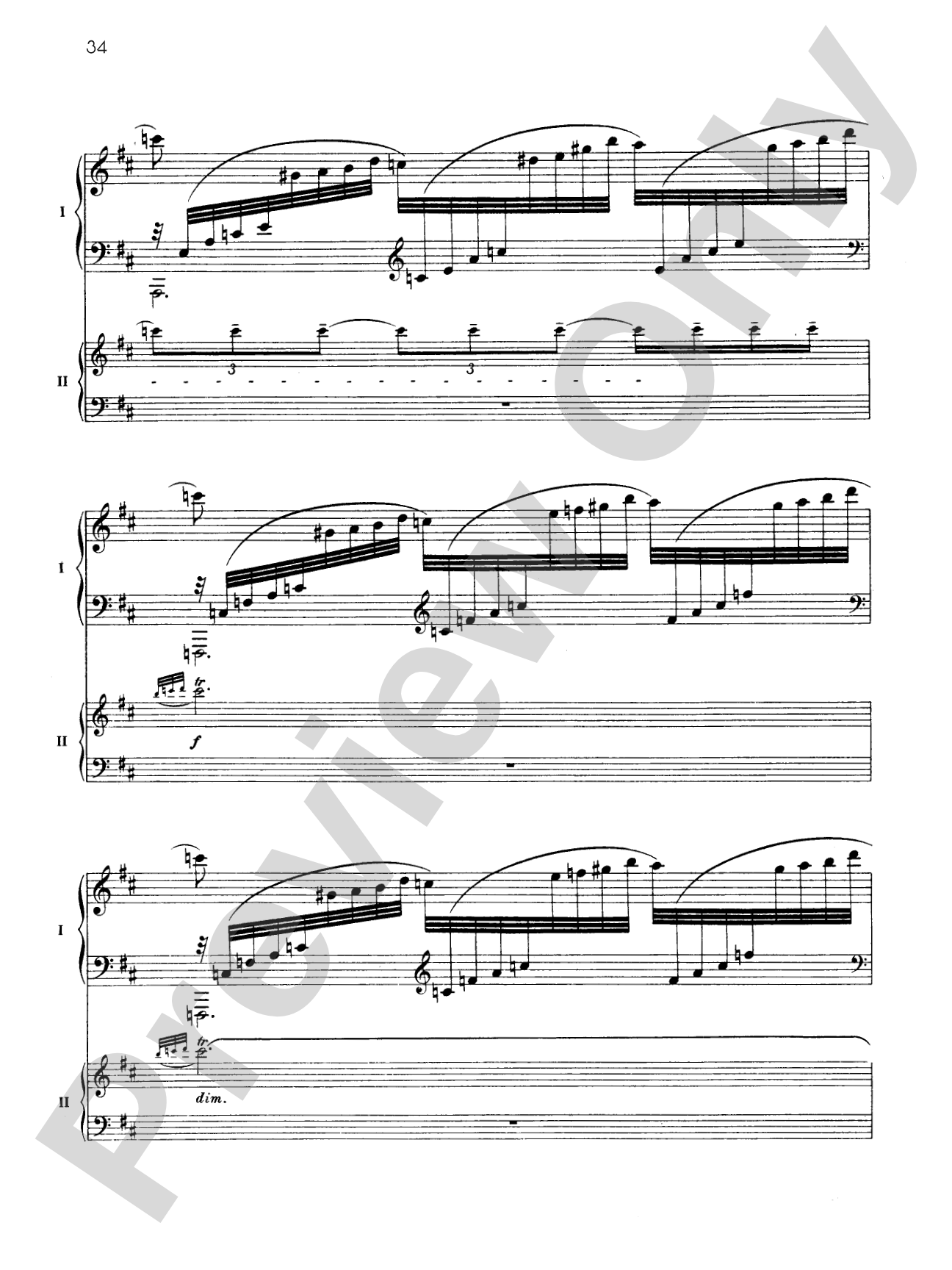
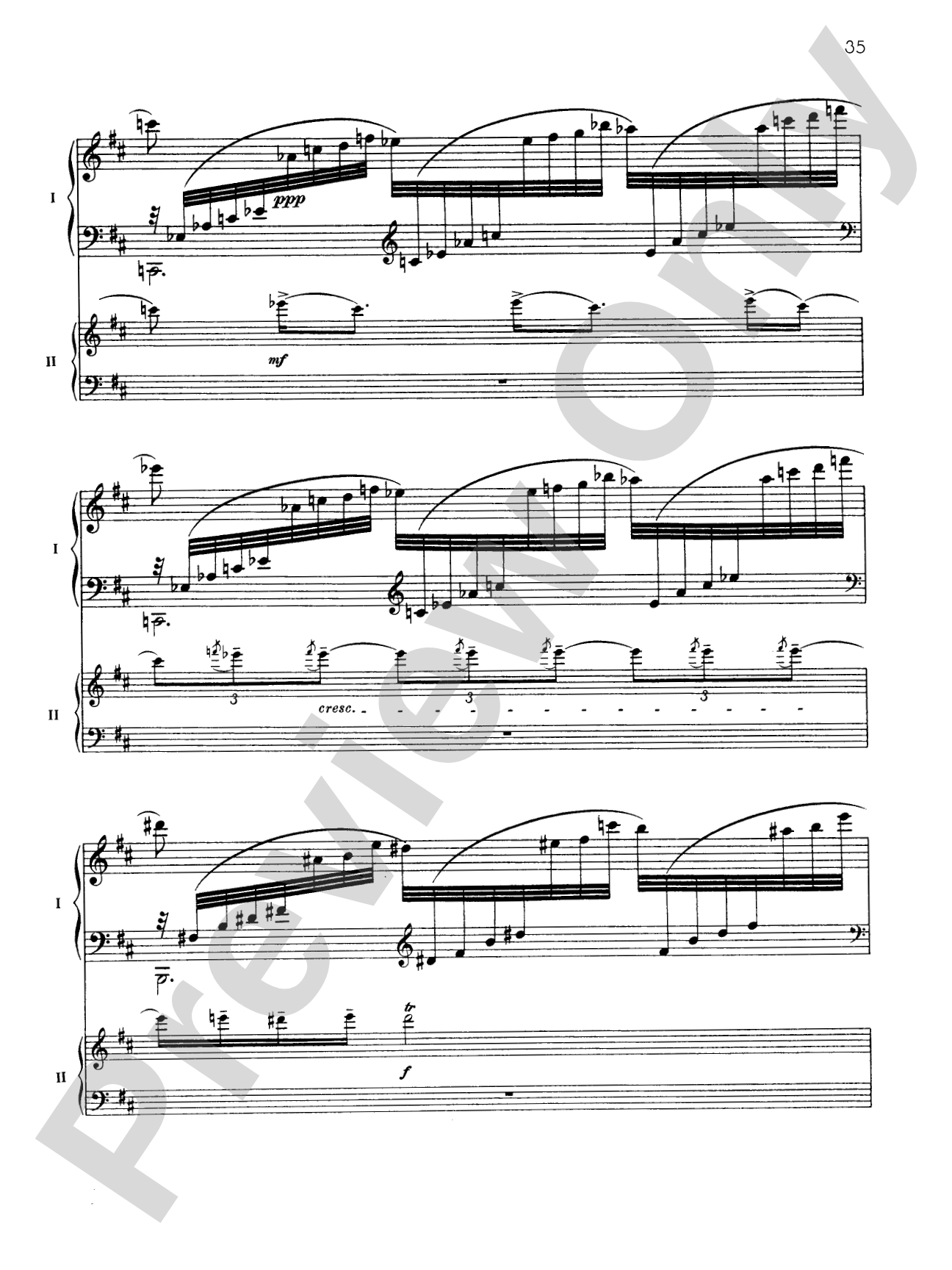

Fantaisie-tableaux (Suite No. 1), Opus 5 - II. La nuit, l'amour - Piano Duo (2 Pianos, 4 Hands): Piano Duo (2 Pianos, 4 Hands)
By Sergei Rachmaninoff
Level: Advanced
Item: 00-PS-0017268
$9.99
Pickup currently not available
Related Items
Fantaisie-tableaux (Suite No. 1), Opus 5 - I. Barcarolle - Piano Duo (2 Pianos, 4 Hands): Piano Duo (2 Pianos, 4 Hands) |
$9.99
|
View | |
Fantaisie-tableaux (Suite No. 1), Opus 5 - III. Les larmes - Piano Duo (2 Pianos, 4 Hands): Piano Duo (2 Pianos, 4 Hands) |
$9.99
|
View | |
Fantaisie-tableaux (Suite No. 1), Opus 5 - IV. Pâques - Piano Duo (2 Pianos, 4 Hands): Piano Duo (2 Pianos, 4 Hands) |
$5.99
|
View | |
Prelude in C-Sharp Minor - Piano Duo (2 Pianos, 4 Hands): Piano Duo (2 Pianos, 4 Hands) |
$5.99
|
View | |
Suite No. 2, Opus 17 - I. Introduction - Piano Duo (2 Pianos, 4 Hands): Piano Duo (2 Pianos, 4 Hands) |
$5.99
|
View | |
Suite No. 2, Opus 17 - II. Valse - Piano Duo (2 Pianos, 4 Hands): Piano Duo (2 Pianos, 4 Hands) |
$9.99
|
View | |
Suite No. 2, Opus 17 - III. Romance - Piano Duo (2 Pianos, 4 Hands): Piano Duo (2 Pianos, 4 Hands) |
$9.99
|
View | |
Suite No. 2, Opus 17 - IV. Tarantelle - Piano Duo (2 Pianos, 4 Hands): Piano Duo (2 Pianos, 4 Hands) |
$9.99
|
View | |
The Piano Works of Rachmaninoff, [0i*] Volume IX: Piano Duos (Two Pianos, Four Hands): Piano Duo (2 Pianos, 4 Hands) Book & Online Audio |
$16.99
|
View |
Description
This historic reference edition contains 9 pieces by Sergei Rachmaninoff for piano duo (Two Pianos, Four Hands), including an arrangement of Prelude in C-sharp Minor, Op. 3 No. 2 by the composer. Also included is a recording of Rachmaninoff's two suites by the famed piano duo Begoña Uriarte and Karl-Hermann Mrongovius. Contains: Fantaisie-tableaux (Suite No. 1), Op. 5 * Suite No. 2, Op. 17 * Prelude in C-sharp Minor, Op. 3, No. 2. A Federation Festivals 2024-2028 selection.


Fantaisie-tableaux (Suite No. 1), Opus 5 - II. La nuit, l'amour - Piano Duo (2 Pianos, 4 Hands): Piano Duo (2 Pianos, 4 Hands) isn't in MakeMusic Cloud just yet...but it could be. Let us know you'd like to see it, and you'll help shape what comes next. In the meantime, start a free trial and dive into thousands of interactive titles your students can play along with today.
Request This Title
Tell us you want it.
Start Your Free Trial
Explore everything that's ready to play right now.
Sample Audio
1
FantaisieTableauxPaques
--:--
2
Tarantelle
--:--
FantaisieTableauxPaques
0:00
0:00
Sample Video
No sample videos found.
Additional Details
Series:
Alfred's Classic Editions
Publisher:
Alfred Music
Page Count:
132
SKU:
00-PS-0017268
More about this title
About the Composer: Sergei Rachmaninoff
Sergei Rachmaninoff (1873-1943) stands as one of the last great Romantic composers, bridging 19th-century piano tradition with 20th-century modernism. A virtuoso pianist himself, he composed with an intimate understanding of the instrument's capabilities, writing works that demand technical brilliance and emotional depth in equal measure.
Rachmaninoff's relationship with the piano duo genre reflects his larger compositional philosophy: these pieces showcase orchestral ambition translated through four hands at two keyboards. His suites and fantasias for piano duo represent some of his most inventive writing, allowing two skilled pianists to explore the full range of his harmonic language and dramatic scope.
Why we love this
Rachmaninoff's piano duo works occupy a rare space in the repertoire where genuine compositional mastery meets genuine pianistic pleasure. These are not simplified arrangements or pedagogical exercises; they are serious concert works that give two advanced pianists an equal partnership in exploring some of the most gorgeous harmonic writing in the standard literature. The inclusion of the Prelude in C-sharp Minor alongside the full suites offers both a beloved gateway piece and deeper territory for musicians ready to claim it.
What to expect
These movements drift between nocturnal reverie and passionate declaration. Rachmaninoff's orchestral textures shimmer across both pianos, creating moments of gossamer delicacy that suddenly bloom into surging emotional climaxes. The writing feels inherently vocal and singing, even when the passage work demands precision and speed.
Who it's for
Advanced pianists preparing for college auditions, piano duo competitions, or sophisticated chamber concert programming. This collection suits musicians with several years of advanced repertoire experience and genuine comfort with Romantic-era harmonic language and technical demands.
How to get the most out of it
- Balance the voices between pianos with careful attention to register; Rachmaninoff frequently divides his musical material unevenly, and the second piano's role shifts from accompaniment to soloist within a single movement.
- Establish a unified sound at the rehearsal 'a' and 'b' level by tuning both instruments together before final preparation begins; the resonance of two grands in a concert hall behaves unpredictably without this groundwork.
- Use the recorded performance by Begoña Uriarte and Karl-Hermann Mrongovius as a structural reference rather than an interpretive template, noting how they shape tempo and phrasing across the broader suite architecture.
How to use it
Open a recital with the Prelude in C-sharp Minor to set an intimate mood, or anchor a second half devoted to Russian Romantic music alongside works by Scriabin or Borodin. Program an entire suite as a centerpiece for a piano duo concert exploring early 20th-century chamber writing, pairing it with works by Ravel or Stravinsky for the same medium.
Skills your students will build
- Balancing two independent musical lines across two pianos while maintaining ensemble cohesion
- Executing quick shifts between accompanimental and soloistic roles within a single movement
- Interpreting advanced Romantic harmony with harmonic literacy in extended tonality
- Executing rapid scalar and arpeggiated passage work at the advanced level with clarity and control
- Shaping long-phrase structures across several systems and pages while maintaining architectural awareness