
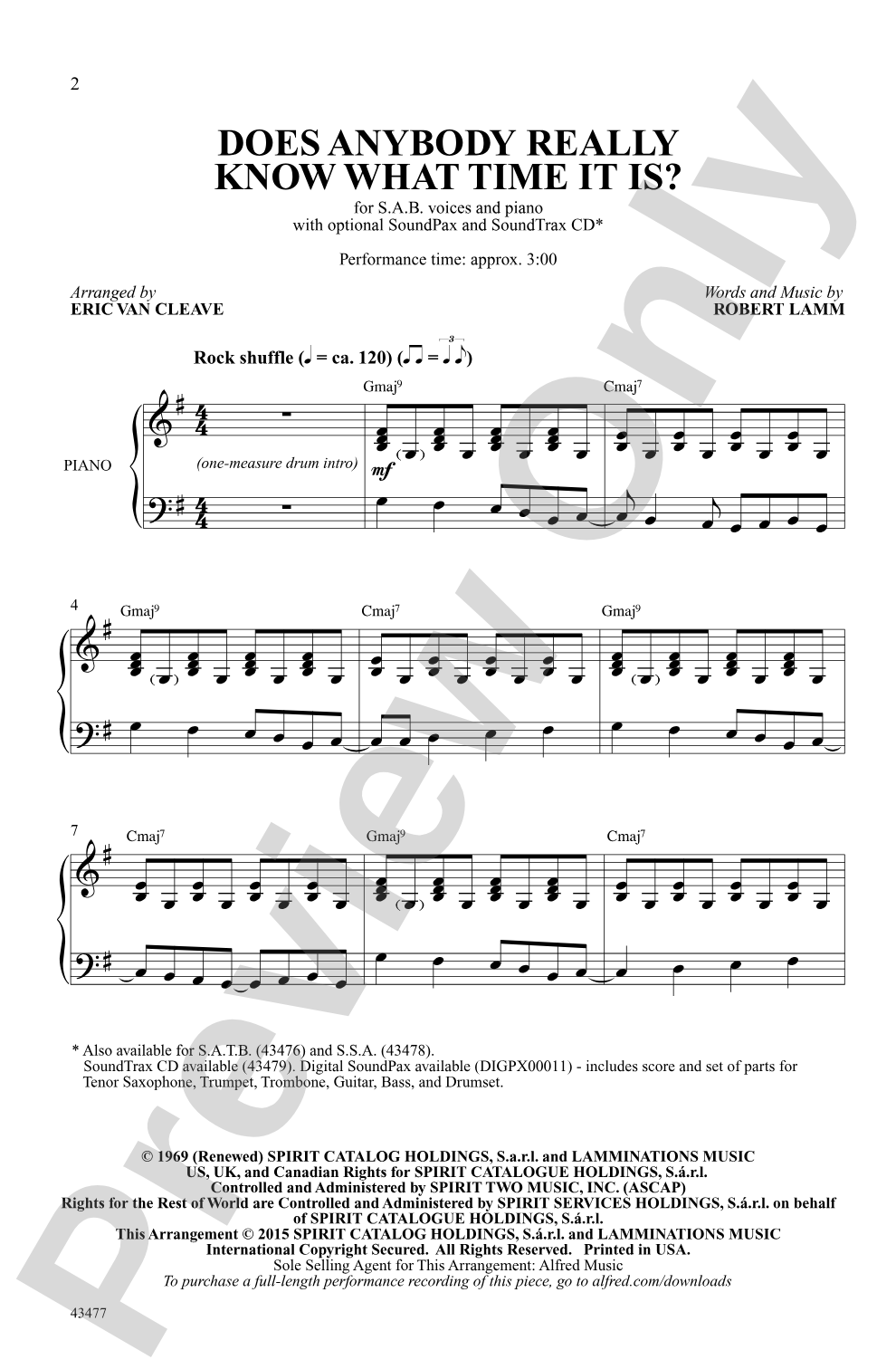
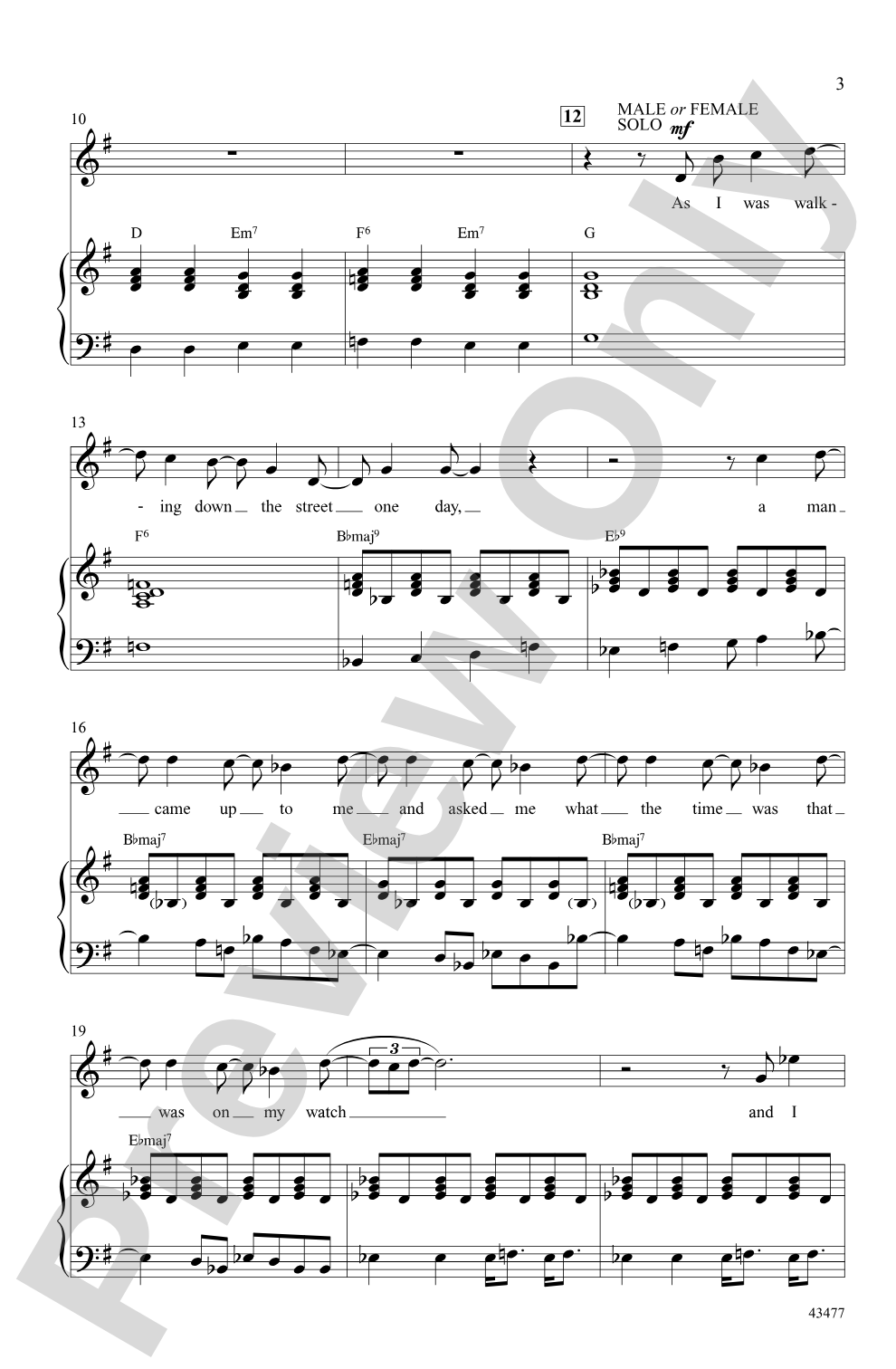
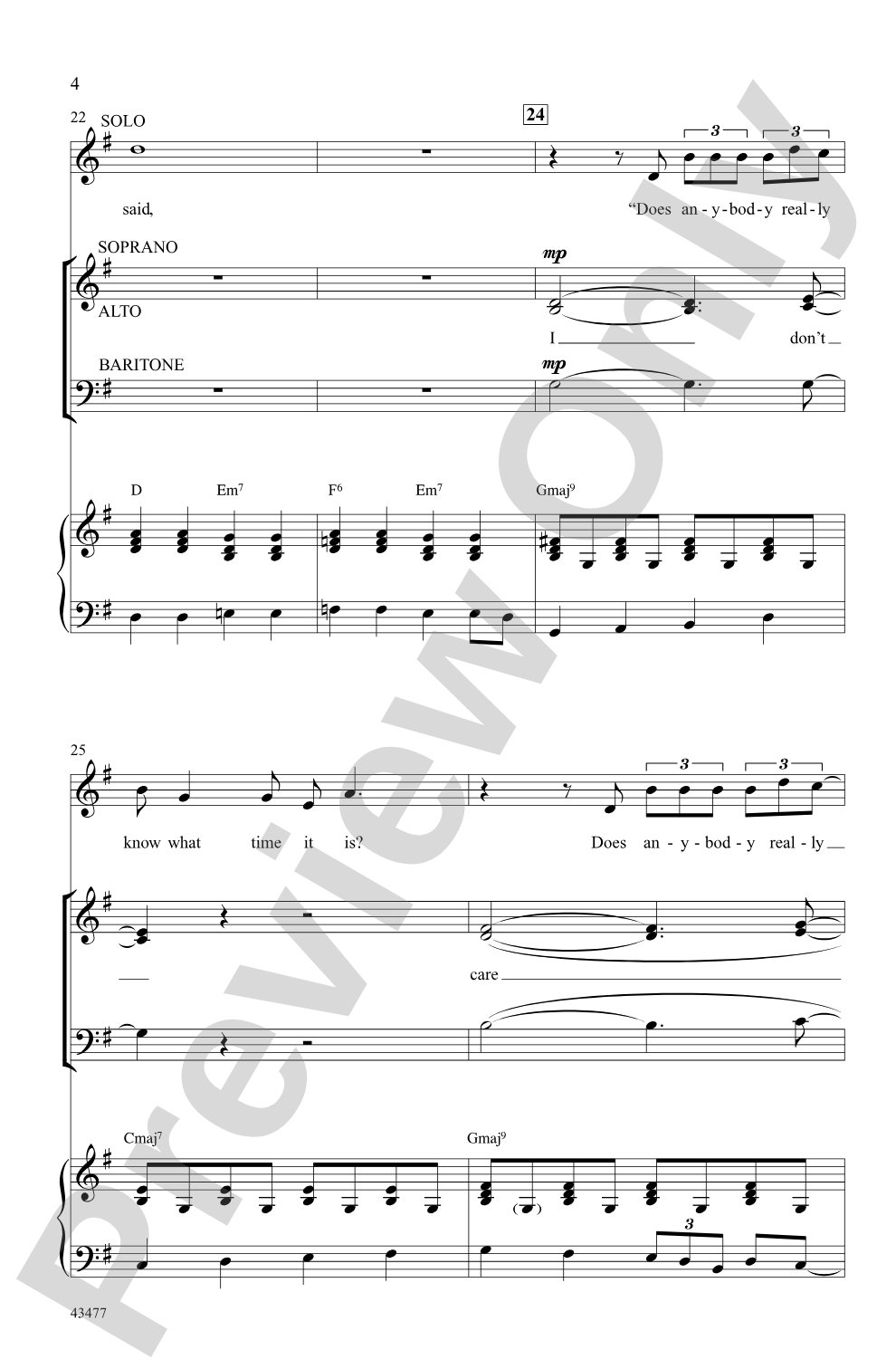

Does Anybody Really Know What Time It Is?: SAB Choral Octavo
Words and music by Robert Lamm [Chicago] / arr. Eric Van Cleave
Item: 00-PO-0003389
$2.10
Minimum order quantity: 20 copies
One moment…
Related Items
Does Anybody Really Know What Time It Is?: SoundTrax Digital Audio Download |
$27.99
|
View | |
Does Anybody Really Know What Time It Is?: SATB Choral Octavo |
$2.10
|
View | |
Does Anybody Really Know What Time It Is?: SSA Choral Octavo |
$2.10
|
View | |
Does Anybody Really Know What Time It Is?: Choral Octavo Digital SoundPax |
$30.00
|
View | |
Does Anybody Really Know What Time It Is?: SATB Choral Octavo |
$2.10
|
View | |
Does Anybody Really Know What Time It Is?: SAB Choral Octavo |
$2.10
|
View | |
Does Anybody Really Know What Time It Is?: SSA Choral Octavo |
$2.10
|
View | |
Does Anybody Really Know What Time It Is?: Choral Octavo SoundTrax CD |
$27.99
|
View |
Description
The Chicago Transit Authority (now known just as Chicago) had their third straight Billboard top ten single with this 1969 classic. Based on the radio version and featuring a soloist, this arrangement includes all of the well-known instrumental licks. Hard to resist!


Does Anybody Really Know What Time It Is?: SAB Choral Octavo isn't in MakeMusic Cloud just yet...but it could be. Let us know you'd like to see it, and you'll help shape what comes next. In the meantime, start a free trial and dive into thousands of interactive titles your students can play along with today.
Request This Title
Tell us you want it.
Start Your Free Trial
Explore everything that's ready to play right now.
Sample Audio
1
Audio File
--:--
0:00
0:00
Sample Video
No sample videos found.
Additional Details
Series:
Alfred Pop Choral Series
Publisher:
Alfred Music
Page Count:
16
SKU:
00-PO-0003389
More about this title
About the Composer: Robert Lamm
Robert Lamm co-founded Chicago Transit Authority in 1967 and served as keyboardist, vocalist, and primary songwriter throughout the band's most successful decades. His compositions defined the horn-driven rock sound of the early 1970s, blending pop sensibility with sophisticated arrangements that made complex harmonies accessible to mainstream audiences.
Why we love this
Eric Van Cleave's arrangement captures the infectious energy and iconic horn riffs that made this 1969 hit instantly recognizable, while the SAB voicing keeps it accessible for mixed choirs without sacrificing the song's character. The inclusion of a soloist part and instrumental licks transforms what could be a novelty selection into a showcase for your ensemble's ability to nail tight, rhythmic precision and blend rock sensibilities with choral discipline.
What to expect
Energetic and infectious, with a conversational tone that invites the audience into the joke of the lyrics. The arrangement pulses with rhythmic sophistication beneath a seemingly simple pop hook, creating a feeling of controlled fun that demands tight ensemble work and rhythmic confidence from every section.
Who it's for
Directors programming a secular concert that needs a crowd-pleasing, high-energy moment will find this immediately engaging for mixed choirs. The SAB voicing makes it viable for high school and community ensembles where finding true four-part balance can be challenging, and the soloist opportunity invites vocal spotlighting within a group context.
How to get the most out of it
- Lock the rhythm section (bass and drums from the accompaniment) with your choir from the first rehearsal so ensemble members understand they're not singing a traditional choral ballad. The groove drives everything.
- Keep the text conversational and natural rather than over-articulating it. The charm lives in the casual, question-posed-to-the-listener quality of the melody.
- Highlight the soloist without letting them overshadow the ensemble; the background vocals are equally essential to the sound and should remain present even during solo passages.
- Balance brightness in the upper voices (sopranos and altos) without letting them thin out the texture. This arrangement needs harmonic density to support those instrumental licks.
How to use it
Use this as an opening or closer on a concert where you're mixing genres and want to signal that the choir doesn't take itself too seriously. It pairs well after or before other contemporary repertoire, and the recorded accompaniment makes it ideal for a concert where your band can't provide live support.
Skills your students will build
- Rhythmic precision and groove singing in a rock idiom
- Balancing solo lines with ensemble background vocals
- Articulation and phrasing in a conversational pop style
- Blending three-part harmony while maintaining textural clarity
- Singing to a recorded rhythm section without a live conductor's beat