
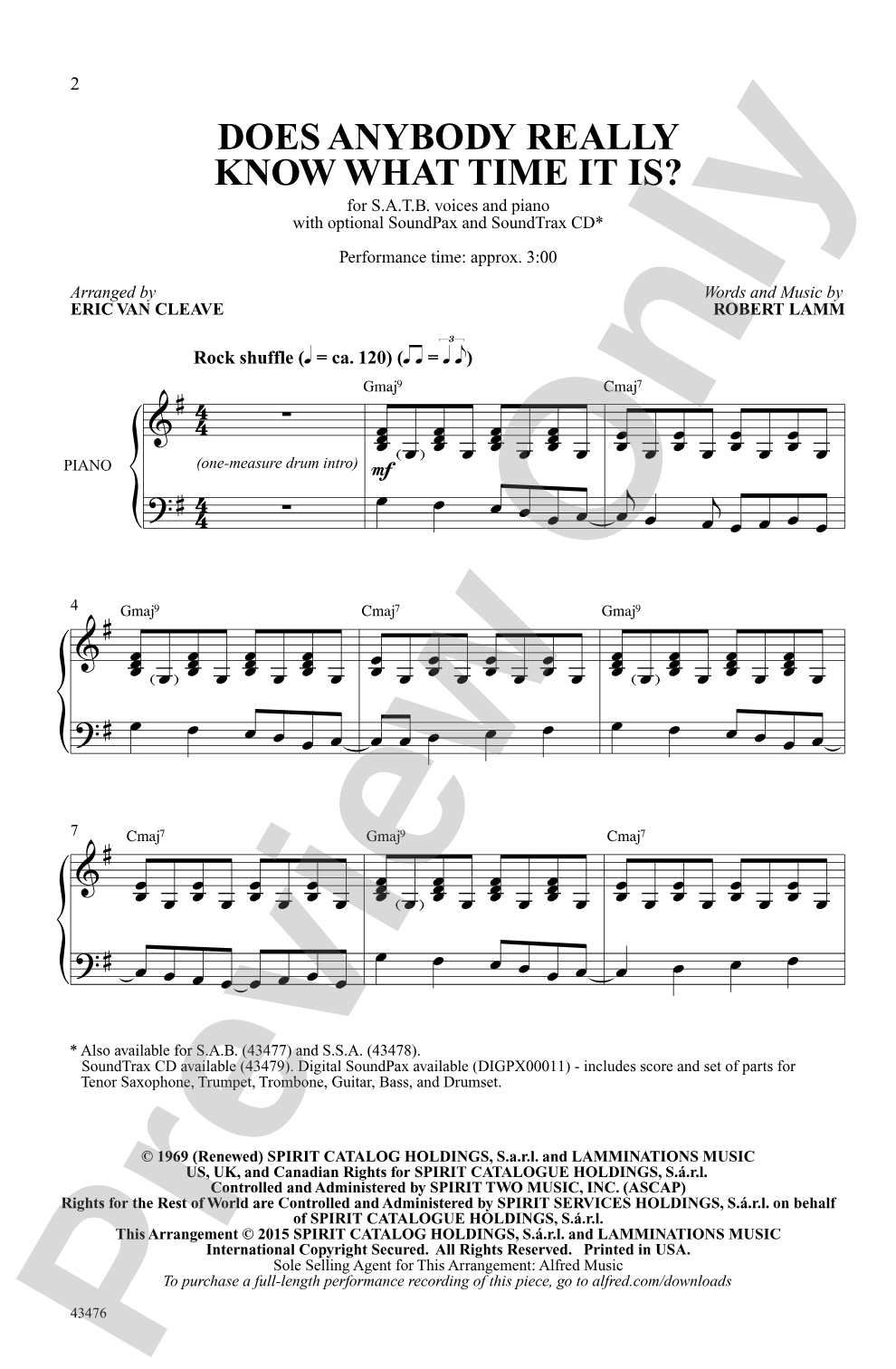
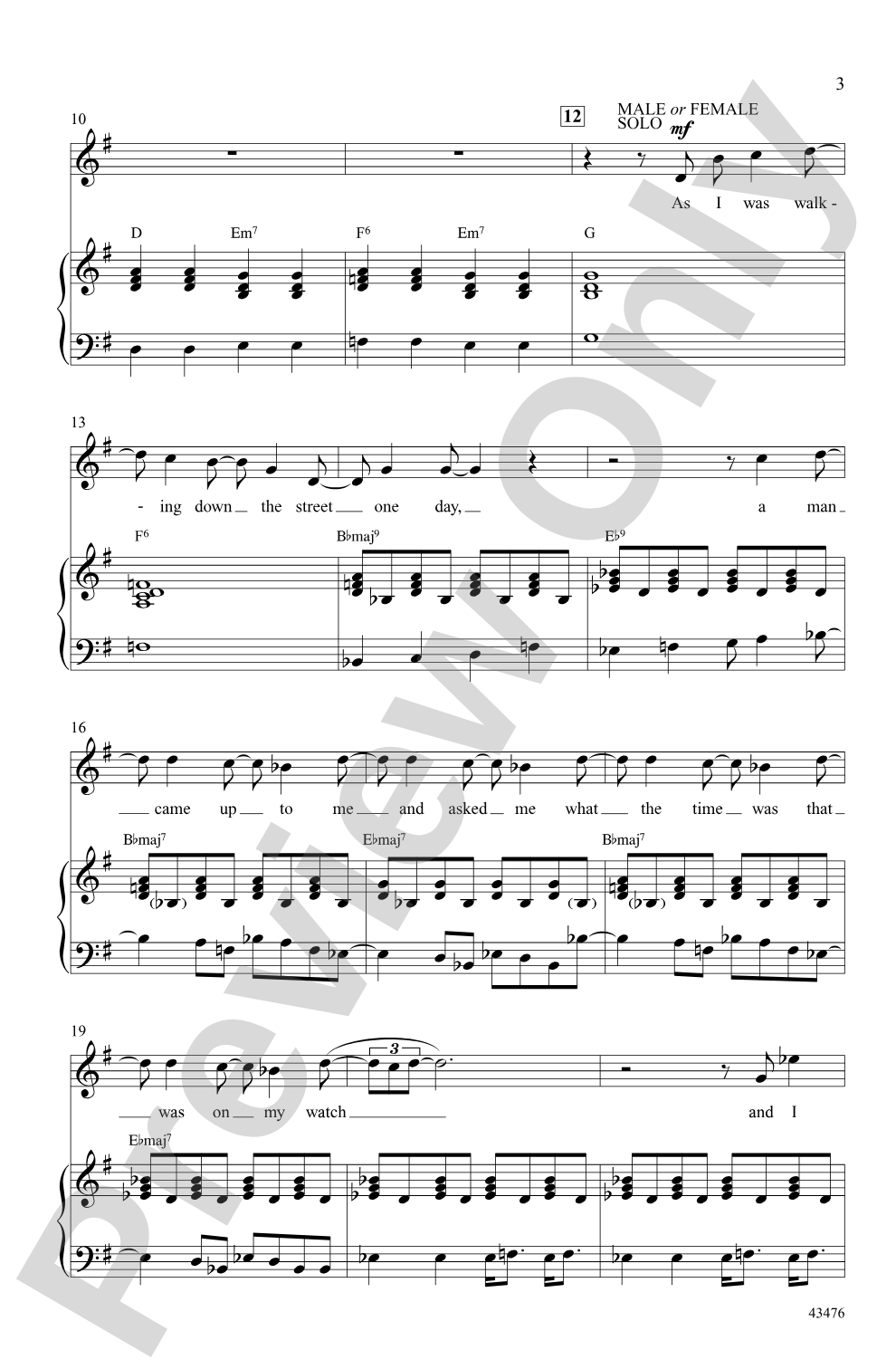
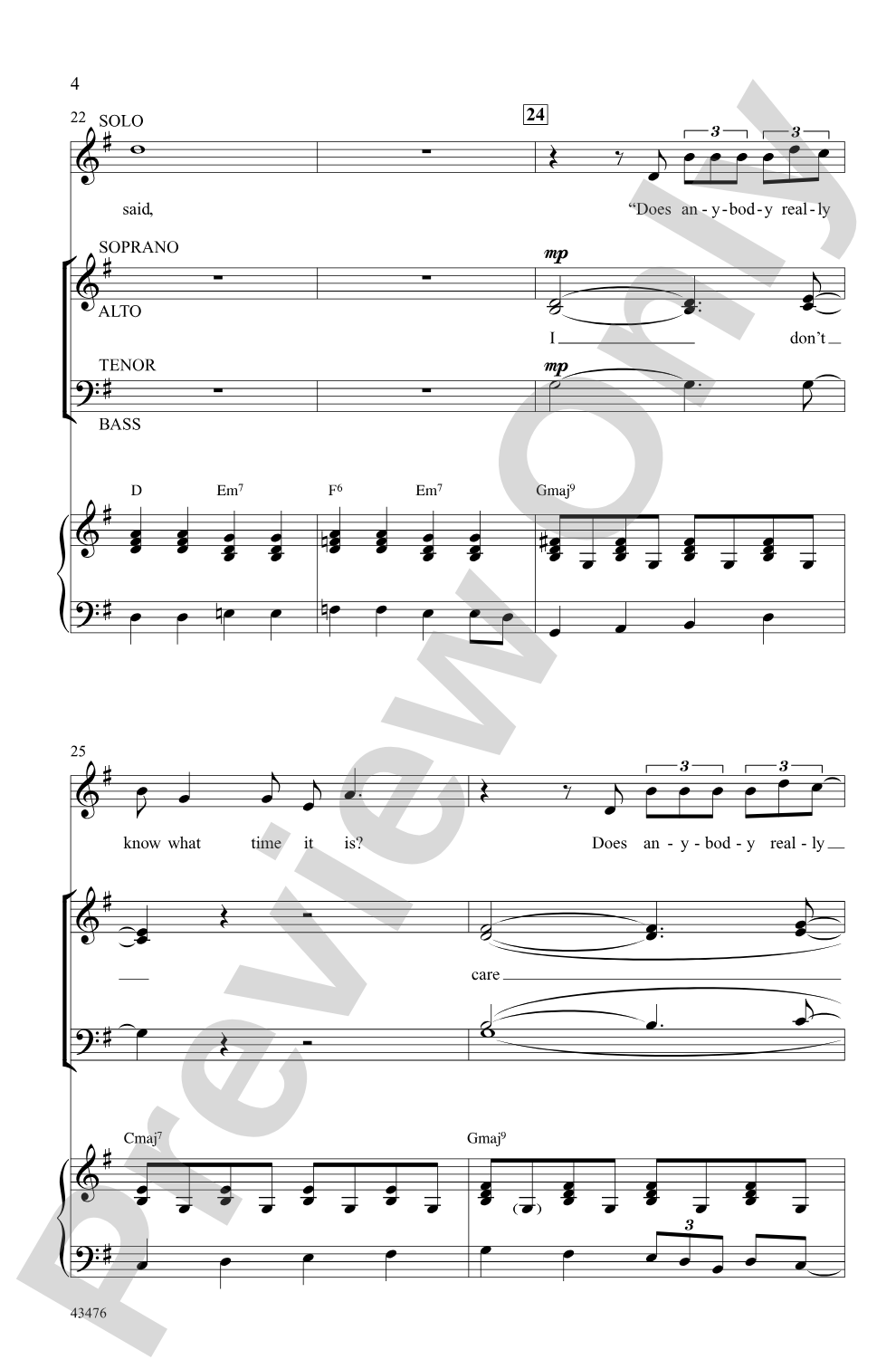

Does Anybody Really Know What Time It Is?: SATB Choral Octavo
Words and music by Robert Lamm [Chicago] / arr. Eric Van Cleave
Item: 00-PO-0003388
$2.10
Minimum order quantity: 20 copies
One moment…
Related Items
Does Anybody Really Know What Time It Is?: SoundTrax Digital Audio Download |
$27.99
|
View | |
Does Anybody Really Know What Time It Is?: SAB Choral Octavo |
$2.10
|
View | |
Does Anybody Really Know What Time It Is?: SSA Choral Octavo |
$2.10
|
View | |
Does Anybody Really Know What Time It Is?: Choral Octavo Digital SoundPax |
$30.00
|
View | |
Does Anybody Really Know What Time It Is?: SATB Choral Octavo |
$2.10
|
View | |
Does Anybody Really Know What Time It Is?: SAB Choral Octavo |
$2.10
|
View | |
Does Anybody Really Know What Time It Is?: SSA Choral Octavo |
$2.10
|
View | |
Does Anybody Really Know What Time It Is?: Choral Octavo SoundTrax CD |
$27.99
|
View |
Description
The Chicago Transit Authority (now known just as Chicago) had their third straight Billboard top ten single with this 1969 classic. Based on the radio version and featuring a soloist, this arrangement includes all of the well-known instrumental licks. Hard to resist!


Does Anybody Really Know What Time It Is?: SATB Choral Octavo isn't in MakeMusic Cloud just yet...but it could be. Let us know you'd like to see it, and you'll help shape what comes next. In the meantime, start a free trial and dive into thousands of interactive titles your students can play along with today.
Request This Title
Tell us you want it.
Start Your Free Trial
Explore everything that's ready to play right now.
Sample Audio
1
Audio File
--:--
0:00
0:00
Sample Video
No sample videos found.
Additional Details
Series:
Alfred Pop Choral Series
Publisher:
Alfred Music
Page Count:
16
SKU:
00-PO-0003388
More about this title
About the Composer: Robert Lamm
Robert Lamm co-founded Chicago Transit Authority (later shortened to Chicago) in 1967 and served as keyboardist, vocalist, and primary songwriter for the band's most celebrated era. His compositions became touchstones of early 1970s rock, blending sophisticated horn arrangements with pop sensibility and introspective lyrics. Lamm's work as a composer demonstrates how rock music can incorporate complex instrumental textures and harmonic ideas while remaining accessible to broad audiences.
Why we love this
Eric Van Cleave's arrangement captures the iconic horn riffs and rhythmic energy of the original while making the piece genuinely singable for high school and college choirs. The inclusion of a solo part and instrumental licks keeps the arrangement from feeling like a standard choral reduction, giving singers the chance to experience how the original instrumental voice lines sit alongside vocal harmony. This is the kind of rock arrangement that energizes rehearsals and resonates with audiences who know the song.
What to expect
Upbeat and rhythmically alive, with a nostalgic pull that spans generations. The interplay between choir and soloist creates conversational warmth, while the instrumental figures provide swagger and sophistication that elevate it beyond typical pop arrangements.
Who it's for
High school and college choirs looking for a crowd-pleasing rock selection that doesn't sacrifice musical substance. Directors who want their singers to engage with a beloved pop standard while developing skills in contemporary arrangement and ensemble balance. Any program seeking a secular piece that brings genuine energy and historical relevance to a concert.
How to get the most out of it
- Lock the rhythm section (bass and drum parts) to the recorded accompaniment first; once that foundation is solid, the horn figures and vocal lines fall into place more naturally.
- Balance the solo line so it sits clearly above the choir without asking the vocalist to oversing. The charm of the original comes from its conversational quality, not belted intensity.
- Lean into the syncopated figures in the rhythm parts; they're what give the piece its propulsive feel and set it apart from standard choral fare.
- Shape the instrumental licks with the same care you'd give to melodic phrases. These horn-inspired figures deserve clear articulation and phrasing, not just note accuracy.
How to use it
This works beautifully as a closing number on a pops concert or as a bridge between a classical first half and a contemporary second half. Consider pairing it with other Chicago-era rock arrangements or 1960s hits for a thematic program. The familiarity of the tune makes it ideal for community concert settings where audience engagement matters.
Skills your students will build
- Singing syncopated rhythms against a steady harmonic foundation
- Balancing blend when instrumental licks are voiced within the choir
- Executing clean ensemble articulation in rhythmic figures
- Responding to recorded accompaniment cues with precision
- Interpreting rock/pop style in a choral context