
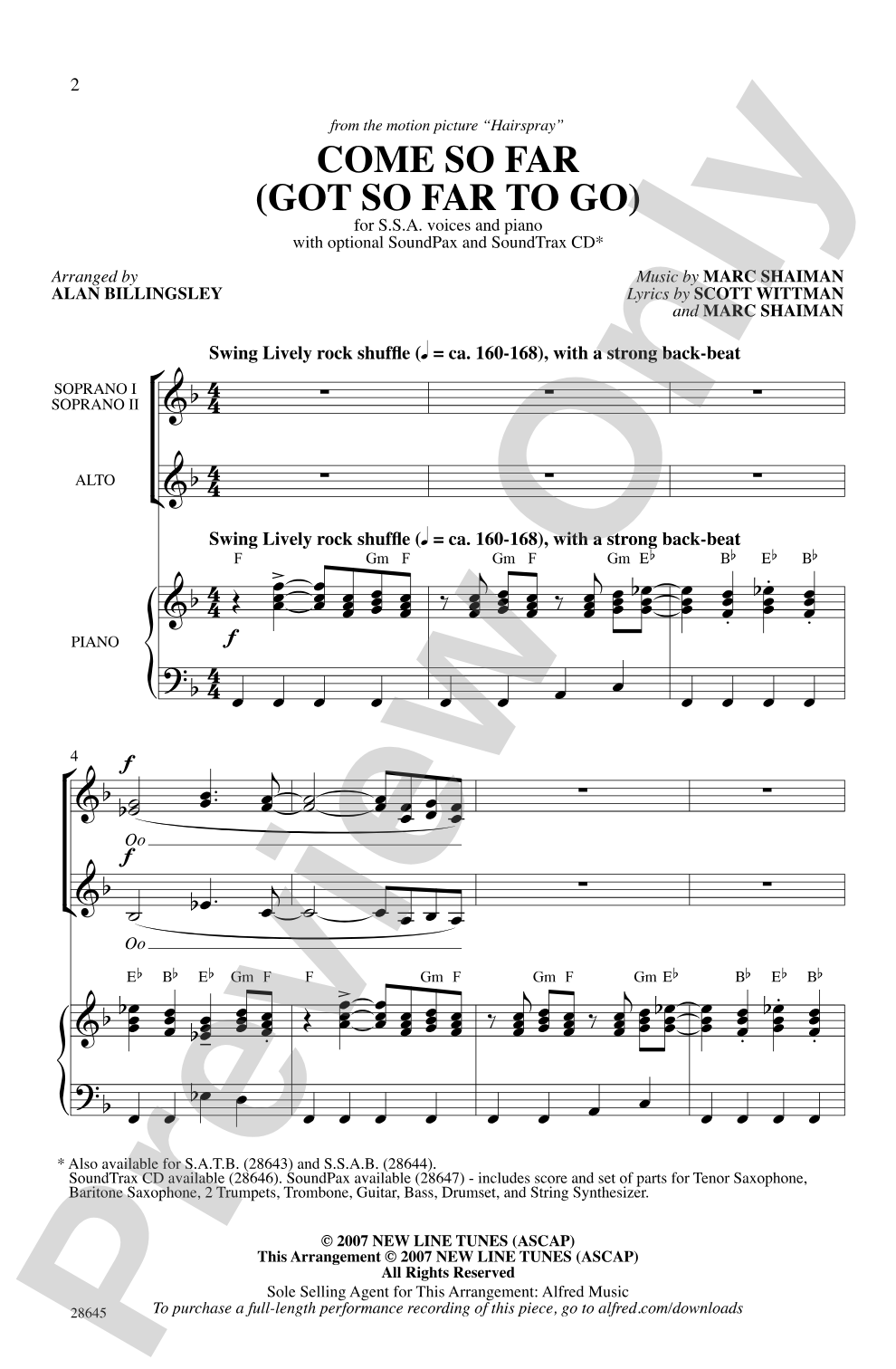
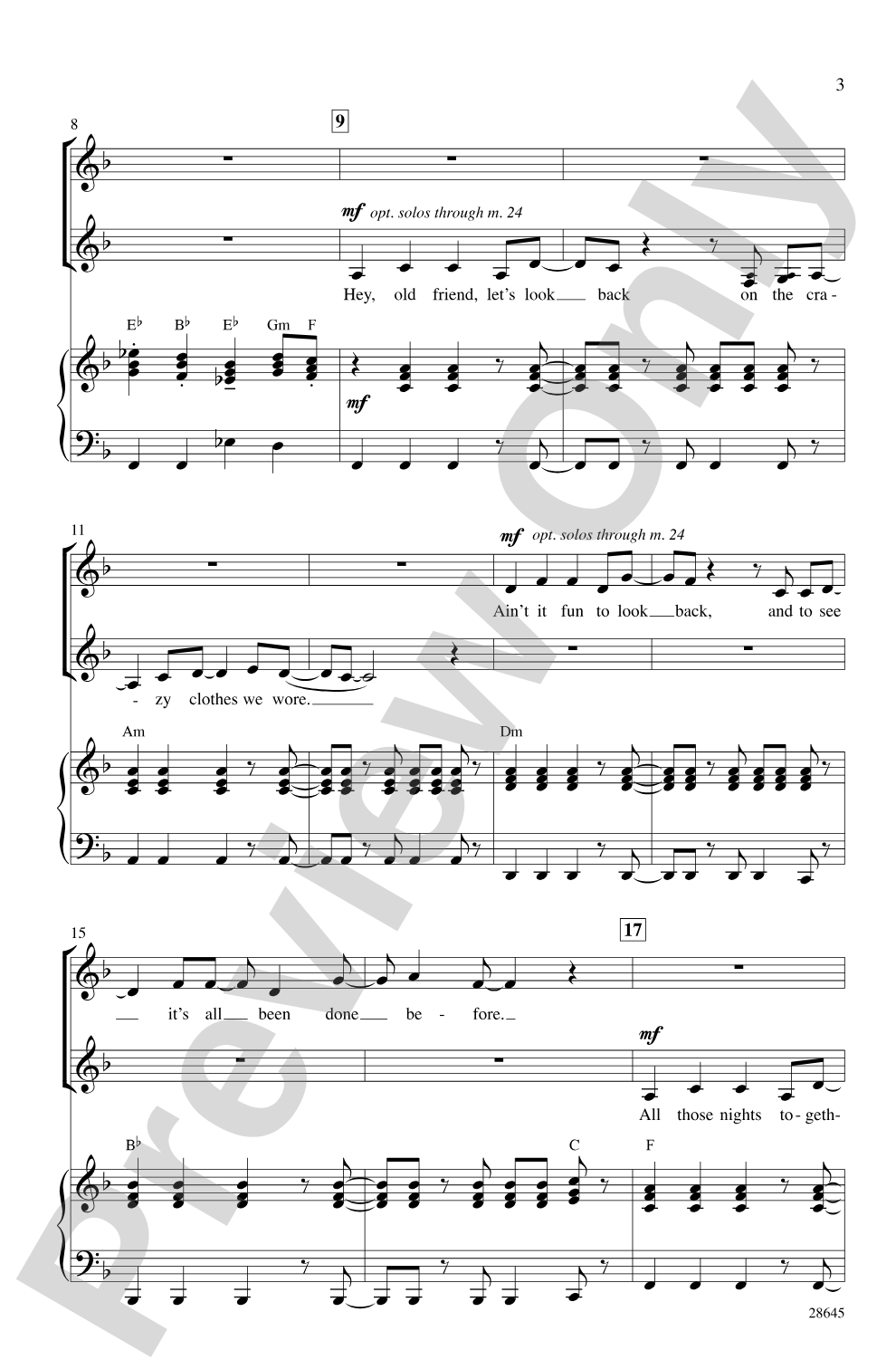
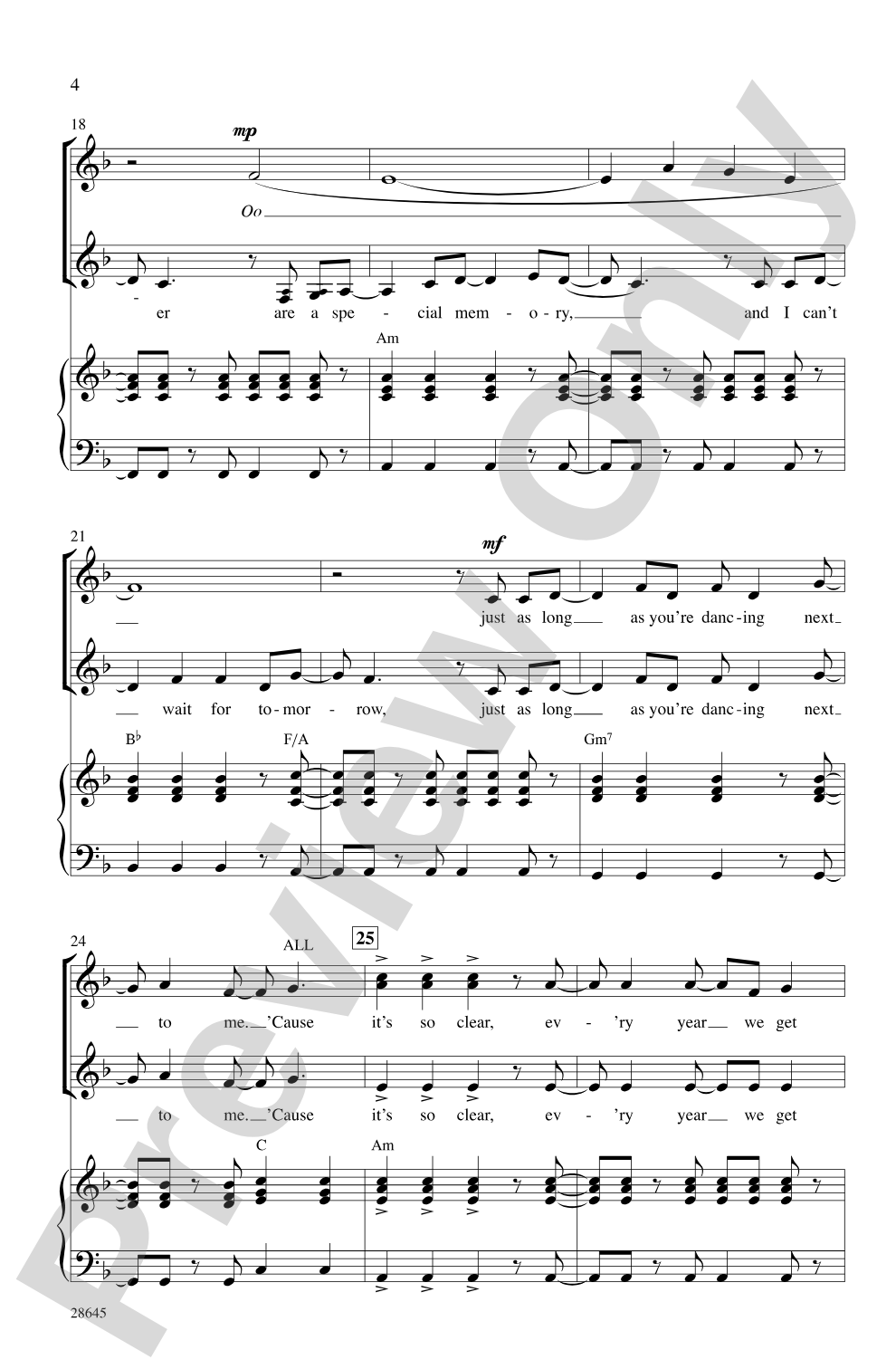

Come So Far (Got So Far to Go) (from Hairspray): SSA Choral Octavo
From the Motion Picture Hairspray
Music by Marc Shaiman, lyrics by Scott Wittman and Marc Shaiman / arr. Alan Billingsley
Item: 00-PO-0004375
$2.95
Minimum order quantity: 20 copies
Pickup currently not available
Related Items
Come So Far (Got So Far to Go): SoundTrax Digital Audio Download |
$27.99
|
View | |
Come So Far (Got So Far to Go) (from Hairspray): SATB Choral Octavo |
$2.95
|
View | |
Come So Far (Got So Far to Go) (from Hairspray): Choral SoundPax |
$30.00
|
View | |
Come So Far (Got So Far to Go): SATB Choral Octavo |
$2.95
|
View | |
Come So Far (Got So Far to Go): SSA Choral Octavo |
$2.95
|
View | |
Come So Far (Got So Far to Go): Choral Octavo SoundTrax CD |
$27.99
|
View | |
Come So Far (Got So Far to Go): Choral SoundPax |
$30.00
|
View |
Description
The only brand new song from the hit movie Hairspray arranged for mixed chorus. Also available for SSA. Great for graduation: "every year we get stronger." Kickin' and fun.


Come So Far (Got So Far to Go) (from Hairspray): SSA Choral Octavo isn't in MakeMusic Cloud just yet...but it could be. Let us know you'd like to see it, and you'll help shape what comes next. In the meantime, start a free trial and dive into thousands of interactive titles your students can play along with today.
Request This Title
Tell us you want it.
Start Your Free Trial
Explore everything that's ready to play right now.
Sample Audio
1
Audio File
--:--
0:00
0:00
Sample Video
No sample videos found.
Additional Details
Series:
Alfred Archive Edition: Alfred Pop Choral Series
Publisher:
Alfred Music
Page Count:
16
SKU:
00-PO-0004375
More about this title
About the Composer: Marc Shaiman
Marc Shaiman is a composer and conductor whose work spans Broadway, film, and television. His scores for Hairspray, Cinderella, and The Smurfs demonstrate his gift for writing music that feels both contemporary and theatrically satisfying. Shaiman's theatrical compositions balance accessibility with sophistication, making them favorites in educational choral programs.
Beyond his film and stage work, Shaiman has established himself as a champion of music education and live performance. His ability to craft memorable melodies with clear harmonic vocabulary makes his arrangements ideal for high school and community choirs seeking material with genuine theatrical polish.
Why we love this
This arrangement captures the infectious optimism of the movie while remaining completely singable for developing SSA choirs. Alan Billingsley's setting honors Shaiman's original composition while creating natural divisi and entry points that give every voice a moment to shine. Few graduation songs balance genuine sentiment with pure fun quite this well.
What to expect
Energetic and affirming. The piece moves with the confidence of characters who know they've accomplished something real but recognize the larger journey ahead. There's genuine Broadway pizzazz here, paired with the kind of hope that doesn't feel saccharine.
Who it's for
SSA choirs looking for graduation repertoire with theatrical flair and positive messaging. The text and emotional arc make this ideal for high school and adult community ensembles that value contemporary material with substance. This arrangement works equally well for choirs seeking a concert closer or a special occasion feature.
How to get the most out of it
- Establish the energy and rhythmic precision early in rehearsal. The groove depends on locking the rhythm section parts together, so isolate and drill the accompaniment pattern before adding melody lines.
- Shape the phrase "Come so far, got so far to go" as a conversational statement rather than a proclamation. The message lands harder when the delivery feels personal.
- Keep the tempo steady but never mechanical. The recorded accompaniment helps, but your singers should feel the natural breath and swing of the rhythm regardless of whether you use it in performance.
- Balance the soloistic moments (if your arrangement includes them) with the choral sections. These passages create intimacy before building back to full ensemble power.
How to use it
This arrangement shines as a graduation finale where the theme of progress and possibility feels earned by your singers and audience alike. It works equally well as a spring concert highlight or an end-of-year celebration number. Consider pairing it with a more introspective piece earlier in the program to let this one's brightness hit at full impact.
Skills your students will build
- rhythmic precision in contemporary pop/musical theater idiom
- sustaining energy across longer phrases without loss of diction clarity
- balance between soloistic and ensemble singing
- interpreting theatrical text with emotional authenticity
- Part independence in SSA voicing