
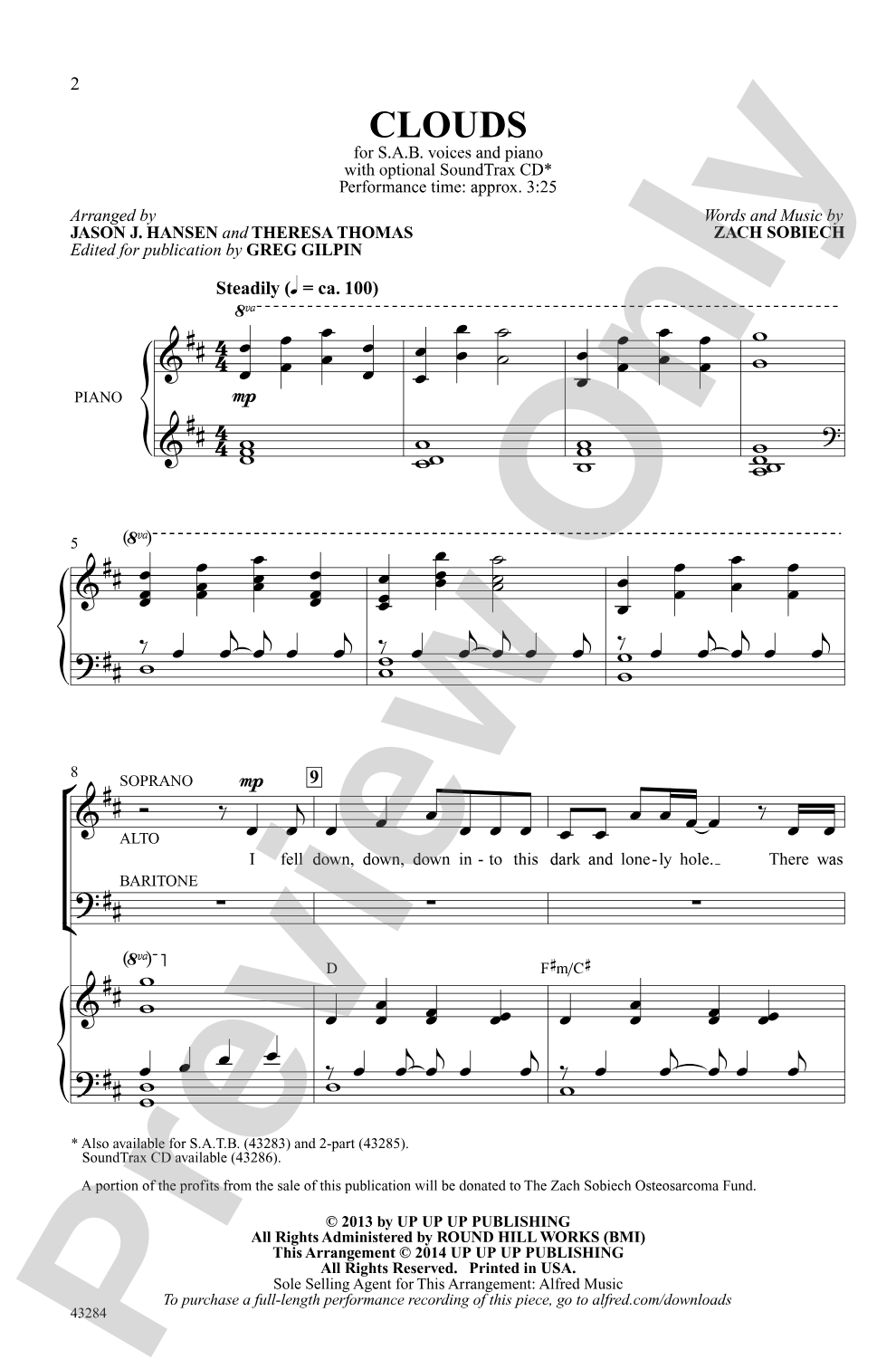
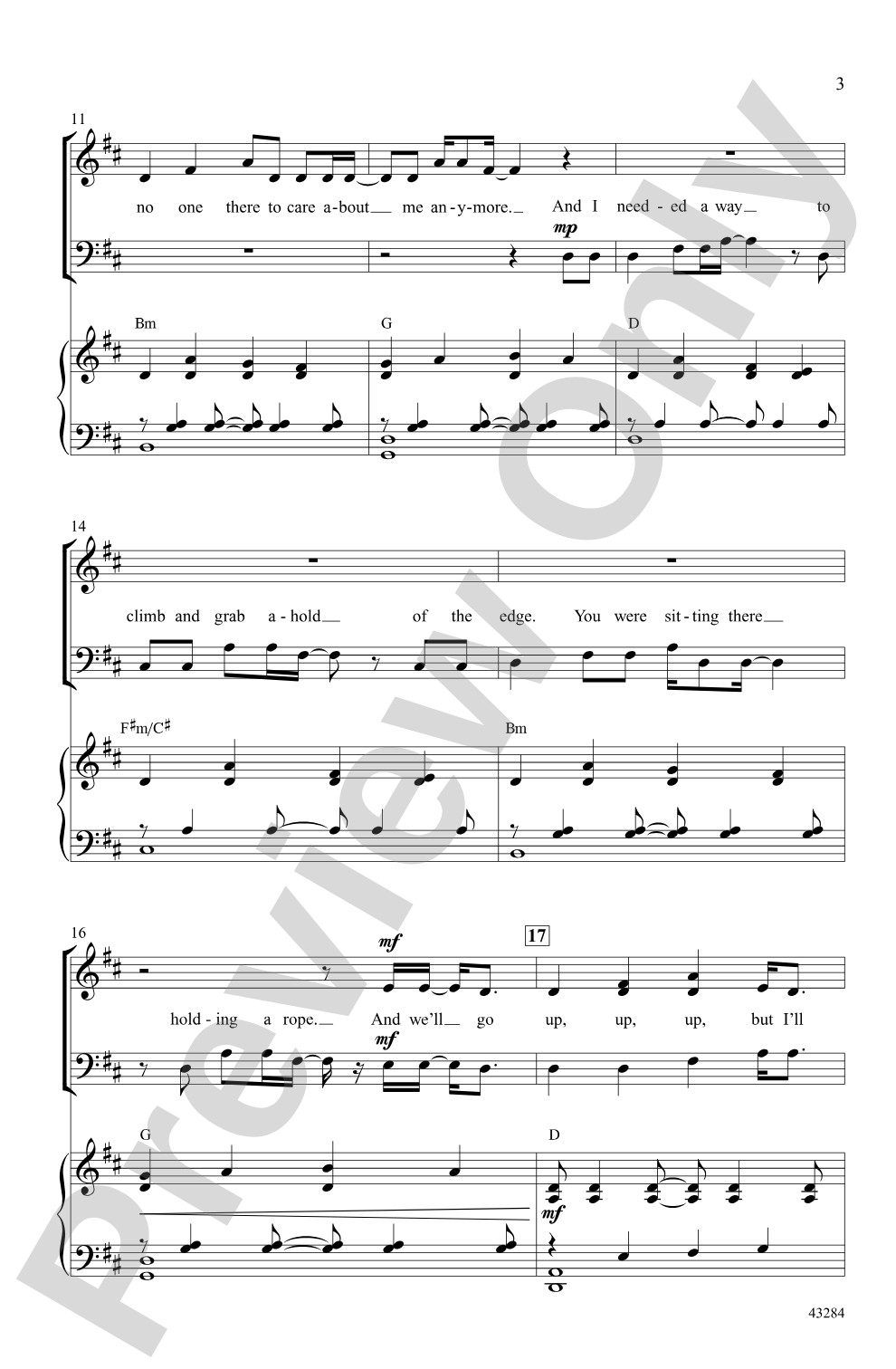
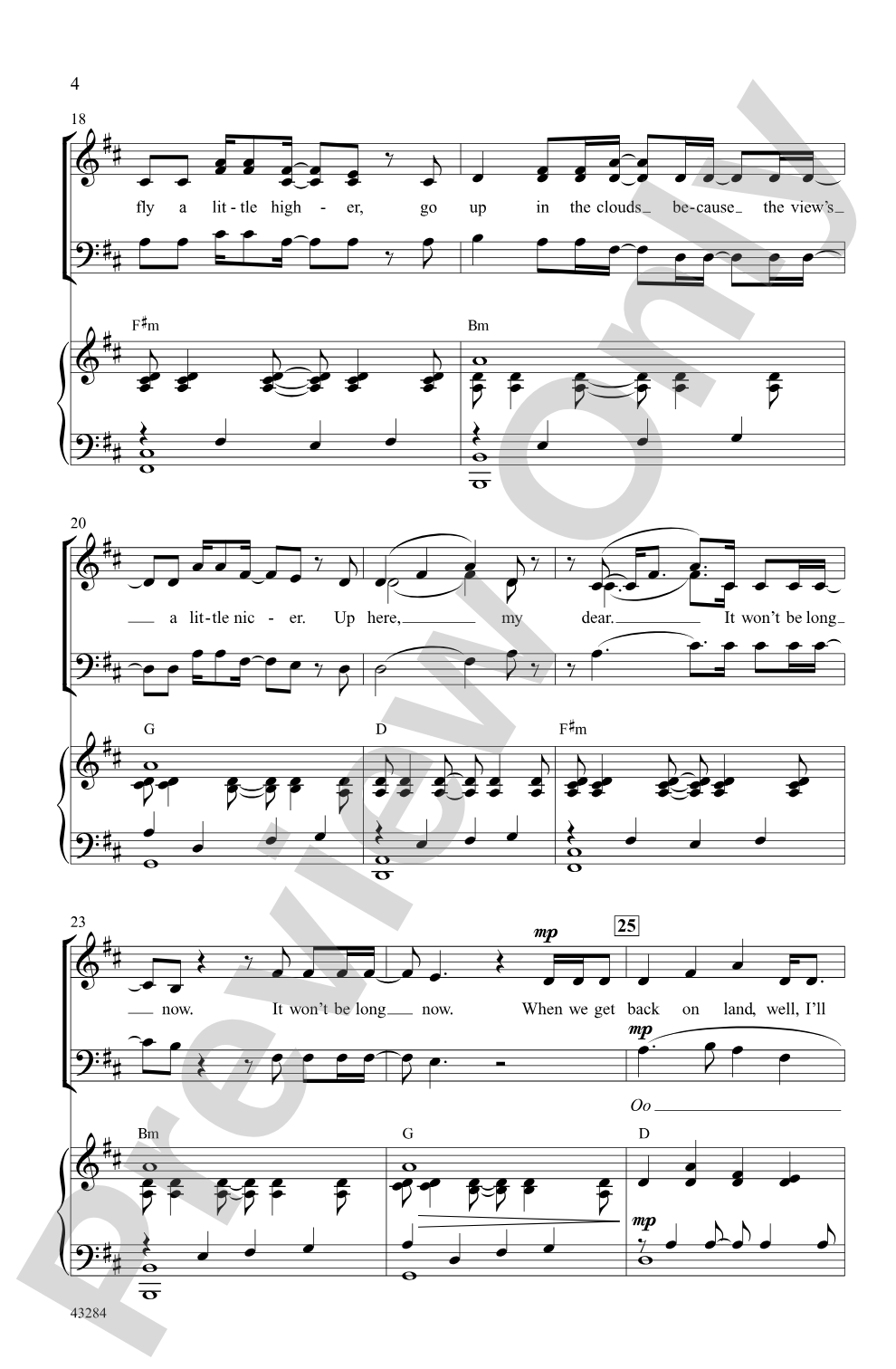

Clouds (SAB): SAB Choral Octavo
Words and music by Zach Sobiech / arr. Jason J. Hansen and Theresa Thomas / ed. Greg Gilpin
Item: 00-PO-0002045
$2.00
Minimum order quantity: 20 copies
Pickup currently not available
Related Items
Clouds: SoundTrax Digital Audio Download |
$27.99
|
View | |
Clouds (SATB): SATB Choral Octavo |
$2.10
|
View | |
Clouds (2-Part): 2-Part Choral Octavo |
$2.10
|
View | |
Clouds: SATB Choral Octavo |
$2.10
|
View | |
Clouds: SAB Choral Octavo |
$2.00
|
View | |
Clouds: 2-Part Choral Octavo |
$2.10
|
View | |
Clouds: Choral Octavo SoundTrax CD |
$27.99
|
View |
Description
After being given a year to live, 17-year old Zach Sobiech wrote a powerful goodbye song that quickly gained international attention in the form of celebrity tribute videos and other high-profile covers. Zach passed away in 2013, but his legacy lives on in this positive message of hope. A portion of the royalties from this arrangement will be donated to the Zach Sobiech Osteosarcoma Fund.


Clouds (SAB): SAB Choral Octavo isn't in MakeMusic Cloud just yet...but it could be. Let us know you'd like to see it, and you'll help shape what comes next. In the meantime, start a free trial and dive into thousands of interactive titles your students can play along with today.
Request This Title
Tell us you want it.
Start Your Free Trial
Explore everything that's ready to play right now.
Sample Audio
1
Audio File
--:--
0:00
0:00
Sample Video
No sample videos found.
Additional Details
Series:
Alfred Pop Choral Series
Publisher:
Alfred Music
Page Count:
12
SKU:
00-PO-0002045
More about this title
About the Composer: Zach Sobiech
Zach Sobiech wrote "Clouds" at 17 years old after learning he had terminal osteosarcoma. The song became a viral phenomenon, inspiring celebrity covers and tribute videos that spread his message of hope across the globe. Though he passed away in 2013, his music continues to resonate with audiences of all ages and serves as a powerful reminder of resilience and finding meaning in difficult circumstances.
For choral programs, Sobiech's work offers a rare opportunity to engage students with contemporary songwriting that carries genuine emotional weight. "Clouds" demonstrates how a young composer's authentic voice can transcend age and experience to touch listeners deeply, making it a meaningful addition to any choir's repertoire.
Why we love this
This arrangement captures the emotional core of Sobiech's original without overwhelming your singers. Hansen and Thomas have crafted an accessible yet meaningful SAB voicing that lets the song's message shine through, and the recorded accompaniment option gives you flexibility in how you approach rehearsal and performance. Choirs consistently respond to this piece with genuine investment because the material itself is honest.
What to expect
The piece radiates quiet strength rather than despair, with harmonic warmth that supports Sobiech's hopeful perspective. Your singers will feel the earnestness of the writing; there's no manipulation here, just honest melody and straightforward harmony that creates emotional clarity.
Who it's for
This octavo suits choirs at the intermediate level and above who want to program contemporary material with real substance. It works equally well in school choral programs, church choirs, and community ensembles where singers appreciate songs that carry meaning beyond the music itself.
How to get the most out of it
- Balance the melody line across your section during unison passages; even though SAB offers harmonic support, Sobiech's vocal line should remain the focal point throughout
- Record a rehearsal run-through early on and listen back as an ensemble; hearing the whole picture helps singers understand where their part fits in the emotional arc
- Shape the dynamic contour with intention rather than singing straight through at one level; the lyrics themselves suggest natural ebb and flow that will emerge if you follow the text's emotional beats
- If using the recorded accompaniment, spend at least one full rehearsal without it to ensure your ensemble can hold the harmonic foundation independently
How to use it
Consider programming this as a closing piece or as part of a thematic set exploring resilience and contemporary voices. The song's accessibility makes it a natural bridge between traditional repertoire and modern choral writing, helping audiences connect with your choir's range. It also serves as an effective concert closer that leaves listeners with something meaningful to think about.
Skills your students will build
- Singing contemporary pop melodies with legit choral technique
- Balancing individual vocal lines within a three-part harmonic structure
- Interpreting lyrics with emotional authenticity and directness
- Developing sensitivity to dynamic shaping and phrasing in pop arrangements