
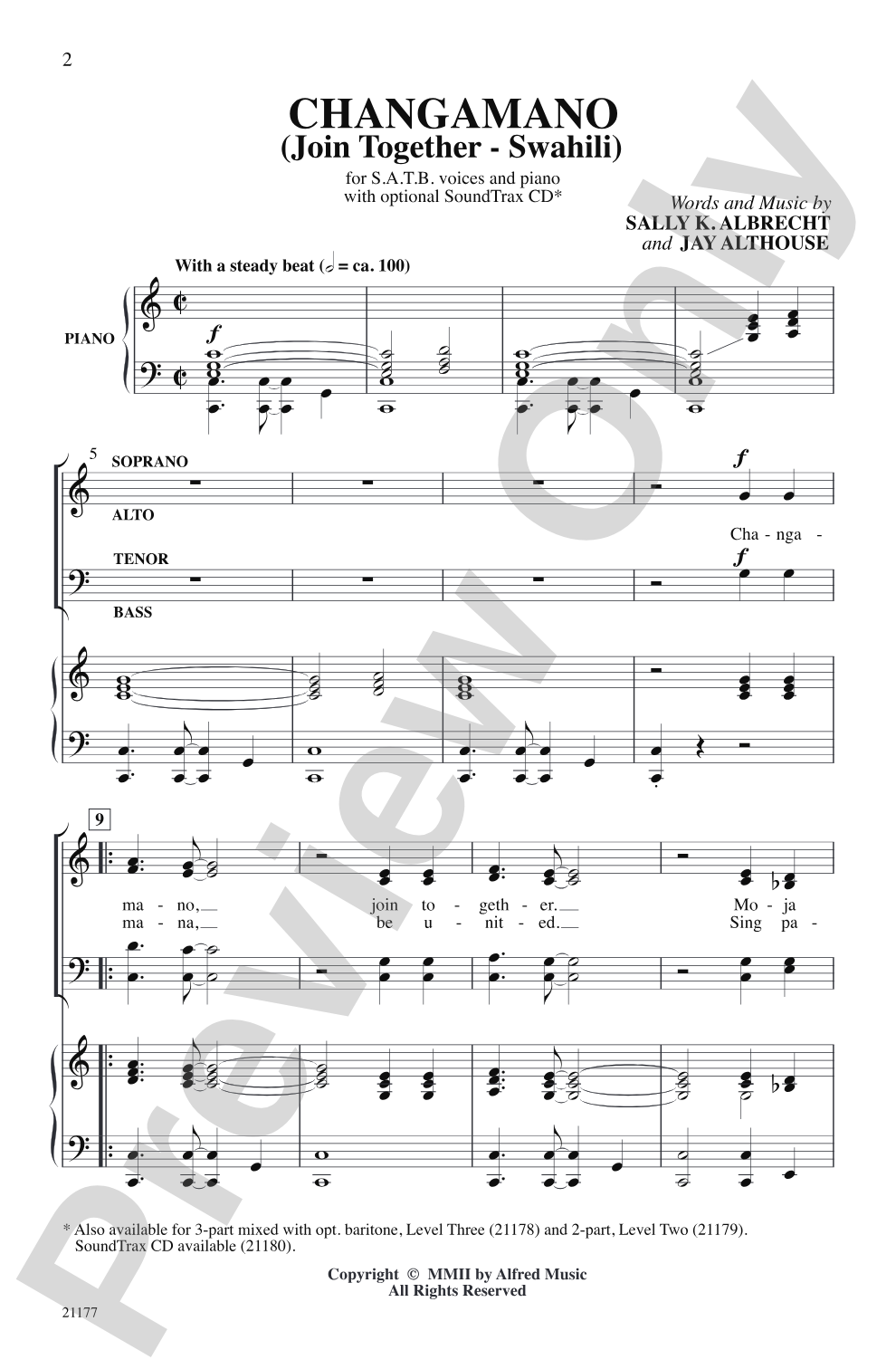
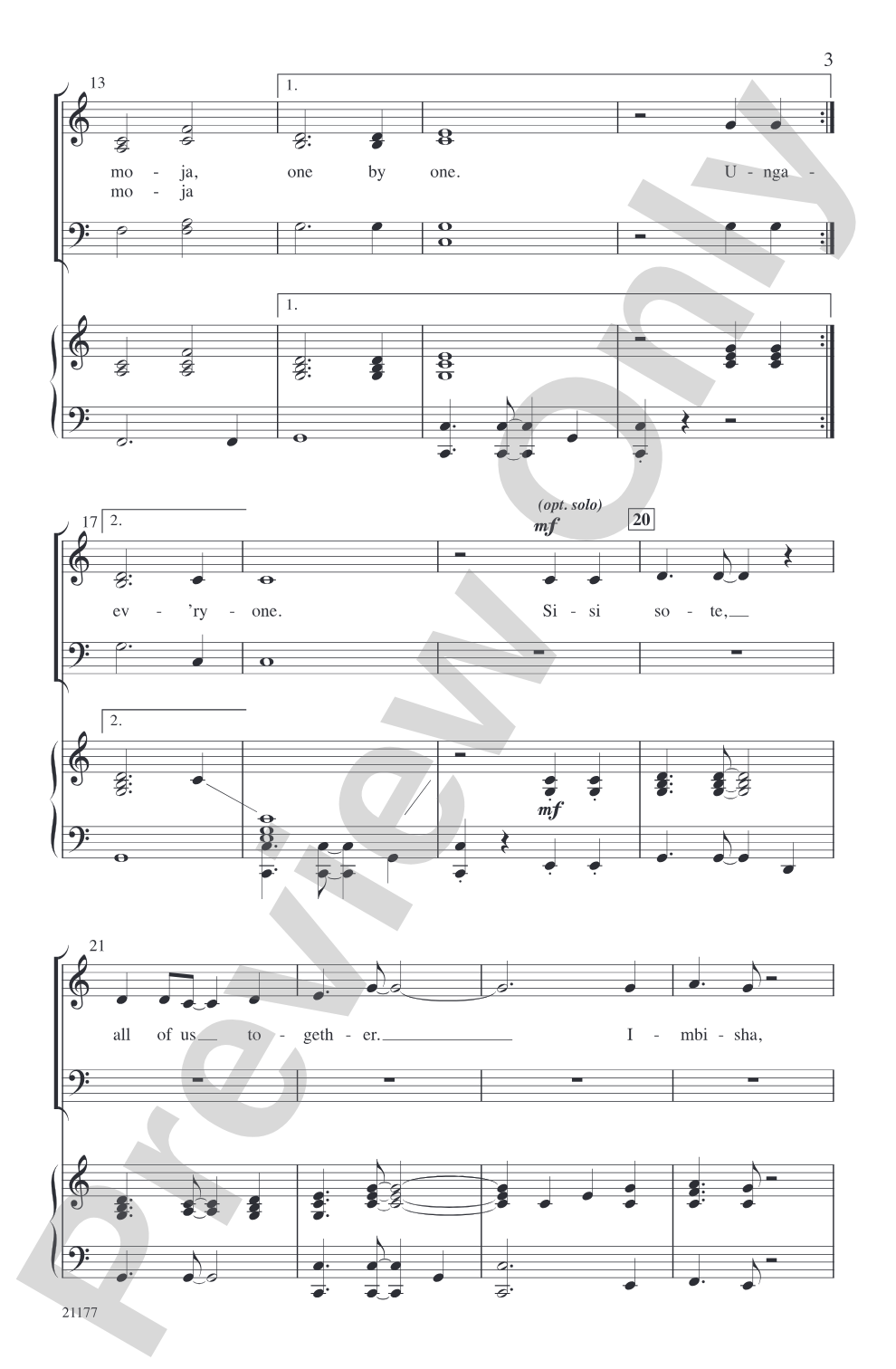
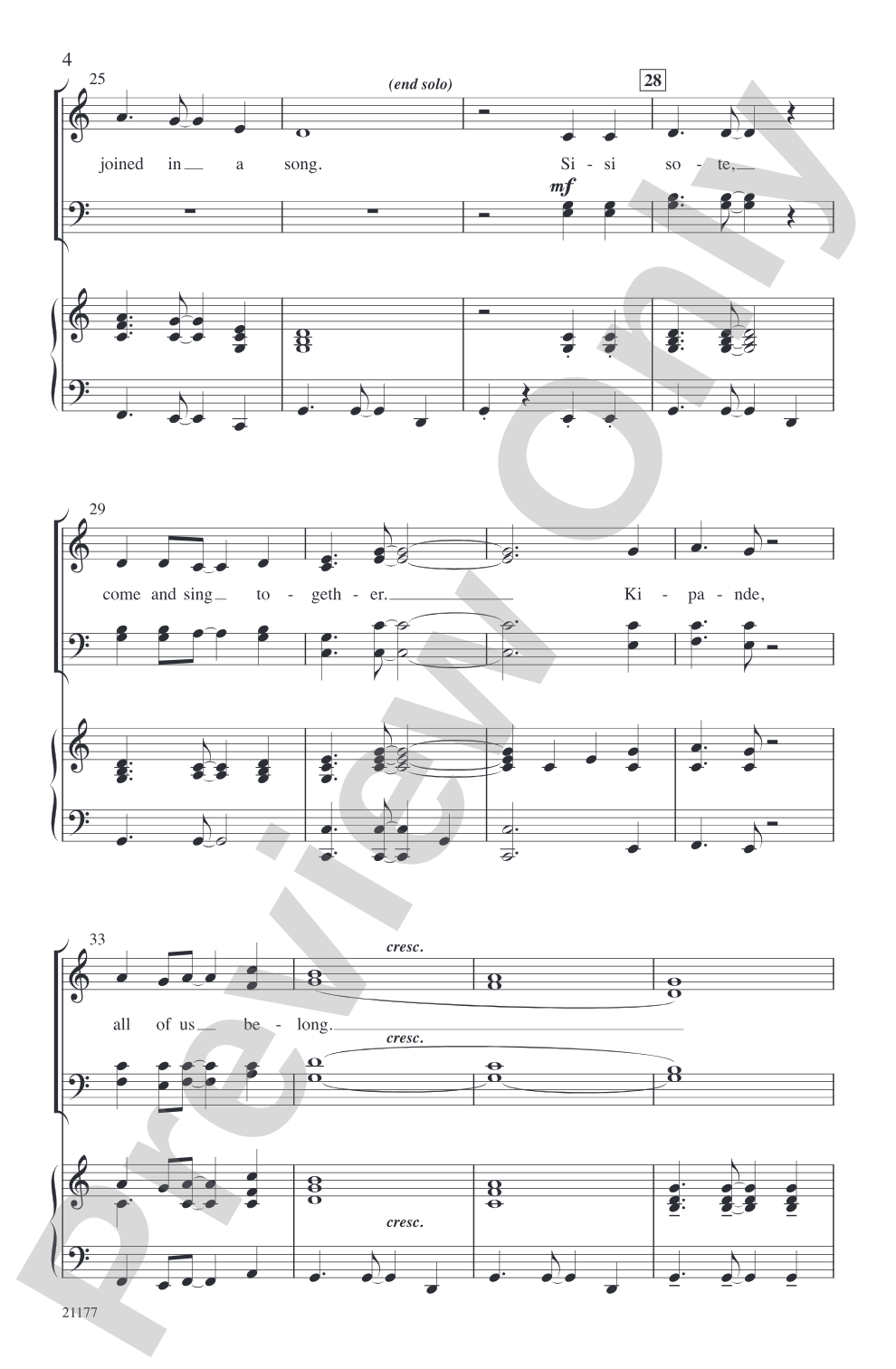

Changamano (Join Together-Swahili): SATB Choral Octavo
(Join Together--Swahili)
Music by Sally K. Albrecht and Jay Althouse
Item: 00-PO-0004261
$2.25
Minimum order quantity: 20 copies
Pickup currently not available
Related Items
Changamano (Join Together-Swahili): 3-Part Mixed Choral Octavo |
$2.25
|
View | |
Changamano (Join Together-Swahili): 2-Part Choral Octavo |
$2.25
|
View | |
Changamano: SATB Choral Octavo |
$2.25
|
View | |
Changamano: 3-Part Mixed Choral Octavo |
$2.25
|
View | |
Changamano: 2-Part Choral Octavo |
$2.25
|
View | |
Changamano: Choral Octavo SoundTrax CD |
$27.99
|
View |
Description
You'll feel the African pulse of this piece from the first measure. "Changamano, join together. Moja, moja, one by one." The text features seven Swahili words or phrases; a pronunciation guide and translations are included in the publication. It's a "music" song, it's a "unite as one" song, but most of all, it's a joy to sing. Includes optional solos and a treble trio descant. Staging Suggestion are featured on Sally's "Showtime!" video, Alfred #21176.


Changamano (Join Together-Swahili): SATB Choral Octavo isn't in MakeMusic Cloud just yet...but it could be. Let us know you'd like to see it, and you'll help shape what comes next. In the meantime, start a free trial and dive into thousands of interactive titles your students can play along with today.
Request This Title
Tell us you want it.
Start Your Free Trial
Explore everything that's ready to play right now.
Sample Audio
1
Audio File
--:--
0:00
0:00
Sample Video
No sample videos found.
Additional Details
Series:
Alfred Archive Edition: Alfred Choral Designs
Publisher:
Alfred Music
Page Count:
12
SKU:
00-PO-0004261
More about this title
About the Composer: Sally K. Albrecht
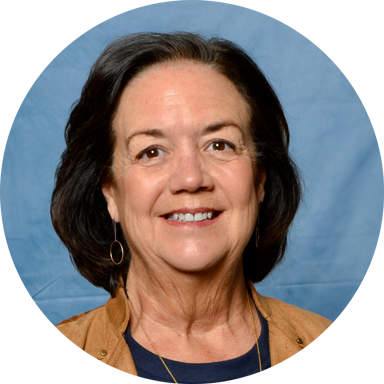
Sally K. Albrecht has composed over 600 choral works and served as Director of School Choral, Vocal, and Elementary Publications for major educational music publishers, including Alfred Music. A clinician and conductor known for integrating movement into choral performance, she has led honor choirs at prestigious venues including Lincoln Center, Carnegie Hall, and The Kennedy Center. Since 1987, she has been an annual recipient of the ASCAP Special Music Award.
Albrecht earned degrees from Rollins College (B.A. in Music and Theater, 1976), the University of Miami (M.A. in Drama, 1977; M.M. in Accompanying, 1979), and has taught at Oakland University, Jersey City State College, and Meredith College. In 2021, she received the Distinguished Alumna Award from both the University of Miami Frost School of Music and Rollins College. She collaborates frequently with her husband, composer and arranger Jay Althouse, and is based in North Carolina.
Why we love this
Albrecht's text selection and melodic phrasing make the Swahili lyrics immediate and memorable; your singers will own the pronunciation from rehearsal one. The piece balances serious cultural representation with genuine musical joy, and the optional solos and treble descant give you flexible casting options that keep every voice engaged.
What to expect
From the opening measures, the African rhythmic pulse creates an infectious, forward-moving energy that draws singers and listeners into a shared moment. The text's call to unity, paired with the bright harmonic writing, generates genuine warmth and collective purpose without requiring complex vocal technique.
Who it's for
Mixed choirs at the high school and adult community level will find this piece accessible and rewarding. The moderate difficulty and cultural authenticity make it ideal for choirs seeking to expand their multicultural repertoire while building ensemble cohesion.
How to get the most out of it
- Learn the Swahili pronunciation as a group early. The built-in pronunciation guide lets you move past diction questions quickly and focus on the song's message and forward momentum.
- Use the optional solos strategically to spotlight strong voices while keeping the full ensemble grounded in the main melody; the solos support rather than dominate.
- Explore the staging suggestions on the referenced "Showtime!" video (Alfred #21176) to see how movement can deepen the piece's communal energy without overwhelming rehearsal time.
- Balance the treble descant carefully in the mix; it should enhance the harmonic texture rather than pull focus from the main SATB line.
How to use it
Program this as a winter concert centerpiece or opening number that sets an inclusive, celebratory tone. It works equally well as a standalone cultural feature or paired with other spirituals or world music that reinforces themes of community and togetherness.
Skills your students will build
- Swahili pronunciation and language awareness
- SATB voice independence and blend
- Rhythmic precision in syncopated African-based patterns
- Ensemble unity and collective expression
- Optional solo performance and descant part-singing