
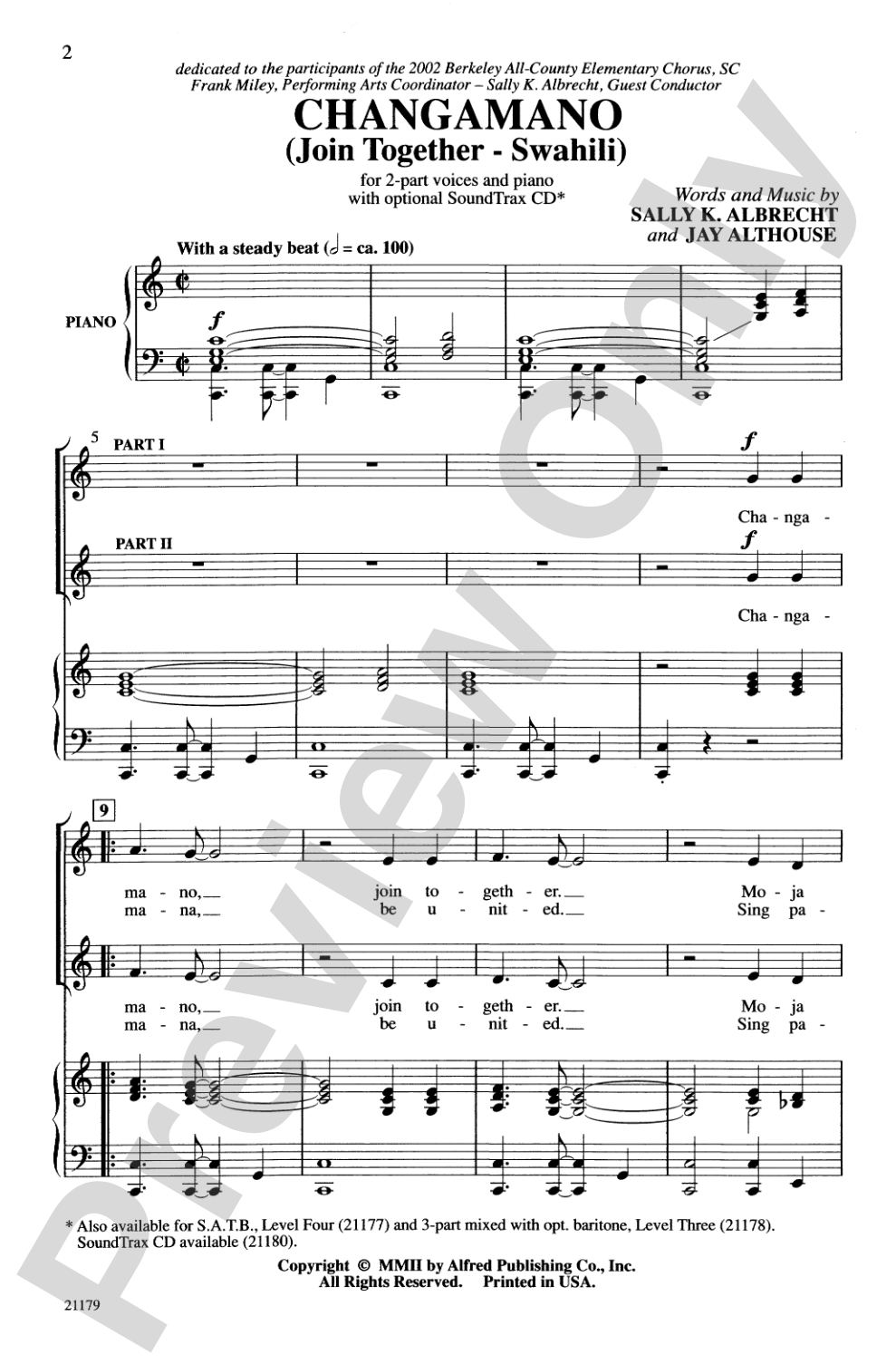

Changamano (Join Together-Swahili): 2-Part Choral Octavo
(Join Together--Swahili)
Music by Sally K. Albrecht and Jay Althouse
Item: 00-PO-0002197
$2.25
Minimum order quantity: 20 copies
Pickup currently not available
Related Items
Changamano (Join Together-Swahili): SATB Choral Octavo |
$2.25
|
View | |
Changamano (Join Together-Swahili): 3-Part Mixed Choral Octavo |
$2.25
|
View | |
Changamano: SATB Choral Octavo |
$2.25
|
View | |
Changamano: 3-Part Mixed Choral Octavo |
$2.25
|
View | |
Changamano: 2-Part Choral Octavo |
$2.25
|
View | |
Changamano: Choral Octavo SoundTrax CD |
$27.99
|
View |
Description
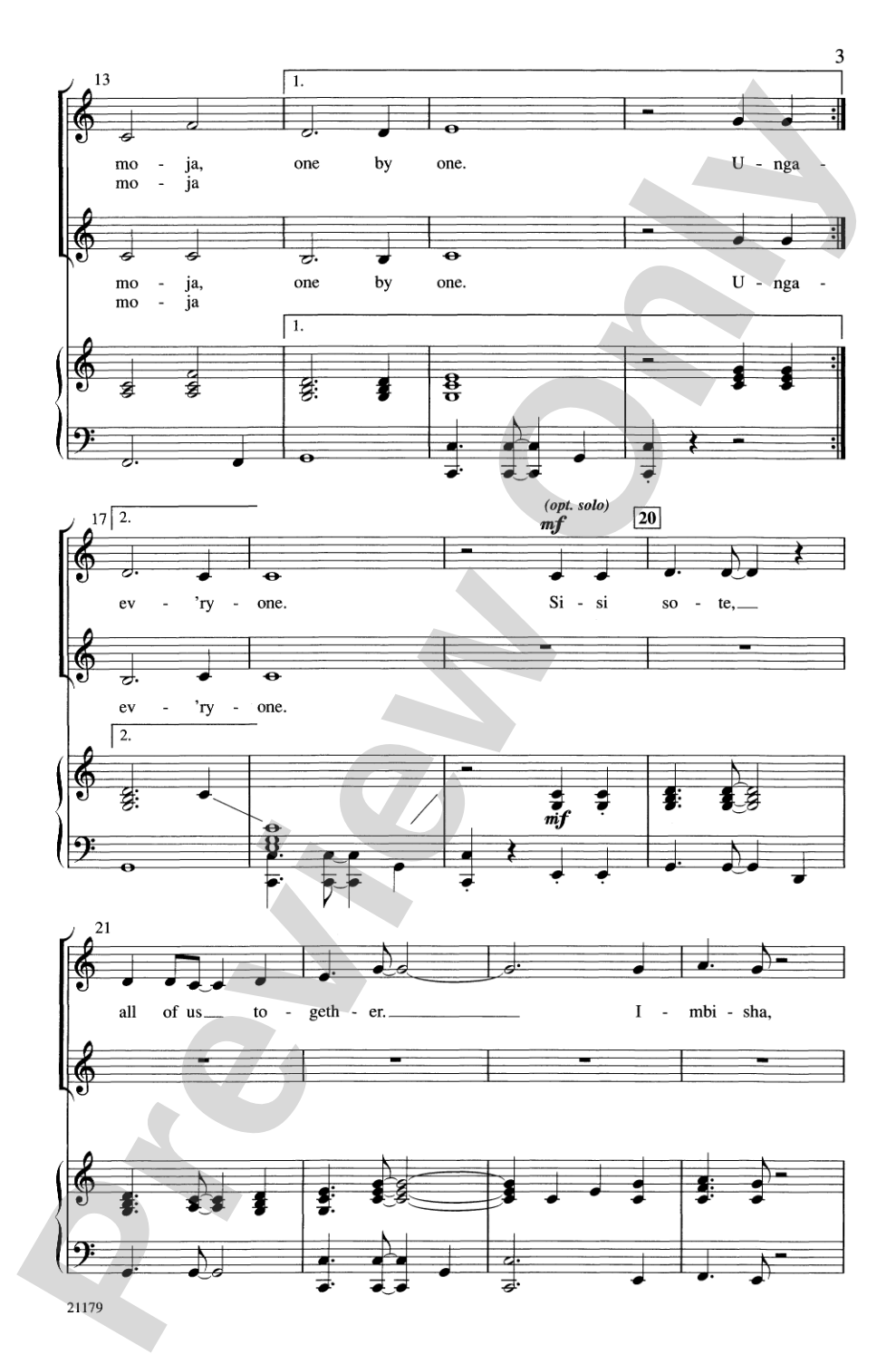
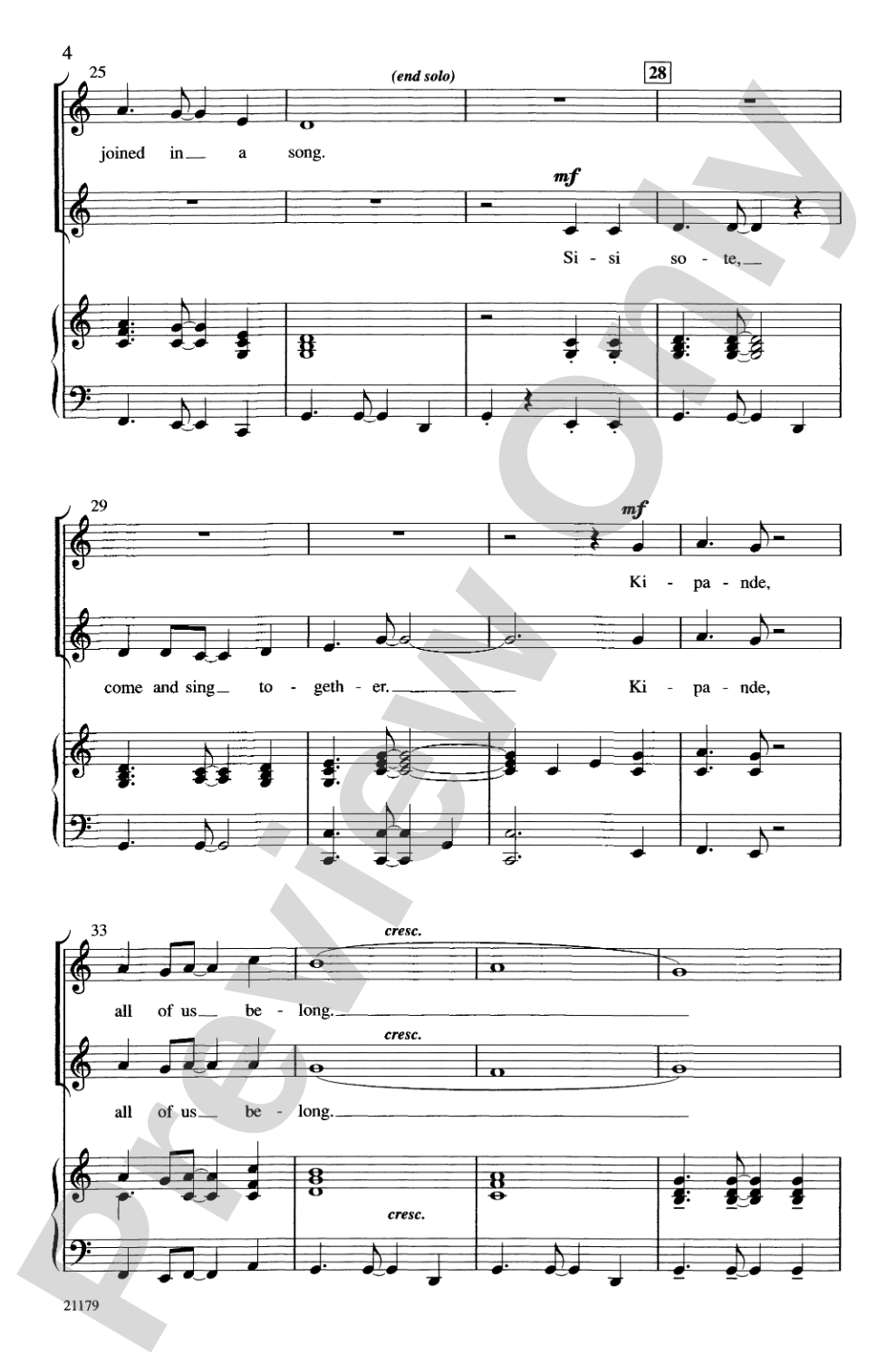
You'll feel the African pulse of this piece from the first measure. "Changamano, join together. Moja, moja, one by one." The text features seven Swahili words or phrases; a pronunciation guide and translations are included in the publication. It's a "music" song, it's a "unite as one" song, but most of all, it's a joy to sing. Includes optional solos and a treble trio descant. Staging Suggestions are featured on Sally's "Showtime!" video, Alfred #21176.


Changamano (Join Together-Swahili): 2-Part Choral Octavo isn't in MakeMusic Cloud just yet...but it could be. Let us know you'd like to see it, and you'll help shape what comes next. In the meantime, start a free trial and dive into thousands of interactive titles your students can play along with today.
Request This Title
Tell us you want it.
Start Your Free Trial
Explore everything that's ready to play right now.
Sample Audio
1
Audio File
--:--
0:00
0:00
Sample Video
No sample videos found.
Additional Details
Series:
Alfred Archive Edition: Alfred Choral Designs
Publisher:
Alfred Music
Page Count:
12
SKU:
00-PO-0002197
More about this title
About the Composer: Sally K. Albrecht
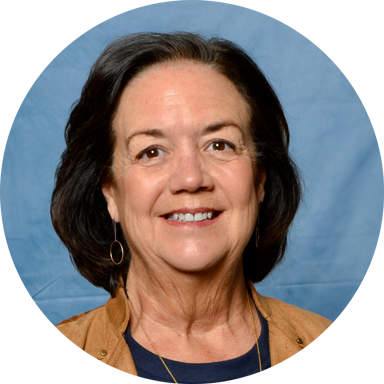
Sally K. Albrecht has shaped American choral music for decades as both a composer and a leader in music publishing. Since 1987, she has received annual ASCAP Special Music Awards and has authored over 600 choral publications alongside 75 larger works for stage and concert. Her conducting experience spans prestigious venues including Lincoln Center, Carnegie Hall, and The Kennedy Center, where she has led honor choirs and festival ensembles across the nation.
For more than thirty years, Albrecht directed school choral and vocal publications at major educational publishers, including her tenure as Director of School Choral, Vocal, and Elementary Publications at Alfred Music. She holds degrees from Rollins College (B.A. in Music and Theater, 1976) and the University of Miami (M.A. in Drama, 1977; M.M. in Accompanying, 1979). In recent years, she has been recognized with the Distinguished Alumna Award from both the University of Miami Frost School of Music and Rollins College, and she serves on the Board of Trustees at Rollins. She lives in Wake Forest, North Carolina, with her husband, composer and arranger Jay Althouse.
Why we love this
Albrecht and Althouse craft a piece that balances accessibility with genuine musical substance. The Swahili text and pronunciation guide give students a meaningful entry point into another language and culture, while the optional solos and treble trio descant offer flexible staging options that work whether you're performing at a winter concert or a Kwanzaa celebration. This is music that invites movement and joy without sacrificing musical integrity.
What to expect
From the opening measure, this piece carries the rhythmic heartbeat of African music, propelling singers and listeners alike into a community celebration. The Swahili text "Changamano, join together. Moja, moja, one by one" feels like an invitation to unify, and the arrangement honors that message with warmth and infectious energy that makes singers want to move.
Who it's for
This octavo suits middle school and high school choirs seeking a multicultural repertoire piece that resonates with winter programming and Kwanzaa celebrations. The 2-part voicing and optional extensions make it accessible to developing ensembles while offering enough musical texture to keep experienced singers engaged.
How to get the most out of it
- Establish the African pulse early in rehearsals by clapping or stepping the rhythmic foundation before singing; this grounds the piece's character and helps singers feel the propulsive energy from measure one.
- Layer in the optional solos and descant gradually rather than all at once, so singers without featured lines stay engaged and the texture builds naturally through the arrangement.
- Reference the staging suggestions on the "Showtime!" video (Alfred #21176) during the final rehearsals to coordinate movement with the music and maximize the celebratory feel.
How to use it
Program this piece as a centerpiece in a winter or Kwanzaa concert, where it can anchor a thematic set exploring world music and cultural unity. Its joy and accessibility also make it an excellent choice for community engagement concerts or multicultural assemblies, where the optional solos and descant create opportunities for student leadership and ensemble ownership.
Skills your students will build
- Singing in a non-English language with accurate Swahili pronunciation
- Maintaining rhythmic independence in a syncopated, African-influenced texture
- Balancing layered vocal lines when optional solos and descants are added
- Connecting musical expression to cultural context and meaning