Changamano Cover Image

Changamano: 3-Part Mixed Choral Octavo

$2.25 USD
Sale price  $2.25 USD Regular price 
Skip to product information
Changamano Cover Image

Changamano: 3-Part Mixed Choral Octavo

(Join Together--Swahili)

Music by Sally K. Albrecht and Jay Althouse

Item: 00-21178

makemusic Cloud badge
$2.25
Shipped

One moment…

Description
You'll feel the African pulse of this piece from the first measure. "Changamano, join together. Moja, moja, one by one." The text features seven Swahili words or phrases; a pronunciation guide and translations are included in the publication. It's a "music" song, it's a "unite as one" song, but most of all, it's a joy to sing. Includes optional solos and a treble trio descant. Staging Suggestions are featured on Sally's "Showtime!" video, Alfred #21176.

Don't just read it, hear it, play along with it, and watch your students grow with it. In MakeMusic Cloud, Changamano: 3-Part Mixed Choral Octavo comes alive with professional accompaniment, adjustable tempo, and built-in practice tools that turn solo practice into real progress.

Sample Pages

Sample Audio
0:00
0:00
Sample Video
Additional Details
Series: Alfred Archive Edition: Alfred Choral Designs
Publisher: Alfred Music
Page Count: 12
UPC: 038081200996
SKU: 00-21178
Instrumentation: Opt. Baritone

More about this title

About the Composer: Sally K. Albrecht
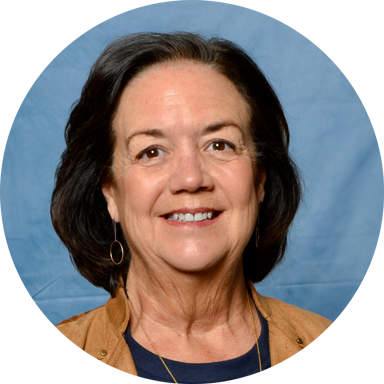
Sally K. Albrecht

Sally K. Albrecht has shaped American choral music for over three decades, first as Director of School Choral, Vocal, and Elementary Publications at major educational publishers including Alfred Music, then as a prolific composer in her own right. Since 1987, she has received annual ASCAP Special Music Awards, and her catalog includes more than 600 choral publications alongside 75 larger works for stage. Her conducting leadership spans honor choirs at Lincoln Center, Carnegie Hall, and The Kennedy Center, establishing her as both a celebrated clinician and a champion of choral movement in the classroom.

Albrecht holds degrees from Rollins College (B.A. in Music and Theater, 1976), the University of Miami (M.A. in Drama, 1977; M.M. in Accompanying, 1979), and has taught at Oakland University, Jersey City State College, and Meredith College. A native of Cleveland, she currently resides in Wake Forest, North Carolina, with her husband, composer and arranger Jay Althouse. Her leadership extends beyond music; she has chaired the Board of Trustees for the Omicron Delta Kappa National Leadership Honor Society and received their Pillar of Leadership award, along with Distinguished Alumna Awards from both the University of Miami Frost School of Music and Rollins College.

Why we love this

This piece brings authentic cultural celebration into your winter concert without requiring extensive preparation or specialized knowledge. The Swahili text and pronunciation guide mean your students can own the language immediately, and the optional solos and treble trio descant give you flexibility to highlight different singers while keeping the arrangement accessible for mixed-voice choirs of varying ability levels.

What to expect

Energy and warmth radiate from the opening measures as the Swahili words invite singers and listeners alike to join in community. The harmonic movement is accessible but never patronizing, and the optional descant floats above with a sense of celebration that feels earned rather than added on.

Who it's for

Any choir singing winter or Kwanzaa programs that wants to celebrate African heritage authentically and joyfully. This works equally well in middle school, high school, and adult community choirs; the optional solos mean you can feature advanced singers while keeping the core arrangement within reach for developing ensembles.

How to get the most out of it

  • Study the pronunciation guide thoroughly before rehearsal so you can model accurate Swahili vowels and consonants confidently; students will absorb the language faster when they hear it clearly from you.
  • Lean into the African rhythmic pulse from measure one by conducting with a grounded, steady beat that lets the ensemble feel the forward motion rather than fight it.
  • If you're using the optional solos, give singers who take them time to build confidence with the text separately; pairing them with a peer during rehearsal can reduce anxiety and strengthen their ownership of the material.
  • The recorded accompaniment (available separately) locks the harmonic foundation; use it strategically in early rehearsals so your singers can internalize the chords, then pull back as they gain independence.

How to use it

Place this near the close of your winter concert as a moment of brightness and unity; its message of coming together resonates powerfully in December. The 12-page format is manageable for a single octavo slot, and the staging suggestions referenced in Sally Albrecht's "Showtime!" video (Alfred #21176) give you concrete choreography ideas if your singers want to move.

Skills your students will build

  • Singing in Swahili with accurate vowel colors and rhythmic precision
  • Reading three-part mixed voicing (SAB) with confidence
  • Blending voices across parts in an unfamiliar harmonic language
  • Interpreting cultural text with respect and understanding
  • Managing optional solo lines and ensemble parts within a single arrangement

You May Also Like
