

Carol of the Star: SATB Choral Octavo
Words and music by Donald Moore
Item: 00-PO-0002321
$2.05
Minimum order quantity: 20 copies
Pickup currently not available
Related Items
Carol of the Star: SoundTrax Digital Audio Download |
$27.99
|
View | |
Carol of the Star: 3-Part Mixed Choral Octavo |
$2.05
|
View | |
Carol of the Star: TTB Choral Octavo |
$1.85
|
View | |
Carol of the Star: 2-Part Choral Octavo |
$2.05
|
View | |
Carol of the Star: SATB Choral Octavo |
$2.05
|
View | |
Carol of the Star: 3-Part Mixed Choral Octavo |
$2.05
|
View | |
Carol of the Star: TTB Choral Octavo |
$1.85
|
View | |
Carol of the Star: 2-Part Choral Octavo |
$2.05
|
View | |
Carol of the Star: Choral Octavo SoundTrax CD |
$27.99
|
View |
Description
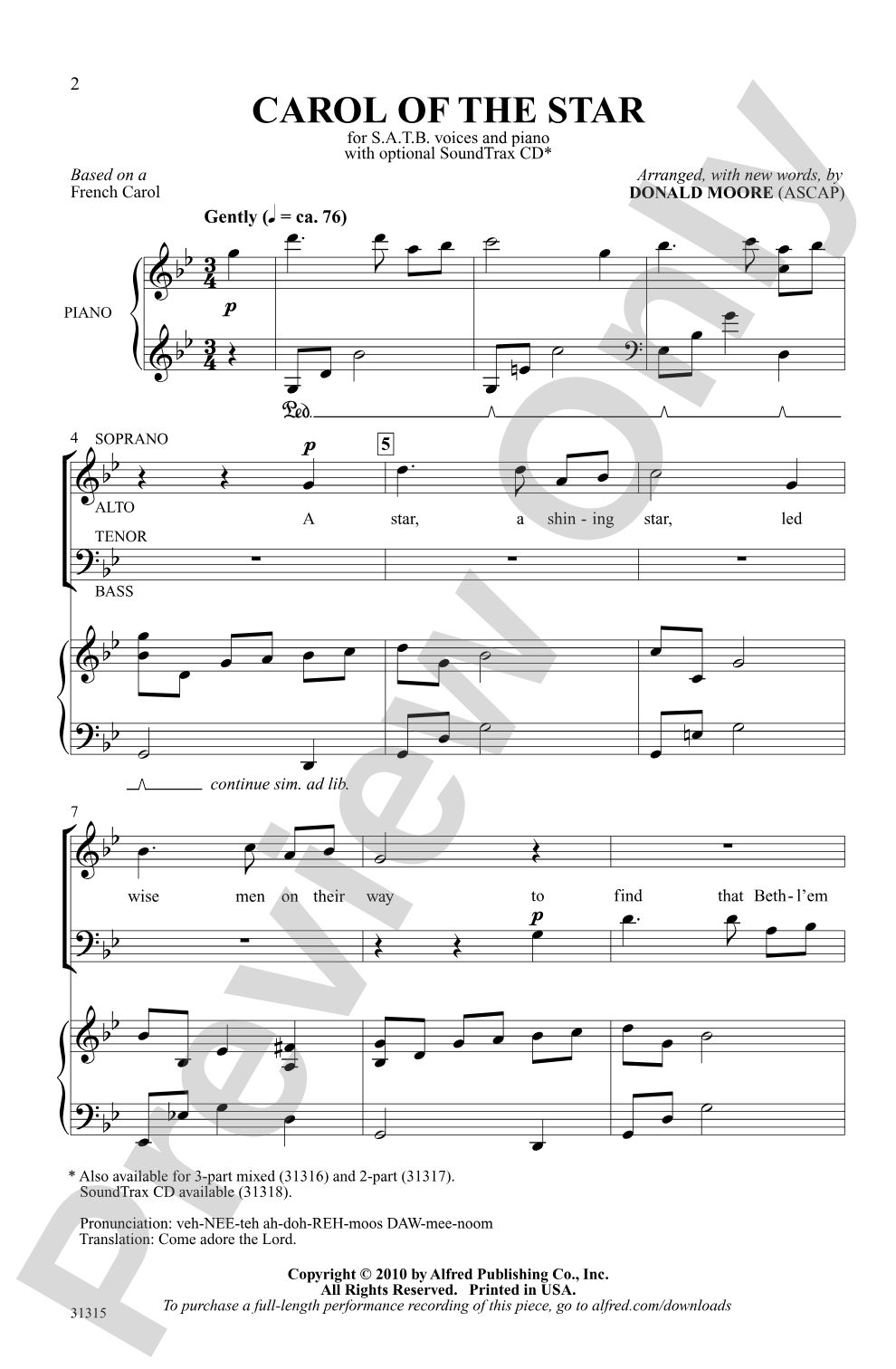
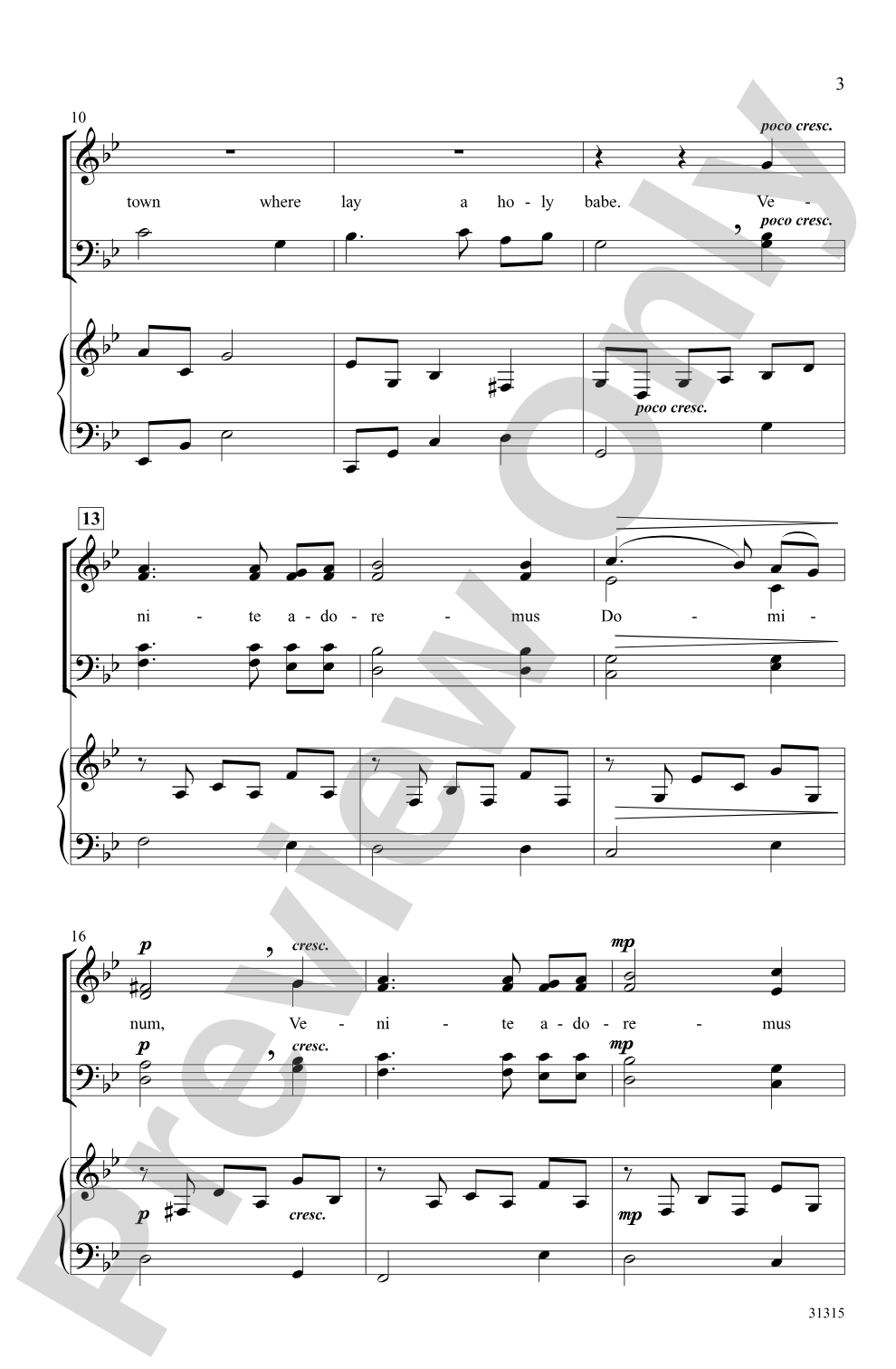
This expressive original carol will take your breath away and bring out the very best in your choir. One Latin phrase provides an elegant refrain in this distinctive selection for Christmas concerts and services.


Carol of the Star: SATB Choral Octavo isn't in MakeMusic Cloud just yet...but it could be. Let us know you'd like to see it, and you'll help shape what comes next. In the meantime, start a free trial and dive into thousands of interactive titles your students can play along with today.
Request This Title
Tell us you want it.
Start Your Free Trial
Explore everything that's ready to play right now.
Sample Audio
1
Audio File
--:--
0:00
0:00
Sample Video
No sample videos found.
Additional Details
Series:
Alfred Choral Designs
Publisher:
Alfred Music
Page Count:
8
SKU:
00-PO-0002321
More about this title
About the Composer: Donald Moore

Donald Moore earned his Bachelor of Music in organ performance and Master of Arts in Teaching from Kent State University. He currently serves as Organist-Choirmaster at Pilgrim United Church of Christ in Cuyahoga Falls, Ohio, and has built a catalog of over 500 published compositions spanning sacred, secular, and educational choral works alongside organ and piano pieces.
Moore's compositions appear regularly at state contests, regional festivals, and national conventions. He has received the ASCAP Composers Standard Award seventeen times and was recognized by the American Choral Directors Association Choral Journal as one of 400 significant composers in American choral history. His works are published through Alfred Music, Hal Leonard, Heritage Music Press, and other major houses.
Why we love this
Moore captures something genuinely moving here without resorting to sentimentality. The integration of a Latin refrain gives the carol a liturgical weight that distinguishes it from generic seasonal fare, while the accessibility of the SATB writing ensures your singers can focus on expression rather than wrestling with technical demands.
What to expect
The piece evokes quiet reverence and warmth. The original melody unfolds with a natural, singable arc, and the Latin refrain lifts the work into something more ceremonial and contemplative than typical Christmas carols. There is elegance here, a sense of genuine spiritual reflection.
Who it's for
This octavo suits choirs ranging from community churches to school choirs with solid fundamentals. The straightforward SATB writing makes it accessible without sacrificing emotional depth, making it ideal for holiday services and concerts where you want something that sounds polished without excessive rehearsal time.
How to get the most out of it
- Shape the Latin phrase with special care; it functions as both spiritual anchor and textual highlight, so clarity and reverence matter more than speed.
- Balance the melody among your soprano and alto sections when they share the tune, allowing the harmonic foundation below to support without overwhelming.
- Take advantage of any dynamics marked in the score to build emotional peaks; resist the impulse to keep the texture flat throughout all eight pages.
- If using the recorded accompaniment, rehearse with it early and often so singers internalize the harmonic language and can perform securely without relying on it.
How to use it
Pair this with other original carols or settings to create a program that moves beyond familiar repertoire. It works especially well as a concert centerpiece or service anthem where the choir can shine without competing with overly dense arrangements. The eight-page length makes it substantial enough to stand alone without overwhelming a single rehearsal block.
Skills your students will build
- Singing in Latin with proper vowel shapes and phrase clarity
- Balancing part independence in four-part harmony
- Expressive phrasing and dynamic shaping in sacred music
- Ensemble blend and intonation in unison and harmonic sections