
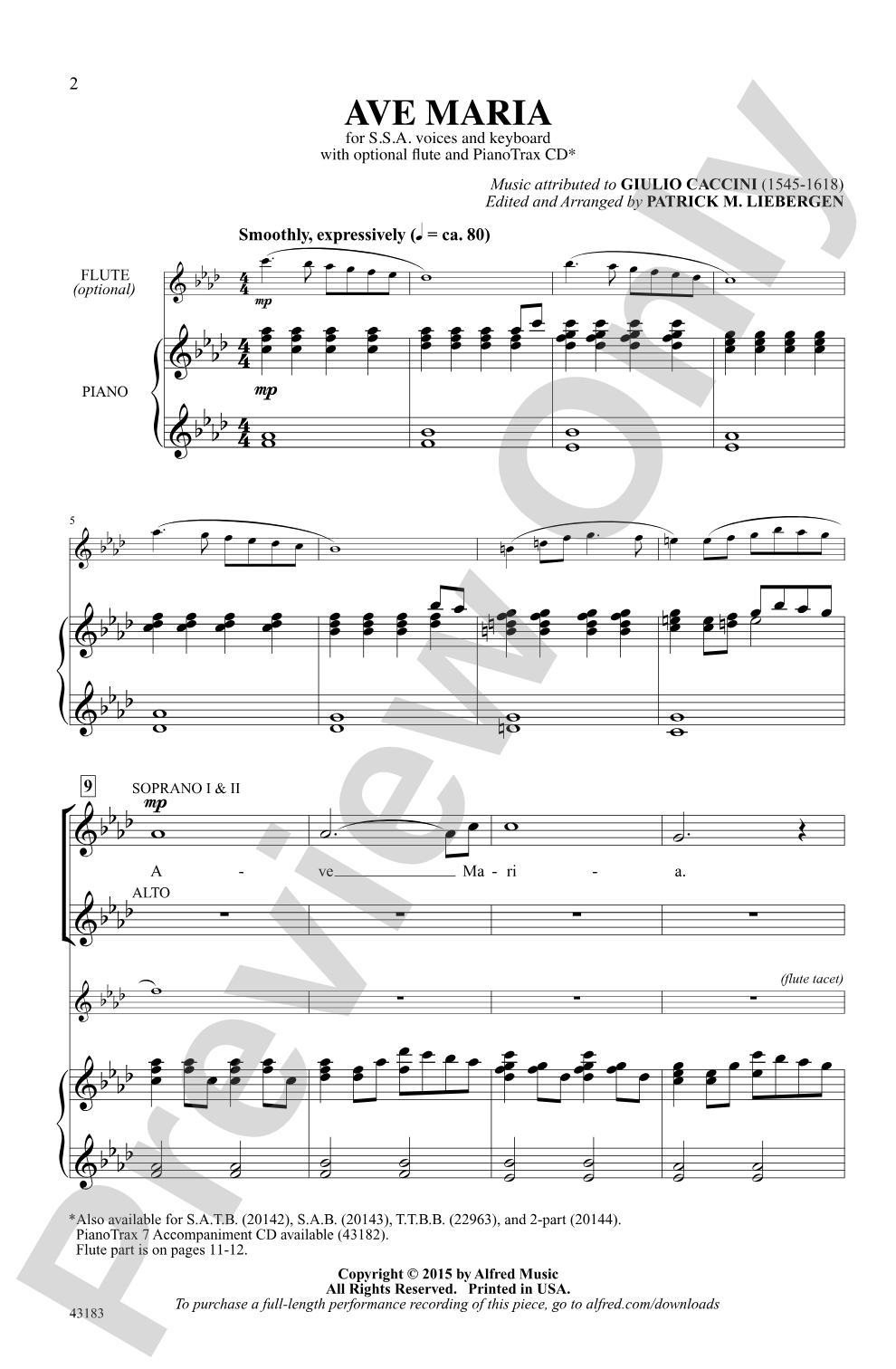
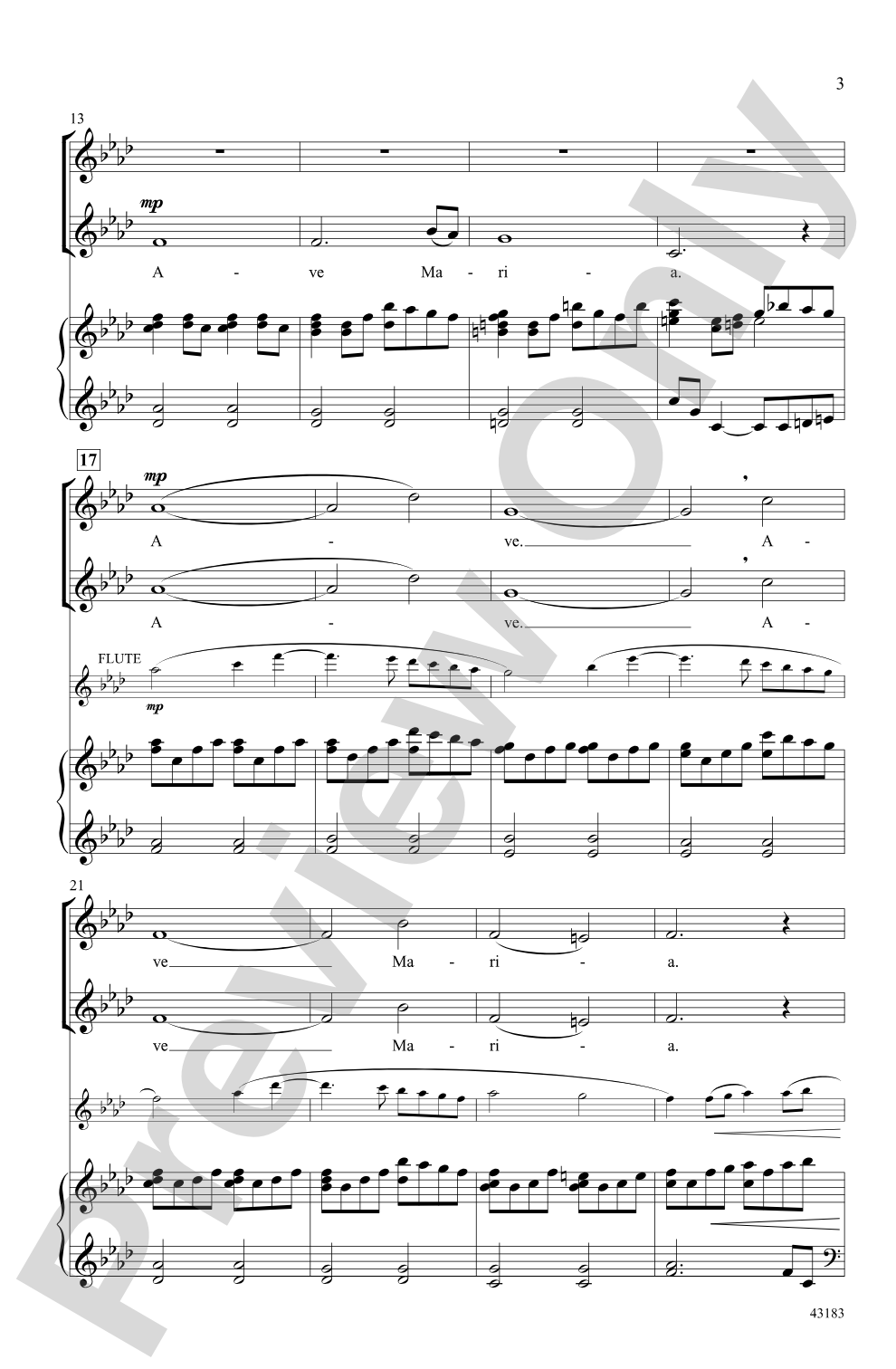
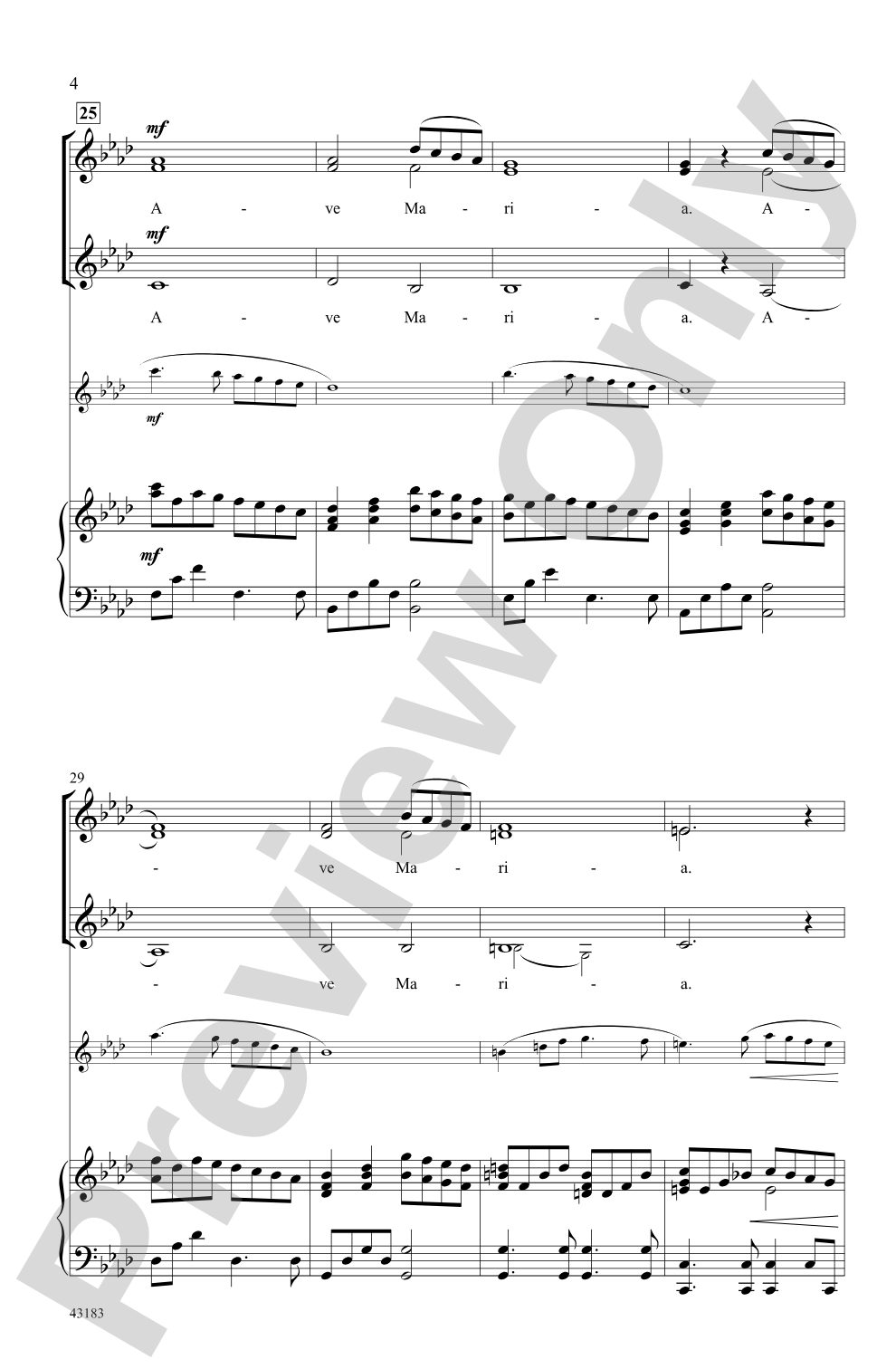

Ave Maria: SSA Choral Octavo
Music attributed to Giulio Caccini / ed. and arr. Patrick M. Liebergen
Item: 00-PO-0003183

$2.05
Minimum order quantity: 20 copies
Pickup currently not available
Related Items
Ave Maria: SATB Choral Octavo |
$2.05
|
View | |
Ave Maria: SAB Choral Octavo |
$2.25
|
View | |
Ave Maria: 2-Part Choral Octavo |
$2.05
|
View | |
Ave Maria: TTBB Choral Octavo |
$2.25
|
View | |
Ave Maria: SATB Choral Octavo |
$2.05
|
View | |
Ave Maria: SAB Choral Octavo |
$2.25
|
View | |
Ave Maria: SSA Choral Octavo |
$2.05
|
View | |
Ave Maria: 2-Part Choral Octavo |
$2.05
|
View | |
Ave Maria: TTBB Choral Octavo |
$2.25
|
View |
Description
Caccini's haunting melody has been recorded by everyone from Charlotte Church to Andrea Bocelli and no wonder: it's simply gorgeous. Now available for SSA groups, this tasteful arrangement allows the melody and lush harmonies to speak for themselves. An optional flute part is included in the octavo.


Don't just read it, hear it, play along with it, and watch your students grow with it. In MakeMusic Cloud, Ave Maria: SSA Choral Octavo comes alive with professional accompaniment, adjustable tempo, and built-in practice tools that turn solo practice into real progress.
Open in the Player
Jump straight in and assign it today.
Start Your Free Trial
Open this title and explore the full library in minutes.
Sample Audio
1
Audio File
--:--
0:00
0:00
Sample Video
No sample videos found.
Additional Details
Series:
Alfred Choral Designs
Publisher:
Alfred Music
Page Count:
12
SKU:
00-PO-0003183
Instrumentation:
Opt. Flute
More about this title
About the Composer: Giulio Caccini
Giulio Caccini (1551-1618) was a Florentine composer and singer who helped shape the emerging genre of opera during the late Renaissance. A member of the Camerata, the influential circle of artists and intellectuals who experimented with reviving ancient Greek drama through music, Caccini pioneered the expressive vocal style known as stile recitativo. His compositions bridged Renaissance polyphony and Baroque melody, emphasizing text-driven expression and vocal virtuosity.
Caccini's "Ave Maria" endures as one of the most beloved sacred melodies in choral repertoire, transcending its historical period through its profound lyricism and emotional directness. The piece demonstrates his gift for crafting singable, memorable lines that convey spiritual depth without complexity, making it a cornerstone work for singers of all levels.
Why we love this
Patrick Liebergen's arrangement respects the integrity of Caccini's melody while crafting warm, flowing harmonies that sit naturally for SSA voices. The optional flute part offers flexibility for groups with instrumental resources, and the piece's moderate length and accessible range make it equally effective for developing choirs and experienced ensembles seeking a concert-ready sacred work.
What to expect
The arrangement unfolds with quiet reverence, its transparent harmonies allowing Caccini's signature melody to breathe and soar. There's a timeless quality here—the music feels both intimate and universal, inviting singers and listeners into a moment of spiritual stillness without demanding technical pyrotechnics.
Who it's for
SSA choirs at the intermediate to advanced level will find this arrangement both singable and rewarding. It suits festivals, liturgical services, or concert programming where a beloved sacred standard is called for, and it works equally well for high school ensembles or community choruses seeking polished, accessible repertoire.
How to get the most out of it
- Balance the melody across all three parts during passages where the primary line shifts between soprano one and soprano two; a unified vocal blend will let the architecture of Caccini's writing emerge.
- Shape phrases toward their natural text cadences rather than holding each note equally; "Ave Maria" responds beautifully to gentle dynamic contours that follow the prayer's emotional arc.
- If using the optional flute, allow it to double the soprano line during key moments while pulling back during passages where the voices shine alone, creating natural light and shadow.
How to use it
This piece anchors a sacred choral concert or serves as a bridge between contemporary and classical repertoire on a mixed program. Its 12-page length makes it ideal as a centerpiece work for a short program or as a meaningful closing selection, and its universal recognition means audiences will settle into attentive silence from the first notes.
Skills your students will build
- Sustained legit singing in the upper register
- Blending within SSA voicing while maintaining clarity between parts
- Phrasing and dynamic shaping in Renaissance-Baroque sacred style
- Intonation control in lush four-part harmony
- Coordination with optional instrumental doubling