
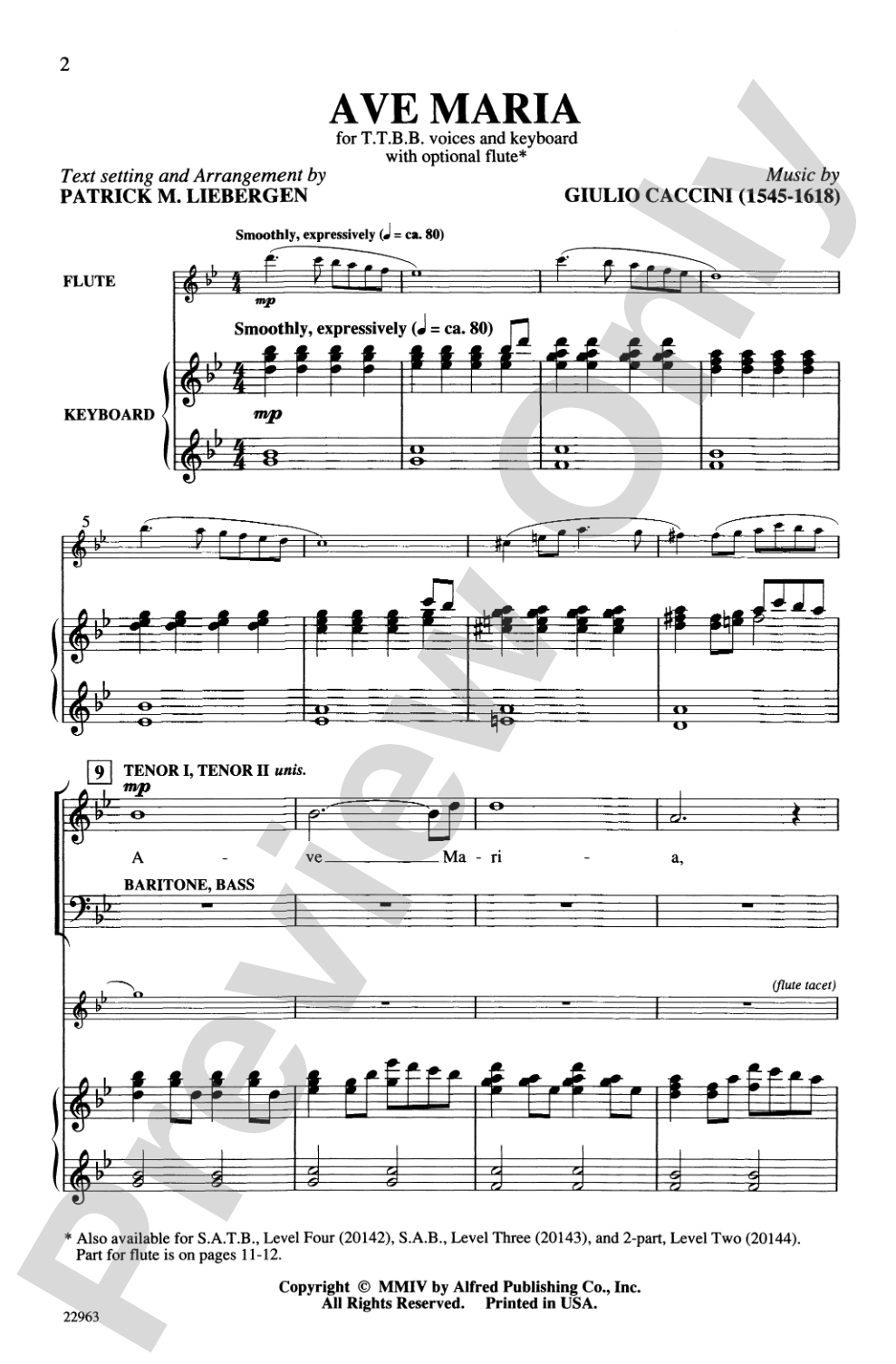
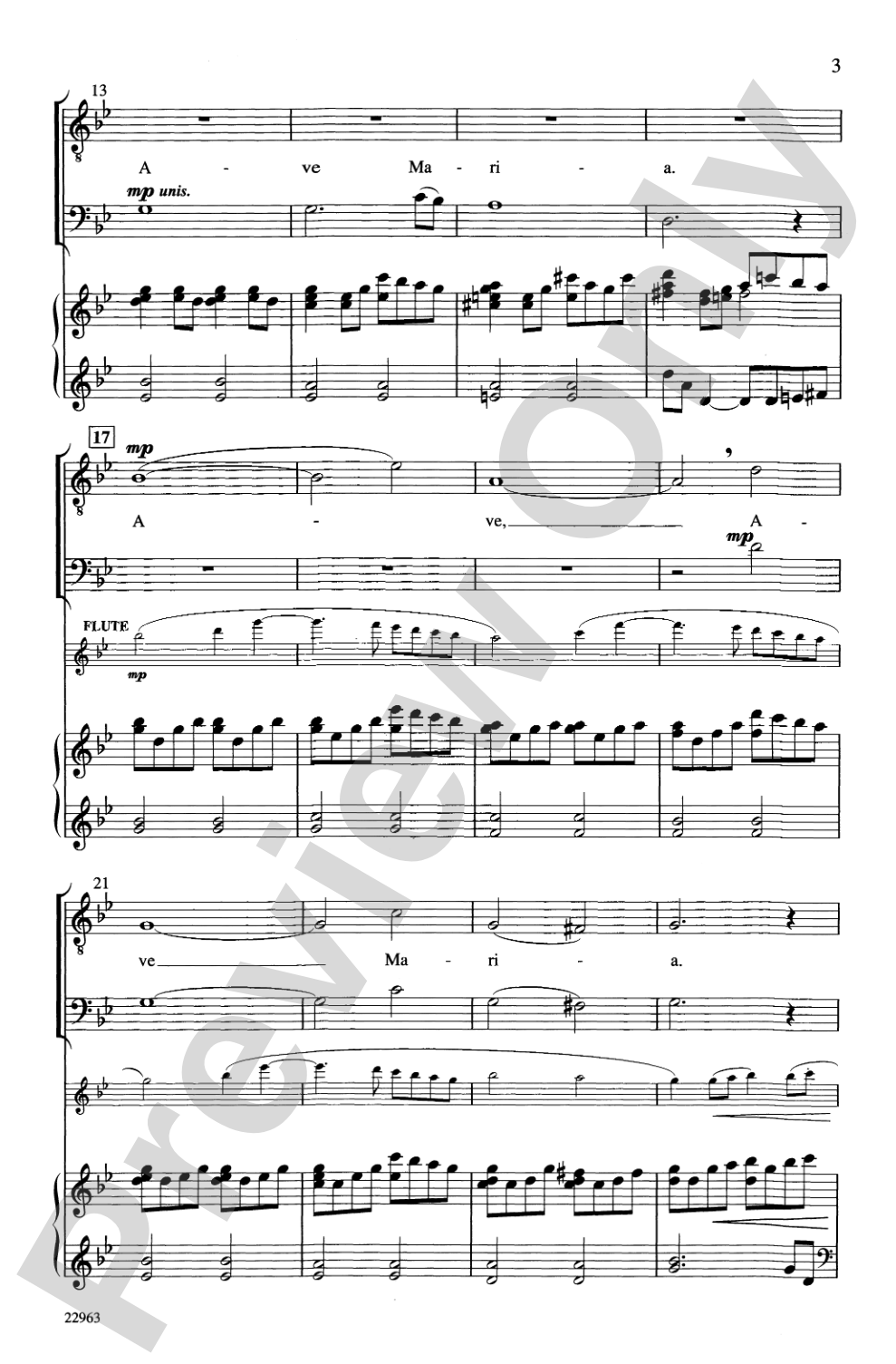
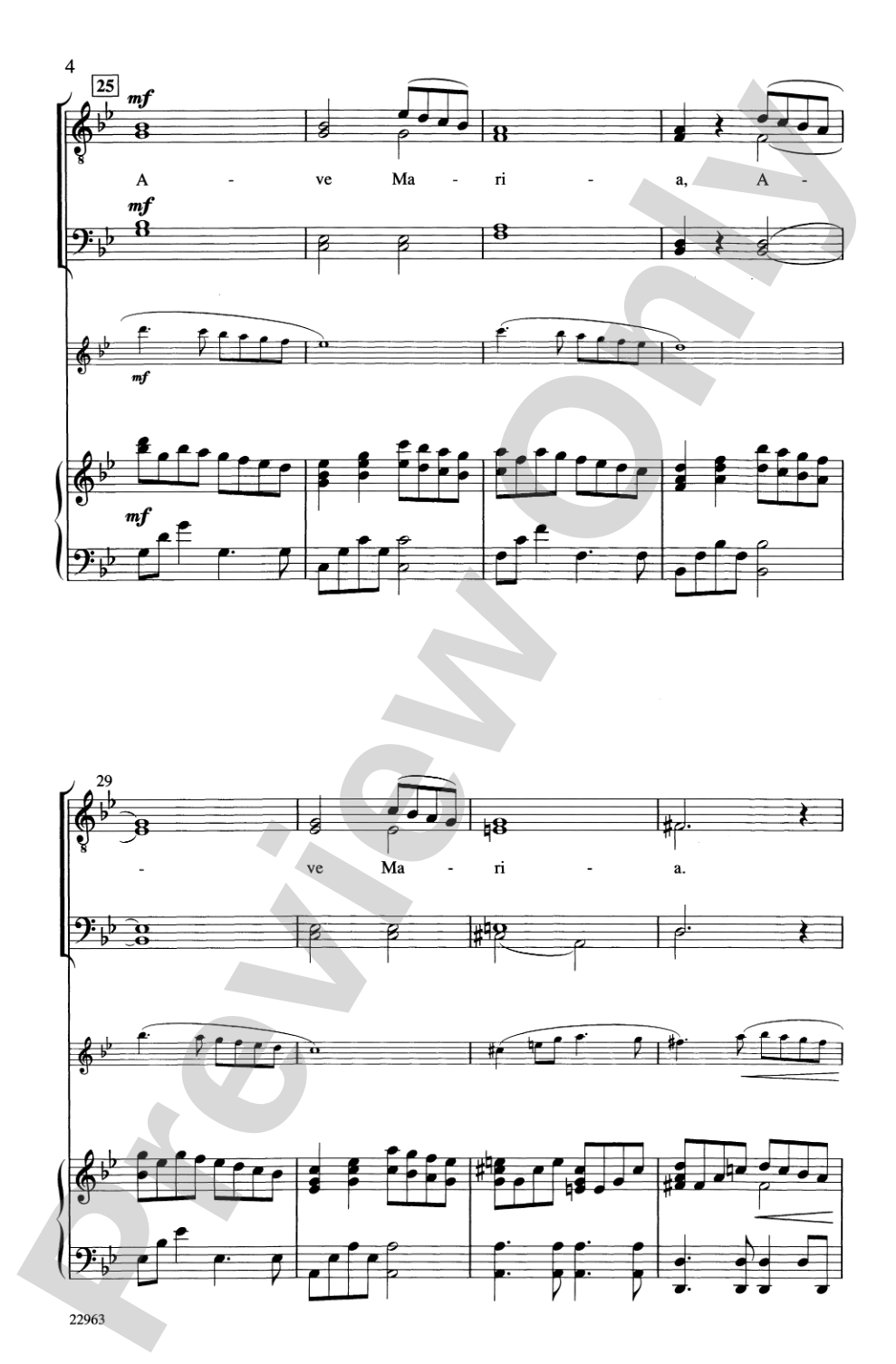

Ave Maria: TTBB Choral Octavo
Music attributed to Giulio Caccini / ed. and arr. Patrick M. Liebergen
Item: 00-PO-0002214
$2.25
Minimum order quantity: 20 copies
Pickup currently not available
Related Items
Ave Maria: SATB Choral Octavo |
$2.05
|
View | |
Ave Maria: SAB Choral Octavo |
$2.25
|
View | |
Ave Maria: SSA Choral Octavo |
$2.05
|
View | |
Ave Maria: 2-Part Choral Octavo |
$2.05
|
View | |
Ave Maria: SATB Choral Octavo |
$2.05
|
View | |
Ave Maria: SAB Choral Octavo |
$2.25
|
View | |
Ave Maria: SSA Choral Octavo |
$2.05
|
View | |
Ave Maria: 2-Part Choral Octavo |
$2.05
|
View | |
Ave Maria: TTBB Choral Octavo |
$2.25
|
View |
Description
Now available for men's voices, the haunting melody of this top-seller has been recorded by everyone from Charlotte Church to Andrea Bocelli, and no wonder: it's gorgeous. The harmonies are lush and unexpected for a 16th century piece. The voice writing is straightforward, with no surprises: Patrick Liebergen lets the beautiful melody and harmonies speak for themselves. The piano accompaniment is supportive and an optional flute part is included. Appropriate for school or church use, year round.


Ave Maria: TTBB Choral Octavo isn't in MakeMusic Cloud just yet...but it could be. Let us know you'd like to see it, and you'll help shape what comes next. In the meantime, start a free trial and dive into thousands of interactive titles your students can play along with today.
Request This Title
Tell us you want it.
Start Your Free Trial
Explore everything that's ready to play right now.
Sample Audio
1
Audio File
--:--
0:00
0:00
Sample Video
No sample videos found.
Additional Details
Series:
Alfred Archive Edition: Alfred Choral Designs
Publisher:
Alfred Music
Page Count:
12
SKU:
00-PO-0002214
Instrumentation:
Opt. Flute
More about this title
About the Composer: Giulio Caccini
Giulio Caccini (1545-1618) was a Florentine singer, composer, and teacher who played a central role in the birth of opera and the seconda pratica movement. He bridged the Renaissance and Baroque worlds, rejecting the strict polyphonic rules of his predecessors in favor of expressive, text-driven melody with harmonic support. His work directly influenced the compositional practices of Monteverdi and shaped how composers approached the marriage of words and music for centuries to come.
Caccini's influence in music education extends beyond his operas and chamber works. His compositions demonstrate how a single, soaring melodic line can carry profound emotional weight when supported by thoughtful harmony. For singers and choirs, his music teaches the power of directness: beauty emerges not from complexity, but from clarity of phrase and commitment to the text.
Why we love this
Liebergen's arrangement respects the integrity of Caccini's original melody while giving men's choirs access to one of the most recognizable sacred melodies in Western music. The harmonies carry genuine harmonic sophistication without asking singers to navigate awkward voice leading or excessive divisi. This is music that allows singers to focus on beautiful sound production and textual expression rather than wrestling with the page.
What to expect
Serene and devotional, the piece unfolds with the quiet certainty of a prayer spoken aloud. The melody moves in gentle arcs while the supporting harmonies shift underneath with subtle richness, creating a sense of movement and stability at once. Singers experience the satisfaction of blending into lush four-part texture while anchoring a melodic line that feels both ancient and immediate.
Who it's for
Men's choirs seeking a piece that projects spirituality and vocal warmth without demanding technical gymnastics. This works equally well in school choral programs, community choirs, and church settings. Directors programming contests or festivals will find a piece that earns genuine musical respect while remaining accessible to singers at intermediate level and above.
How to get the most out of it
- Allow the melody to breathe. Even though the harmonic language is Renaissance-era, the long phrases benefit from singers who understand the emotional arc of each line and shape their tone to support the overall architecture.
- Balance the texture by letting the melody (typically the Tenor 1 part) sit comfortably above the other voices rather than forcing it to dominate. The other three parts are equally important to the harmonic color.
- If including the optional flute part, use it selectively. Consider adding it only in a repeat or final phrase to highlight the melody without overwhelming the voices in the first hearing.
- Pay close attention to vowel consistency across the four parts. The lush harmonies will blur together if singers neglect unified vowel shapes on sustained syllables.
How to use it
Program this in a sacred or seasonal concert as an introspective moment between more dramatic works. It serves well as an opening piece to establish an intimate tone, or as a closing selection that leaves the audience in reflection. The piece's year-round appropriateness makes it valuable in spring contests, winter holiday programs, and liturgical settings.
Skills your students will build
- Sustaining long phrases with consistent breath support
- Blending four-part harmony while maintaining awareness of the melody
- Text-driven expression and interpretive choices in sacred repertoire
- Balance between supporting a featured melodic line and contributing to overall texture