
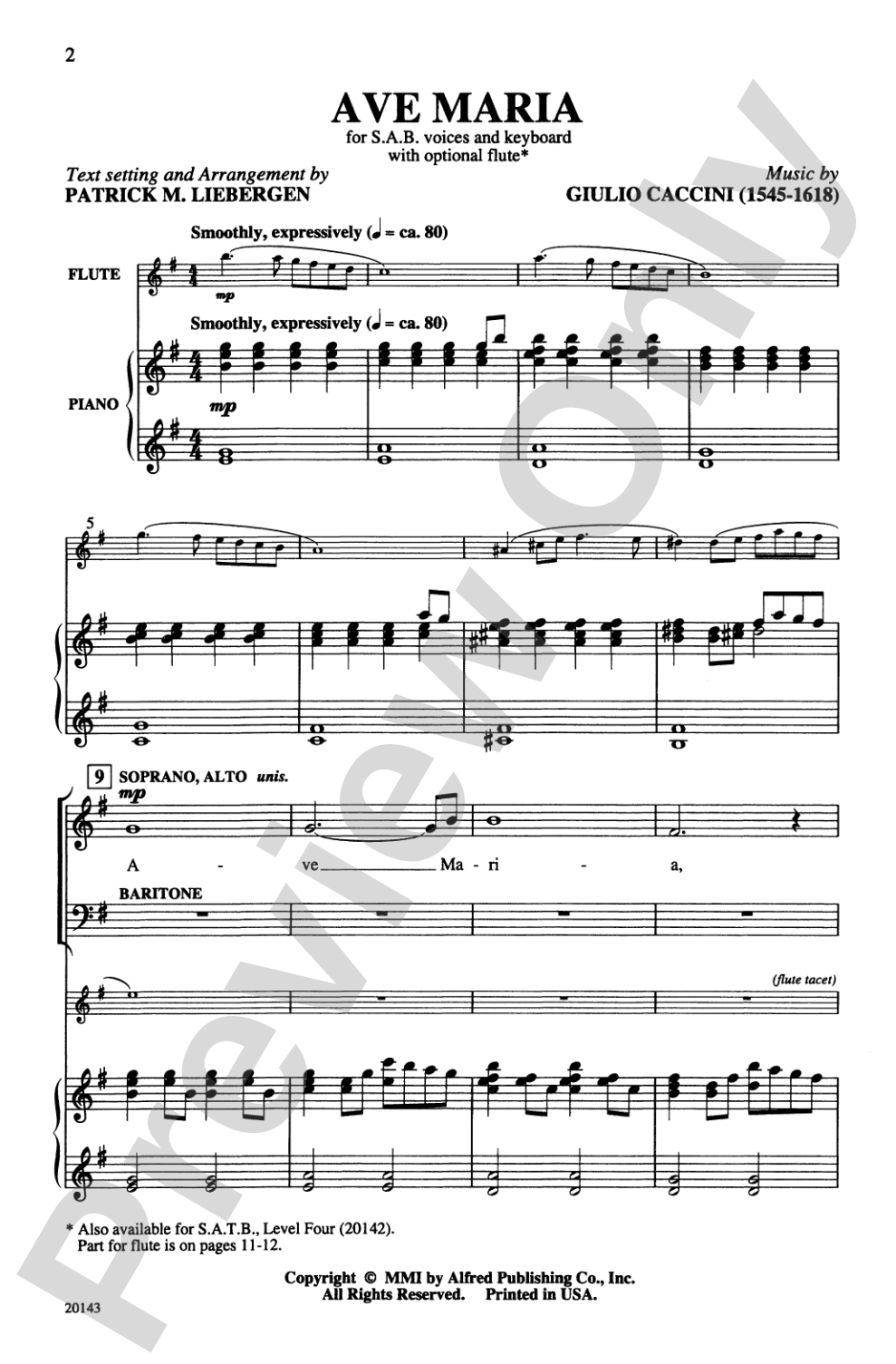
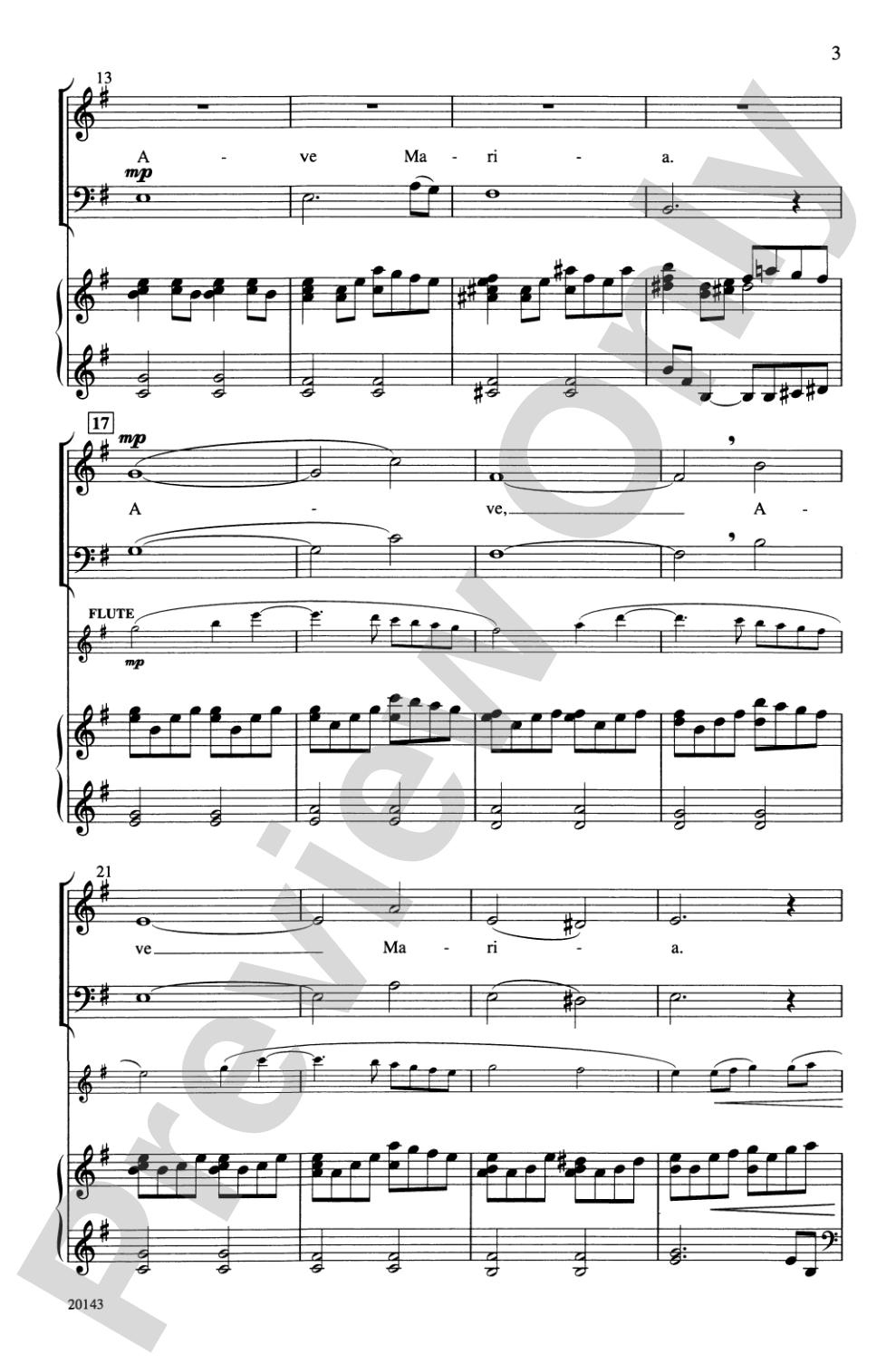
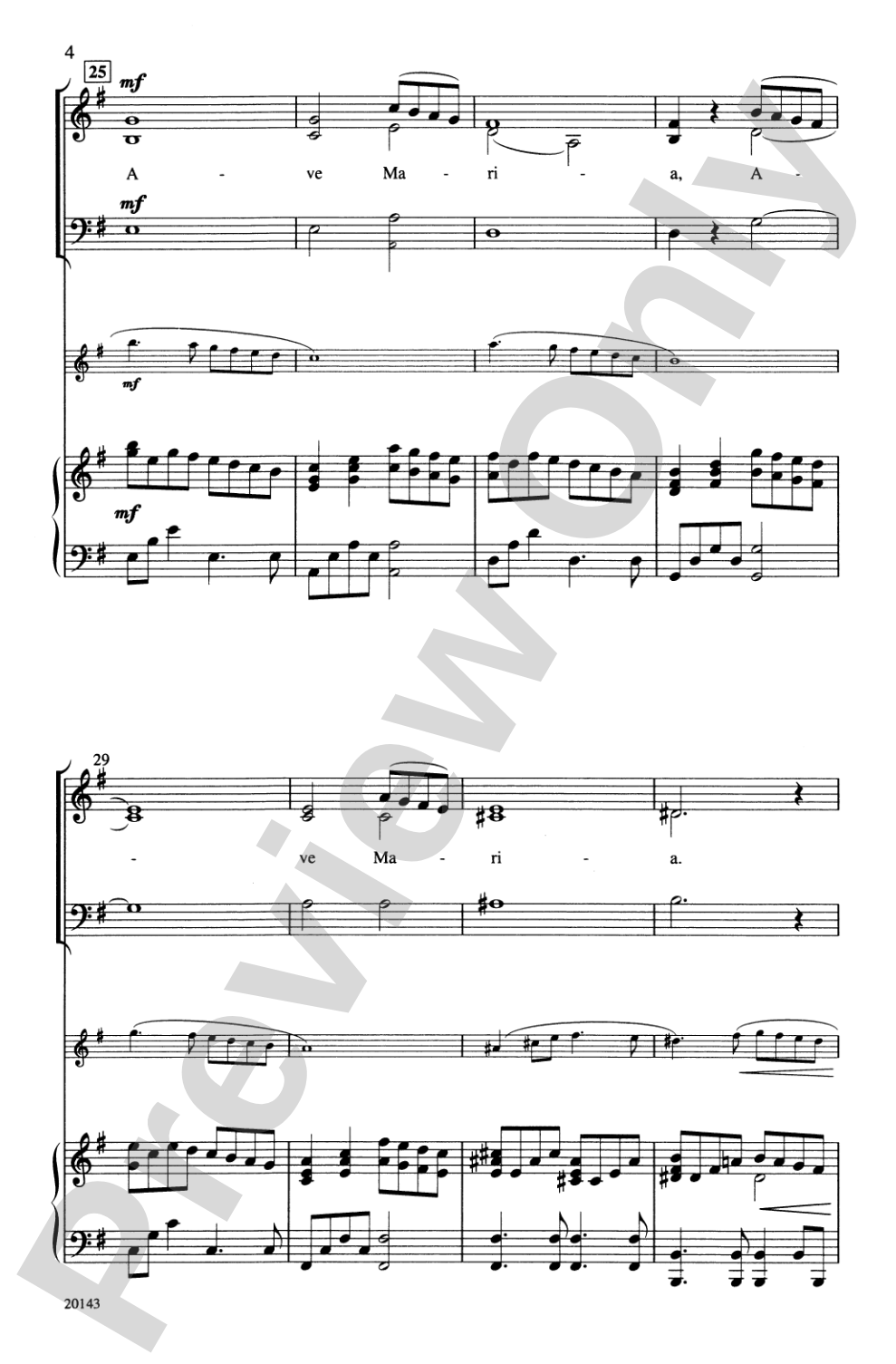

Ave Maria: SAB Choral Octavo
Music attributed to Giulio Caccini / ed. and arr. Patrick M. Liebergen
Item: 00-PO-0002879

$2.25
Minimum order quantity: 20 copies
Pickup currently not available
Related Items
Ave Maria: SATB Choral Octavo |
$2.05
|
View | |
Ave Maria: SSA Choral Octavo |
$2.05
|
View | |
Ave Maria: 2-Part Choral Octavo |
$2.05
|
View | |
Ave Maria: TTBB Choral Octavo |
$2.25
|
View | |
Ave Maria: SATB Choral Octavo |
$2.05
|
View | |
Ave Maria: SAB Choral Octavo |
$2.25
|
View | |
Ave Maria: SSA Choral Octavo |
$2.05
|
View | |
Ave Maria: 2-Part Choral Octavo |
$2.05
|
View | |
Ave Maria: TTBB Choral Octavo |
$2.25
|
View |
Description
This haunting melody has been recorded by everyone from Charlotte Church to Andrea Bocelli and no wonder: it's gorgeous. And the harmonies are lush, and unexpected for a 16th century piece. The voice writing is straightforward, with no surprises; Patrick Liebergen lets the beautiful melody and harmonies speak for themselves. The piano accompaniment is supportive and an optional flute part is included. The Ave Maria text makes it appropriate for school or church use, year round.


Don't just read it, hear it, play along with it, and watch your students grow with it. In MakeMusic Cloud, Ave Maria: SAB Choral Octavo comes alive with professional accompaniment, adjustable tempo, and built-in practice tools that turn solo practice into real progress.
Open in the Player
Jump straight in and assign it today.
Start Your Free Trial
Open this title and explore the full library in minutes.
Sample Audio
1
Audio File
--:--
0:00
0:00
Sample Video
No sample videos found.
Additional Details
Series:
Alfred Archive Edition: Alfred Choral Designs
Publisher:
Alfred Music
Page Count:
12
SKU:
00-PO-0002879
Instrumentation:
Opt. Flute
More about this title
About the Composer: Giulio Caccini
Giulio Caccini (1545-1618) was a Florentine composer and singer at the heart of the early Baroque revolution. He played a key role in developing the expressive vocal style that would define the new music of the late 16th century, moving away from the elaborate counterpoint of the Renaissance toward a more direct, emotionally transparent approach to text-setting.
Caccini's influence on vocal writing remains profound. His emphasis on clear melodic lines, natural declamation, and the singer's ability to convey meaning shaped the future of opera, oratorio, and sacred music. Teachers and directors value his work for its combination of technical accessibility and profound musical beauty.
Why we love this
This arrangement captures everything that makes Ave Maria enduringly moving while keeping the part-writing clean and singable for SAB voices. Liebergen's restraint is the real gift here: he trusts the melody and its rich harmonic support to carry the weight without adding unnecessary flourishes. It's the kind of piece that sounds sophisticated but doesn't demand superhuman musicianship from your singers.
What to expect
Reverent and intimate, with a melody that seems to unfold naturally despite its carefully composed elegance. The harmonies are warm without being sentimental, and there's a quietness to the accompaniment that allows space for the voices to float and resonate.
Who it's for
SAB choirs of intermediate skill and above will find this piece accessible yet substantial. It works equally well in school choirs, community ensembles, and church settings, offering a genuine masterwork that doesn't require a four-part soprano section to sound complete and rewarding.
How to get the most out of it
- Shape the melody with genuine phrase breathing rather than punctuating at bar lines. Let the arc of the tune guide where your singers naturally release and reenter.
- Balance the three voice parts so the soprano line remains audible without forcing; the altos and basses provide context, not competition. A light touch from your sopranos often projects more effectively than aggressive singing.
- If you use the optional flute part, have it double the soprano rather than playing independently. This reinforces the line and adds color without fragmenting the choir's focus.
- Slow the tempo slightly in the climactic phrases to allow the harmonic shifts to land. Caccini's writing asks for breath and space to reveal its depth.
How to use it
Program this as a moment of repose in a concert that mixes eras and styles. It works beautifully paired with Renaissance or modern sacred repertoire, and its spiritual character makes it appropriate for holiday performances, spring concerts, or any programming that values contemplative beauty. Twelve pages gives you substantial material without overextending a single concert's emotional arc.
Skills your students will build
- Sustaining long melodic lines with natural phrasing
- Balancing three-part harmony where each voice supports the whole
- Singing text with clarity and emotional intention in a sacred context
- Working with optional instrumental parts and understanding how they blend with voices