

Ave Maria: 2-Part Choral Octavo
Music attributed to Giulio Caccini / ed. and arr. Patrick M. Liebergen
Item: 00-PO-0002184

$2.05
Minimum order quantity: 20 copies
Pickup currently not available
Related Items
Ave Maria: SATB Choral Octavo |
$2.05
|
View | |
Ave Maria: SAB Choral Octavo |
$2.25
|
View | |
Ave Maria: SSA Choral Octavo |
$2.05
|
View | |
Ave Maria: TTBB Choral Octavo |
$2.25
|
View | |
Ave Maria: SATB Choral Octavo |
$2.05
|
View | |
Ave Maria: SAB Choral Octavo |
$2.25
|
View | |
Ave Maria: SSA Choral Octavo |
$2.05
|
View | |
Ave Maria: 2-Part Choral Octavo |
$2.05
|
View | |
Ave Maria: TTBB Choral Octavo |
$2.25
|
View |
Description
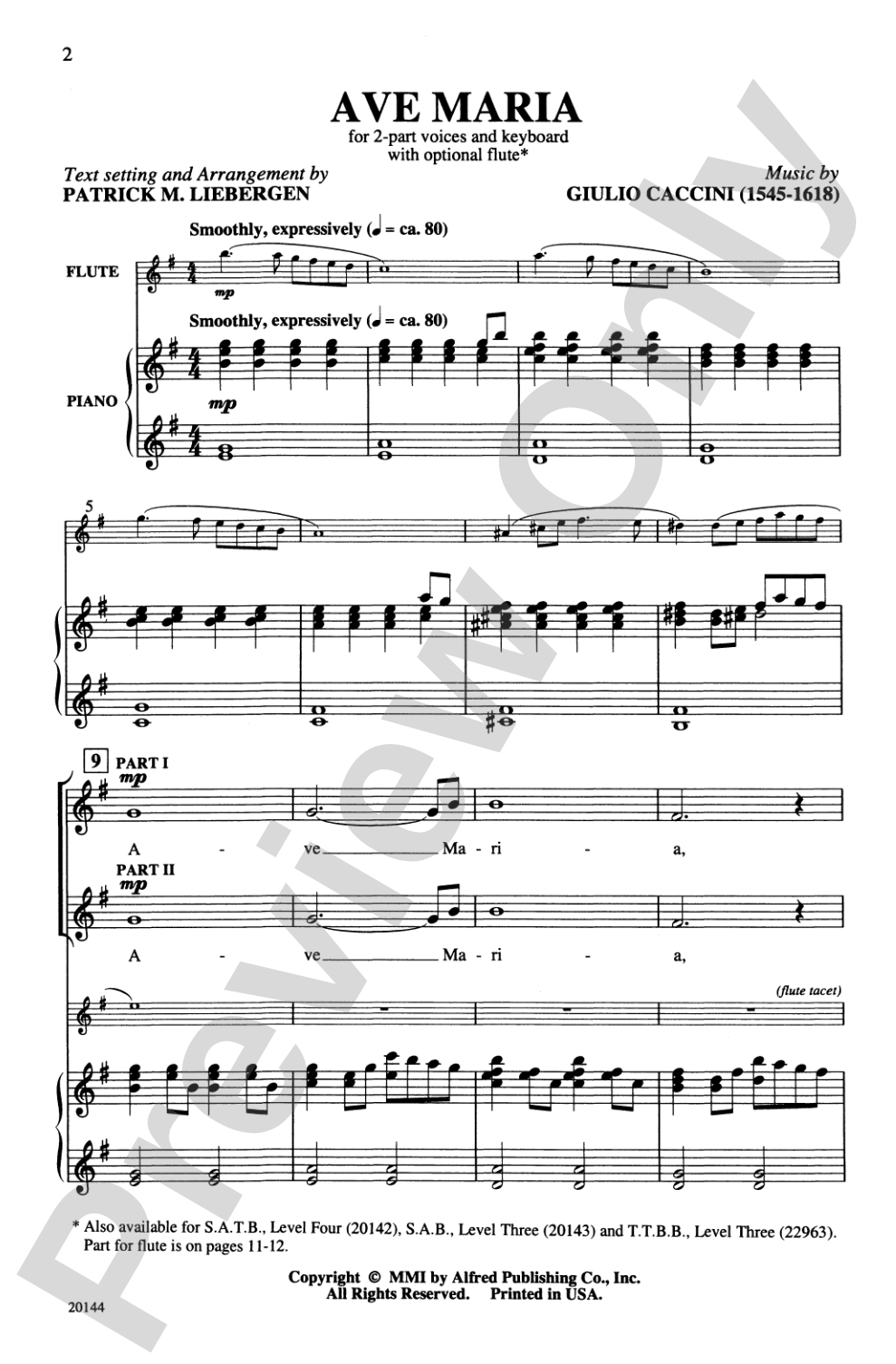
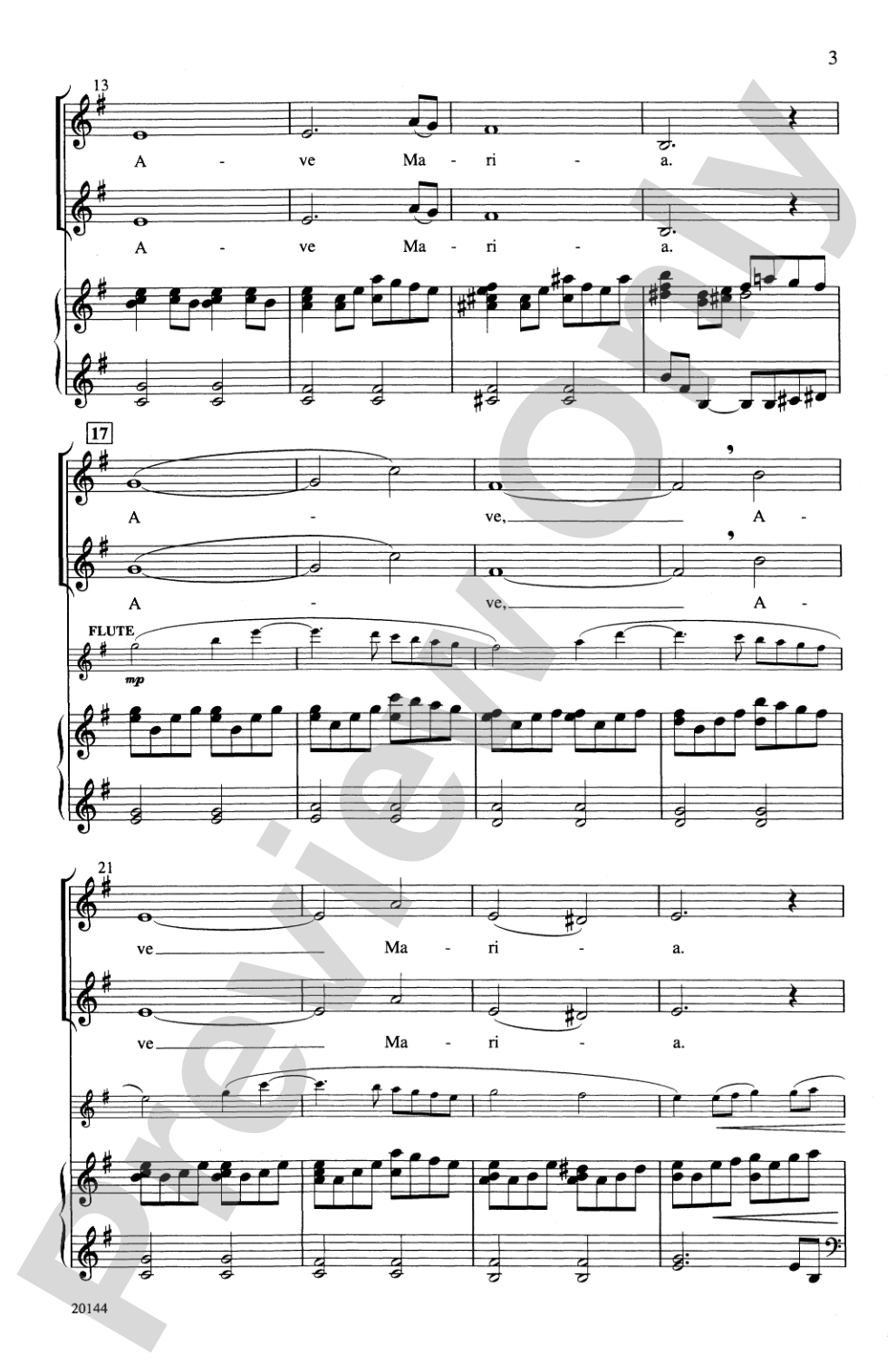
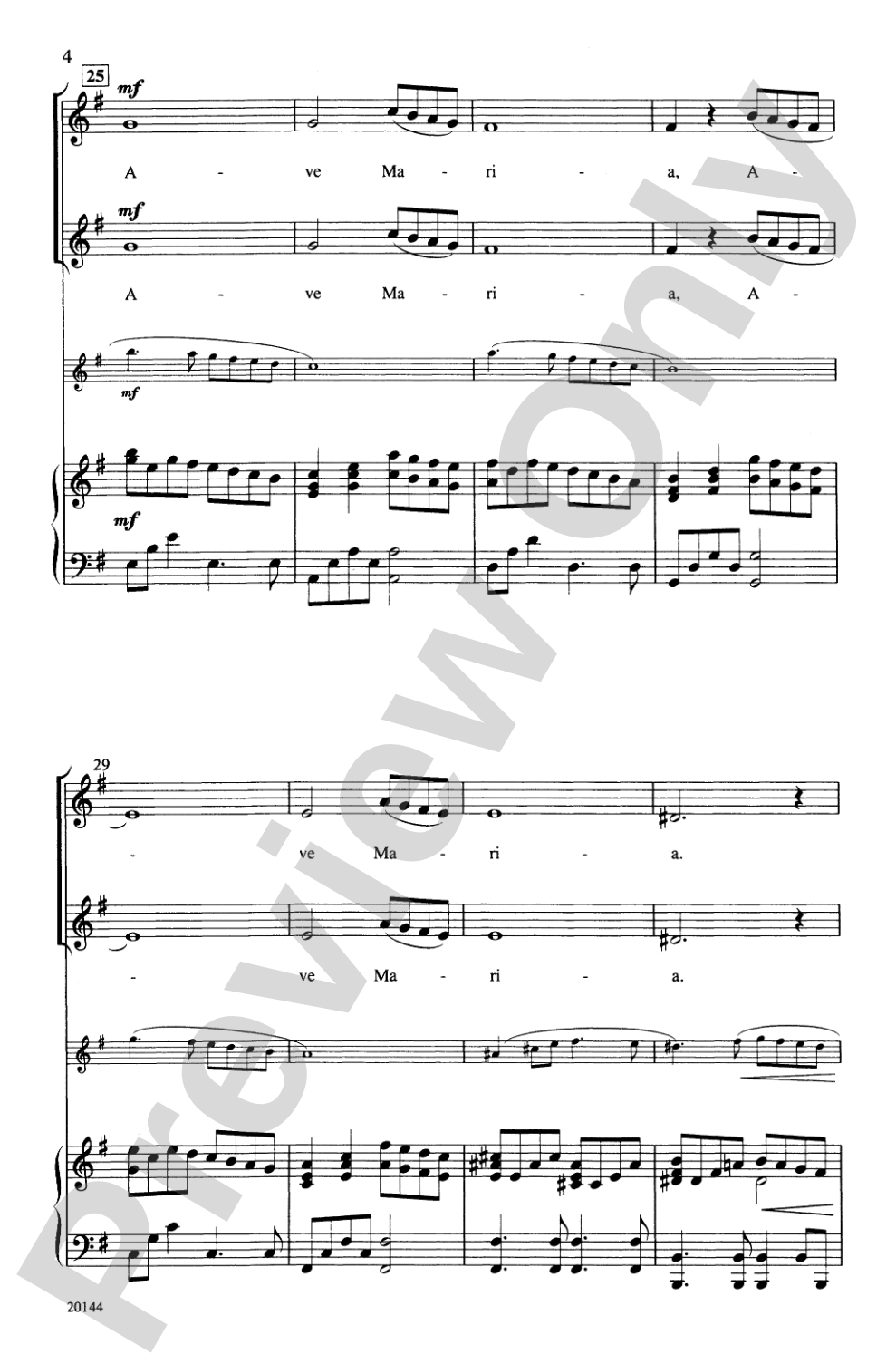
This haunting melody has been recorded by everyone from Charlotte Church to Andrea Bocelli and no wonder: it's gorgeous. And the harmonies are lush, and unexpected for a 16th century piece. The voice writing is straightforward, with no surprises; Patrick Liebergen lets the beautiful melody and harmonies speak for themselves. The piano accompaniment is supportive and an optional flute part is included. The Ave Maria text makes it appropriate for school or church use, year round.


Don't just read it, hear it, play along with it, and watch your students grow with it. In MakeMusic Cloud, Ave Maria: 2-Part Choral Octavo comes alive with professional accompaniment, adjustable tempo, and built-in practice tools that turn solo practice into real progress.
Open in the Player
Jump straight in and assign it today.
Start Your Free Trial
Open this title and explore the full library in minutes.
Sample Audio
1
Audio File
--:--
0:00
0:00
Sample Video
No sample videos found.
Additional Details
Series:
Alfred Choral Designs
Publisher:
Alfred Music
Page Count:
12
SKU:
00-PO-0002184
Instrumentation:
Opt. Flute
More about this title
About the Composer: Giulio Caccini
Giulio Caccini (c. 1545-1618) was a composer and singer at the Medici court in Florence during a transformative moment in musical history. He played a central role in the development of monody and early opera, composing some of the first dramatic vocal music that prioritized expressive melody and text-driven phrasing over strict polyphonic imitation. His influence on vocal writing shaped centuries of music that followed.
Why we love this
Liebergen's arrangement strips away unnecessary complexity and lets Caccini's 16th-century melody do the heavy lifting, making this a genuine crowd-pleaser that works equally well in school concerts and sacred settings. The lush harmonies feel effortless to sing, and the optional flute part gives you flexibility to feature an advanced instrumentalist or keep things simple with voices and piano alone. This is the kind of repertoire that reminds singers why they joined choir in the first place.
What to expect
The piece unfolds with quiet reverence, its Renaissance melody settling into the listener like a prayer spoken rather than sung. Liebergen's harmonies deepen the introspection without disrupting the melody's clarity, creating a soundscape that feels both ancient and timeless.
Who it's for
This arrangement suits treble or mixed-voice choirs of any experience level, from beginning ensembles building confidence with accessible sacred repertoire to advanced groups looking for a polished festival or concert piece. School and church directors seeking music that satisfies both musical substance and practical accessibility will find this especially useful.
How to get the most out of it
- Shape the melody through the arch of each phrase rather than treating it as a series of note-to-note events; the beauty lives in the line.
- Balance the two voice parts so neither overwhelms the other; the harmonies are most effective when both lines sing with equal warmth.
- If including the optional flute part, ensure it sits slightly above the soprano line texturally without covering the choral sound.
- Allow the piano accompaniment to breathe with space between phrases; it supports but need not rush the singers forward.
How to use it
Program this early in a concert to establish an intimate mood, or pair it with other sacred works to create a devotional set. It also serves beautifully as a transition piece between sections of contrasting character, allowing your singers and audience a moment of reflection.
Skills your students will build
- Sustaining long phrases with consistent breath support
- Listening to harmony parts and adjusting blend within a chord
- Shaping melody through dynamic contour rather than text stress alone
- Balancing solo-like melodic responsibility with ensemble awareness