
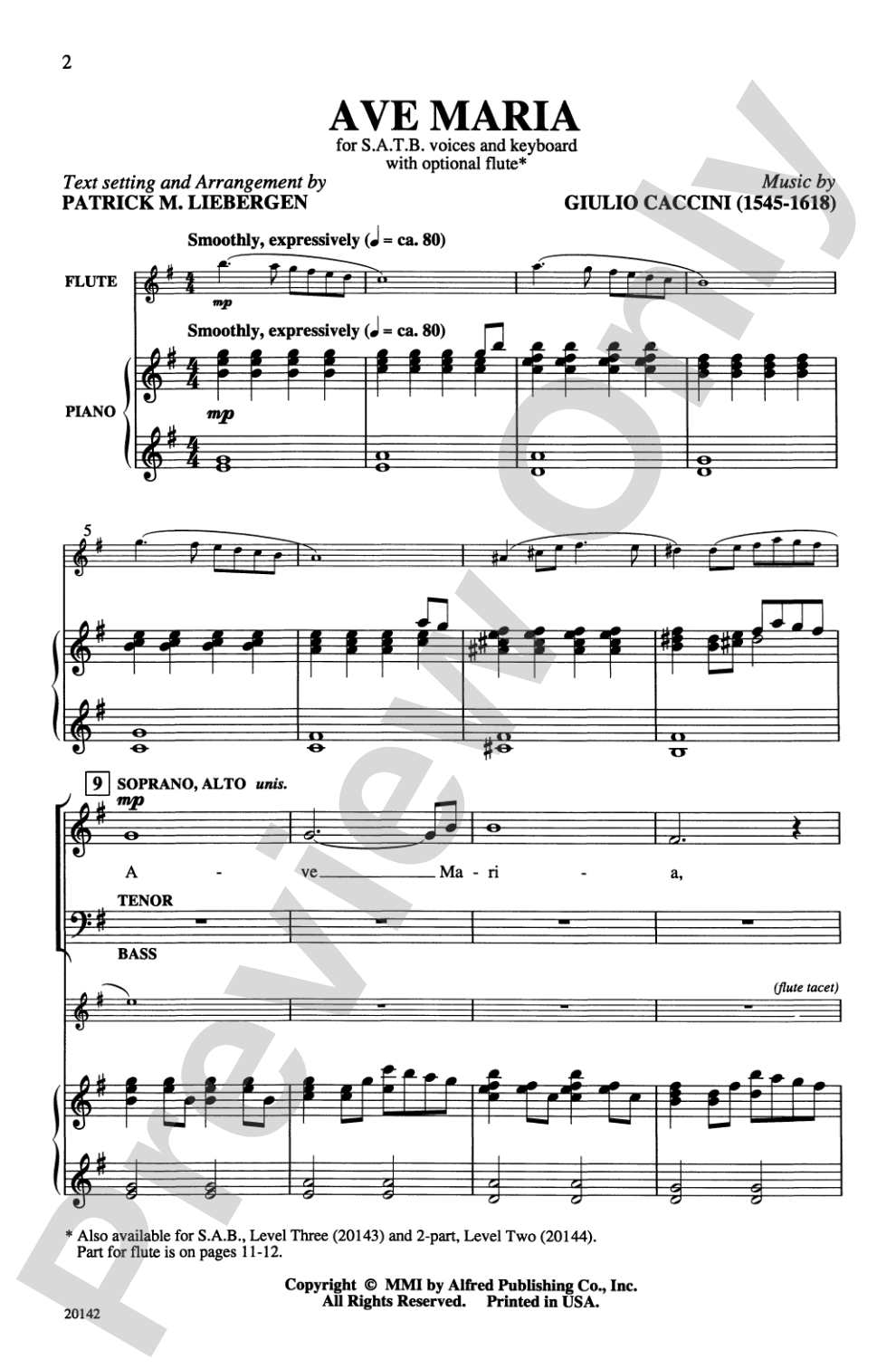
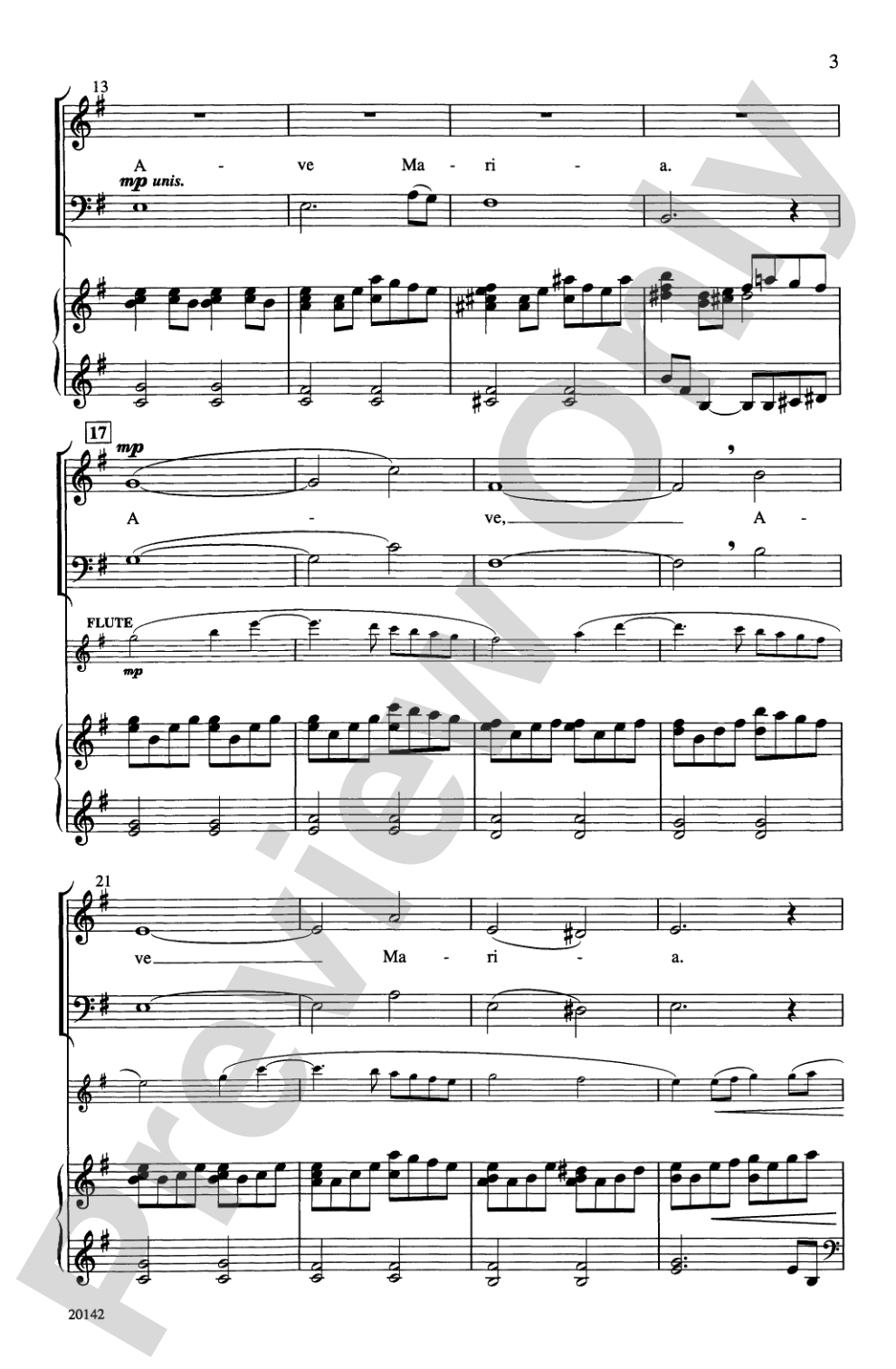
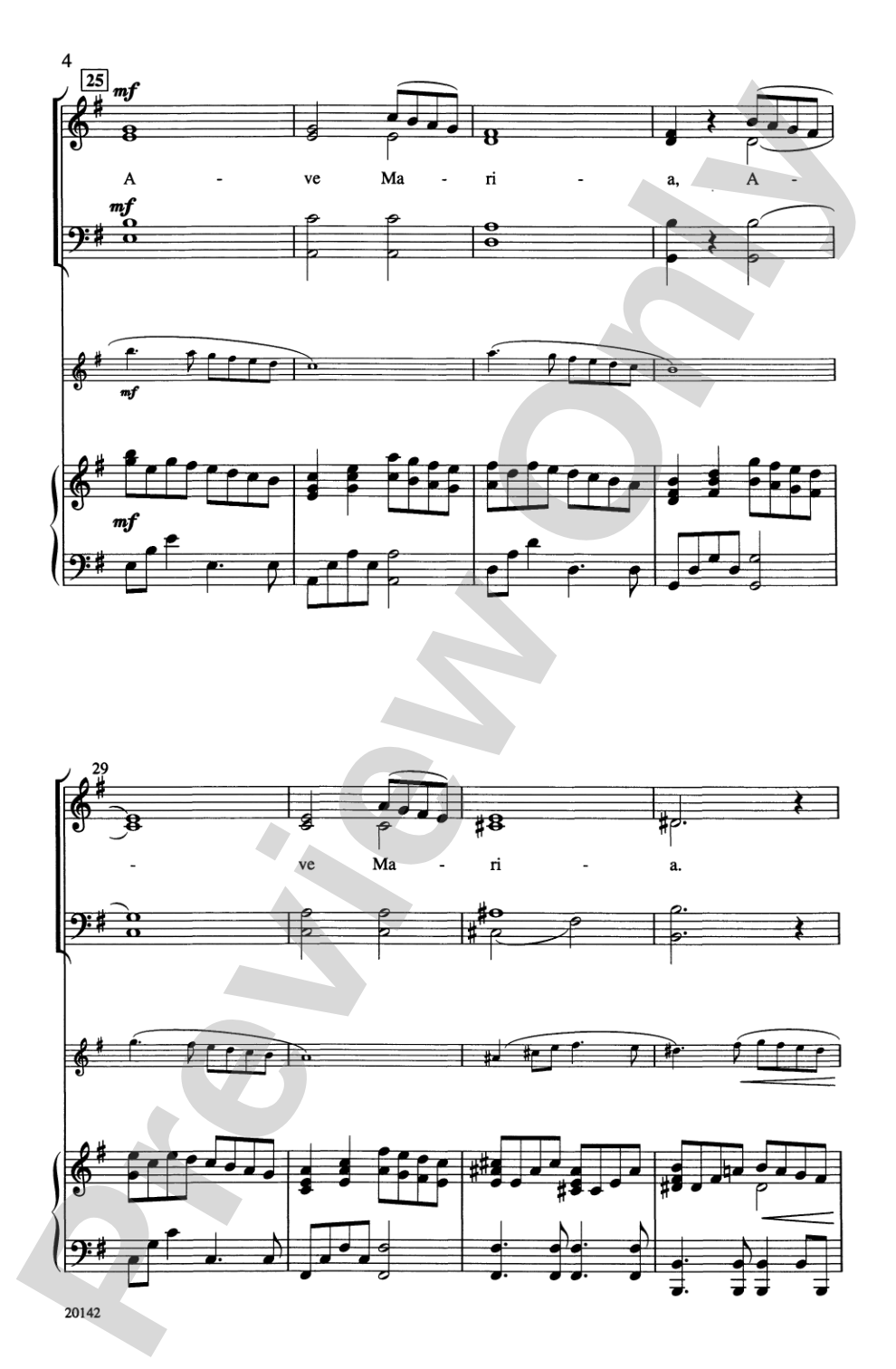

Ave Maria: SATB Choral Octavo
Music attributed to Giulio Caccini / ed. and arr. Patrick M. Liebergen
Item: 00-PO-0003148

$2.05
Minimum order quantity: 20 copies
Pickup currently not available
Related Items
Ave Maria: SAB Choral Octavo |
$2.25
|
View | |
Ave Maria: SSA Choral Octavo |
$2.05
|
View | |
Ave Maria: 2-Part Choral Octavo |
$2.05
|
View | |
Ave Maria: TTBB Choral Octavo |
$2.25
|
View | |
Ave Maria: SATB Choral Octavo |
$2.05
|
View | |
Ave Maria: SAB Choral Octavo |
$2.25
|
View | |
Ave Maria: SSA Choral Octavo |
$2.05
|
View | |
Ave Maria: 2-Part Choral Octavo |
$2.05
|
View | |
Ave Maria: TTBB Choral Octavo |
$2.25
|
View |
Description
This haunting melody has been recorded by everyone from Charlotte Church to Andrea Bocelli and no wonder: it's gorgeous. And the harmonies are lush, and unexpected for a 16th century piece. The voice writing is straightforward, with no surprises; Patrick Liebergen lets the beautiful melody and harmonies speak for themselves. The piano accompaniment is supportive and an optional flute part is included. The Ave Maria text makes it appropriate for school or church use, year round.


Don't just read it, hear it, play along with it, and watch your students grow with it. In MakeMusic Cloud, Ave Maria: SATB Choral Octavo comes alive with professional accompaniment, adjustable tempo, and built-in practice tools that turn solo practice into real progress.
Open in the Player
Jump straight in and assign it today.
Start Your Free Trial
Open this title and explore the full library in minutes.
Sample Audio
1
Audio File
--:--
0:00
0:00
Sample Video
Additional Details
Series:
Alfred Choral Designs
Publisher:
Alfred Music
Page Count:
12
SKU:
00-PO-0003148
Instrumentation:
Opt. Flute
More about this title
About the Composer: Giulio Caccini
Giulio Caccini (1545-1618) was a singer, composer, and theorist central to the emergence of opera and monody in late Renaissance Italy. Working primarily in Florence at the court of the Medici family, he pioneered a style of expressive vocal writing that prioritized the text and the singer's ability to move the listener emotionally. His compositions, particularly his songs and early dramatic works, shaped how composers understood the relationship between melody, words, and accompaniment for centuries to come.
Caccini's influence extends far beyond his own era. His approach to vocal writing emphasized clarity of text, singability, and direct emotional communication, principles that remain central to choral music pedagogy today. The pieces that bear his name, including this Ave Maria, reflect his gift for creating melodies that are both sophisticated and deeply human.
Why we love this
Liebergen's arrangement honors Caccini's original gift without overcomplicating it. What makes this setting stand out is how it lets the melody do the work while surrounding it with warm, unexpected harmonic support. For programming, it's equally at home in a concert hall, a festival adjudication, or a sacred service, and that versatility means you can use it strategically across your year.
What to expect
From the first phrase, there's a sense of quiet reverence that never rushes. The harmonic movement is subtle but sophisticated, creating moments of gentle surprise that reward careful listening. By the conclusion, the accumulated warmth of the voices feels both timeless and intimate.
Who it's for
This arrangement works for mixed choirs of intermediate to advanced ability who are comfortable with ensemble blend and sustaining tone. It's equally valuable for high school concert choirs, college and community ensembles, and church choirs serving year-round liturgical calendars. Even singers who've performed this piece before will find Liebergen's approach refreshing.
How to get the most out of it
- Approach the opening phrase as a meditation rather than a performance. Stillness in the breath and release will draw the audience in before the melody even arrives.
- Balance the optional flute part carefully. If you use it, let it enhance the melody without doubling the soprano throughout; consider featuring it in select phrases to add texture without muddying the harmonic richness.
- Shape each phrase toward the text rather than toward the bar line. The Latin vowels should bloom naturally, especially on the longer notes where the harmonies shift.
- Keep the piano accompaniment transparent. It's there to support, not to fill space, so a lighter touch will allow the voice parts to resonate fully.
How to use it
Program this as a centerpiece for a choral concert when you want to showcase vocal maturity and blend without demanding technical virtuosity. It also serves festival and contest contexts exceptionally well, where both the straightforward musicality and the reverent character will resonate with adjudicators. For a sacred service, it provides a moment of spiritual depth that will anchor your program's emotional arc.
Skills your students will build
- Sustaining legit tone across longer phrases without tension
- Balancing individual voice parts within a harmonic texture
- Shaping phrases musically according to text rather than rhythmic notation
- Blending and intonation in chromatic harmonic progressions
- Maintaining ensemble focus during sparse accompaniment