Ask Me to Sing Cover Image

Ask Me to Sing: SATB Choral Octavo

$2.05 USD
Sale price  $2.05 USD Regular price 
Skip to product information
Ask Me to Sing Cover Image

Ask Me to Sing: SATB Choral Octavo

Words and music by Sally K. Albrecht and Jay Althouse

Item: 00-45351

makemusic Cloud badge

Need it now?

Buy Digital Version
$2.05
Shipped

One moment…

Description
"Ask me to sing, and I'll give you a part of my soul. Ask me to sing, and I feel happy and hopeful and whole." Powerful as an opener, closer, or for a combined choir concert, this inspirational contemporary musical-theater-style choral opens simply and builds to an exquisite finish. Don't miss the choreography on the Step One! DVD and at alfred.com/video.

Don't just read it, hear it, play along with it, and watch your students grow with it. In MakeMusic Cloud, Ask Me to Sing: SATB Choral Octavo comes alive with professional accompaniment, adjustable tempo, and built-in practice tools that turn solo practice into real progress.

Sample Pages

Sample Audio
0:00
0:00
Sample Video
Additional Details
Series: Alfred Choral Designs
Publisher: Alfred Music
Page Count: 12
UPC: 038081510910
SKU: 00-45351

More about this title

About the Composer: Sally K. Albrecht
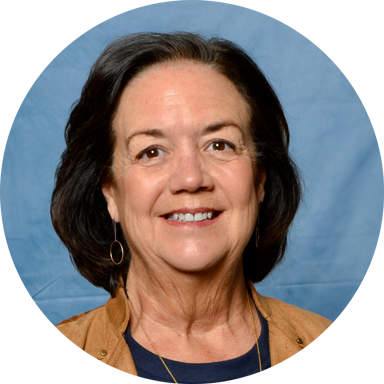
Sally K. Albrecht

Sally K. Albrecht has shaped American choral music for over three decades, earning an ASCAP Special Music Award every year since 1987. Her catalog exceeds 600 published choral works alongside 75 larger musicals and songbooks. She has conducted honor choirs at prestigious venues including Lincoln Center, Carnegie Hall, and The Kennedy Center, and spent more than 30 years overseeing choral, vocal, and elementary publications at major educational music publishers, including her role at Alfred Music. A graduate of Rollins College (B.A., 1976) and the University of Miami (M.A. in Drama, 1977; M.M. in Accompanying, 1979), she has taught at Oakland University, Jersey City State College, and Meredith College.

Albrecht is particularly renowned for integrating movement and choreography into choral performance, a signature element of her compositional voice. She was recognized with the Distinguished Alumna Award from both the University of Miami Frost School of Music and Rollins College in 2021, and has served as Board Chair for the Omicron Delta Kappa National Leadership Honor Society. She lives in Wake Forest, North Carolina, with her husband, composer and arranger Jay Althouse.

Why we love this

This octavo strikes the rare balance of being genuinely stirring without sentimentality. The simplicity of the opening draws singers and audiences in immediately, then the arc to the exquisite finish rewards both the choir's investment and the listeners' attention. The integrated choreography option (available through the Step One DVD and online) transforms what could be a static performance into something visibly alive, making this equally powerful as a concert opener, closer, or festival centerpiece.

What to expect

The text captures something achingly human about what it means to share yourself through song. Musically, the piece mirrors this journey: it begins unguarded and intimate, then unfolds into something larger and more luminous, as though the act of singing itself opens the singers' capacity for hope and wholeness.

Who it's for

Choirs of intermediate to advanced ability who can sustain a lyrical line and respond to directional cues for building intensity. This works equally well for high school choirs, college ensembles, community choruses, and festival-ready groups seeking contemporary repertoire with substance.

How to get the most out of it

  • Shape the opening phrases with restraint. Let the simplicity speak; avoid over-singing the early sections so the build to the finish has maximum impact.
  • If you use the choreography, begin rehearsals with the movement before layering it with the full vocal demands. This sequencing prevents singers from sacrificing intonation or breath control.
  • Balance the parts as the texture expands. SATB writing here benefits from clear voice leading, so ensure each section can hear the adjacent parts even as the dynamic climbs.
  • Consider the acoustics of your performance space when determining how much breath and space to leave between major sections. The piece's architecture depends on those moments of clarity.

How to use it

Program this at the top of a concert to establish an emotional tone of vulnerability and connection, or position it as a closer that leaves the audience moved and reflective. It pairs exceptionally well in a set of contemporary secular works and holds its own at competition or festival where programming stands out for authenticity over spectacle.

Skills your students will build

  • Sustaining a lyrical vocal line across extended phrases
  • Ensemble blend and balance in expanding SATB texture
  • Interpreting dynamic and emotional growth within a single piece
  • Coordinating vocal technique with physical movement (if choreography is used)
  • Expressing vulnerability and sincerity as an ensemble

You May Also Like
