
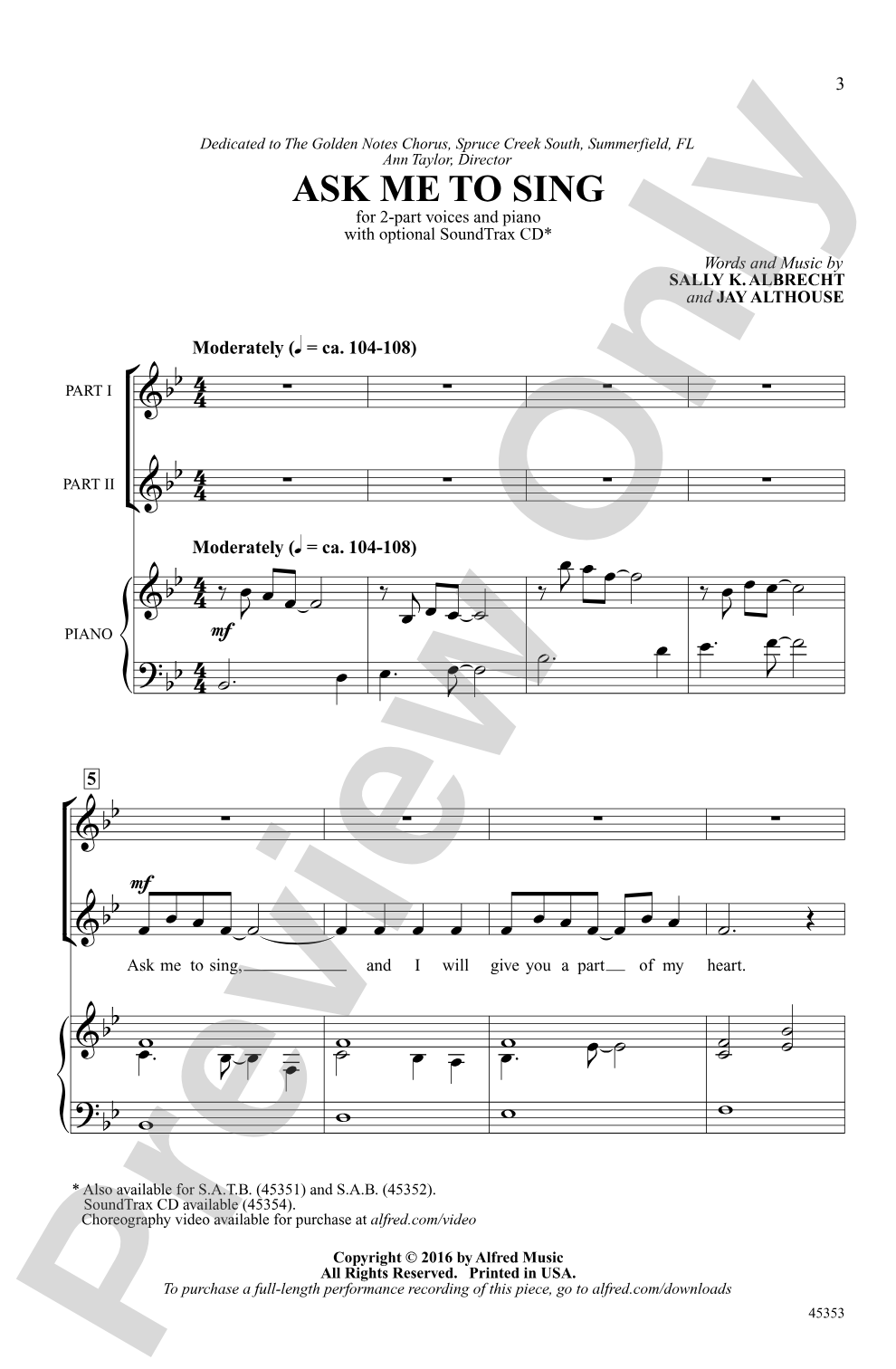
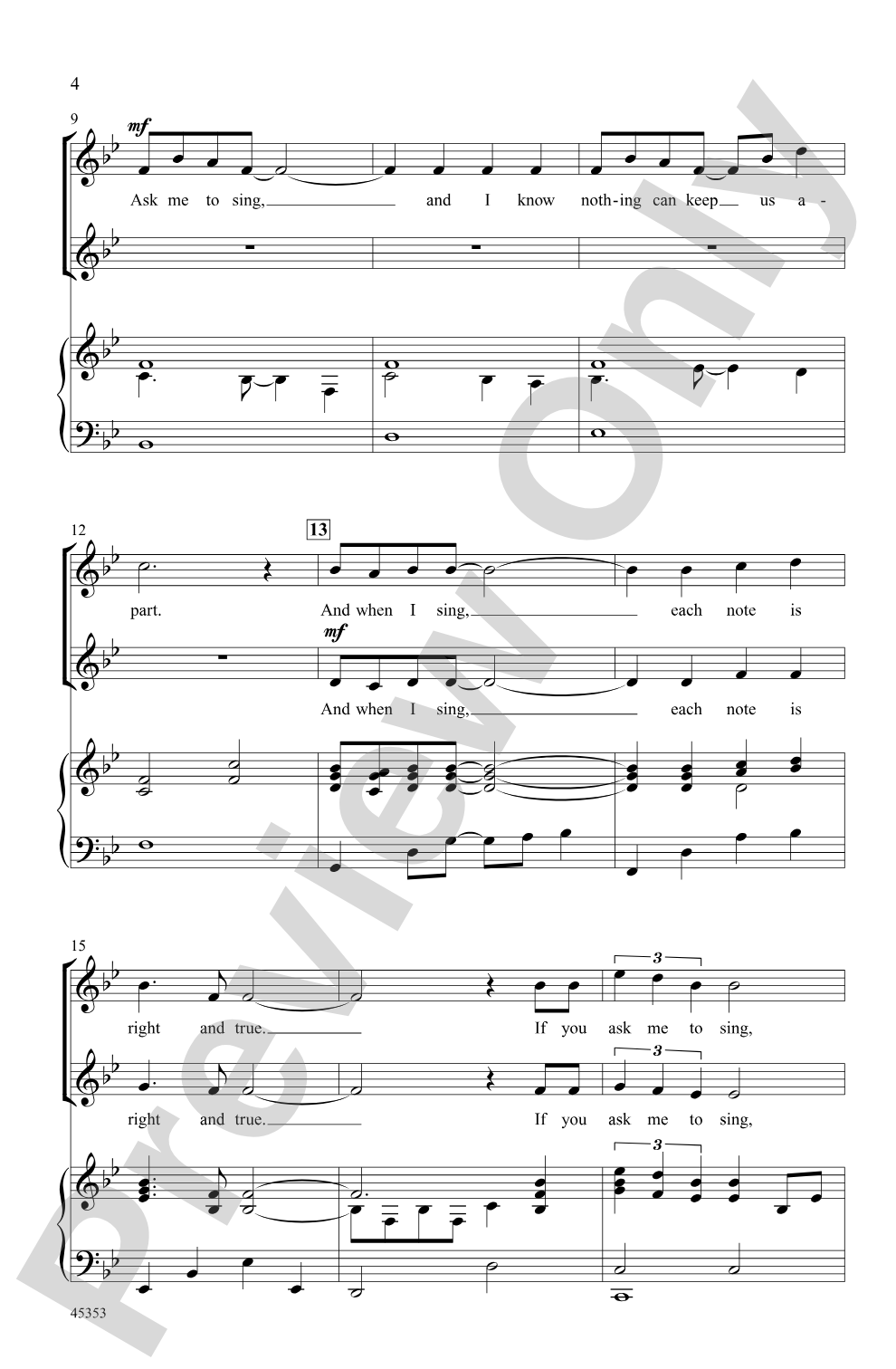

Ask Me to Sing: 2-Part Choral Octavo
Words and music by Sally K. Albrecht and Jay Althouse
Item: 00-PO-0003612
$1.90
Minimum order quantity: 20 copies
Pickup currently not available
Related Items
Ask Me to Sing: SoundTrax Digital Audio Download |
$27.99
|
View | |
Ask Me to Sing: SATB Choral Octavo |
$2.05
|
View | |
Ask Me to Sing: SAB Choral Octavo |
$1.90
|
View | |
Ask Me to Sing: SATB Choral Octavo |
$2.05
|
View | |
Ask Me to Sing: SAB Choral Octavo |
$1.90
|
View | |
Ask Me to Sing: 2-Part Choral Octavo |
$1.90
|
View | |
Ask Me to Sing: Choral Octavo SoundTrax CD |
$27.99
|
View |
Description
"Ask me to sing, and I'll give you a part of my soul. Ask me to sing, and I feel happy and hopeful and whole." Powerful as an opener, closer, or for a combined choir concert, this inspirational contemporary musical-theater-style choral opens simply and builds to an exquisite finish. Don't miss the choreography on the Step One! DVD and at alfred.com/video.


Ask Me to Sing: 2-Part Choral Octavo isn't in MakeMusic Cloud just yet...but it could be. Let us know you'd like to see it, and you'll help shape what comes next. In the meantime, start a free trial and dive into thousands of interactive titles your students can play along with today.
Request This Title
Tell us you want it.
Start Your Free Trial
Explore everything that's ready to play right now.
Sample Audio
1
Audio File
--:--
0:00
0:00
Sample Video
No sample videos found.
Additional Details
Series:
Alfred Choral Designs
Publisher:
Alfred Music
Page Count:
12
SKU:
00-PO-0003612
More about this title
About the Composer: Sally K. Albrecht
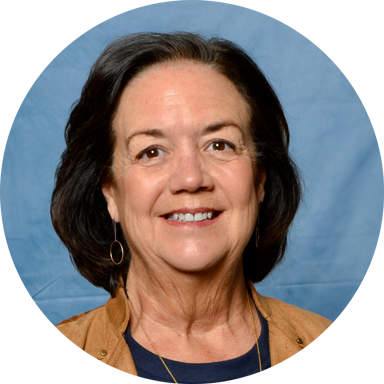
Sally K. Albrecht has shaped choral music education for over three decades as a composer, conductor, and clinician with a particular gift for integrating movement into choral performance. Since 1987, she has received annual ASCAP Special Music Awards and maintains more than 600 published choral works alongside 75 larger musicals and songbooks. She has conducted honor choirs at prestigious venues including Lincoln Center, Carnegie Hall, and The Kennedy Center, and previously served as Director of School Choral, Vocal, and Elementary Publications for major educational publishers, most recently Alfred Music.
Albrecht holds degrees from Rollins College (B.A. in Music and Theater, 1976), the University of Miami (M.A. in Drama, 1977; M.M. in Accompanying, 1979), and has taught at Oakland University, Jersey City State College, and Meredith College. She resides in Wake Forest, North Carolina, with her husband, composer and arranger Jay Althouse. In 2021, she received the Distinguished Alumna Award from both the University of Miami Frost School of Music and Rollins College, where she serves on the Board of Trustees.
Why we love this
This piece capitalizes on contemporary musical-theater language to create something that feels immediately engaging without sacrificing musical substance. The architecture is smart: it opens accessibly for 2-part voices, then expands in emotional and harmonic scope to deliver a moment that lands powerfully with audiences. The bonus of documented choreography means you can stage it with intention, transforming a beautiful song into a full artistic statement.
What to expect
The piece radiates sincerity and hope without sentimentality. You feel the vulnerability in the opening melody, then experience a sense of building conviction and unity as the arrangement unfolds. By the finish, the choir and audience together occupy a space of genuine emotional affirmation.
Who it's for
This octavo works for middle school through adult choirs seeking contemporary material with accessible voicing but genuine artistic weight. Directors programming combined choir concerts or festival showcases will find it versatile enough to represent multiple skill levels while maintaining musical credibility.
How to get the most out of it
- Establish the opening simplicity with clear diction and genuine tone quality; resist the urge to oversing early phrases, since the power comes from the gradual build.
- Shape the harmonic movement as the piece expands, letting the voicing changes clarify the emotional trajectory rather than treating them as merely technical shifts.
- Reference the choreography video before rehearsals begin so you can plan how movement integrates with musical phrasing and breath points.
- Use the recorded accompaniment in early rehearsals to lock the melodic line, then gradually reduce reliance on it to develop independence within the 2-part texture.
How to use it
Its dual strength as both opener and closer makes it particularly useful in programs where you want to frame your concert with a thematic statement about music's power. It also works beautifully in a combined choir context at festival or invitational events, where you can showcase both your program's musical coherence and the visual impact of choreography.
Skills your students will build
- Balancing individual voice parts in 2-part harmony while maintaining phrase cohesion
- Executing dynamic control through gradual builds rather than sudden shifts
- Coordinating choreography with singing, including breath management across movement
- Understanding contemporary musical-theater style and its harmonic language
- Communicating emotional nuance through text and tone quality in a secular context