

As Time Goes By: SATB Choral Octavo
Words and music by Herman Hupfeld / arr. Jay Althouse
Item: 00-PO-0003161
$2.10
Minimum order quantity: 20 copies
One moment…
Related Items
As Time Goes By: SoundTrax Digital Audio Download |
$27.99
|
View | |
As Time Goes By: SAB Choral Octavo |
$2.25
|
View | |
As Time Goes By: SSA Choral Octavo |
$2.25
|
View | |
As Time Goes By: Choral SoundPax |
$25.00
|
View | |
As Time Goes By: SATB Choral Octavo |
$2.10
|
View | |
As Time Goes By: SAB Choral Octavo |
$2.25
|
View | |
As Time Goes By: SSA Choral Octavo |
$2.25
|
View | |
As Time Goes By: Choral Octavo SoundTrax CD |
$27.99
|
View | |
As Time Goes By: Choral SoundPax |
$25.00
|
View |
Description
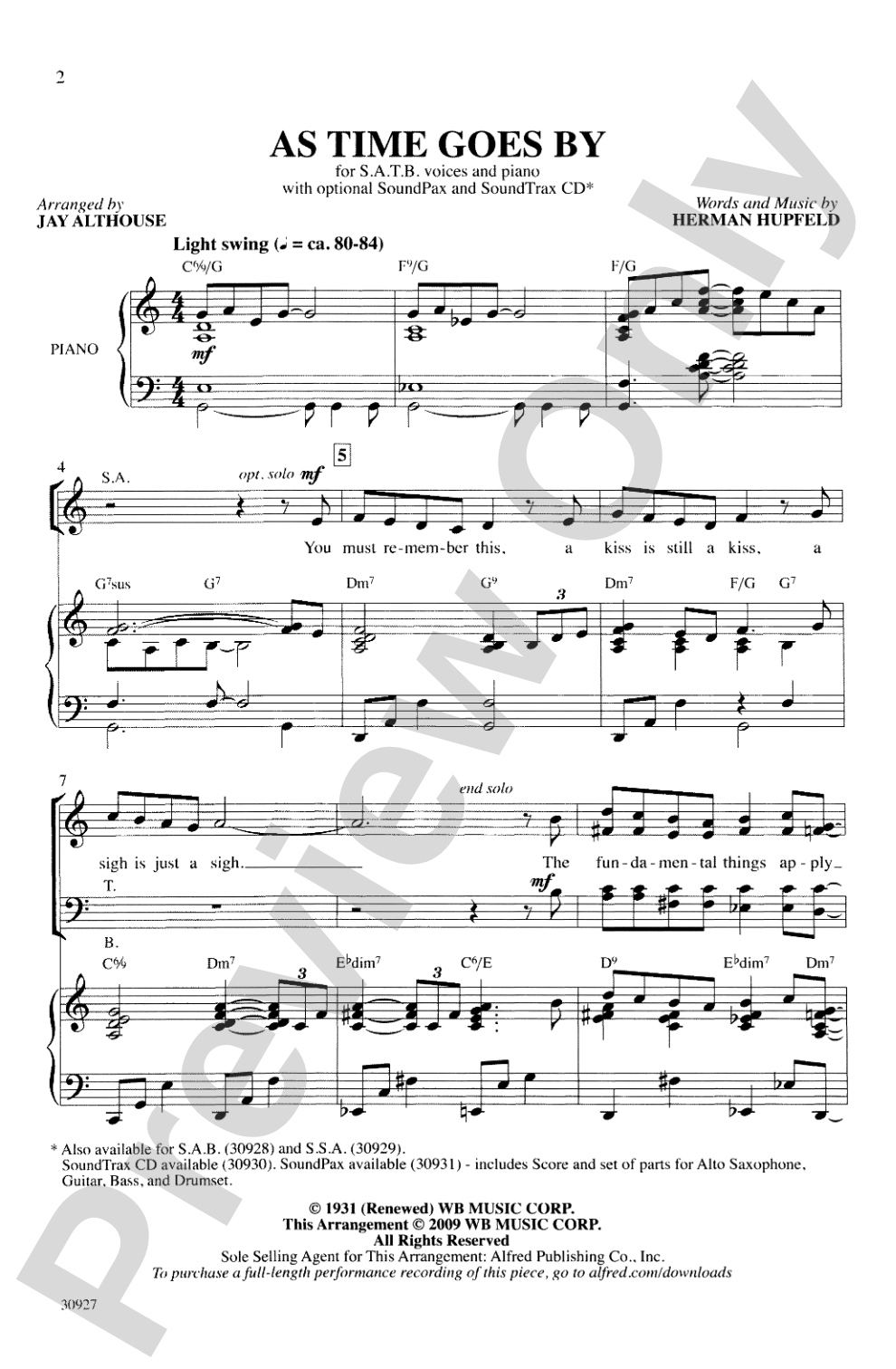
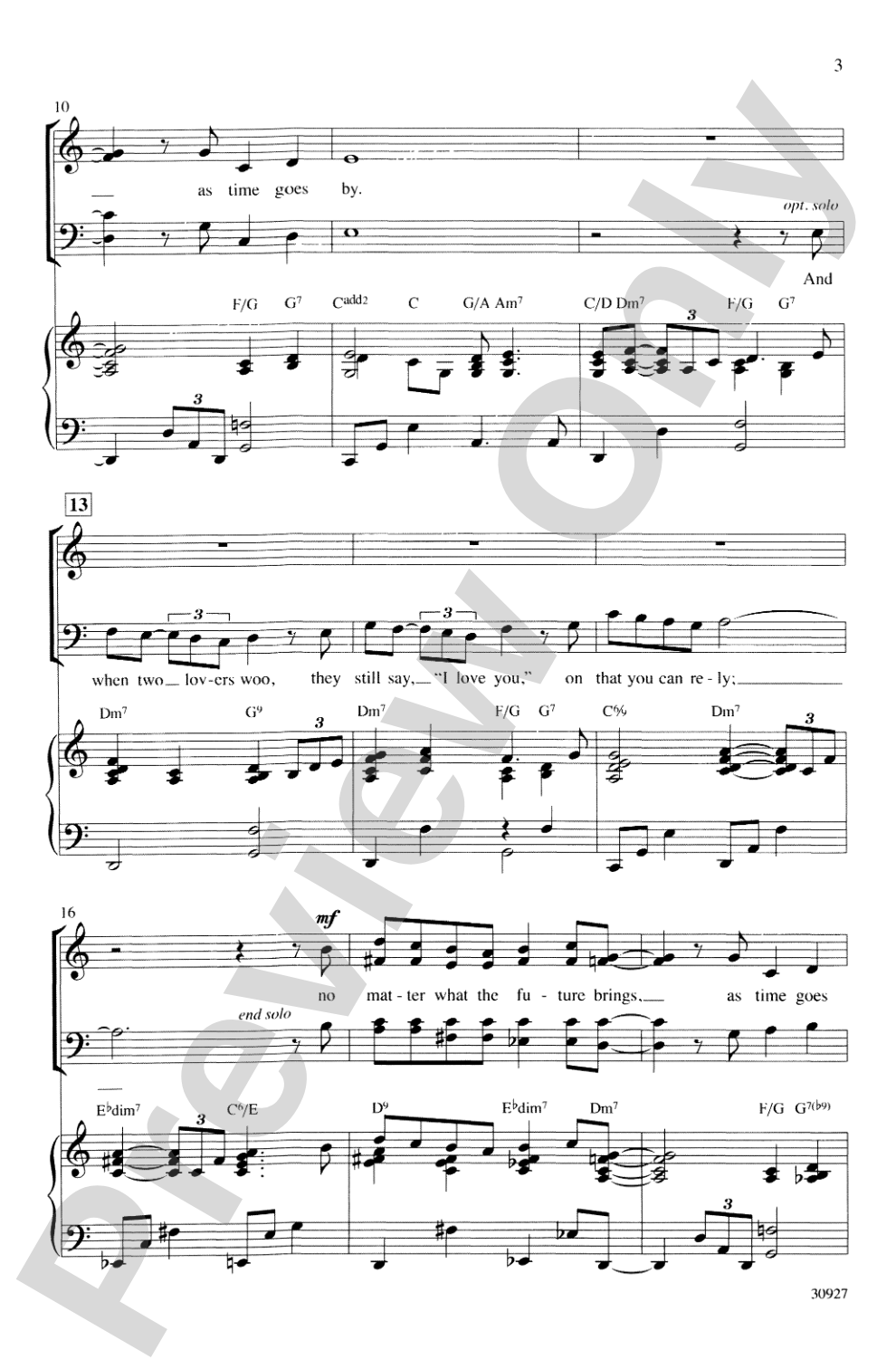
Who can resist this classic movie theme from Casablanca, one of the most famous motion pictures of all time? This arrangement, equally appropriate for jazz, show, and concert choirs, features optional solos, well-designed harmonies, and an optional alto sax solo (in the SoundPax).


As Time Goes By: SATB Choral Octavo isn't in MakeMusic Cloud just yet...but it could be. Let us know you'd like to see it, and you'll help shape what comes next. In the meantime, start a free trial and dive into thousands of interactive titles your students can play along with today.
Request This Title
Tell us you want it.
Start Your Free Trial
Explore everything that's ready to play right now.
Sample Audio
1
Audio File
--:--
0:00
0:00
Sample Video
No sample videos found.
Additional Details
Series:
Alfred Pop Choral Series
Publisher:
Alfred Music
Page Count:
8
SKU:
00-PO-0003161
More about this title
About the Composer: Herman Hupfeld
Herman Hupfeld (1894-1951) was an American composer and lyricist who became synonymous with one of cinema's most enduring standards. Though he wrote extensively for theater and film throughout the 1920s and 1930s, his legacy rests almost entirely on "As Time Goes By," which he composed in 1931 for a Broadway revue. The song gained immortal status when it appeared in Casablanca (1942), where it became the emotional anchor of one of Hollywood's greatest films.
For music educators, Hupfeld's work represents the intersection of popular song craft and timeless melody. His gift for writing singable, memorable lines that work equally well in jazz, pop, and concert settings makes "As Time Goes By" an ideal bridge between contemporary repertoire and the American songbook tradition that students should know.
Why we love this
Jay Althouse's arrangement captures the song's nostalgic elegance without sacrificing singability across all voice parts. The inclusion of optional solos and the featured alto saxophone line (in the SoundPax edition) give choirs flexibility to highlight individual singers or create a small-ensemble moment within a larger piece. This is precisely the kind of repertoire that makes concert programming feel fresh and connected to what audiences actually want to hear.
What to expect
There's an unmistakable warmth to this arrangement, the kind that comes from a melody so perfectly constructed that even new harmonic settings feel inevitable rather than imposed. It carries the bittersweet quality of its original film context: romantic and yearning, yet grounded in a timeless restraint that never slides into sentimentality.
Who it's for
This octavo works for jazz choirs, show choirs, and concert ensembles at the high school and college level. It's equally valuable for mixed-voice community choirs and all-female or all-male groups with strong soprano and alto sections. The optional solo features make it accessible to groups of varying skill levels while remaining engaging for more advanced singers.
How to get the most out of it
- Treat the phrasing with rubato in mind. The melody begs for slight tempo flexibility and breath, particularly at phrase endings; avoid metronomic precision even with the recorded accompaniment.
- Balance the optional solos carefully so they sit inside the choir's texture rather than dominating it. These moments work best when they feel like natural moments of solo reflection, not separate showcase events.
- Shape the harmonies dynamically. This arrangement's strength lies in its well-crafted voicings, which will sing with more character if you bring out the inner voice movement rather than treating all four parts as equal in weight.
- The alto saxophone solo (if using SoundPax) pairs beautifully with a lighter, more playful approach to the choir during that section. Consider how the timbre shift can guide your singers toward a slightly different color and articulation.
How to use it
This piece shines as a bridge between a concert's first half and a lighter, more contemporary second section. It also works as a elegant closer if you want to end a program on a reflective, universally recognizable note. Consider programming it alongside other American songbook standards or as the centerpiece of a concert themed around film music and popular song.
Skills your students will build
- Singing jazz-influenced harmonies with proper voice leading and blend
- Shaping lyrical phrasing and managing rubato within ensemble contexts
- Balancing optional solos within a choral texture
- Connecting to mid-century American popular music repertoire and its cultural significance
- Managing optional instrumental parts (alto sax) in conjunction with vocal lines