
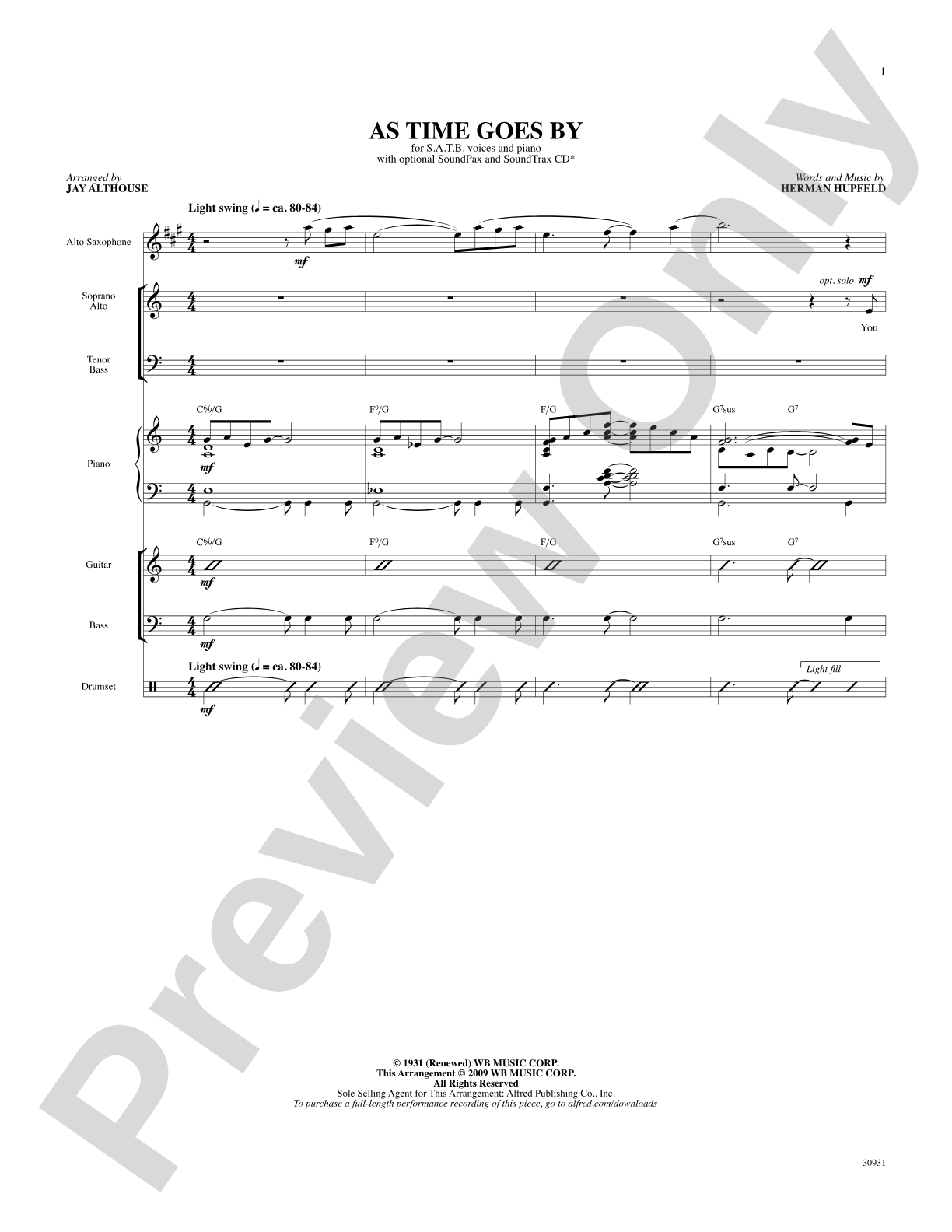
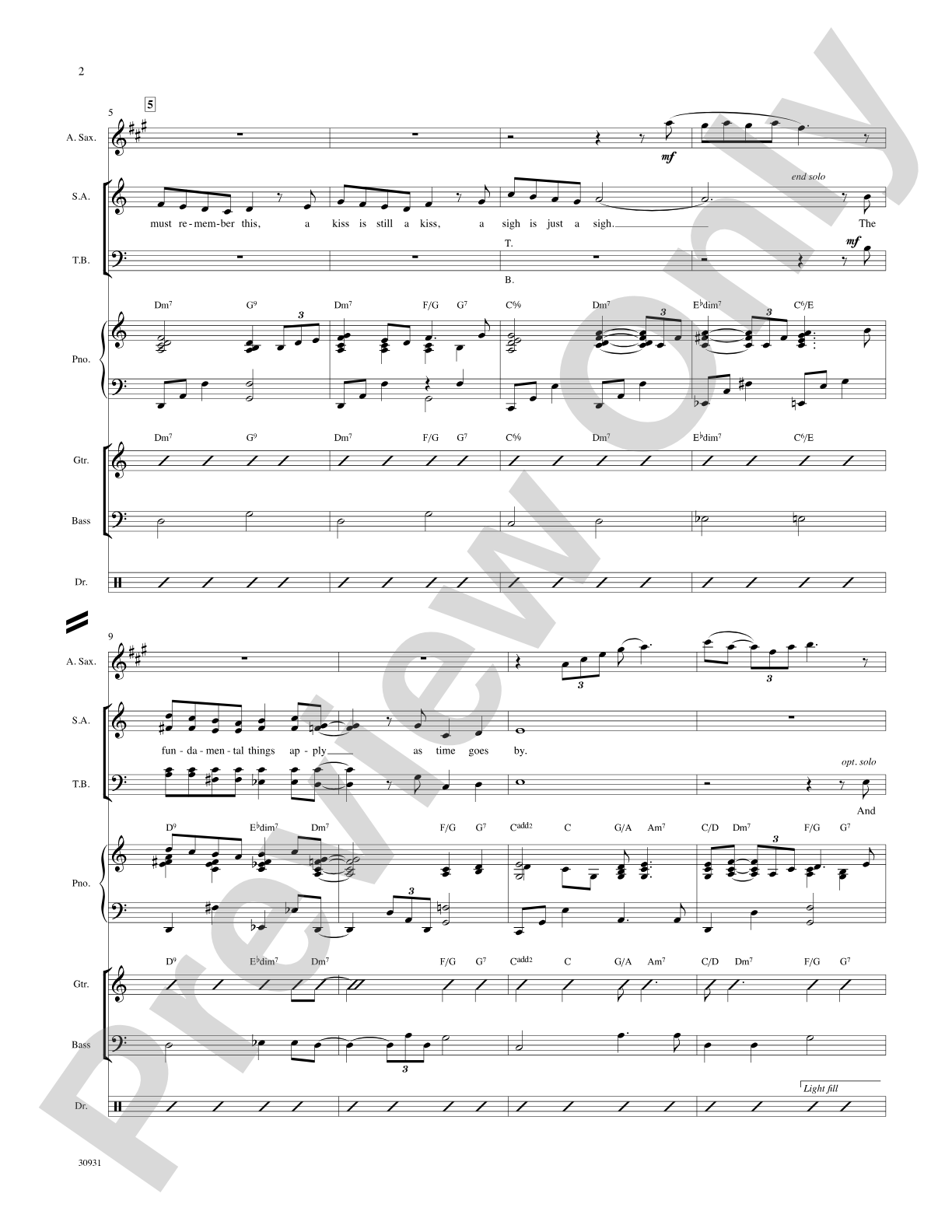
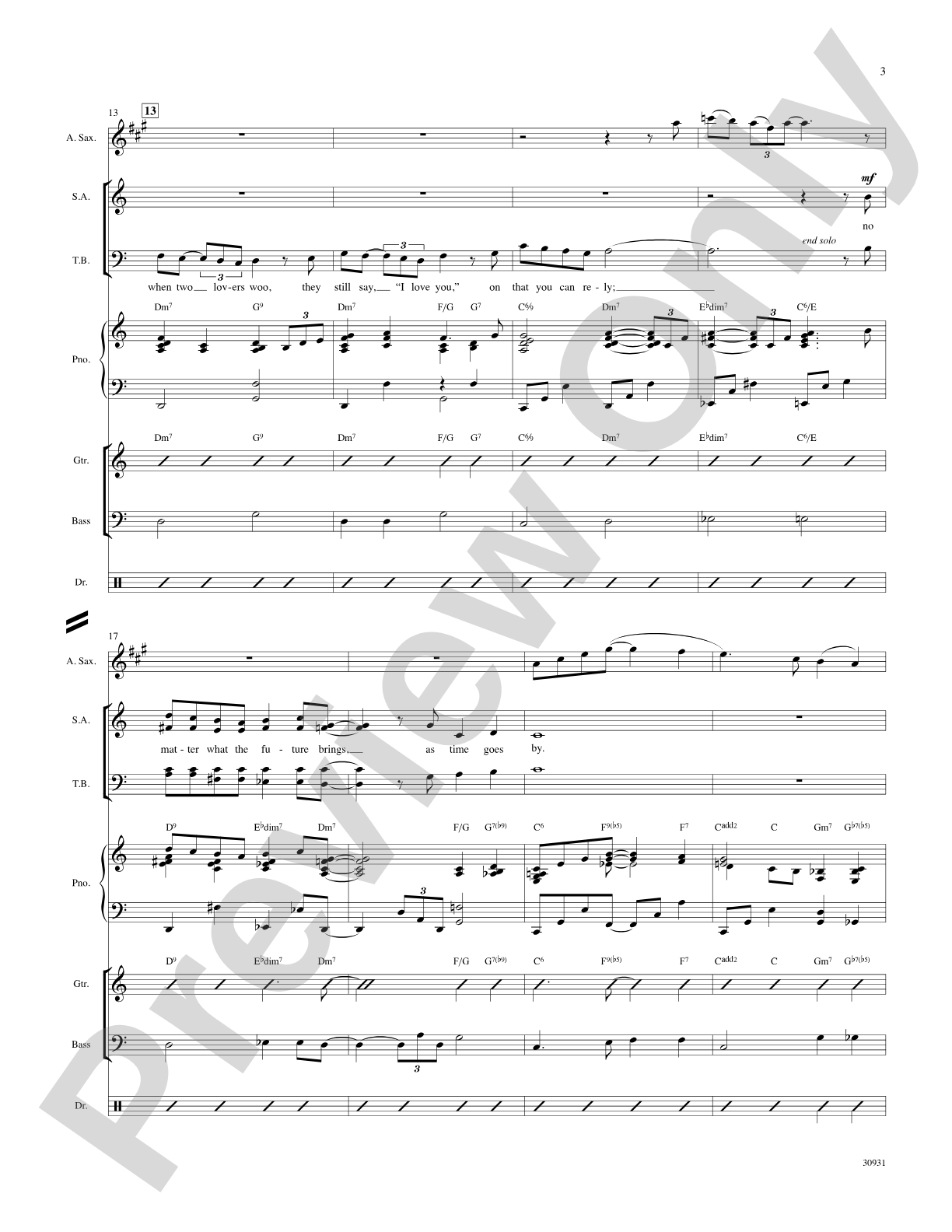
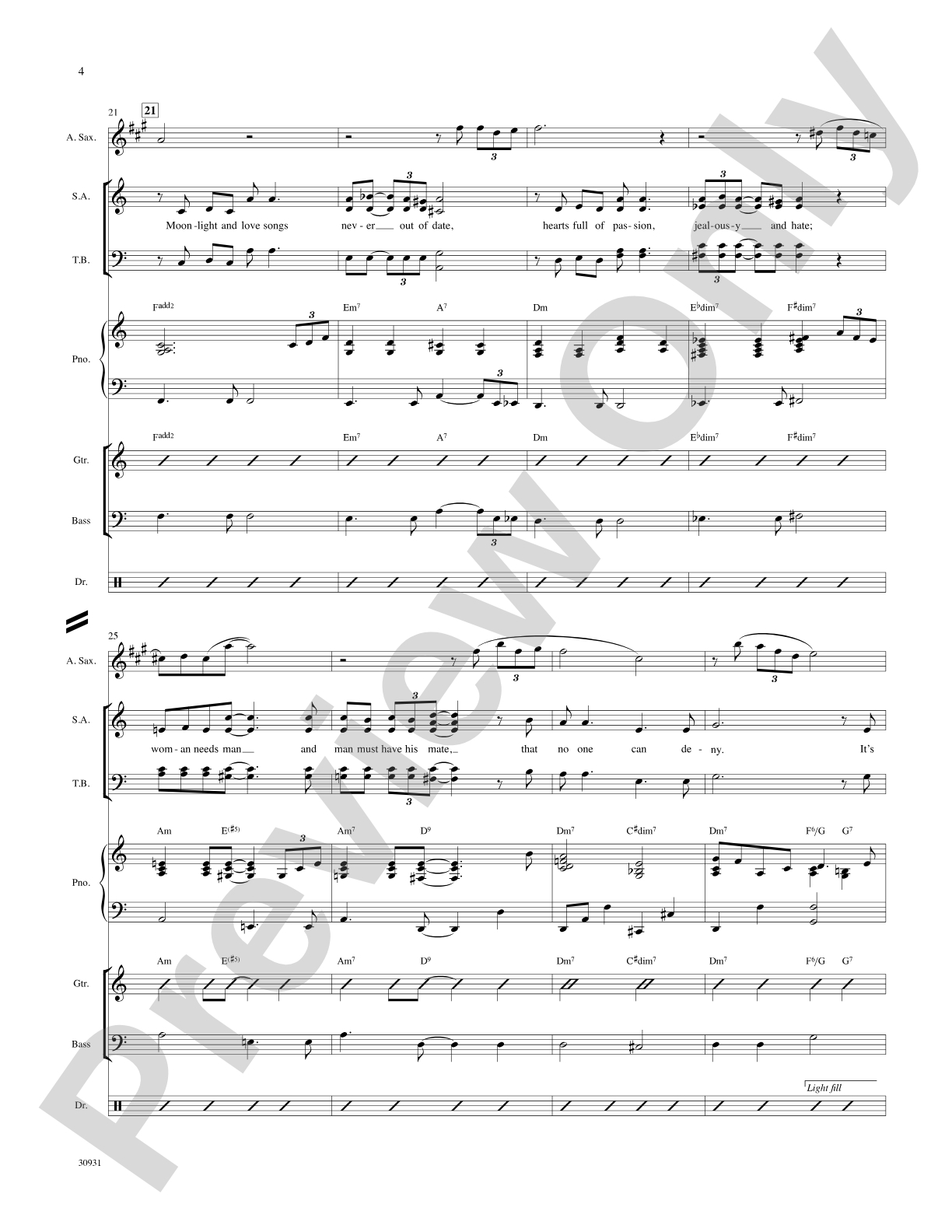
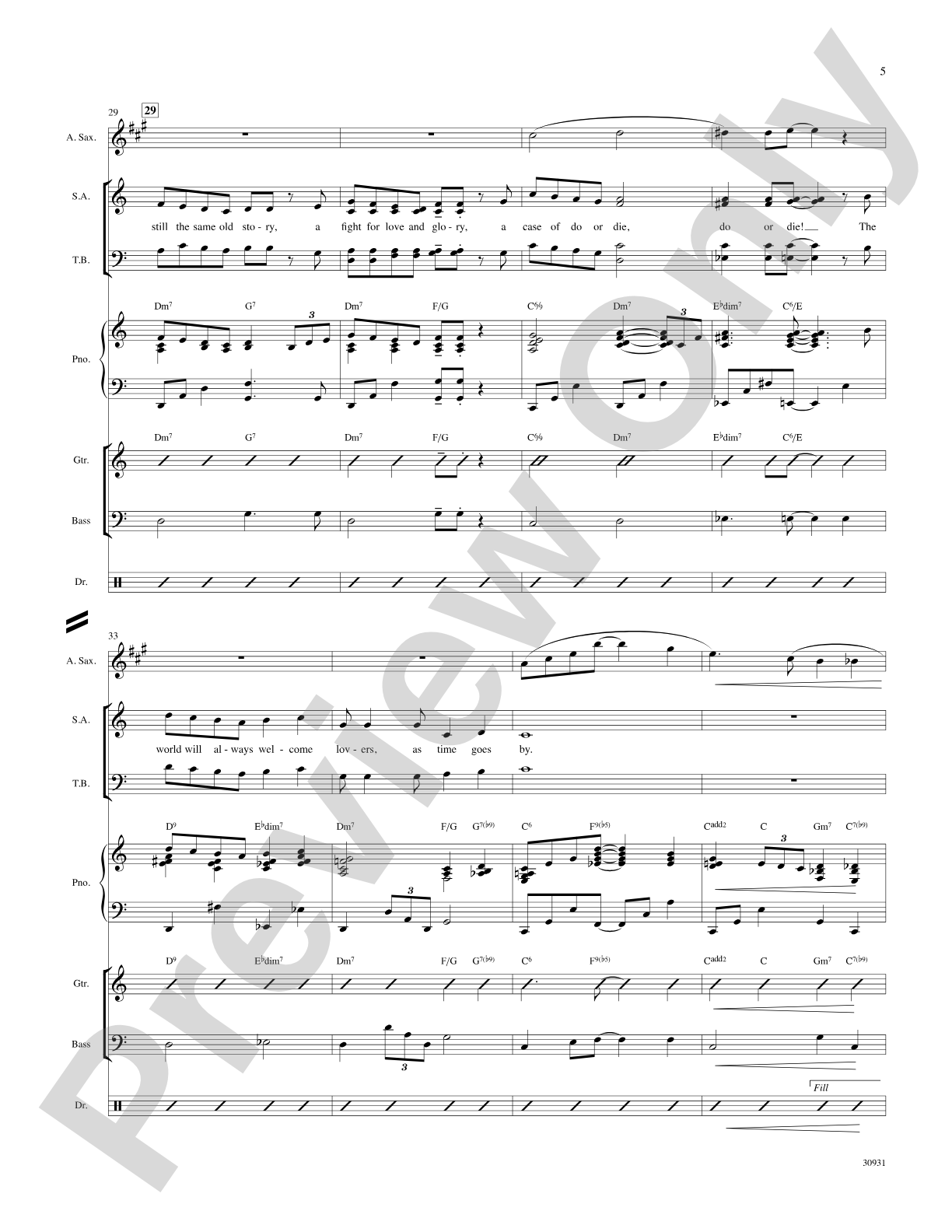
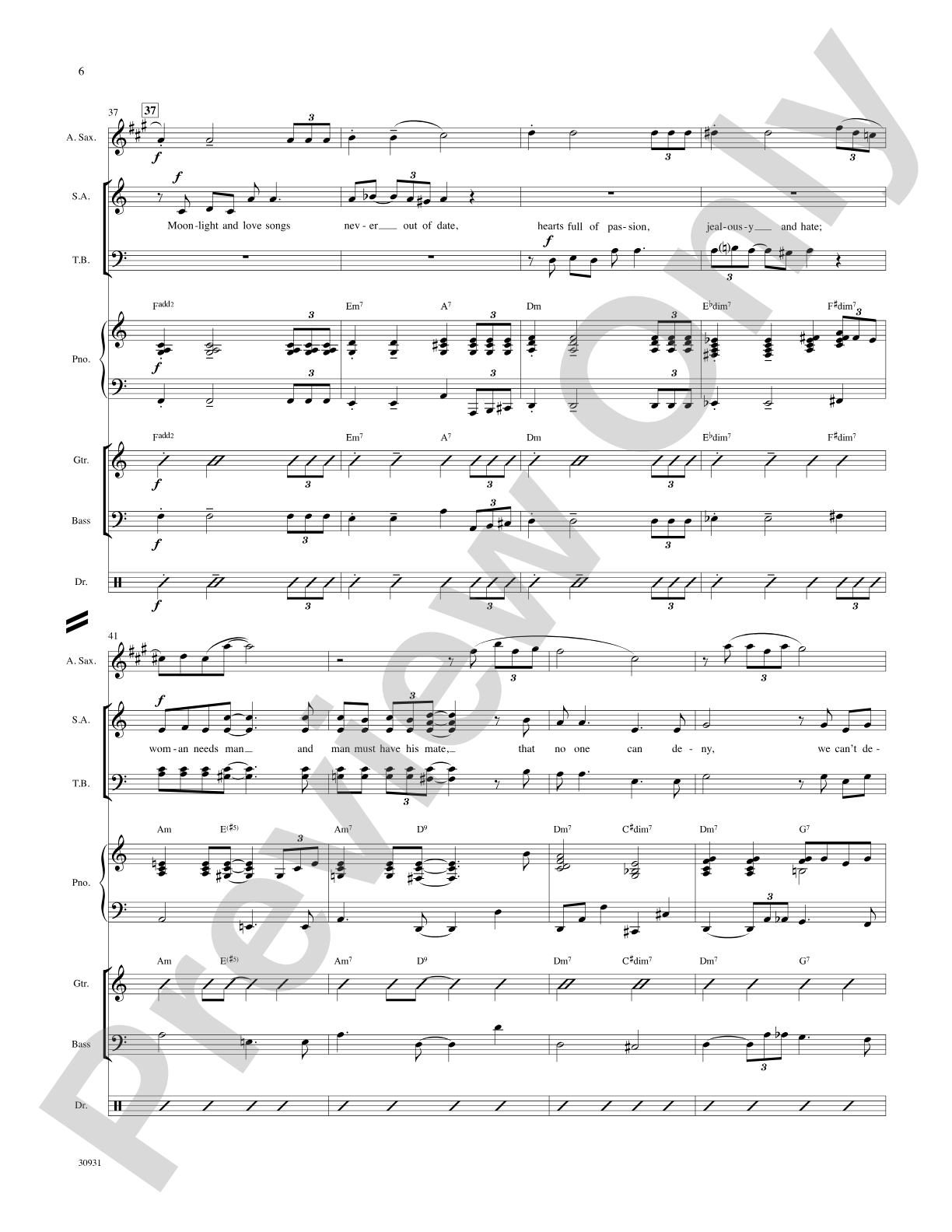
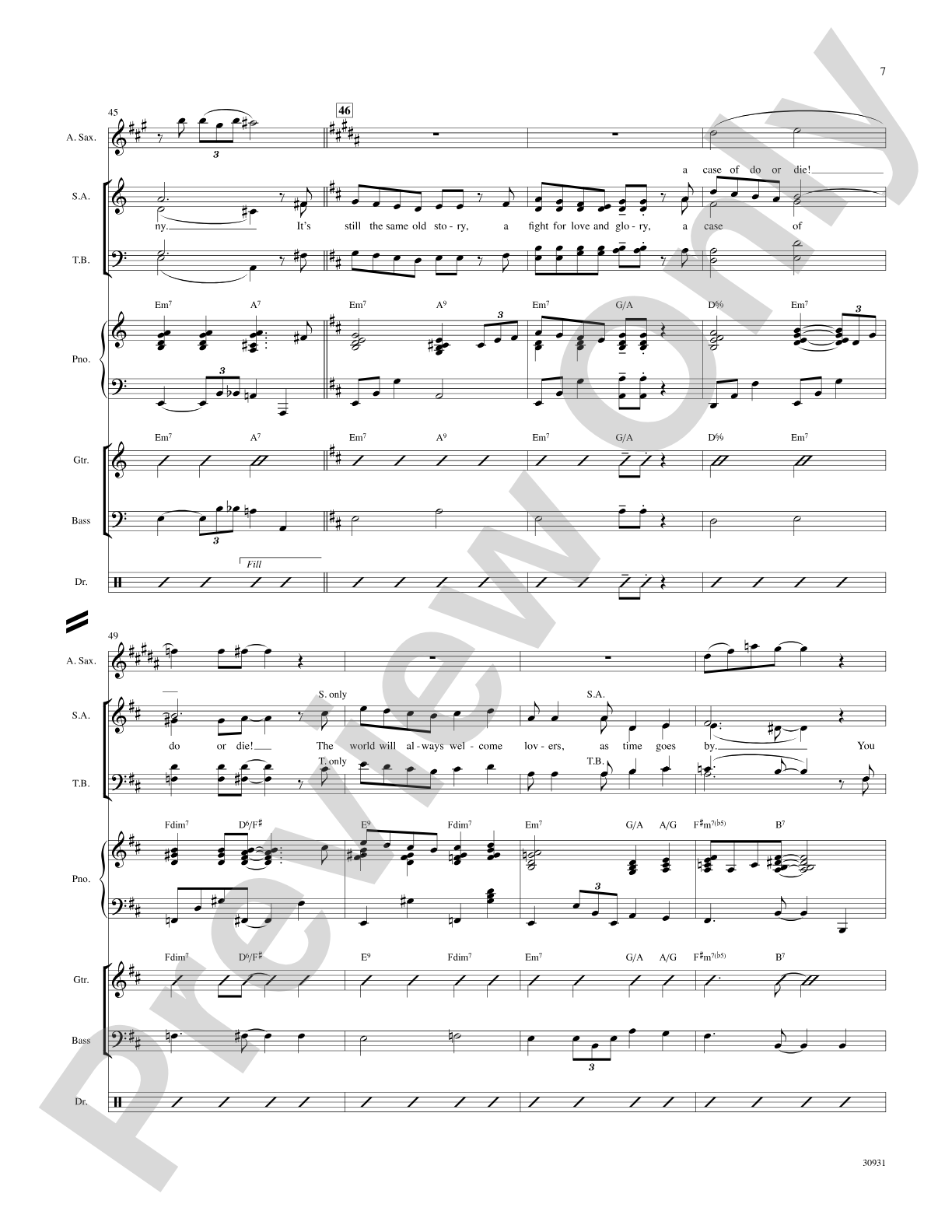
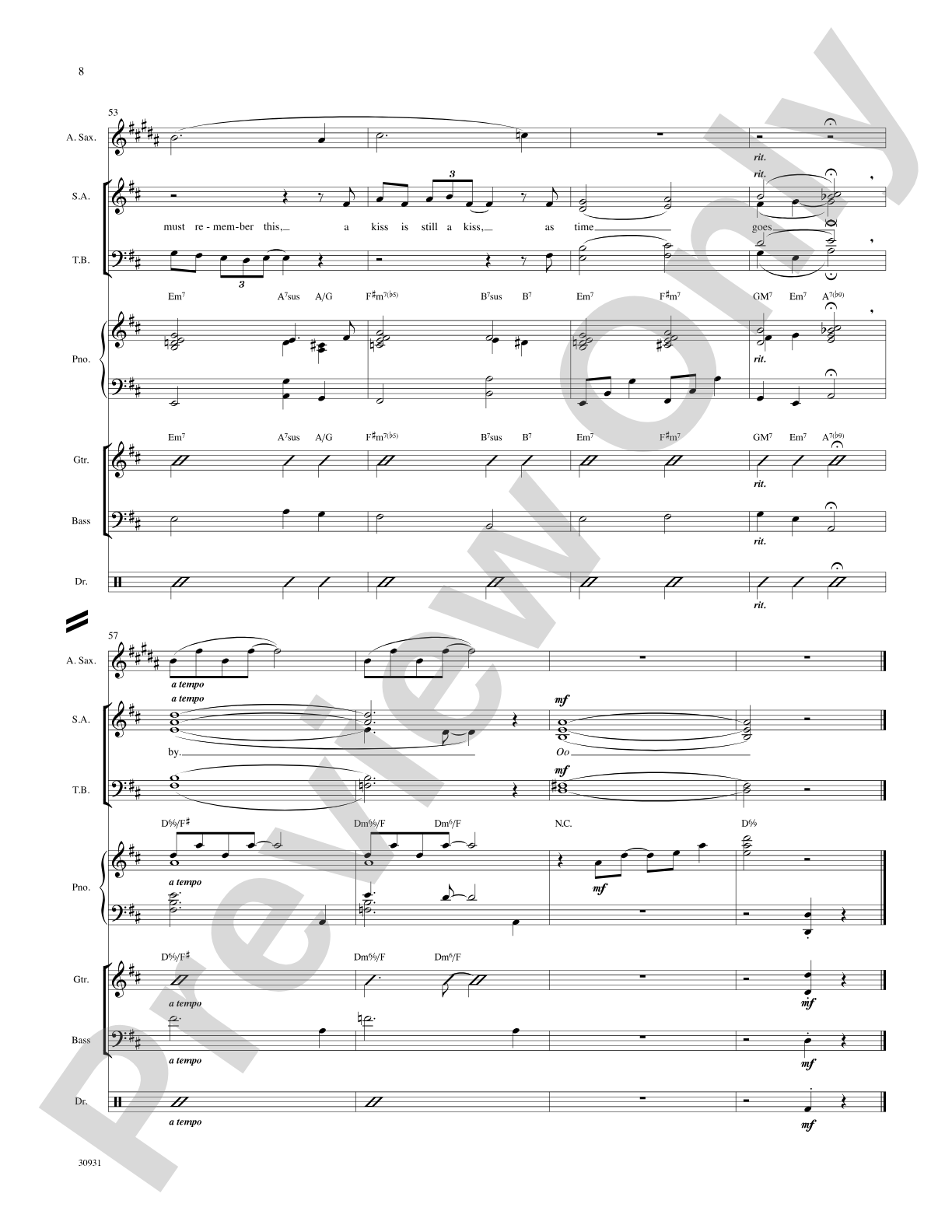

As Time Goes By: Choral SoundPax
Words and music by Herman Hupfeld / arr. Jay Althouse
Item: 00-PK-0004540

$25.00
One moment…
Related Items
As Time Goes By: SoundTrax Digital Audio Download |
$27.99
|
View | |
As Time Goes By: SATB Choral Octavo |
$2.10
|
View | |
As Time Goes By: SAB Choral Octavo |
$2.25
|
View | |
As Time Goes By: SSA Choral Octavo |
$2.25
|
View | |
As Time Goes By: SATB Choral Octavo |
$2.10
|
View | |
As Time Goes By: SAB Choral Octavo |
$2.25
|
View | |
As Time Goes By: SSA Choral Octavo |
$2.25
|
View | |
As Time Goes By: Choral Octavo SoundTrax CD |
$27.99
|
View | |
As Time Goes By: Choral SoundPax |
$25.00
|
View |
Description
Who can resist this classic movie theme from Casablanca, one of the most famous motion pictures of all time? This arrangement, equally appropriate for jazz, show, and concert choirs, features optional solos, well-designed harmonies, and an optional alto sax solo (in the SoundPax). SoundPax includes a. sax., rhy.


Don't just read it, hear it, play along with it, and watch your students grow with it. In MakeMusic Cloud, As Time Goes By: Choral SoundPax comes alive with professional accompaniment, adjustable tempo, and built-in practice tools that turn solo practice into real progress.
Open in the Player
Jump straight in and assign it today.
Start Your Free Trial
Open this title and explore the full library in minutes.
Sample Audio
1
Audio File
--:--
0:00
0:00
Sample Video
No sample videos found.
Additional Details
Series:
Alfred Pop Choral Series
Publisher:
Alfred Music
Page Count:
16
SKU:
00-PK-0004540
Instrumentation:
SoundPax
More about this title
About the Composer: Herman Hupfeld
Herman Hupfeld (1894-1951) was an American composer and lyricist who wrote for Broadway, film, and Tin Pan Alley during the Golden Age of popular song. His career spanned vaudeville, stage revues, and Hollywood soundtracks, establishing him as a skilled craftsman of melody and lyric. Hupfeld composed "As Time Goes By" in 1931 for the Broadway revue "Everybody's Welcome," where it received modest attention until its unforgettable placement in the 1942 film "Casablanca" transformed it into an American standard.
Why we love this
Jay Althouse's arrangement captures the sophistication and romantic warmth of the original without oversimplifying it for student choirs. The optional solos and alto sax feature give singers something to lean into musically, while the harmonies sit well enough for developing ensembles to sound polished and intentional. Programming a genuine American standard signals to your audience that your choir engages with real repertoire, not just academic exercises.
What to expect
There's an elegance and bittersweet nostalgia woven through this piece. The melody has that timeless quality of great popular song, both yearning and philosophical at once, and Althouse's harmonies respect that character while giving the arrangement warmth and modern accessibility for young singers.
Who it's for
This works well for jazz choirs, show choirs, and concert choirs at the middle school through adult levels that want to program recognizable, sophisticated popular music. Singers appreciate the connection to film history and a tune that lives in the cultural memory, while directors gain an arrangement that sounds grown-up without demanding virtuosic range or complex harmony.
How to get the most out of it
- Balance the optional solo passages so they sit forward in the mix without dominating; this arrangement works best when the soloist feels supported by the ensemble behind them.
- Shape the phrase lines with rubato rather than strict metronomic time. The jazz and standard song tradition depends on slight flexibility in pulse to capture the conversational quality of the lyric.
- If you include the alto sax solo, rehearse it alongside the choir several times so the transition in and out feels organic. The sax takes space but shouldn't feel like it's stopping the choir's momentum.
- Let the recorded accompaniment anchor your rhythm section without replacing musicianship. Your singers should still feel the harmonic movement and respond to each other across the parts.
How to use it
Open an American standards concert with this piece, or place it as a feature moment in a program that celebrates film music and twentieth-century popular song. It pairs well alongside other show tunes and jazz standards, and it works equally effectively as a stand-alone performance that connects with multigenerational audiences.
Skills your students will build
- Singing well-crafted jazz harmonies with swing interpretation
- Interpreting optional solo lines with stylistic confidence
- Balancing mixed voice parts while maintaining clarity of melody
- Working with recorded accompaniment and optional instrumental features
- Phrasing lyrics expressively within a popular song idiom