
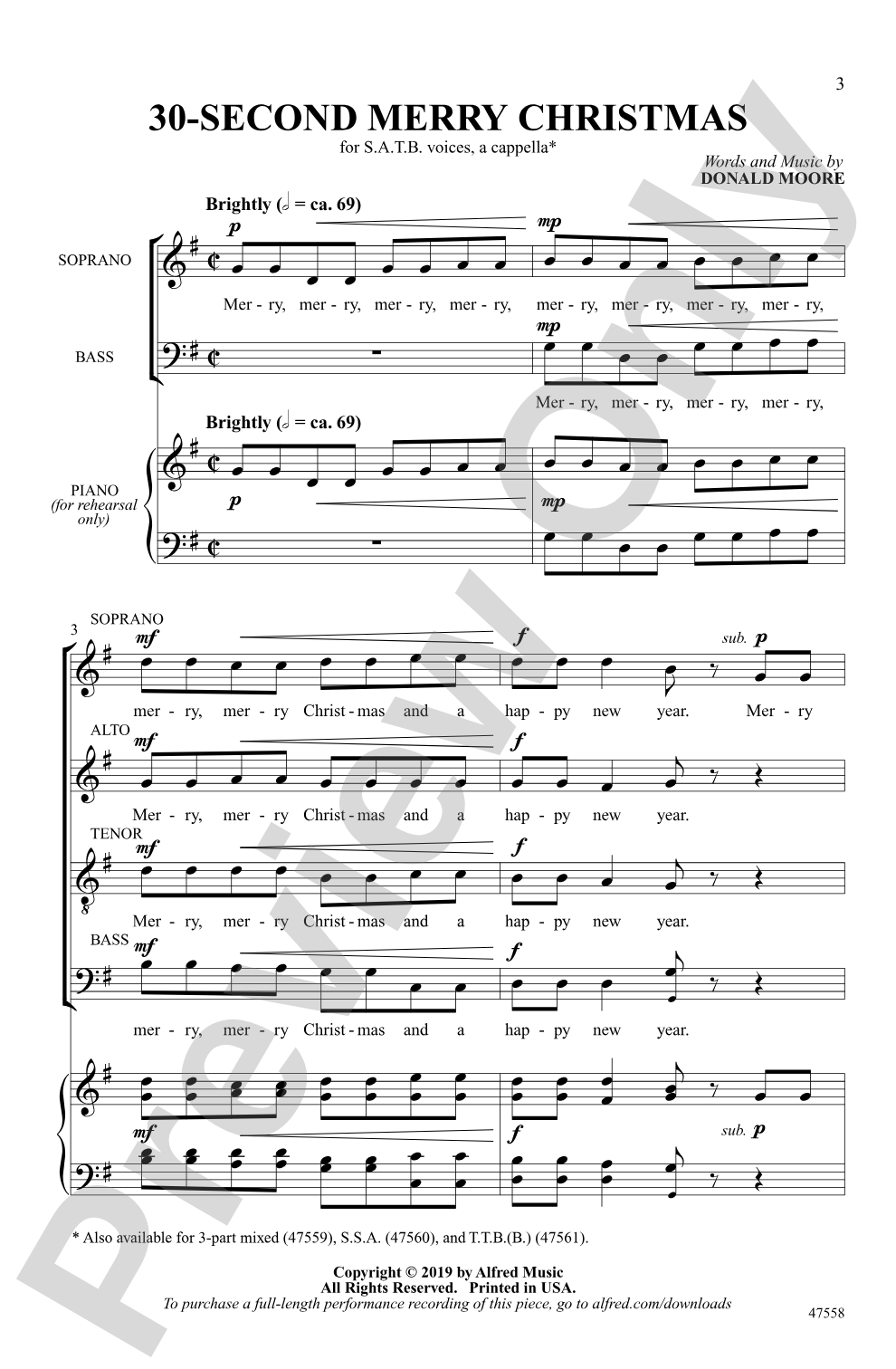

30-Second Merry Christmas: SATB, a cappella Choral Octavo
Words and music by Donald Moore
Item: 00-PO-0005929

$2.05
Minimum order quantity: 20 copies
Pickup currently not available
Related Items
30-Second Merry Christmas: 3-Part Mixed, a cappella Choral Octavo |
$2.05
|
View | |
30-Second Merry Christmas: SSA, a cappella Choral Octavo |
$2.05
|
View | |
30-Second Merry Christmas: TTB(B), a cappella Choral Octavo |
$2.05
|
View | |
30-Second Merry Christmas: SATB, a cappella Choral Octavo |
$2.05
|
View | |
30-Second Merry Christmas: 3-Part Mixed, a cappella Choral Octavo |
$2.05
|
View | |
30-Second Merry Christmas: SSA, a cappella Choral Octavo |
$2.05
|
View | |
30-Second Merry Christmas: TTB(B), a cappella Choral Octavo |
$2.05
|
View |
Description
Wish your audience a “Merry Christmas and a Happy New Year” in just a half a minute. This madrigal-style a cappella novelty is equally easy to learn and enjoyable to sing. Plus, it's a great choice for any seasonal performance: Christmas concerts, community events, madrigal feasts, door-to-door caroling, singing telegrams---you name it! Fun, flexible, and festive in all voicings.


Don't just read it, hear it, play along with it, and watch your students grow with it. In MakeMusic Cloud, 30-Second Merry Christmas: SATB, a cappella Choral Octavo comes alive with professional accompaniment, adjustable tempo, and built-in practice tools that turn solo practice into real progress.
Open in the Player
Jump straight in and assign it today.
Start Your Free Trial
Open this title and explore the full library in minutes.
Sample Audio
1
Audio File
--:--
0:00
0:00
Sample Video
Additional Details
Series:
Alfred Choral Designs
Publisher:
Alfred Music
Page Count:
8
SKU:
00-PO-0005929
More about this title
About the Composer: Donald Moore

Donald Moore studied organ performance at Kent State University and earned his Master of Arts in Teaching from the same institution. He has served as Organist-Choirmaster at Pilgrim United Church of Christ in Cuyahoga Falls, Ohio, and maintains an active composing and arranging practice that spans sacred, secular, educational, and popular choral works alongside organ and piano compositions and instructional materials.
With over 500 published works across Alfred Music, Heritage Music Press, Hal Leonard, and other major publishers, Moore's compositions are regular fixtures at state contests, festivals, and music conventions nationwide. A seventeen-time recipient of the ASCAP Composers Standard Award, he was recognized by the American Choral Directors Association as one of 400 historically significant American choral composers.
Why we love this
This piece delivers exactly what the title promises: a compact, charming way to send holiday greetings without eating up your concert time. The madrigal-style writing is clever enough to engage singers while remaining accessible enough for groups that don't have extensive a cappella experience, and its versatility across caroling gigs, community events, and concert programs means you'll actually use it multiple times each season.
What to expect
The madrigal style brings a touch of Renaissance charm to modern holiday greetings, executed with warmth and wit. At just thirty seconds, it lands like a musical card: brief, genuine, and impossible to forget, with the kind of period-appropriate playfulness that appeals to singers and audiences alike.
Who it's for
This piece fits any choir looking for a holiday opener, interlude, or closer that's genuinely fun rather than merely convenient. Whether you're programming a full Christmas concert, planning madrigal feast repertoire, or organizing door-to-door caroling, groups from church choirs to school ensembles will find it both easy to learn and satisfying to perform.
How to get the most out of it
- Balance the parts carefully in rehearsal so the novelty doesn't slide into cuteness. Moore's writing stands on genuine musical footing despite its brevity.
- The a cappella texture demands clean vowel unification across the choir. Spend time listening to how well your SATB voices blend before you add text.
- Light, steady pacing keeps the energy moving. This is a half-minute gift to your audience, not a moment to linger.
How to use it
Program this as a spirited opener to set a festive mood before moving into longer seasonal works, or use it as a charming interlude between pieces of different character. Its compact length also makes it an ideal finale that sends the audience out smiling without overstaying its welcome.
Skills your students will build
- Blending SATB voices in a cappella texture
- Phrasing and diction within tight melodic space
- Reading madrigal-style part writing
- Maintaining tuning without instrumental support